
How long does water damage restoration take?
Structural drying typically takes three to five days, verified with daily moisture-meter readings. Full restoration — extraction, drying, cleaning, and repairs — usually runs one to three weeks depending on how much material was affected and whether reconstruction is needed. Larger losses or Category 3 contamination can extend the timeline further.
The two clocks: mitigation and restoration
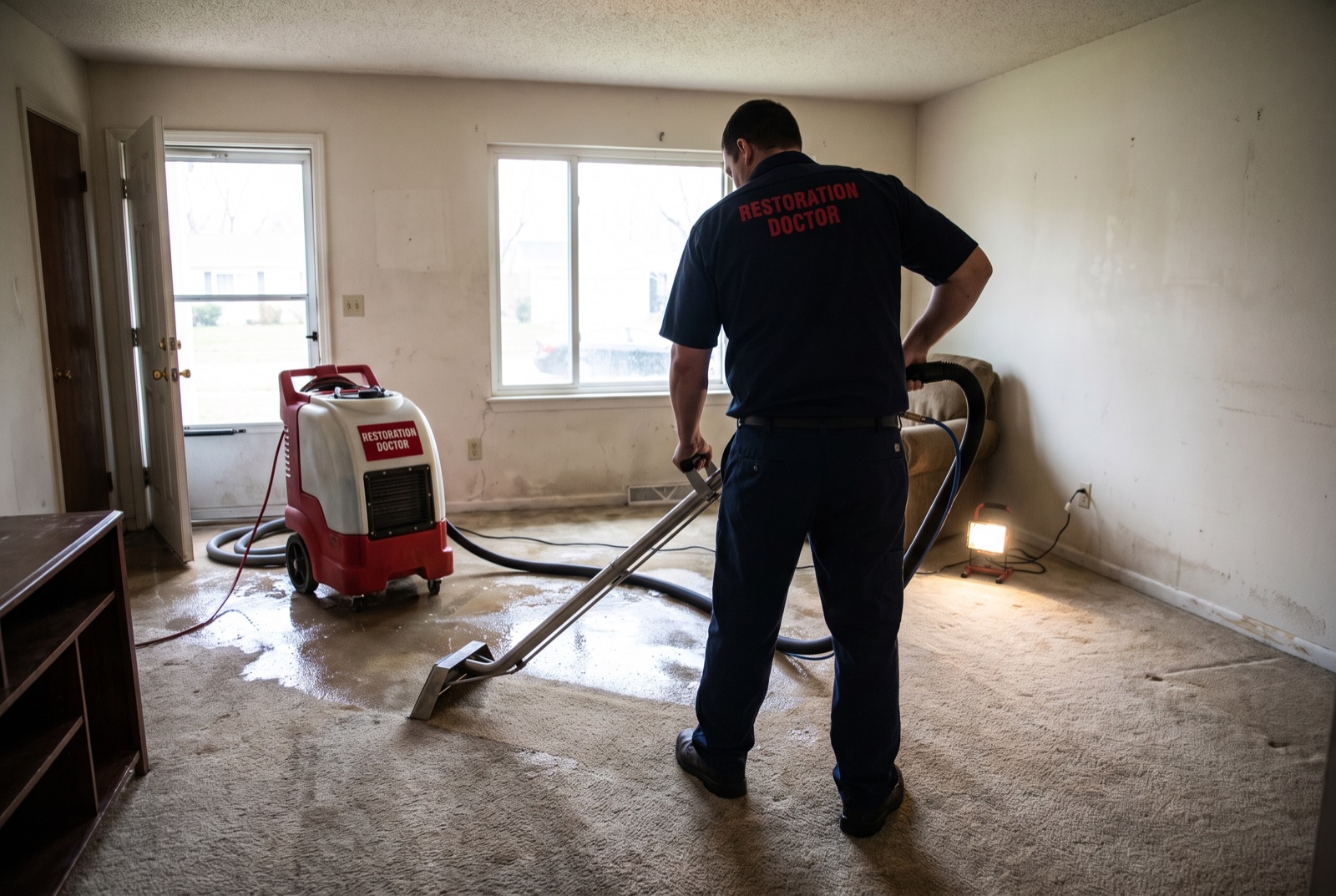
Water damage projects run on two separate timelines, and understanding both helps you plan around displacement and repairs. The first clock is mitigation — the emergency phase of stopping the water, extracting it, and drying the structure. The second clock is restoration — repairing or replacing whatever the water permanently damaged.
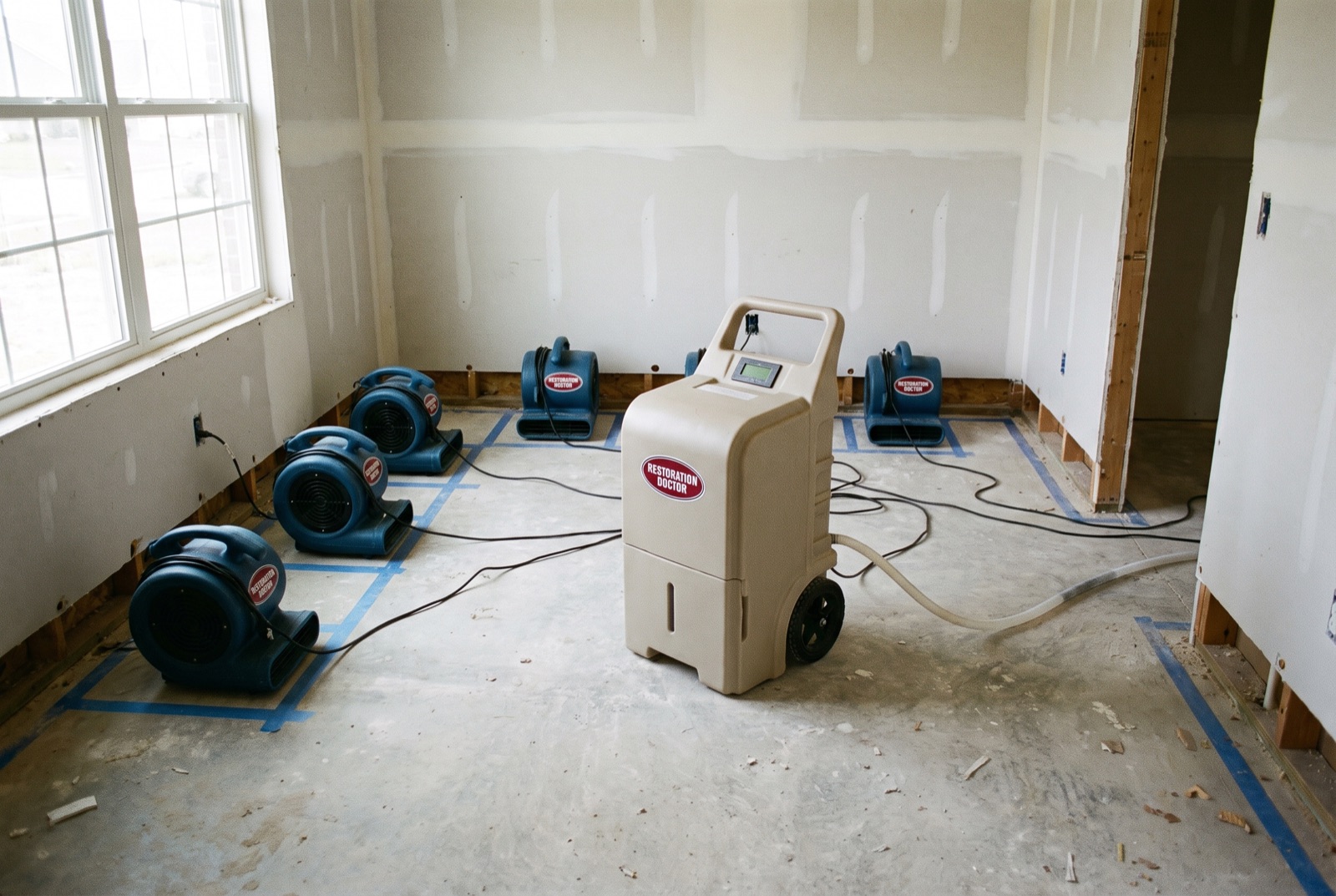
Mitigation moves fast because it has to. Extraction typically happens the same day a crew arrives, and drying equipment goes in immediately after. The drying phase itself usually runs three to five days for a typical residential loss under the IICRC S500 standard, with technicians returning daily to take moisture readings and reposition equipment as the wet footprint shrinks.
Restoration follows at a more normal construction pace: hanging and finishing drywall, replacing flooring, painting, and reinstalling trim. A small loss might need two or three days of repair work; a loss that required significant demolition can take several weeks, particularly when materials like matching hardwood or custom cabinetry have lead times.
What determines how long drying takes
Drying time is driven by four main variables. First is the class of the loss — the IICRC S500 standard classifies water losses from Class 1 (minimal absorption, small area) through Class 4 (deeply bound water in dense materials like hardwood, plaster, and concrete). A Class 1 loss can be dry in two days; Class 4 drying regularly takes a week or more because the water is trapped inside low-permeance materials.
Second is how quickly drying started. Water keeps migrating for as long as it sits — a loss addressed within hours involves far less saturated material than the same loss addressed after a weekend away.
Third is the water category. Clean Category 1 water allows aggressive in-place drying; Category 3 water (sewage, outdoor flooding) requires removing contaminated porous materials before drying begins, which adds demolition time but often shortens the actual dry-down since the wettest materials are gone.
Fourth is the building itself: dense plaster walls, multiple flooring layers, insulated cavities, and below-grade spaces all hold moisture longer than open framing and single-layer drywall.
A realistic week-by-week picture
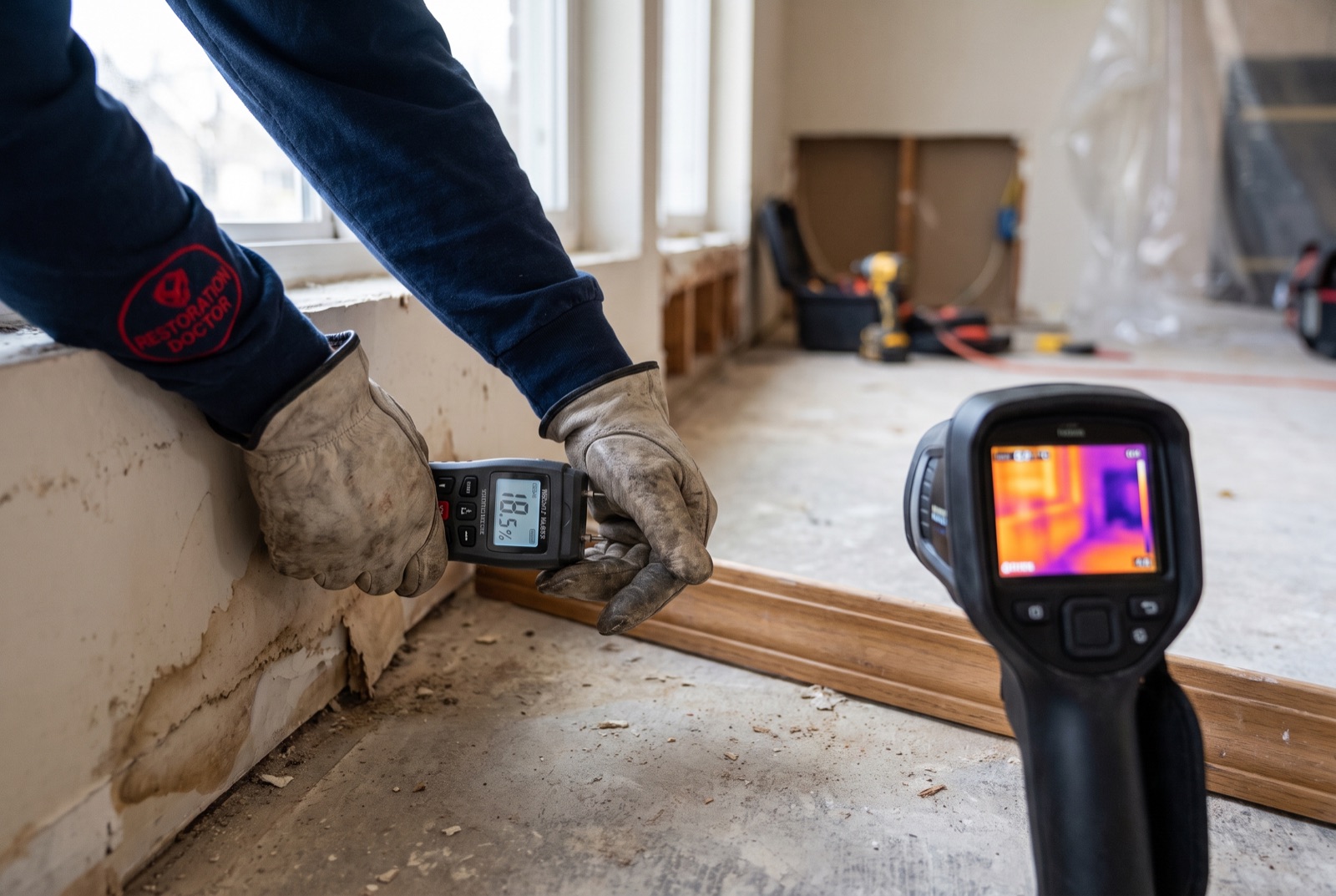
Day one: emergency response, source control, extraction, moisture mapping with meters and thermal imaging, removal of unsalvageable materials like carpet pad, and equipment setup — air movers and low-grain refrigerant (LGR) dehumidifiers positioned to the affected square footage.
Days two through five: daily monitoring visits. Technicians record moisture readings for each affected material against a dry standard taken from unaffected areas of your home, adjust or remove equipment as materials come dry, and document everything for your insurance file.
Once the structure verifies dry, the repair scope is finalized. For insurance claims this is also when the reconstruction estimate is settled with your carrier. Repairs then proceed like any well-run construction project — typically a few days to a few weeks depending on scope. Most homeowners with a moderate loss are fully back to normal within two to three weeks of the initial call.
What slows projects down — and how to avoid it
The most common delays are avoidable: waiting days to call for mitigation, shutting equipment off overnight because of the noise (drying is a continuous process — interrupting it adds days), and letting a claim dispute stall the repair phase. Detailed documentation prevents that last one: itemized moisture logs, photos, and psychrometric records give adjusters what they need to approve scope without back-and-forth.
Restoration Doctor handles both mitigation and reconstruction across Northern Virginia, Maryland, and D.C., so there is no handoff gap between the drying contractor and the rebuild contractor. If you have an active loss and need a realistic timeline for your specific situation, call 1-888-29-FLOOD — an assessment can usually pin down the drying schedule on day one.
Water Damage Restoration
Extraction, structural drying, and moisture verification for burst pipes, appliance leaks, and basement flooding.
Frequently asked
Related questions
How long does it take to dry out water damage?
What is the water damage restoration process step by step?
Can water damage be reversed?
How long do walls take to dry after a leak?
Active water, mold, fire, or sewage event?
Connect directly with the Restoration Doctor team for your region. Crews are on standby 24/7 with documented response protocols.