
How long does it take to dry out water damage?
Professional structural drying takes three to five days on average, verified with daily moisture-meter readings rather than touch or guesswork. Light losses caught immediately can dry in two days; dense materials like hardwood, plaster, and concrete can take a week or more. Without professional equipment, hidden moisture routinely lingers for weeks.
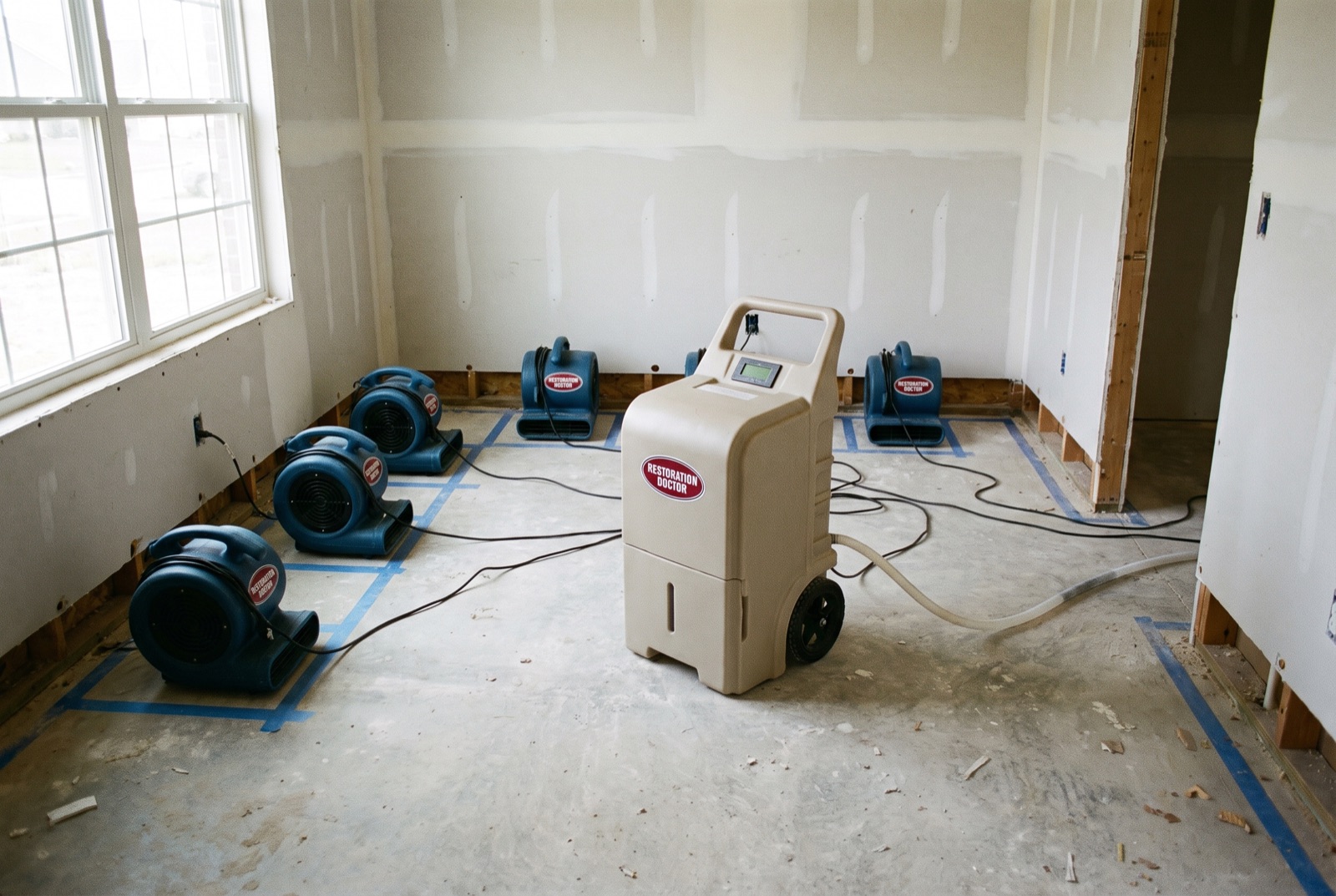
The three-to-five-day standard — and what it depends on
Most residential water losses dry in three to five days once professional equipment is running. That figure assumes prompt extraction, correctly sized equipment, and continuous operation — take away any of those and the timeline stretches.
The biggest variable is how much water the structure absorbed, which the IICRC S500 standard captures as the class of the loss. Class 1 losses (a small area, minimal absorption) can verify dry in a day or two. Class 2 — the typical scenario, with wet carpet and water wicked up the walls — usually lands in the three-to-five-day range. Class 3, where water came from overhead and saturated everything from ceiling to floor, pushes toward the top of that range. Class 4 losses involve water bound in dense, low-permeance materials — hardwood, plaster, brick, concrete slabs — and routinely need specialty drying systems and a week or more.
Response time compounds all of this. Water keeps spreading and soaking deeper until drying starts, so the same leak generates a bigger, slower drying project every day it waits.
Why extraction comes first
Drying time is set largely before the first fan is placed. Liquid water removal by extraction is hundreds of times faster than evaporation — every gallon a truck-mounted extractor pulls out of carpet and off floors is a gallon the dehumidifiers never have to process from the air. Thorough extraction on day one is the single biggest accelerator of the whole schedule.
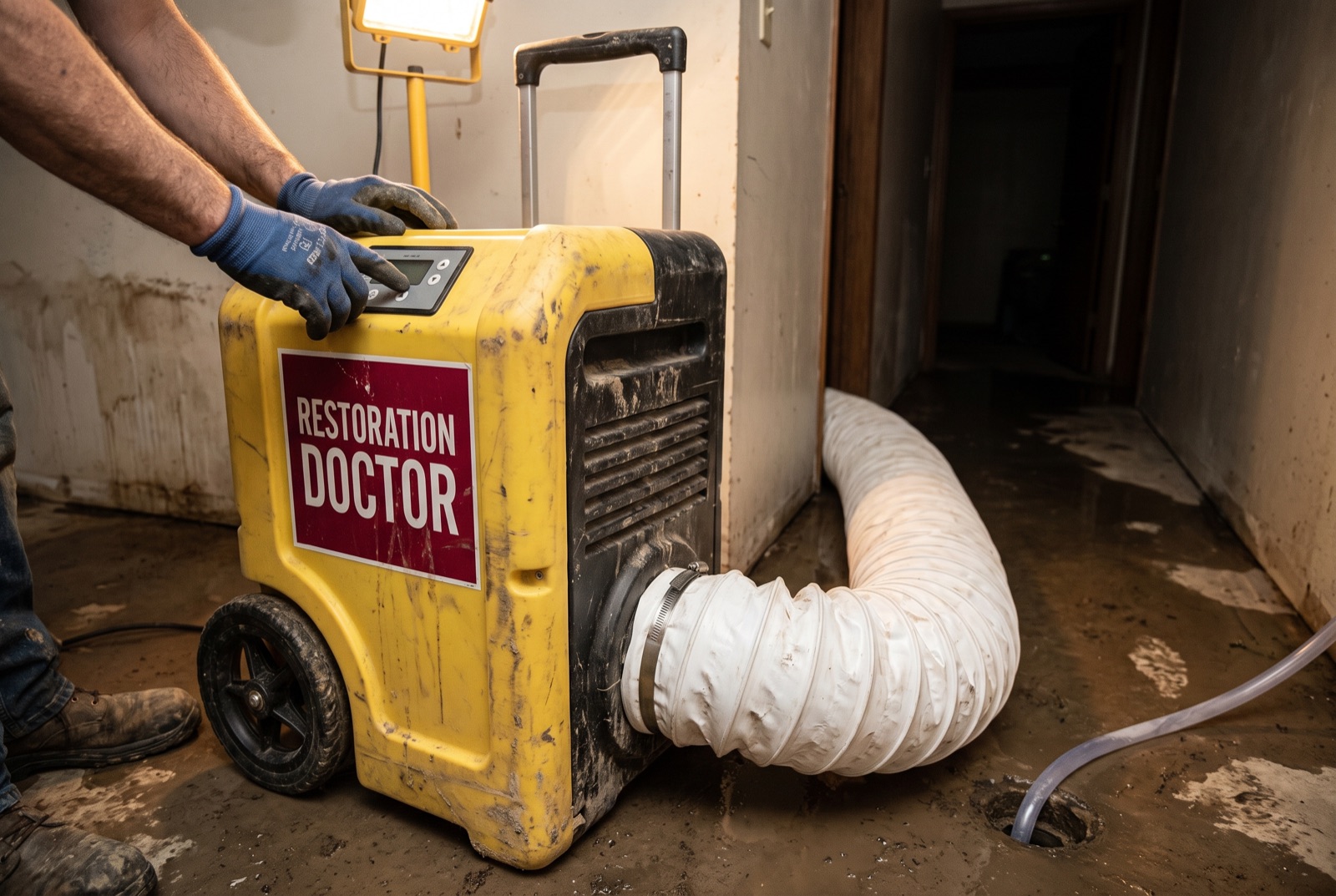
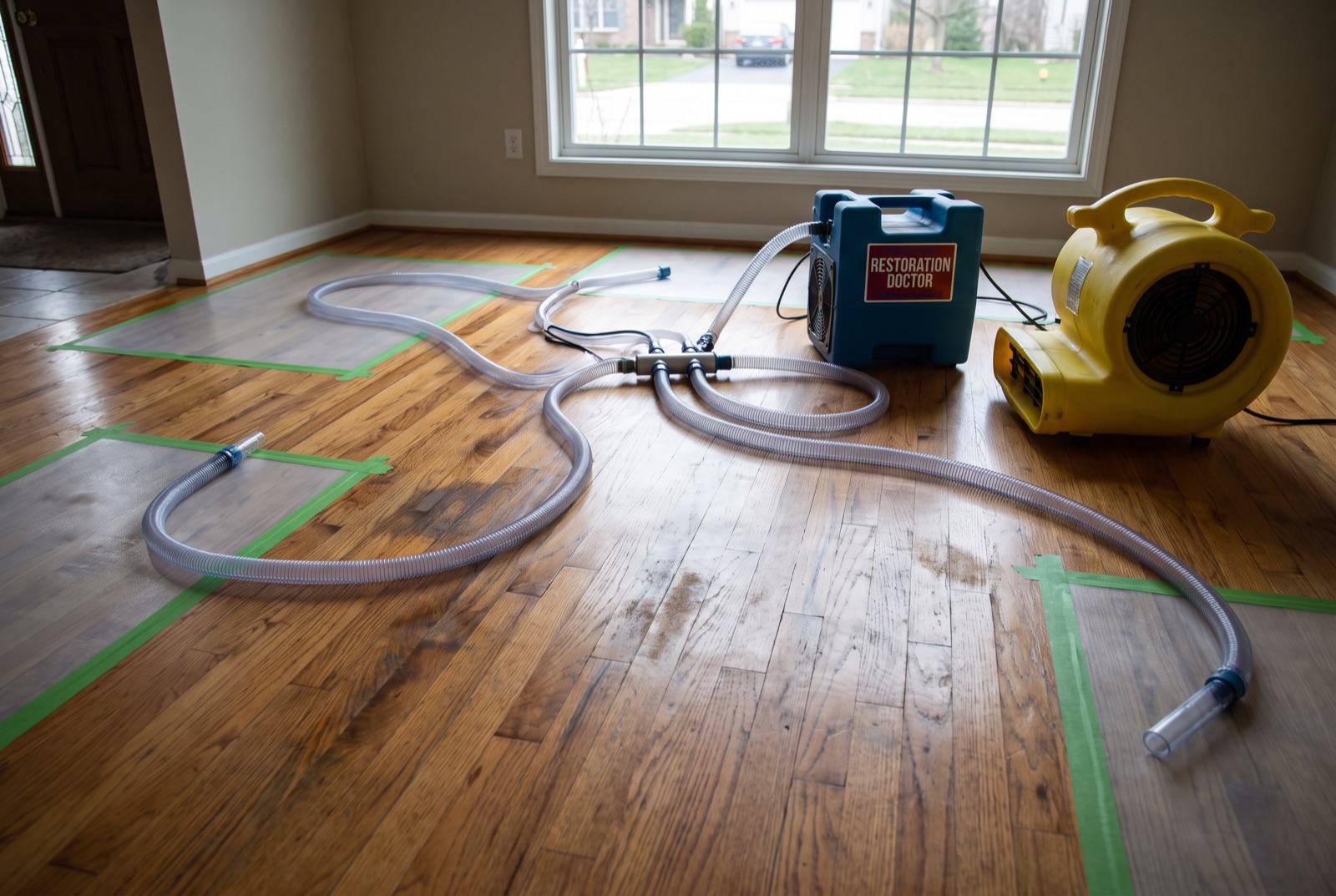
After extraction, crews remove materials that would only slow the dry-down without being worth saving — wet carpet pad is the standard example — and open up assemblies where needed: detaching baseboard, drilling discreet vent holes at the wall base, or floating carpet so air can move beneath it. Then the drying system goes in: air movers to sweep moist air off wet surfaces and speed evaporation, and low-grain refrigerant (LGR) dehumidifiers to strip that moisture from the air so it leaves the building instead of re-absorbing elsewhere.
Dry means measured dry, not dry to the touch
Surfaces feel dry long before materials are dry inside — often days before. That's why professional drying runs on instruments, not fingertips. On day one, technicians establish a dry standard by reading moisture levels in unaffected materials of the same type elsewhere in the home. Each day after, they measure every affected material against that standard and log the readings.
Drying is complete when the affected materials match the dry standard — not when the schedule says so, and not when the room smells better. That daily record does double duty: it tells the crew exactly when equipment can come out (no padded equipment days), and it gives your insurance carrier dated, numeric proof that the structure reached dry standard.
Stopping early is the expensive mistake. Materials that read even modestly wet when equipment is pulled can sustain mold growth inside assemblies weeks later — turning a finished drying job into a remediation project.
Getting your timeline
The honest answer for any specific loss comes from a day-one assessment: how far the water traveled, what materials it reached, and what class of drying problem it created. From there, a competent crew can predict the schedule within a day and confirm it with the daily readings.
Restoration Doctor runs IICRC S500-aligned drying projects across Northern Virginia, Maryland, and D.C. — extraction-first, monitored daily, documented completely. If you have wet structure right now, call 1-888-29-FLOOD; the sooner equipment starts, the shorter this answer gets.
Water Damage Restoration
Extraction, structural drying, and moisture verification for burst pipes, appliance leaks, and basement flooding.
Frequently asked
Related questions
How long does water damage restoration take?
How do professionals dry out a house after water damage?
How do you know when walls are completely dry?
How long does it take to dry out a flooded basement?
Active water, mold, fire, or sewage event?
Connect directly with the Restoration Doctor team for your region. Crews are on standby 24/7 with documented response protocols.