
How long does it take to dry out a flooded basement?
Most flooded basements dry in about three to seven days once water is extracted and commercial dehumidification and air movers are running, though heavier saturation takes longer. Concrete and below-grade walls hold moisture the longest, so drying is verified with moisture meters — not guessed by appearance — to prevent mold.
The typical timeline
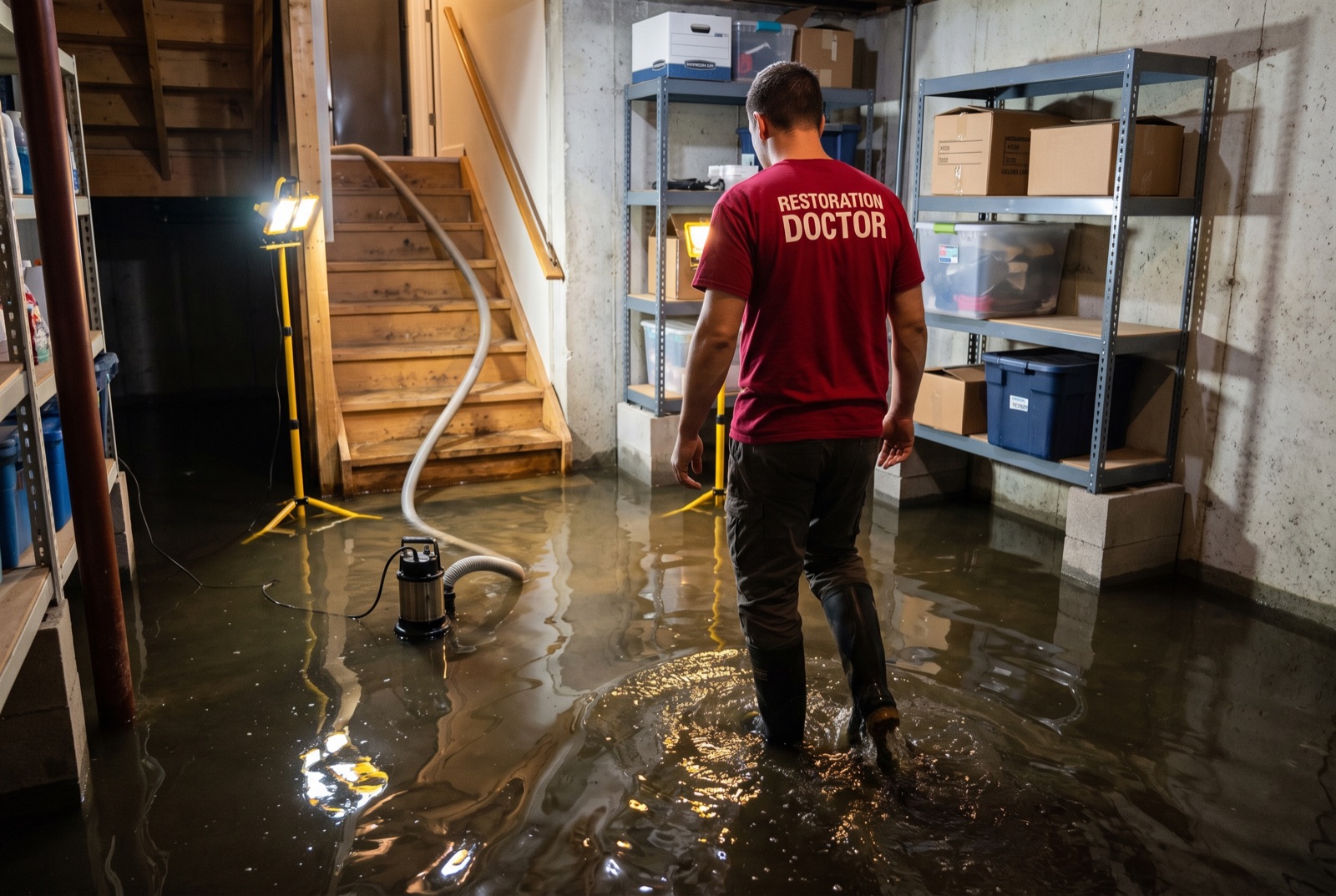
After extraction removes the standing water, structural drying of a basement usually runs three to seven days with professional equipment in place. The range reflects real variables: how much water there was, how long it sat before drying started, which materials got wet, and the size and layout of the space.
That's the drying phase specifically. It follows water removal and, if reconstruction is needed — replacing drywall, flooring, or pad — the overall project runs longer. But the core question of "how long until it's actually dry" typically lands in that three-to-seven-day window.
Why basements dry slower than other rooms
Basements are the hardest spaces in a house to dry, for structural reasons. They're below grade, surrounded by soil that holds moisture. They have limited airflow and ventilation. And they're built largely of concrete and masonry, which absorb water and release it slowly — far slower than the drywall and framing of an above-grade room.
Concrete is the pacing item. A slab or foundation wall can feel dry to the touch on the surface while still holding significant moisture deeper in the material. That retained moisture is exactly what feeds mold if drying is declared finished too early, which is why appearance is never the measure.
Verification, not guesswork
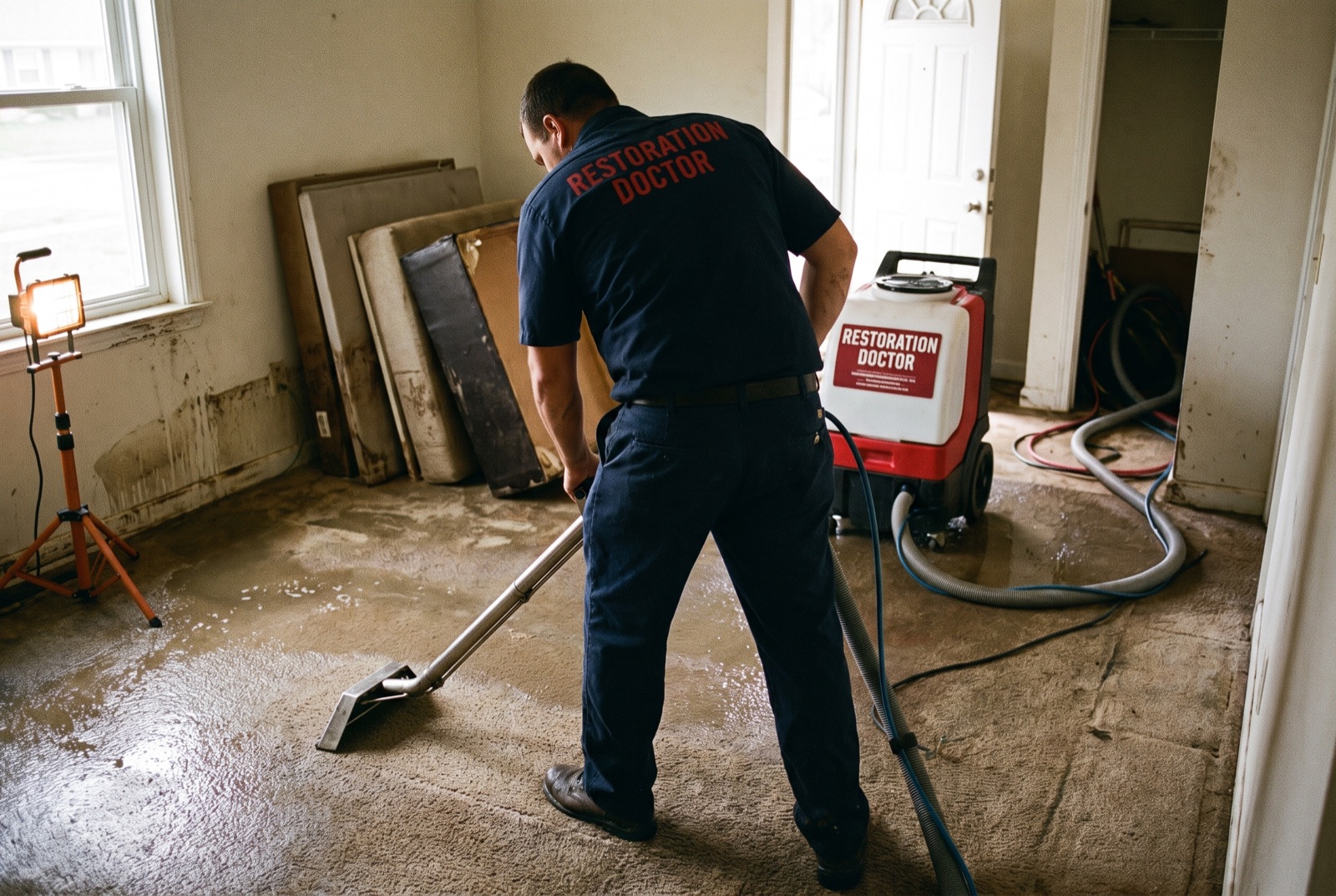
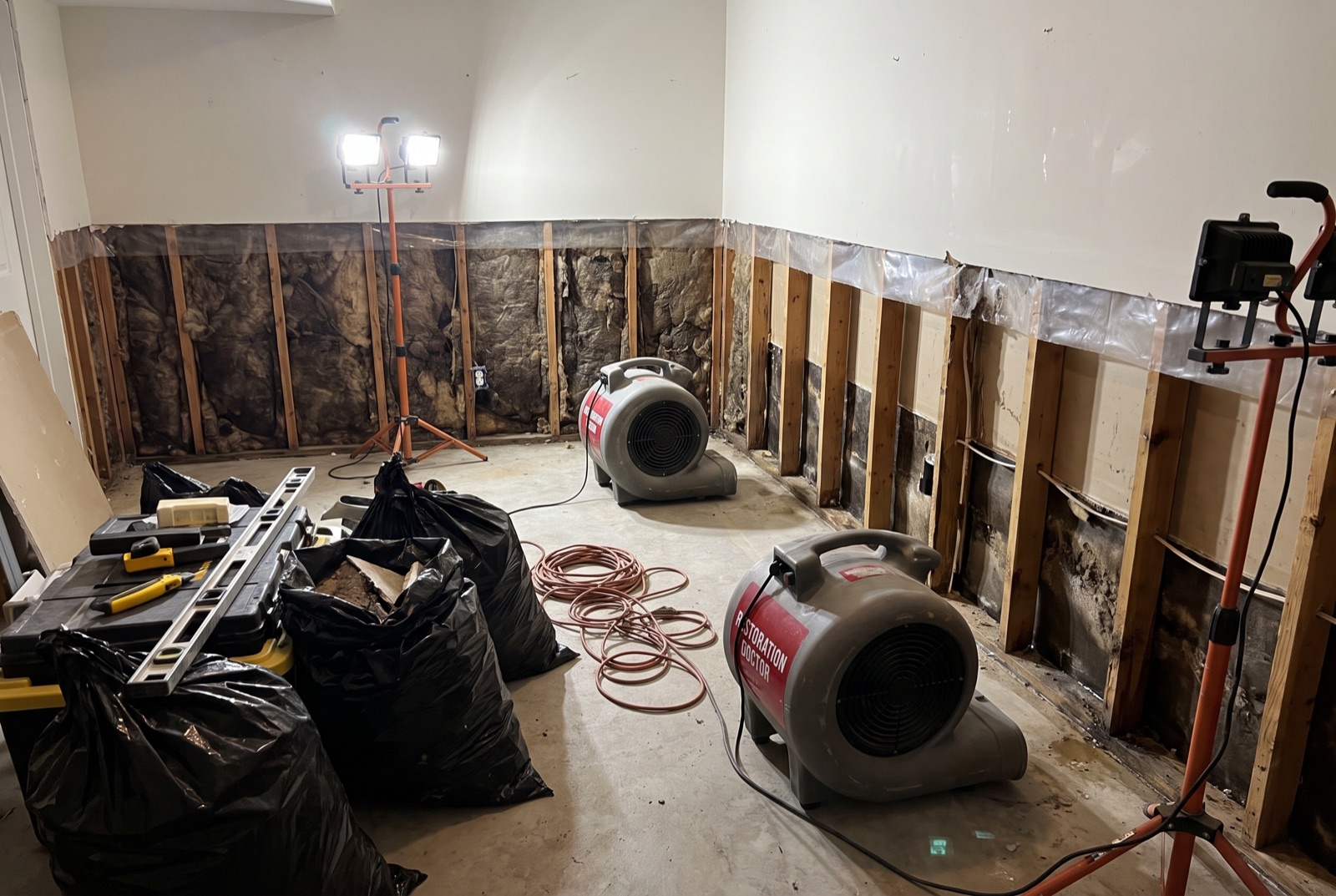
Professional drying tracks progress with moisture meters against a documented dry standard for each material, taking readings over the course of the job and repositioning equipment as the wet zones shrink. Commercial dehumidifiers pull moisture from the air so it doesn't re-absorb, while air movers keep evaporation going at the surfaces.
Equipment stays until the readings — not the calendar and not how the floor looks — confirm materials are back to dry. This is the difference between a basement that's actually dry and one that looks dry but harbors moisture in the slab.
Fast start, verified finish
Two things shorten the timeline and protect the outcome: starting extraction quickly, and using equipment sized for below-grade drying. The longer water sits and the weaker the drying capacity, the longer basements take and the higher the mold risk climbs.
Restoration Doctor dries flooded basements across Northern Virginia, Maryland, and D.C. with commercial dehumidification and daily moisture verification, so drying ends when the structure is genuinely dry. Call 1-888-29-FLOOD to get equipment running.
Water Damage Restoration
Extraction, structural drying, and moisture verification for burst pipes, appliance leaks, and basement flooding.
Frequently asked
Related questions
How do you get water out of a flooded basement?
Can carpet be saved after a basement flood?
What should you do when your basement floods?
How fast does mold grow after water damage?
Active water, mold, fire, or sewage event?
Connect directly with the Restoration Doctor team for your region. Crews are on standby 24/7 with documented response protocols.