
How do you get water out of a flooded basement?
Deep basement water is removed with submersible pumps, then remaining water is pulled with truck-mounted or portable extraction, followed by structural drying with air movers and commercial dehumidifiers. A shop vac is only practical for under an inch of clean water. Power must be confirmed off before anyone enters the water.
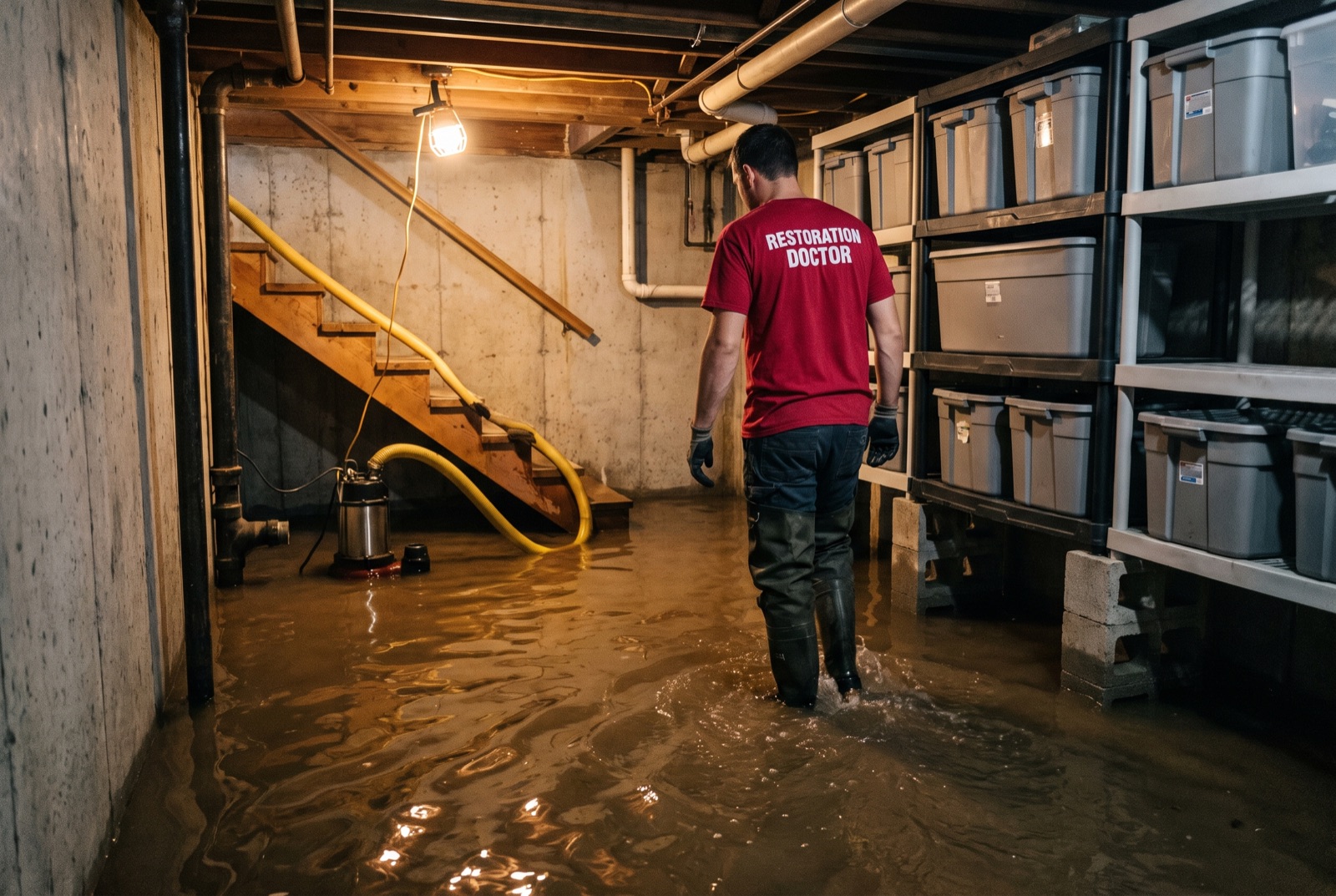
Step one: confirm power is off
Before any water removal begins, the electricity to the flooded area must be off — this is non-negotiable given the electrocution risk of energized water around basement outlets and appliances. If the panel is in the flooded basement, that means having an electrician or the utility cut power rather than wading in to reach it.
Only once the area is confirmed safe does extraction start. Skipping this step to "just get the water out fast" is how basement floods become tragedies.
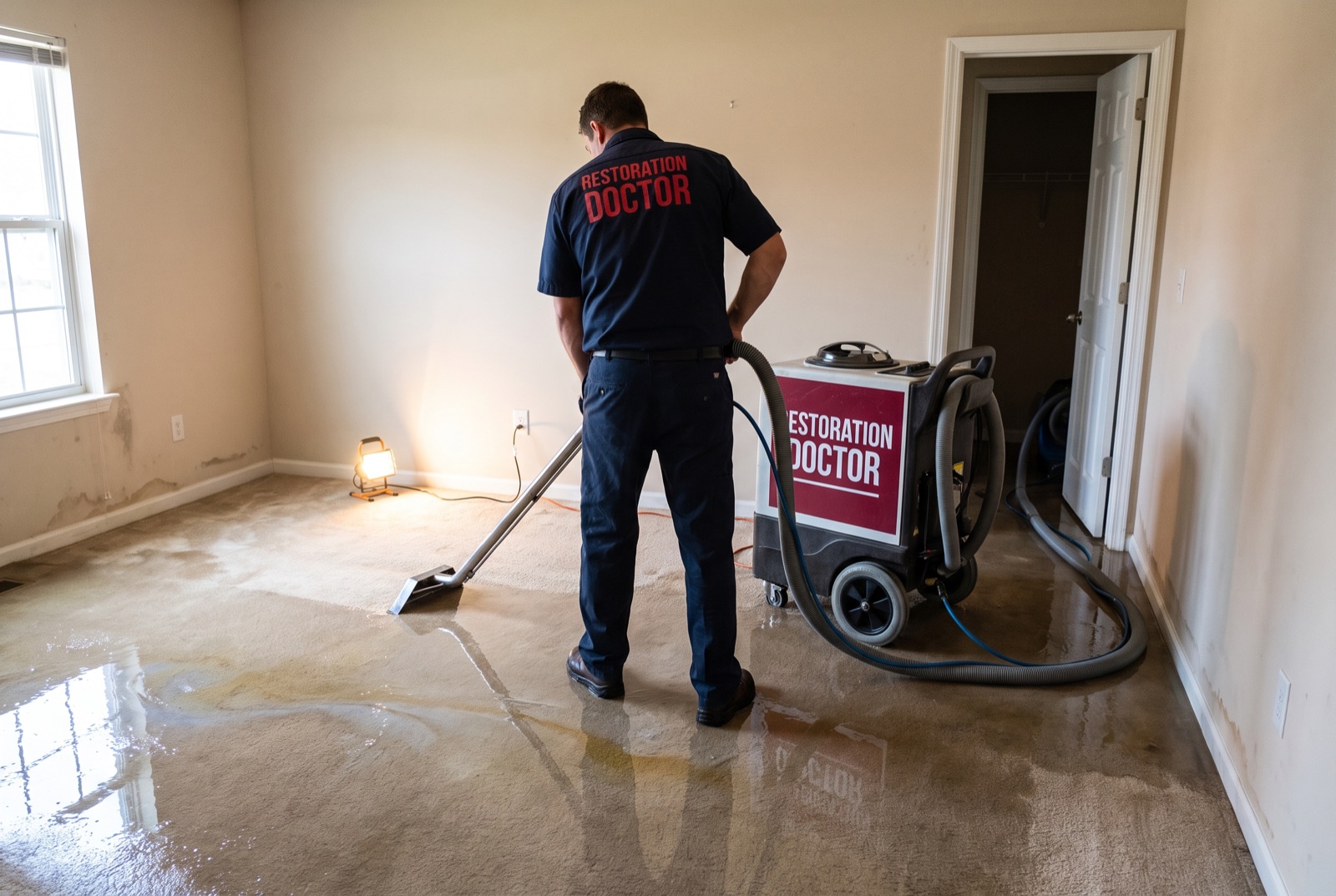
Pumping out deep water
For significant standing water — several inches to feet — the tool is a submersible pump. It's dropped into the deepest point and moves large volumes of water out to a safe discharge location away from the foundation. This is the fast bulk-removal phase, clearing the water that a vacuum could never keep up with.
Discharge placement matters: water pumped right back against the foundation can re-enter. Professionals route it well away from the house so it doesn't simply cycle back in, which is especially important during ongoing rain.
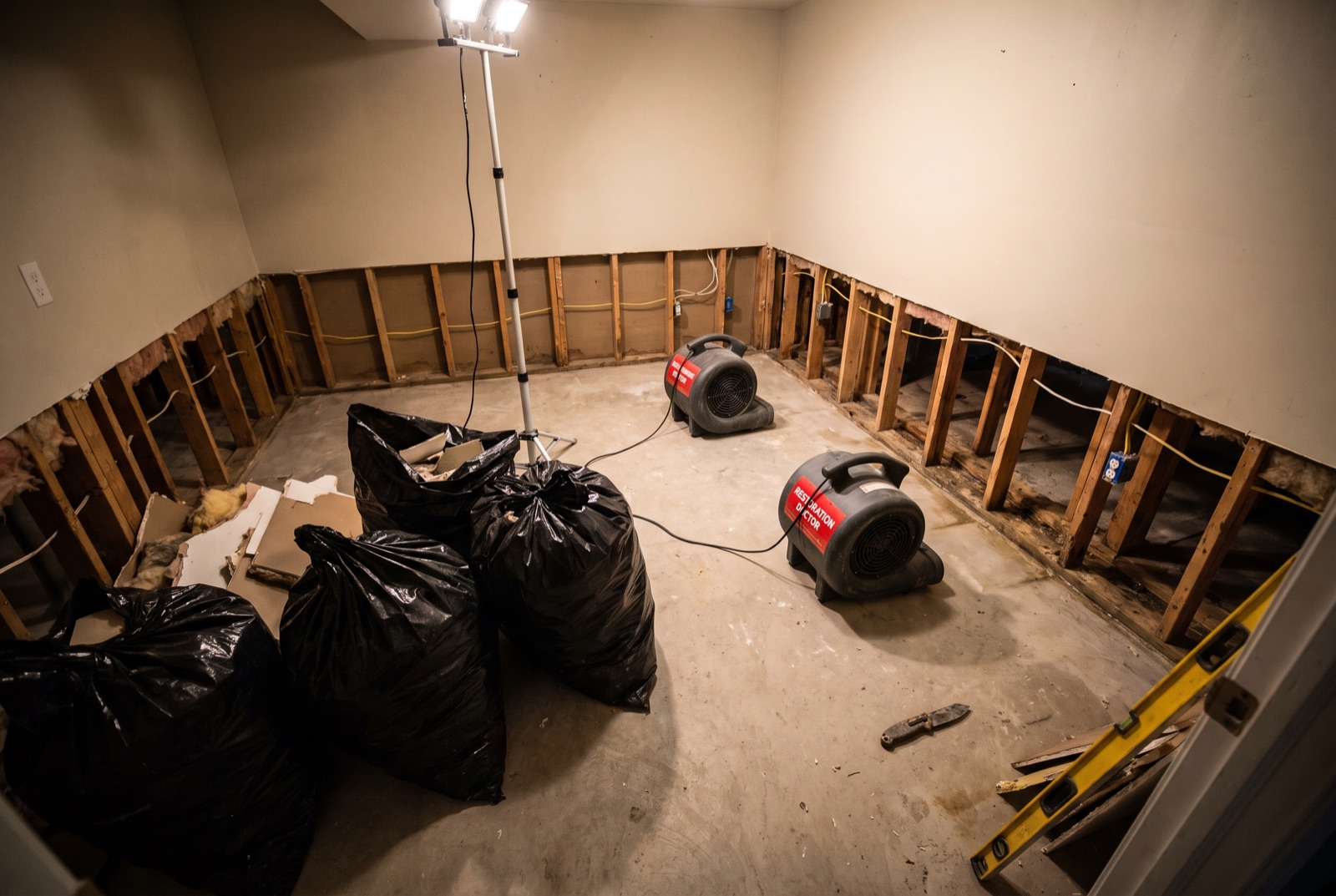
Extraction and then structural drying
Once pumps have handled the depth, the remaining water — what's soaked into the slab surface, low areas, and materials — is removed with extraction equipment. Truck-mounted extractors are dramatically more powerful than any consumer tool and pull water out far faster than evaporation. This is also where a shop vac has its only real role: for under an inch of confirmed-clean water in a small area, once power is off.
Extraction alone doesn't finish the job, because basements hold moisture in concrete and below-grade walls. Structural drying follows: air movers create airflow across surfaces while commercial dehumidifiers remove the moisture from the air, with progress verified by moisture meters until materials reach their dry standard.
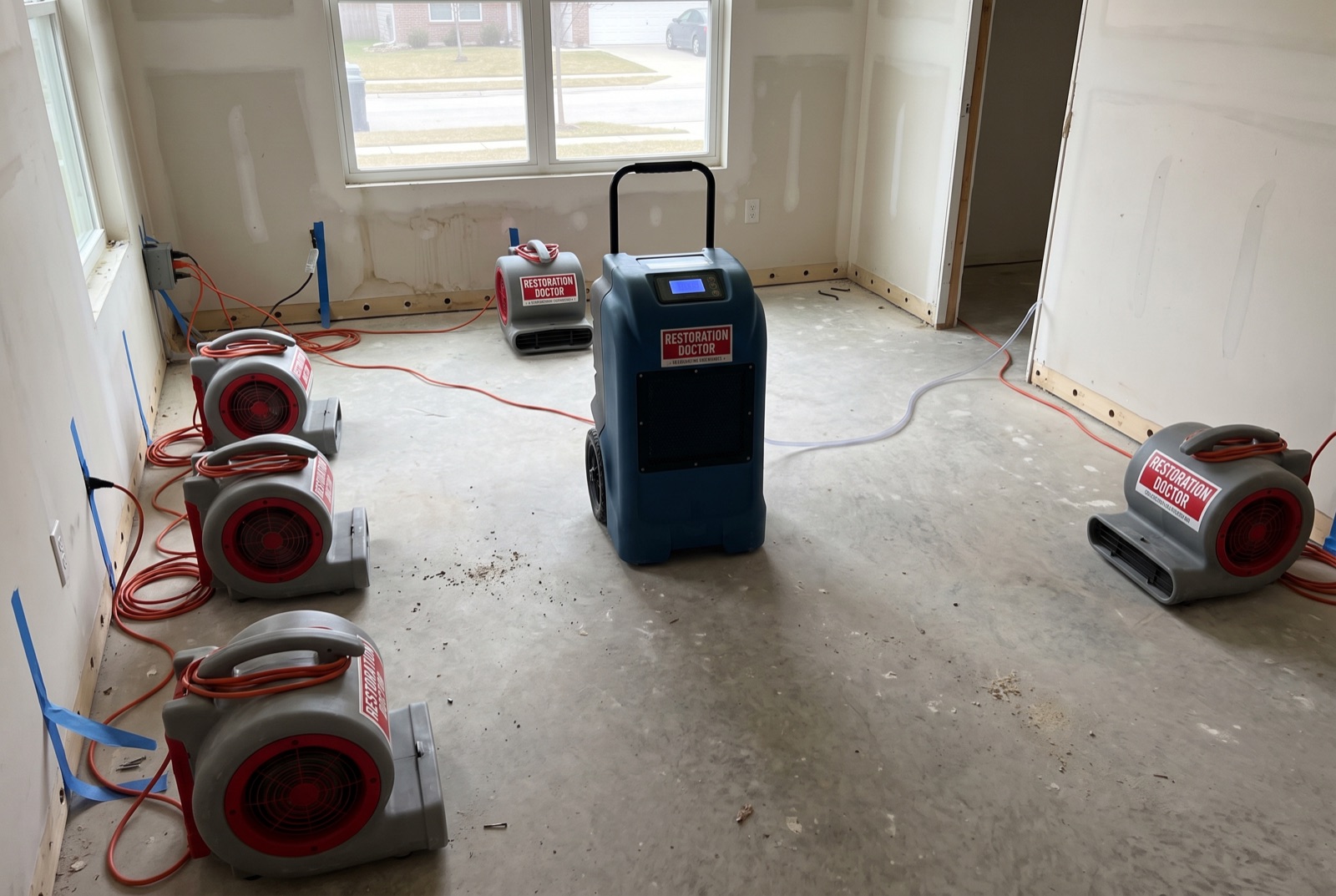
Why basements need professional equipment
Basement floods are the case where DIY hits its limits fastest: depth beyond a shop vac's capacity, frequent contamination, and slow-drying concrete that household dehumidifiers can't handle on a useful timeline. Getting water out is only half the task — drying the below-grade structure to prevent mold is the other half.
Restoration Doctor brings submersible pumps, truck-mounted extraction, and commercial drying to flooded basements across Northern Virginia, Maryland, and D.C., 24/7, with documentation for your insurer. Call 1-888-29-FLOOD once the area is safe.
Water Damage Restoration
Extraction, structural drying, and moisture verification for burst pipes, appliance leaks, and basement flooding.
Frequently asked
Related questions
How long does it take to dry out a flooded basement?
What should you do when your basement floods?
Can carpet be saved after a basement flood?
Is a flooded basement dangerous?
Active water, mold, fire, or sewage event?
Connect directly with the Restoration Doctor team for your region. Crews are on standby 24/7 with documented response protocols.