
What should you do when your basement floods?
Do not enter standing water in a basement until you're certain the power to that area is off — submerged outlets and appliances can energize the water. Stop the source if you can do so safely, avoid contaminated water, then call for professional extraction and drying. Document everything first for your insurance claim.
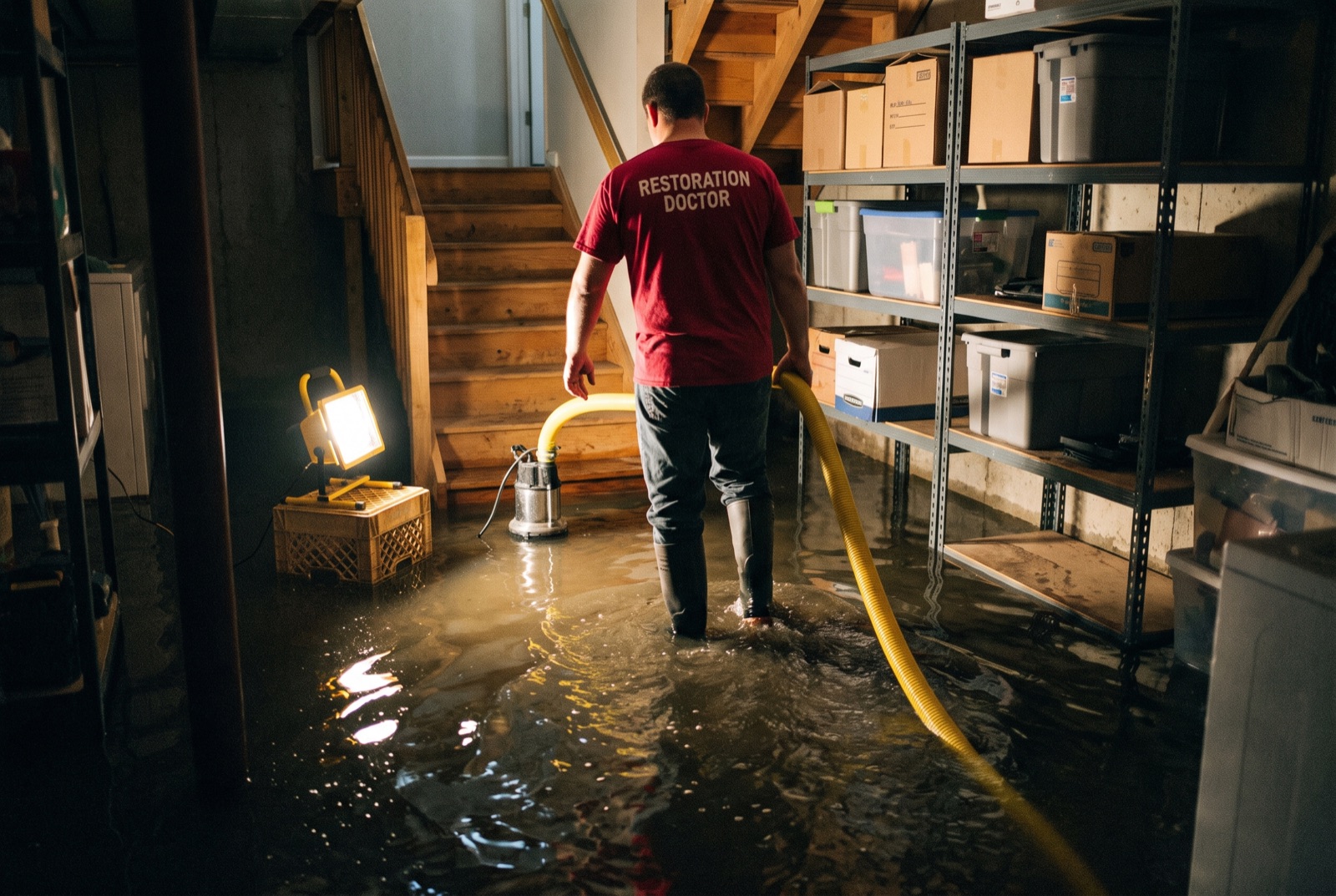
Safety before anything else
A flooded basement is more dangerous than most homeowners realize, and the danger is invisible. Basements house electrical panels, outlets, furnaces, water heaters, and appliances — any of which can energize standing water. The first rule is absolute: do not step into basement floodwater until you know the electricity to that area is off.
If your electrical panel is in the flooded basement and you'd have to stand in water to reach it, do not attempt it — call an electrician or your utility to cut power safely. No amount of saved property justifies an electrocution risk. If you can safely reach the breakers for the basement from a dry location, shut them off.
Watch for the second hazard too: contamination. If the water came from a sewer backup, a failed sump during heavy storms, or outdoor flooding, treat it as contaminated (Category 3) — keep children and pets away and don't handle it without protection.
Stop the source if you safely can
Once safety is addressed, identify where the water is coming from. If it's a burst pipe, failed supply line, or water heater rupture, shut off the main water valve. If it's an overwhelmed or failed sump pump during a storm, there may be little you can do about the inflow until conditions ease — focus on safety and getting professional help mobilized.
If the water is entering through foundation walls or the floor during heavy rain, the source is groundwater pressure, not a household fixture, and there's no valve to close. In every case, resist the urge to wade in and start moving things before power and contamination are sorted out.
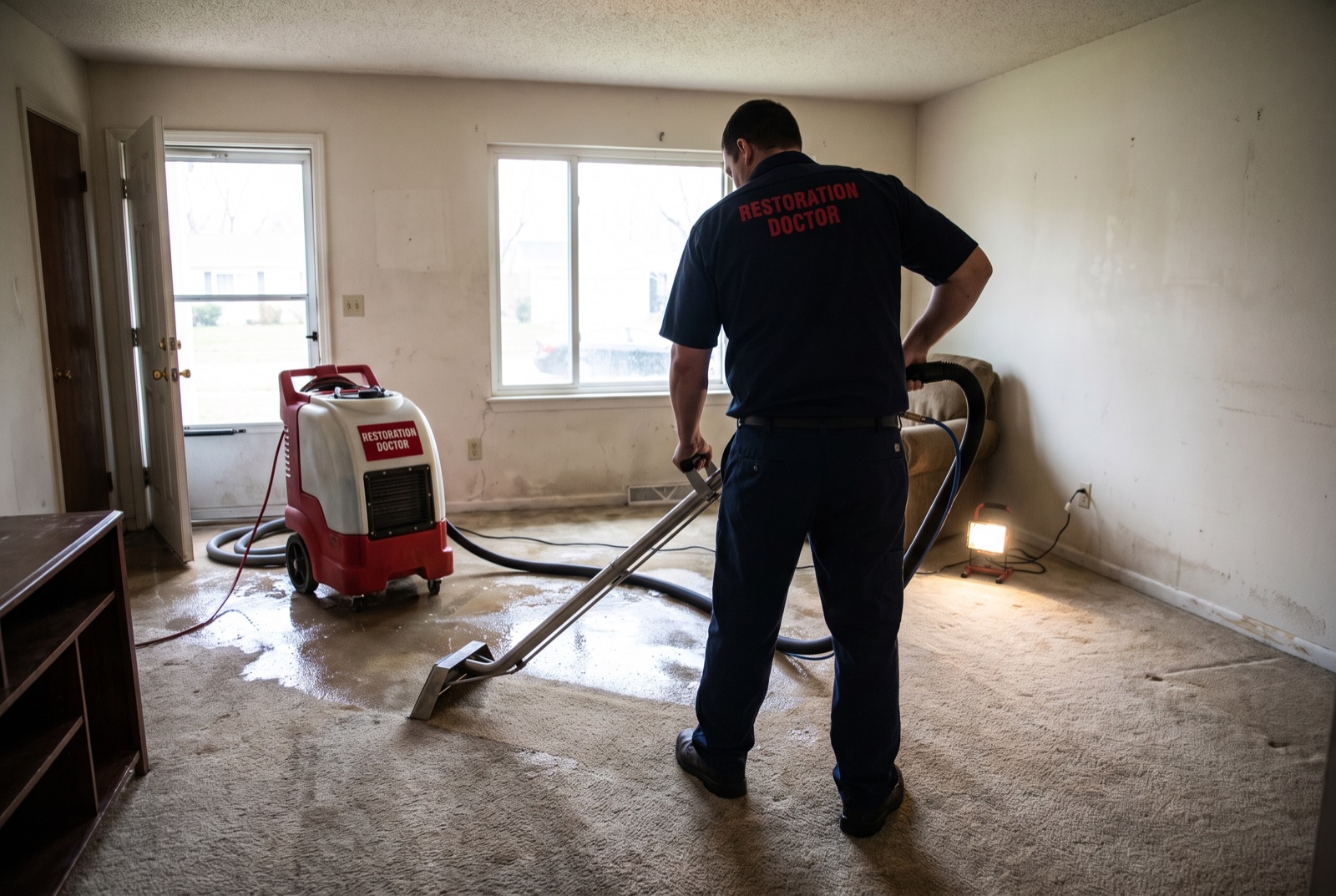
Document, then get extraction moving
Before cleanup begins, photograph and video everything: the water level, the source if visible, and affected belongings and finishes. This record is important for insurance and can't be recreated once water is removed. Note the time you discovered the flood.
Then get professional extraction started. Basements collect the deepest water and are slow to dry — concrete and below-grade walls hold moisture stubbornly — so speed matters for preventing mold and secondary damage. Move undamaged valuables to a dry level if you can reach them safely.
Why professionals for basement floods
Basement flooding combines depth, potential contamination, and slow-drying materials, which is exactly the scenario where professional equipment earns its keep: submersible pumps and truck-mounted extraction remove volume fast, and commercial dehumidification dries below-grade spaces that household units can't.
Restoration Doctor responds 24/7 across Northern Virginia, Maryland, and D.C. with the pumps, extraction, and drying to handle flooded basements — and documents moisture and drying for your carrier. Call 1-888-29-FLOOD once people are safe and the scene is documented.
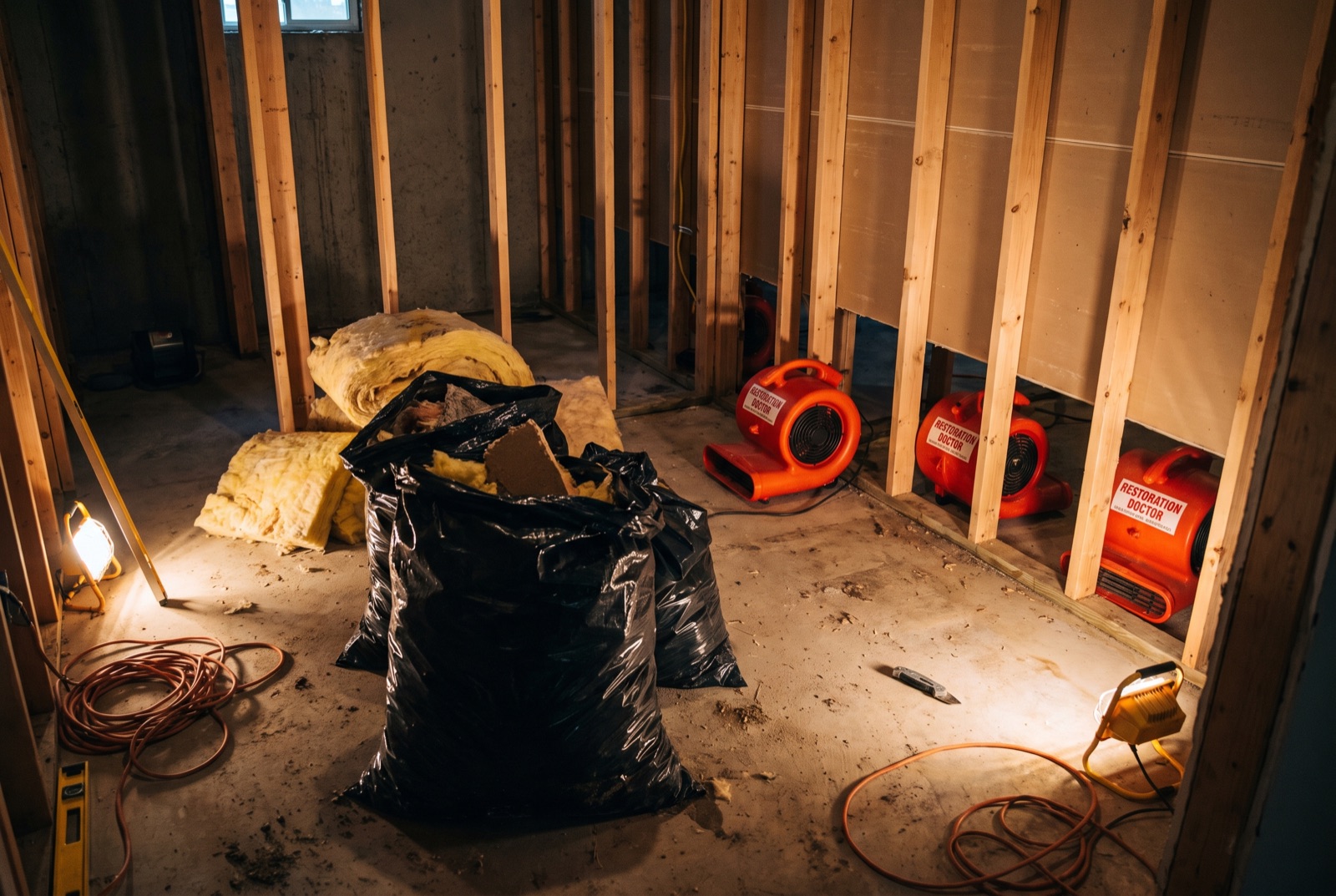
Water Damage Restoration
Extraction, structural drying, and moisture verification for burst pipes, appliance leaks, and basement flooding.
Frequently asked
Related questions
Is a flooded basement dangerous?
How do you get water out of a flooded basement?
How long does it take to dry out a flooded basement?
Why does my basement flood when it rains?
Active water, mold, fire, or sewage event?
Connect directly with the Restoration Doctor team for your region. Crews are on standby 24/7 with documented response protocols.