
How fast does mold grow after water damage?
EPA guidance is to dry water-damaged areas and items within 24 to 48 hours to prevent mold growth; materials that stay wet past that window are at risk, and once growth starts it often becomes visible within three to twelve days. Spores are already present in every home — sustained moisture is the only missing ingredient, which is why professional drying is treated as an emergency.
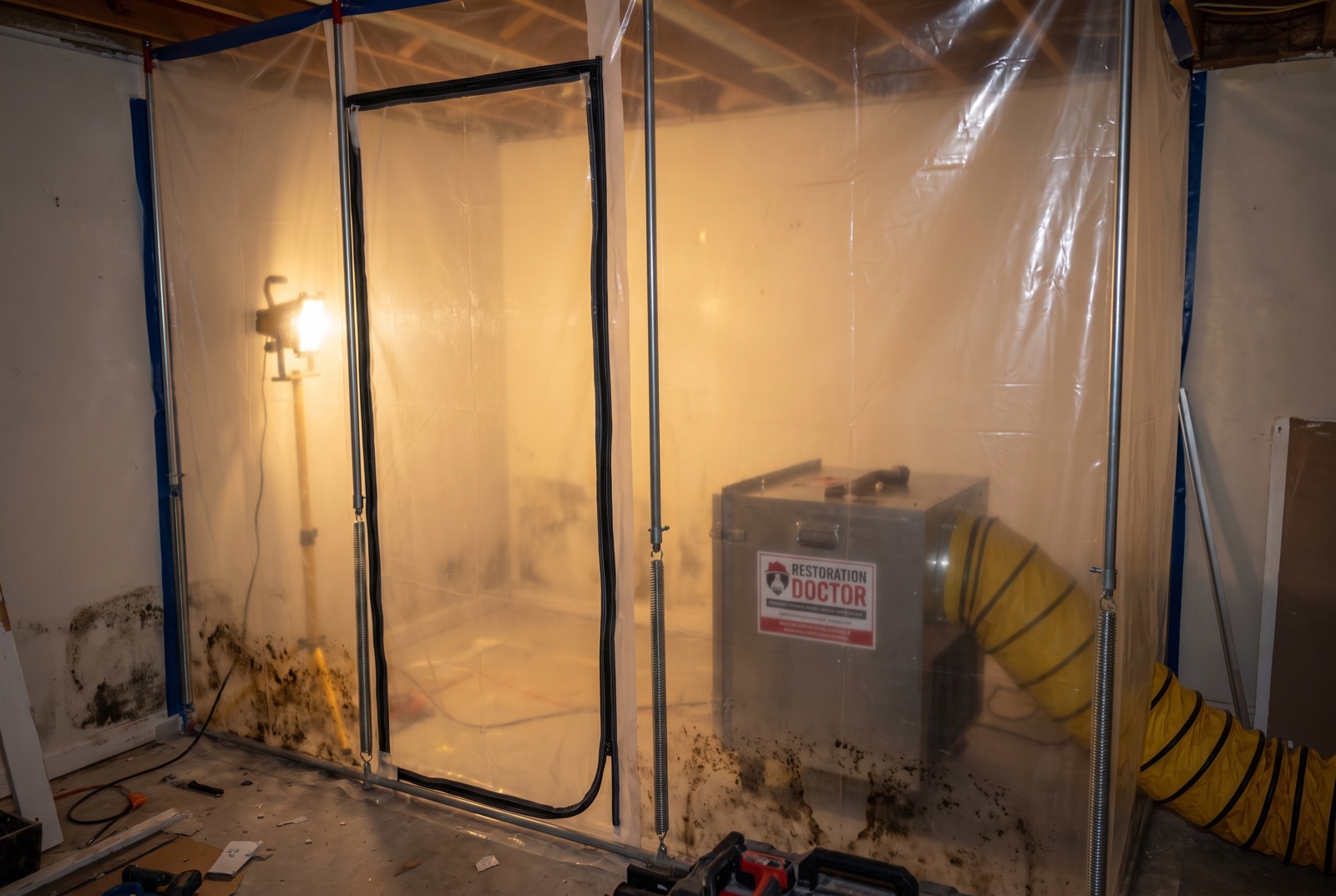
The 24-48 hour window
Mold spores exist naturally in the air of every building in Northern Virginia, Maryland, and D.C. They are harmless in that airborne state. What activates them is moisture: leave spores a porous surface that stays damp past 24 to 48 hours, plus a food source, and colonies have everything they need to establish. This window is the single most important fact in water damage response.
The IICRC S520 mold remediation standard and EPA guidance both treat that first day or two as the decisive period. It is why a reputable restoration company responds to water losses around the clock rather than scheduling drying for the following week — the goal is to get materials below the moisture threshold that supports growth before colonies can form.
Warm, humid conditions accelerate everything. In a Virginia summer, a wet wall cavity is close to an ideal incubator, and growth can outrun the low end of that window. Cooler basements slow it somewhat, but no indoor environment is safe once materials stay wet.
From invisible to visible
Colonization and visibility are two different stages. Mold begins growing on damp drywall paper, wood, and dust well before you can see it. Visible patches — fuzzy, discolored, or sooty growth — typically emerge within roughly three to twelve days depending on temperature, humidity, and material.
That lag is exactly why hidden mold is so common after a leak that seemed to dry on its own. The surface felt dry, so cleanup stopped, while inside the wall cavity — where airflow is minimal and moisture lingers — a colony quietly established over the following week.
By the time a musty odor or a stain gives it away, you are often past the simple-drying stage and into remediation: containment, HEPA filtration, and physical removal of colonized materials.
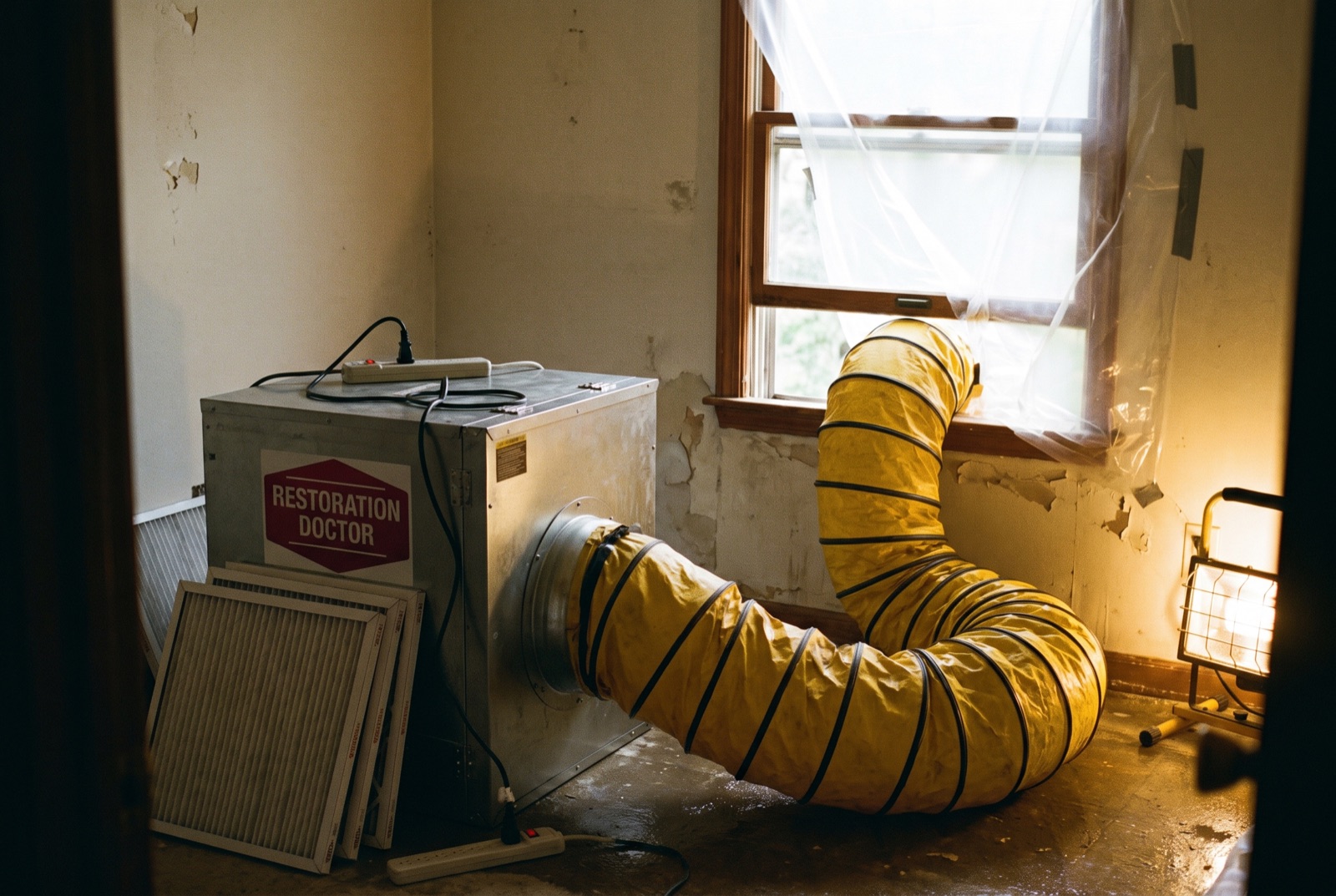
Why drying speed decides the outcome
The same water loss can end in two very different places. Extract and dry within the first day, verify materials back to their dry standard with moisture meters, and mold usually never gets started — you have a drying project. Wait several days, and you have a remediation project instead, with a larger scope and higher cost.
Professional crews attack this on two fronts: removing standing water immediately, then engineering rapid airflow and commercial dehumidification to pull bound moisture out of materials before the growth window closes. Household fans can't move enough air or remove enough humidity to dry the inside of a wall on that timeline.
The practical takeaway for homeowners is simple: the value of fast response isn't convenience, it's avoiding an entire category of secondary damage.
What to do inside the window
If you've had a water event — a burst pipe, an overflow, a roof leak, a basement seep — treat the clock as running. Stop the source, document the damage, and get professional drying started rather than waiting to "see if it dries." Even a modest leak inside a wall justifies a moisture inspection.
Restoration Doctor responds 24/7 across Northern Virginia, Maryland, and D.C. with extraction and structural drying aligned to IICRC S500, and remediation under S520 when growth has already begun. If your home has taken on water, call 1-888-29-FLOOD and get equipment running while the window is still open.
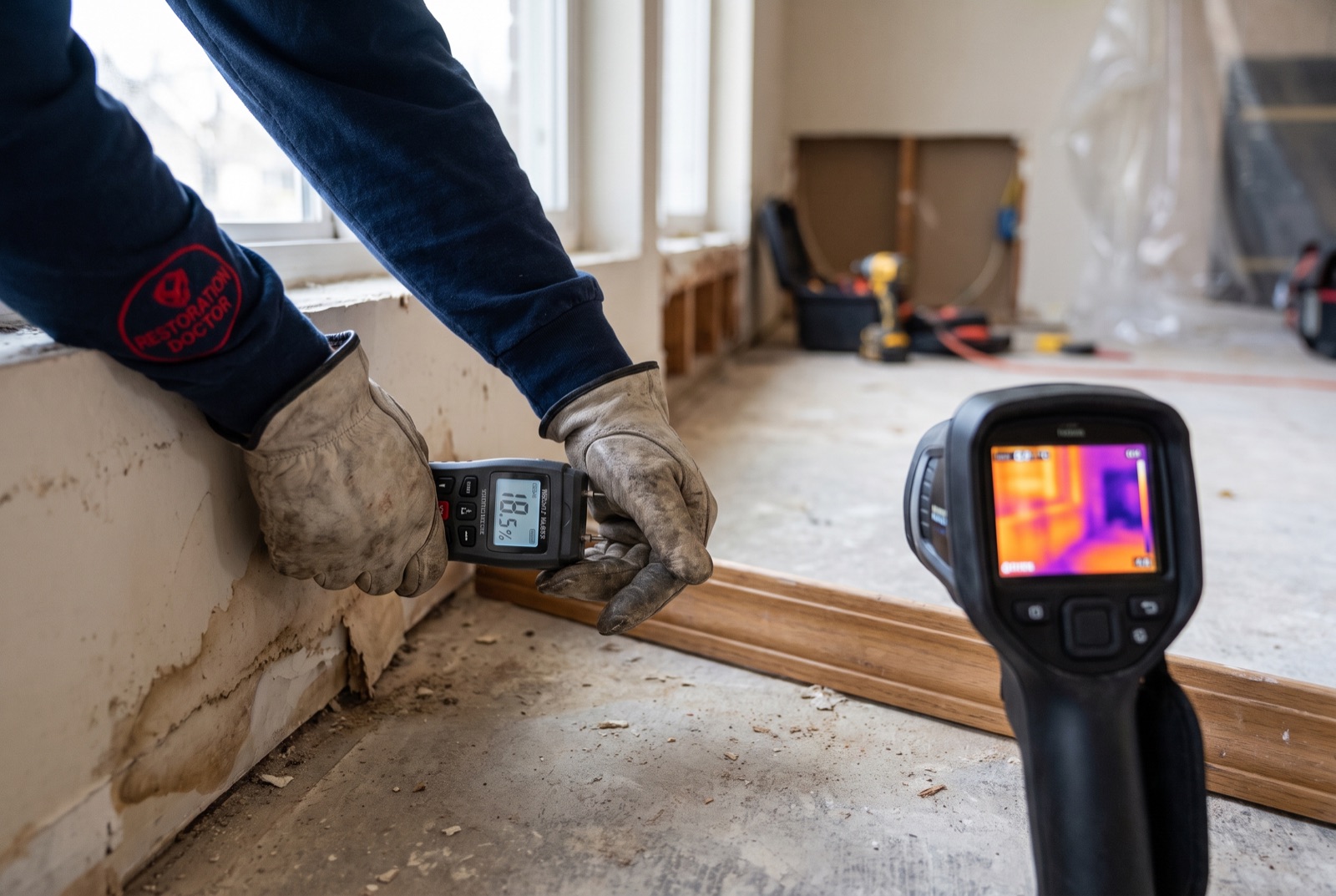
Mold Remediation
IICRC S520 containment, HEPA filtration, safe removal, and post-remediation clearance verification.
Frequently asked
Related questions
How do I know if mold is growing behind my walls?
Will mold go away if I dry it out?
What happens if mold is left untreated?
Will water damage go away on its own?
Active water, mold, fire, or sewage event?
Connect directly with the Restoration Doctor team for your region. Crews are on standby 24/7 with documented response protocols.