
Will mold go away if I dry it out?
No. Drying deprives mold of the moisture it needs to grow, so it goes dormant — but dormant mold is not gone. It stays viable, can still trigger allergic reactions, and reactivates the moment moisture returns. Established colonies on porous materials must be physically removed, not simply dried.
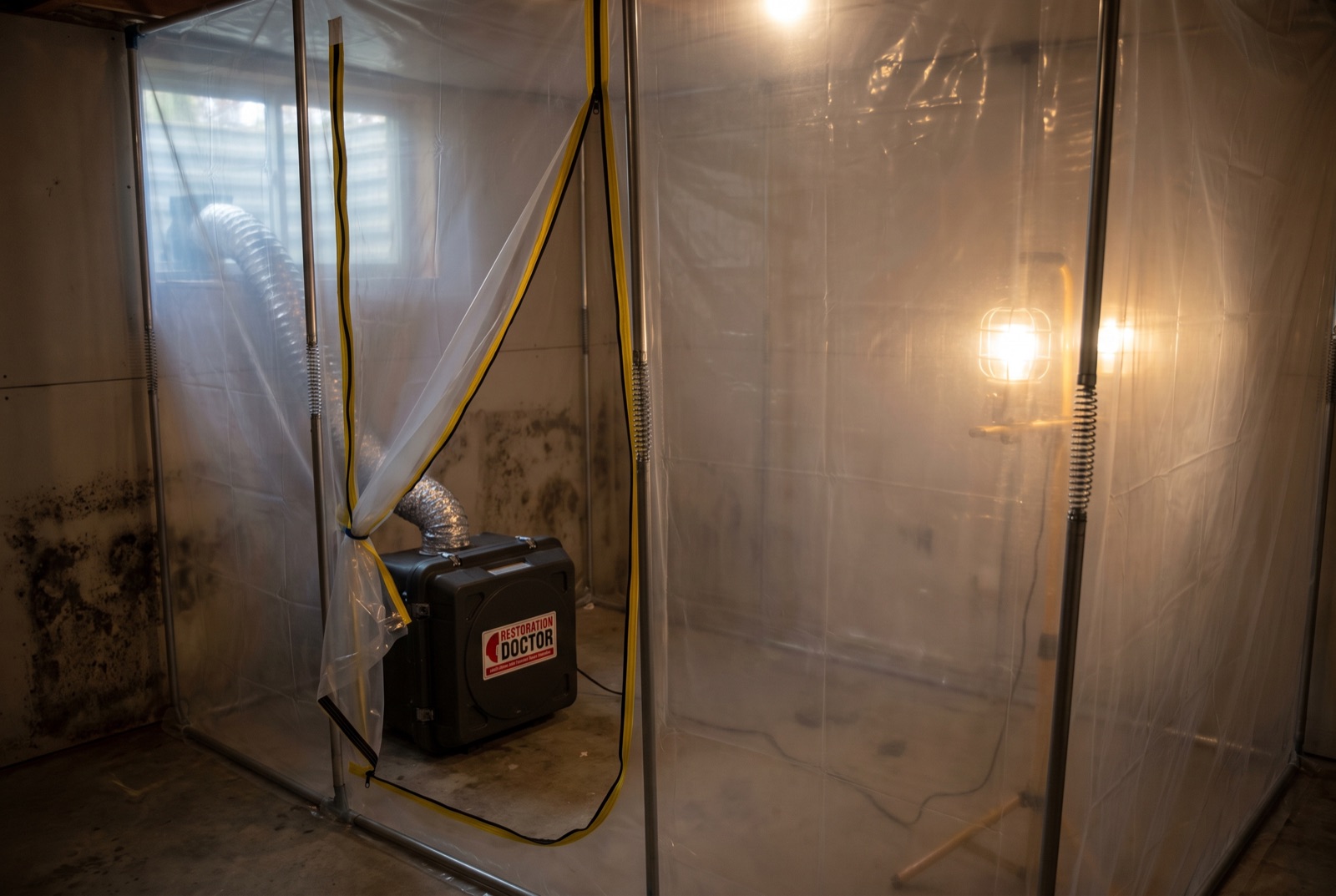
Drying stops growth — it doesn't undo it
It's an understandable hope: dry the area, and the mold problem dries up with it. Drying is genuinely essential — without it, growth continues — but it addresses the future, not the present. Mold that has already colonized a surface doesn't disappear when the moisture leaves; it simply stops expanding.
In that dormant state the mold is still physically there. The spores, the fragments, and the byproducts remain on and in the material. Reintroduce moisture — a humid spell, a new leak, condensation — and dormant colonies wake up and resume growing. Drying alone is a pause button, not a solution.
Dormant mold still affects health and materials
Non-viable and dormant mold is not harmless. Dead spores and mold fragments can still act as allergens and irritants, and sensitive individuals may react to them whether the mold is actively growing or not. Health responses vary from person to person, which is why remediation aims to remove mold, not just to kill or dry it. Anyone experiencing symptoms should consult a medical professional.
There's also the material question. Mold digests what it grows on. Once it has colonized drywall paper, wood, or insulation, it has already begun breaking those materials down. Drying halts further damage but doesn't restore what's been degraded or remove the growth staining and weakening the surface.
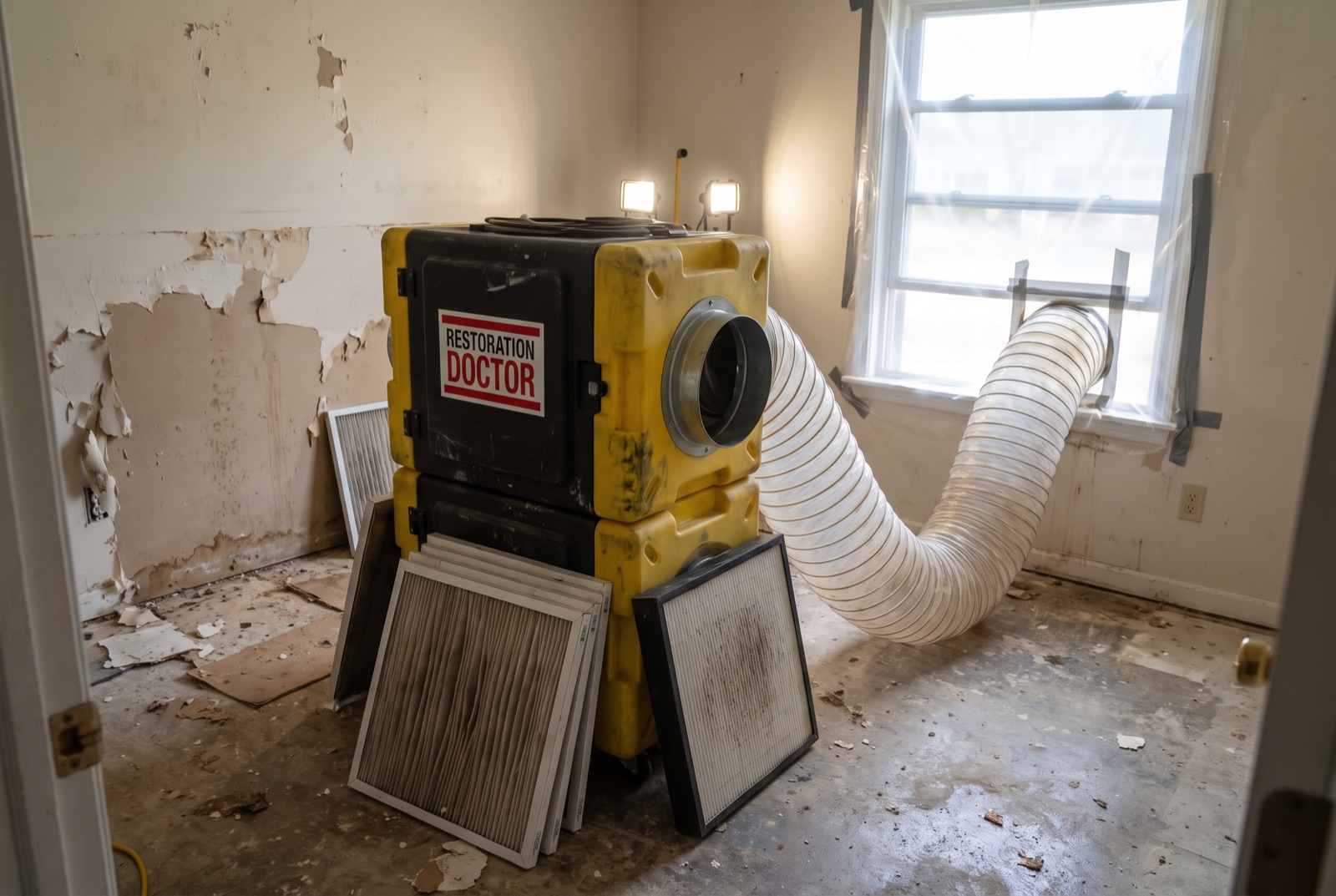
What actually resolves mold
Under the IICRC S520 standard, remediation is built around physical removal, not chemical shortcuts. The core steps are: establish containment so spores don't spread during the work, run HEPA air filtration, physically remove porous materials that are colonized (moldy drywall, insulation, and carpet pad are removals, not cleanables), clean salvageable non-porous surfaces, and — critically — correct the moisture source so it can't come back.
That last point is where drying belongs in the process. Fixing the leak and drying the structure is necessary to keep new mold from forming, but it happens alongside removal of existing growth, not instead of it. Spraying bleach or biocide on a dried surface doesn't substitute for taking colonized porous material out.
The right sequence
The correct order is: stop the moisture, remove the established mold under containment, verify the area is clean and dry, then rebuild. Skipping removal and hoping drying was enough is how homeowners end up remediating the same wall twice.
If you have visible mold or a musty odor from a past leak, Restoration Doctor handles the full sequence — containment, HEPA filtration, removal, and moisture correction — across Northern Virginia, Maryland, and D.C. Call 1-888-29-FLOOD for an assessment before assuming a dried-out area is a solved one.
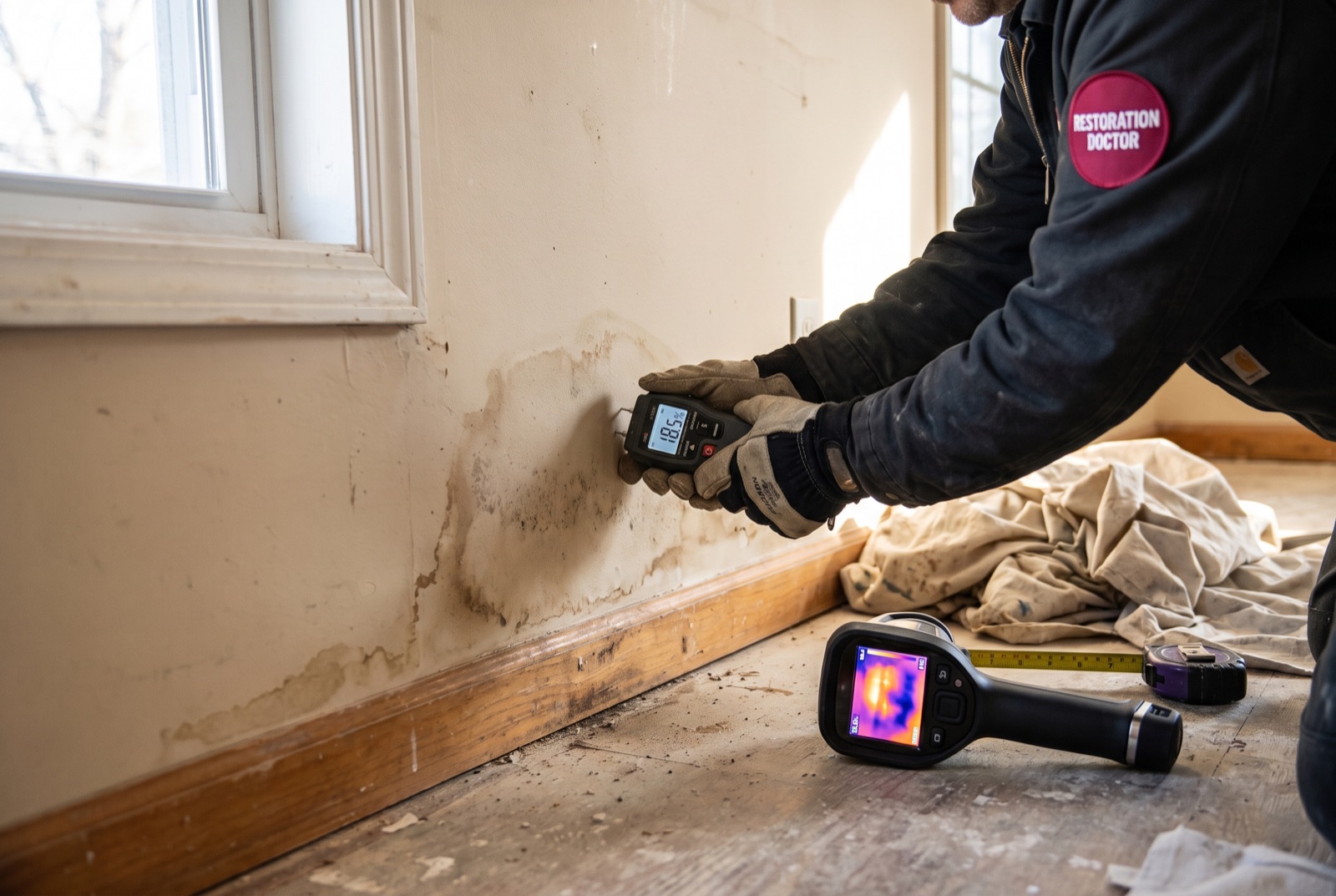
Mold Remediation
IICRC S520 containment, HEPA filtration, safe removal, and post-remediation clearance verification.
Frequently asked
Related questions
How fast does mold grow after water damage?
Does bleach kill mold on drywall?
Can I remove mold myself or do I need a professional?
What happens if mold is left untreated?
Active water, mold, fire, or sewage event?
Connect directly with the Restoration Doctor team for your region. Crews are on standby 24/7 with documented response protocols.