
Does bleach kill mold on drywall?
Not effectively. Bleach can lighten surface mold on drywall, but drywall is porous, and bleach can't penetrate to reach the roots growing inside it. Worse, the water in bleach can soak into the material and feed regrowth. Mold-colonized porous drywall is removed and replaced, not bleached.
Why bleach fails on porous materials
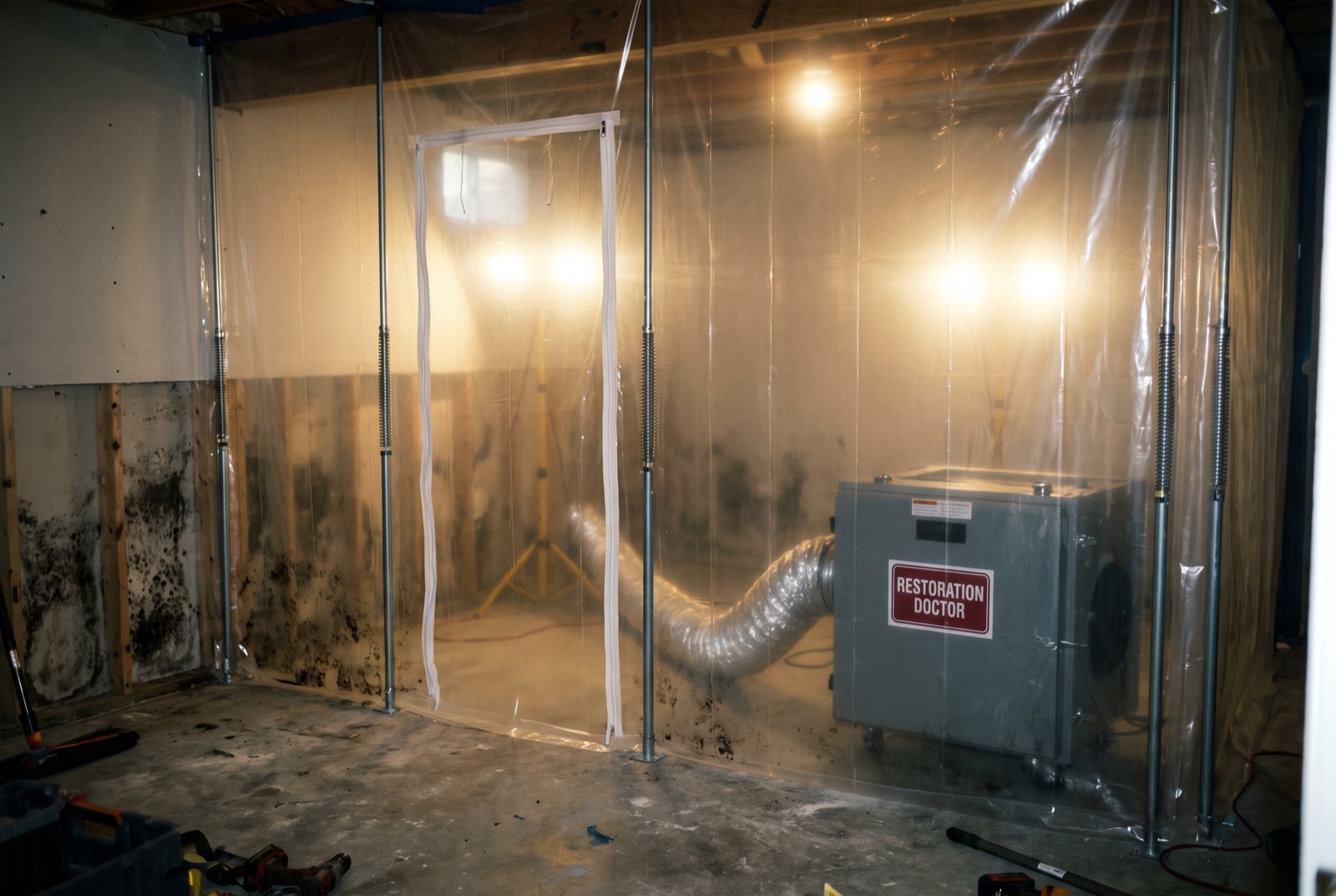
Bleach was designed for non-porous, hard surfaces. On those, it can address surface growth. Drywall is the opposite of non-porous — it's a paper-faced, gypsum-cored material that mold roots into. When mold colonizes drywall, the visible patch is only the top of the growth; the structure extends into the paper and core.
Bleach's active ingredient largely stays on the surface and doesn't carry down into the material, so it can bleach the color out of the mold you can see while leaving the roots alive underneath. The result is drywall that looks cleaner but is still colonized — the problem is disguised, not solved.
The water problem
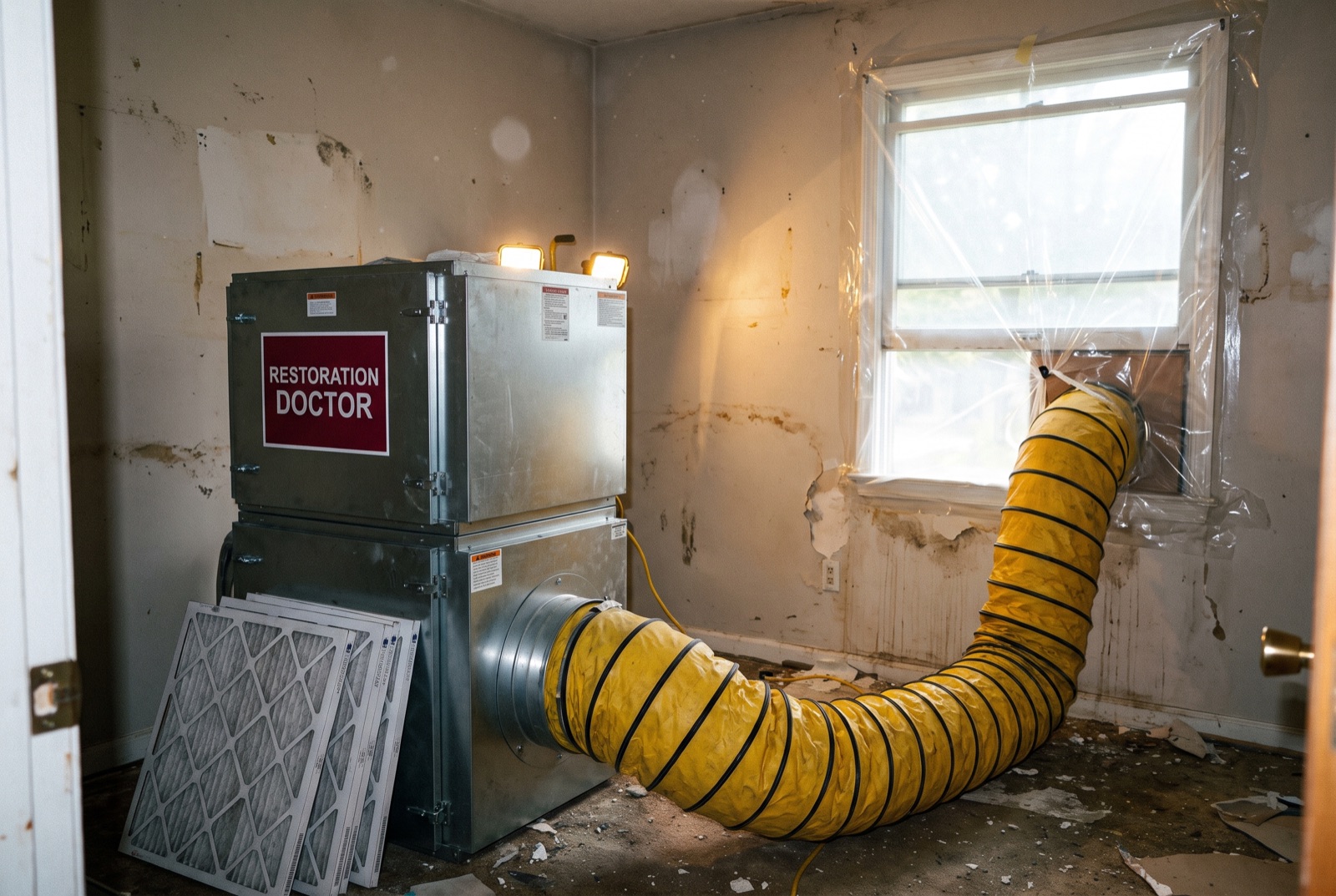
There's a second issue specific to bleach. Household bleach is mostly water. When you apply it to porous drywall, that water absorbs into the material. Since moisture is exactly what mold needs to grow, applying a water-heavy solution to porous material can leave behind the very condition that supports regrowth once the surface dries.
So bleaching moldy drywall can be counterproductive twice over: it doesn't kill the rooted growth, and it can add moisture. This is why mold professionals don't rely on bleach for porous materials.
What actually happens to moldy drywall
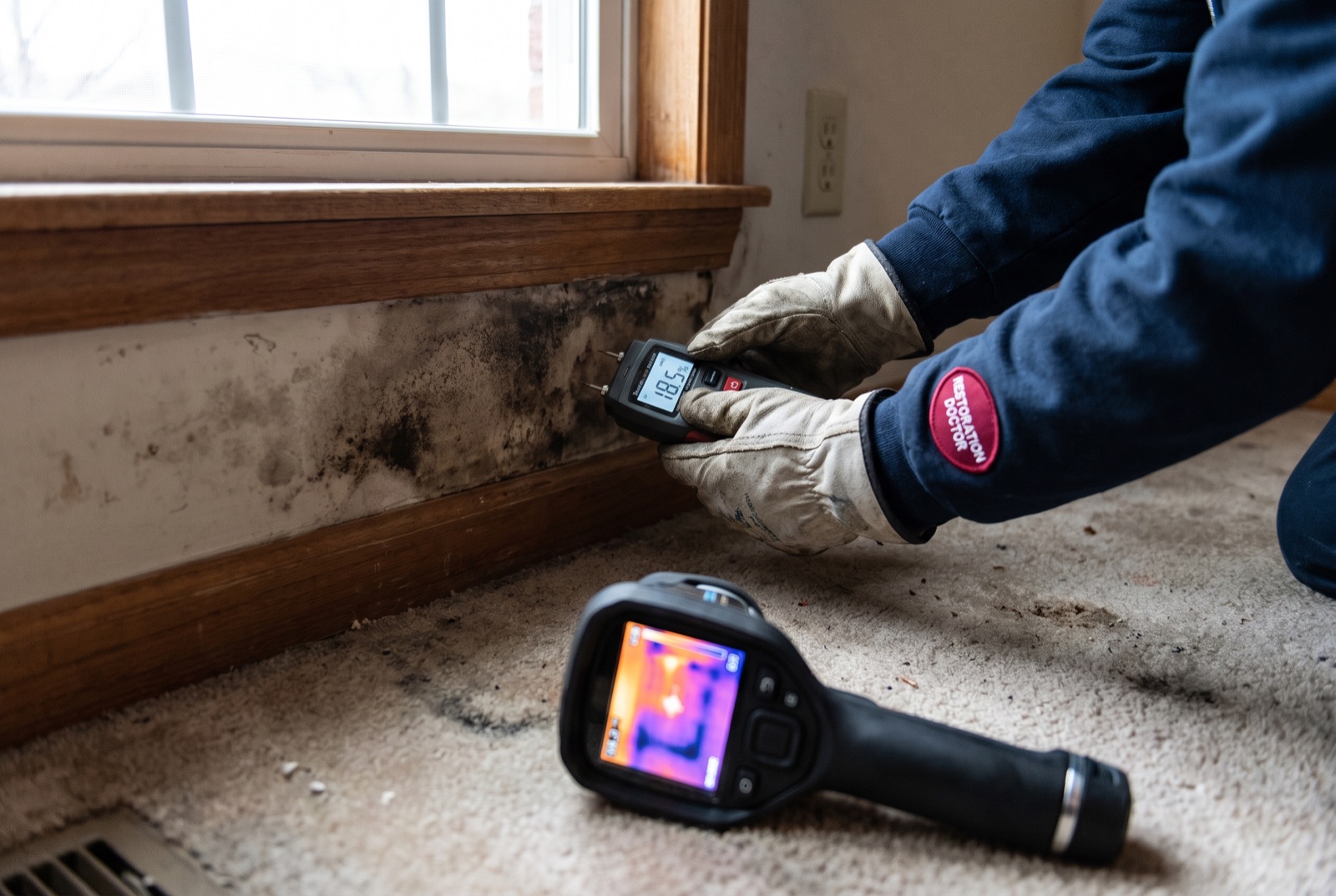
Under the IICRC S520 standard, porous materials that mold has colonized — drywall, insulation, ceiling tile, carpet pad — are removed rather than cleaned, because you can't reliably extract rooted growth from a porous material. The colonized section is cut out under containment, disposed of, and replaced after the area is verified clean and dry.
Non-porous surfaces in the same space (studs that are sound, framing, tile, metal) can often be cleaned and salvaged. The distinction is porosity: hard non-porous materials can be cleaned; soft porous ones that are colonized come out.
Skip the bleach, fix the source
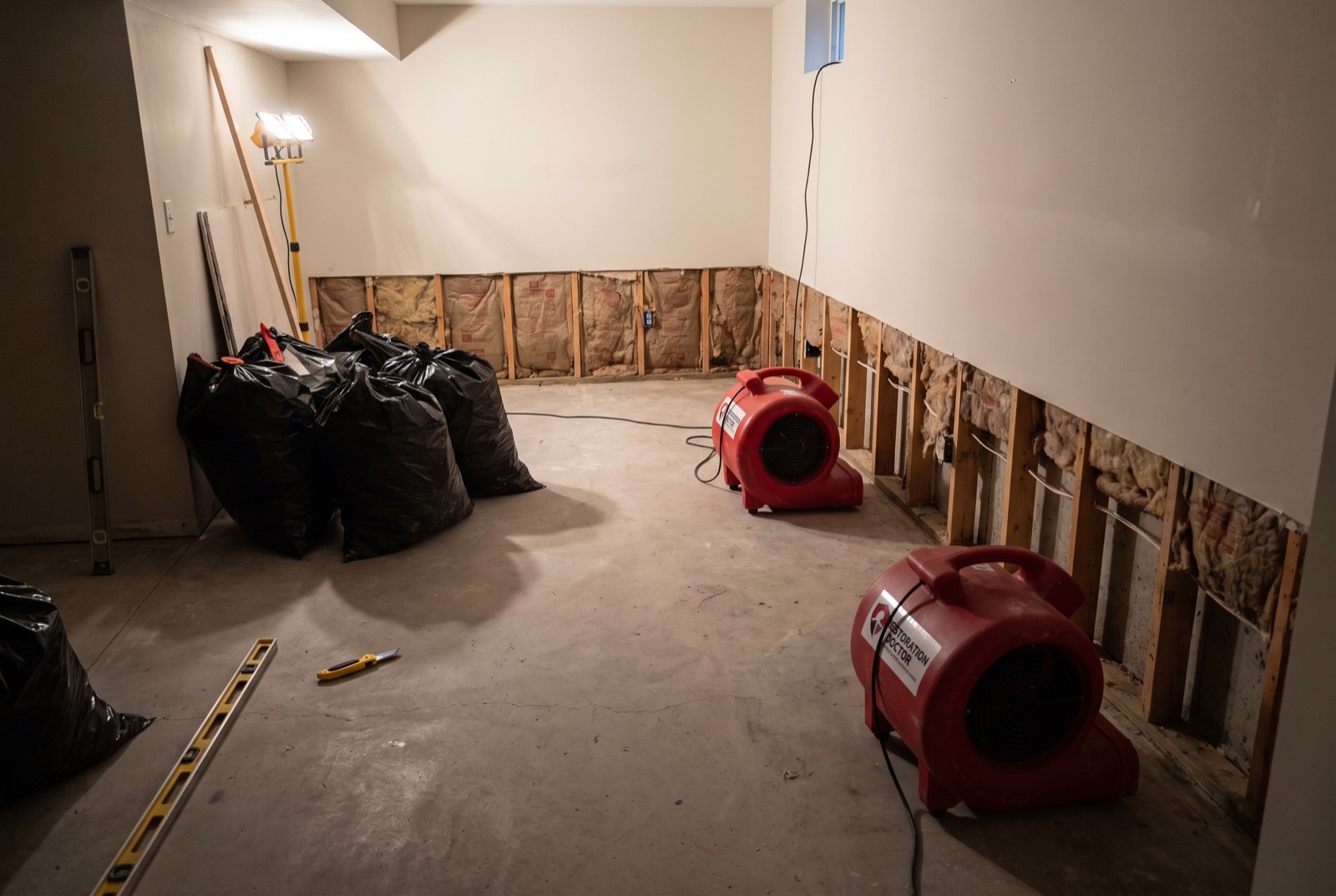
If you're looking at mold on drywall, the productive path isn't a spray bottle — it's removing the affected material, correcting the moisture source, and verifying the area is dry. For a small patch you may handle removal yourself with proper precautions; larger areas or hidden growth call for professional containment.
Restoration Doctor remediates mold on drywall and other materials across Northern Virginia, Maryland, and D.C., removing colonized porous material and fixing the underlying moisture rather than masking it. Call 1-888-29-FLOOD for an assessment.
Mold Remediation
IICRC S520 containment, HEPA filtration, safe removal, and post-remediation clearance verification.
Frequently asked
Related questions
Will mold go away if I dry it out?
Can I remove mold myself or do I need a professional?
What does black mold look like?
How much does mold remediation cost?
Active water, mold, fire, or sewage event?
Connect directly with the Restoration Doctor team for your region. Crews are on standby 24/7 with documented response protocols.