
How do I know if mold is growing behind my walls?
The main signs of mold behind walls are a persistent musty odor, allergy-type symptoms that ease when you leave home, discoloration or staining bleeding through paint, and a known past leak. None confirms it alone — moisture meters, thermal imaging, and borescope cameras verify hidden growth without tearing walls open.
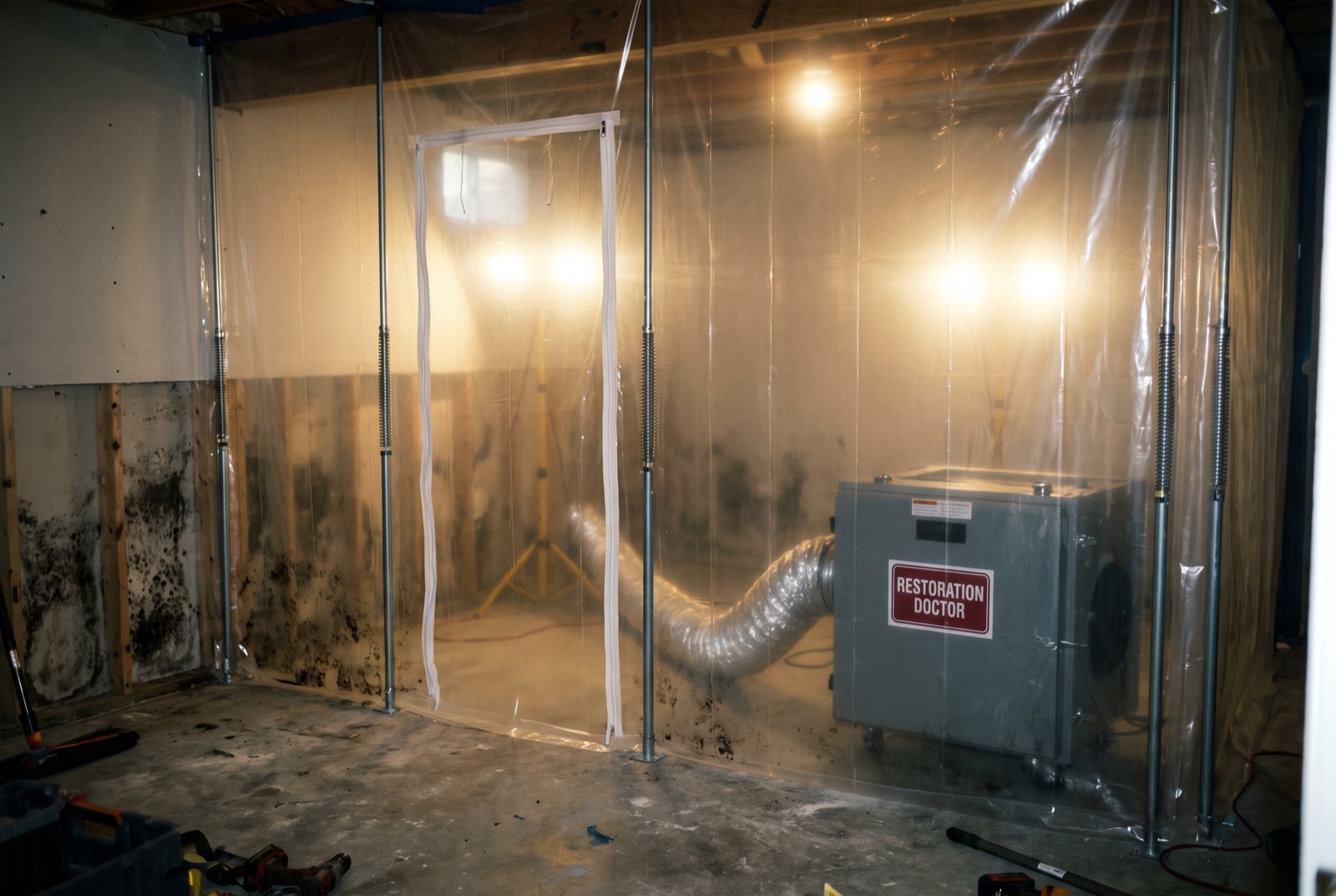
The four everyday warning signs
Hidden mold rarely announces itself, but it leaves clues. A persistent musty, earthy odor — strongest near a wall, closet, or vanity — is the most reliable one; that smell is the gas byproduct of active microbial growth, and it travels through wall cavities even when nothing is visible.
Second, watch how people feel indoors. Congestion, coughing, eye irritation, or headaches that improve when occupants leave the house and return when they come back can point to an indoor source. Health responses to mold vary widely between individuals, so symptoms are a prompt to investigate, not a diagnosis.
Third, look for staining: yellowish, brown, or dark blotches bleeding through paint or wallpaper, or paint that is bubbling, peeling, or warping. Fourth, and most telling, is history — a past pipe leak, roof leak, appliance overflow, or basement seepage in that area. Where there was unresolved moisture, hidden mold is a reasonable suspicion.
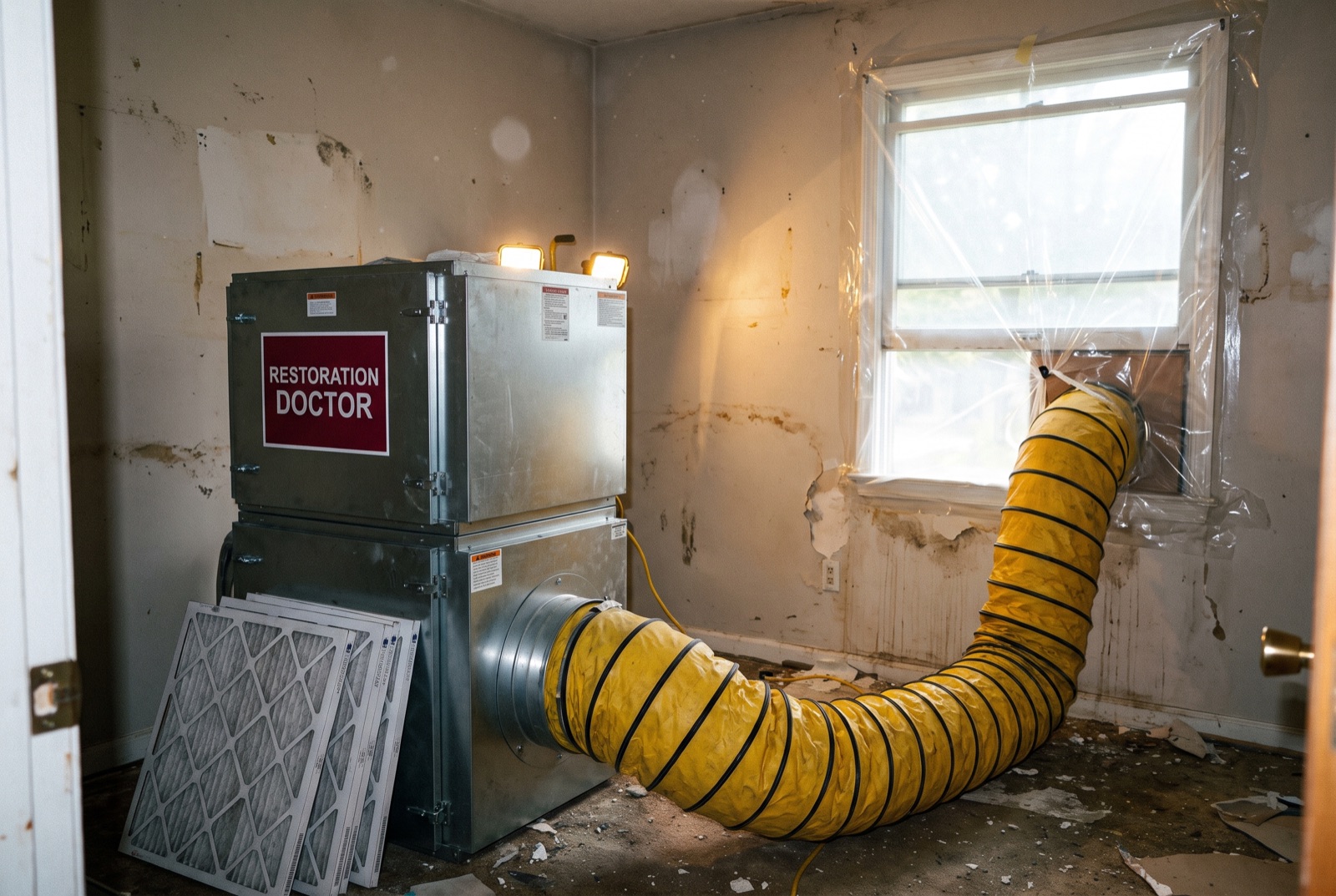
Why walls hide mold so well
Wall cavities are close to ideal for concealed growth. They stay dark, have almost no airflow, and are lined with mold's favorite food — the paper facing on drywall and the wood of the framing. When water gets inside a wall, it dries far slower than the room around it, giving spores days of undisturbed moisture.
That's why the surface of a wall can feel and look perfectly normal while a colony spreads on the back of the drywall. The visible room is the last place mold shows up, not the first. This is also why a leak that seemed minor at the time so often produces a hidden problem discovered months later.
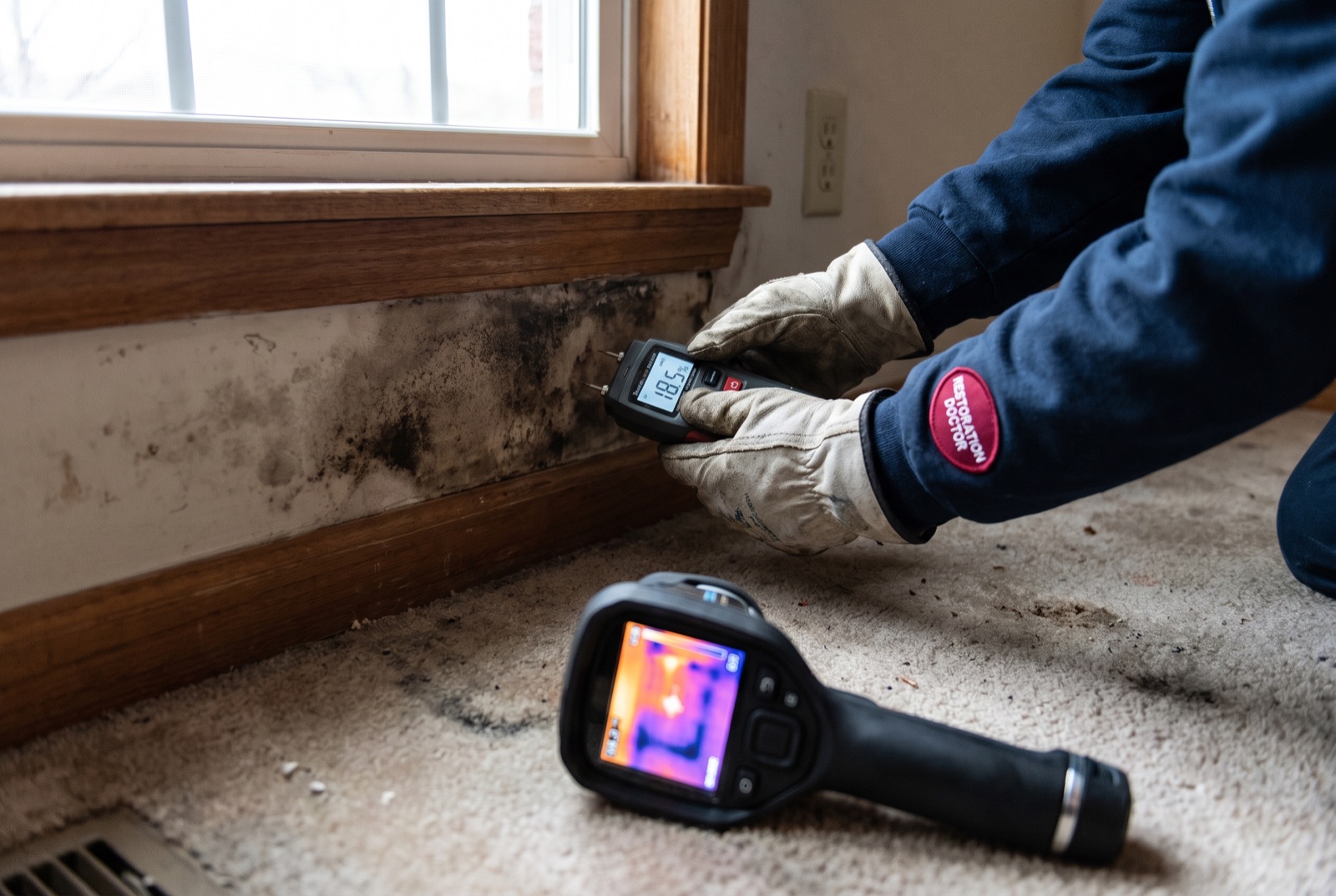
How professionals confirm without demolition
You don't have to open walls to find out. Restoration technicians start with moisture meters — penetrating and non-penetrating — to detect elevated moisture inside materials, mapping where water is or recently was. Thermal imaging cameras reveal temperature differences that flag damp zones behind finishes, narrowing the search.
Where readings and odor justify a closer look, a borescope (a small inspection camera on a flexible probe) can be inserted through a tiny hole — an outlet opening or a discreet drilled port — to view the cavity directly. Together these tools confirm or rule out hidden growth with minimal disruption, so any wall that does come out is opened for a documented reason.
This measured approach also protects your insurance position: a moisture map and inspection findings are exactly the evidence an adjuster needs to approve investigation and remediation of concealed damage.
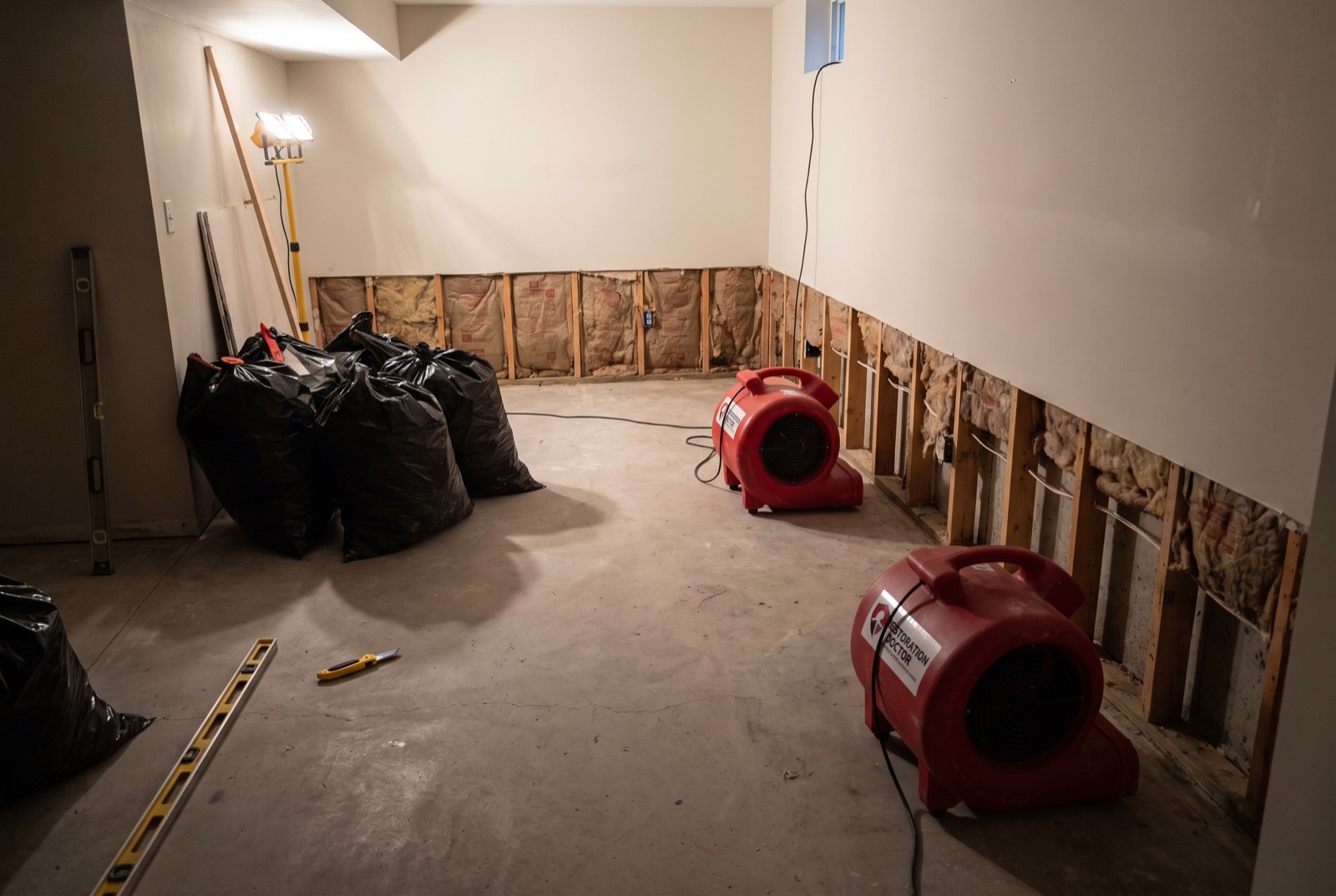
When to get it checked
If you have a lingering musty smell, unexplained indoor symptoms, spreading stains, or a history of water in a specific area, a professional moisture inspection settles the question quickly and non-destructively. Guessing — or ripping into a wall yourself — risks either missing the problem or spreading spores through the home.
Restoration Doctor performs moisture mapping and mold inspections across Northern Virginia, Maryland, and D.C., documenting findings so you know whether you're dealing with an old stain or an active colony. Call 1-888-29-FLOOD to schedule an assessment.
Mold Remediation
IICRC S520 containment, HEPA filtration, safe removal, and post-remediation clearance verification.
Frequently asked
Related questions
How fast does mold grow after water damage?
What are the symptoms of mold exposure in your house?
Should I test for mold after water damage?
What happens if mold is left untreated?
Active water, mold, fire, or sewage event?
Connect directly with the Restoration Doctor team for your region. Crews are on standby 24/7 with documented response protocols.