
Should I test for mold after water damage?
Usually not as a first step. If mold is already visible, it needs removal regardless of what a test says — testing it is spending money to confirm what you can see. Testing is worthwhile for suspected hidden mold, post-remediation clearance verification, or documentation in a dispute, not as routine after every water event.
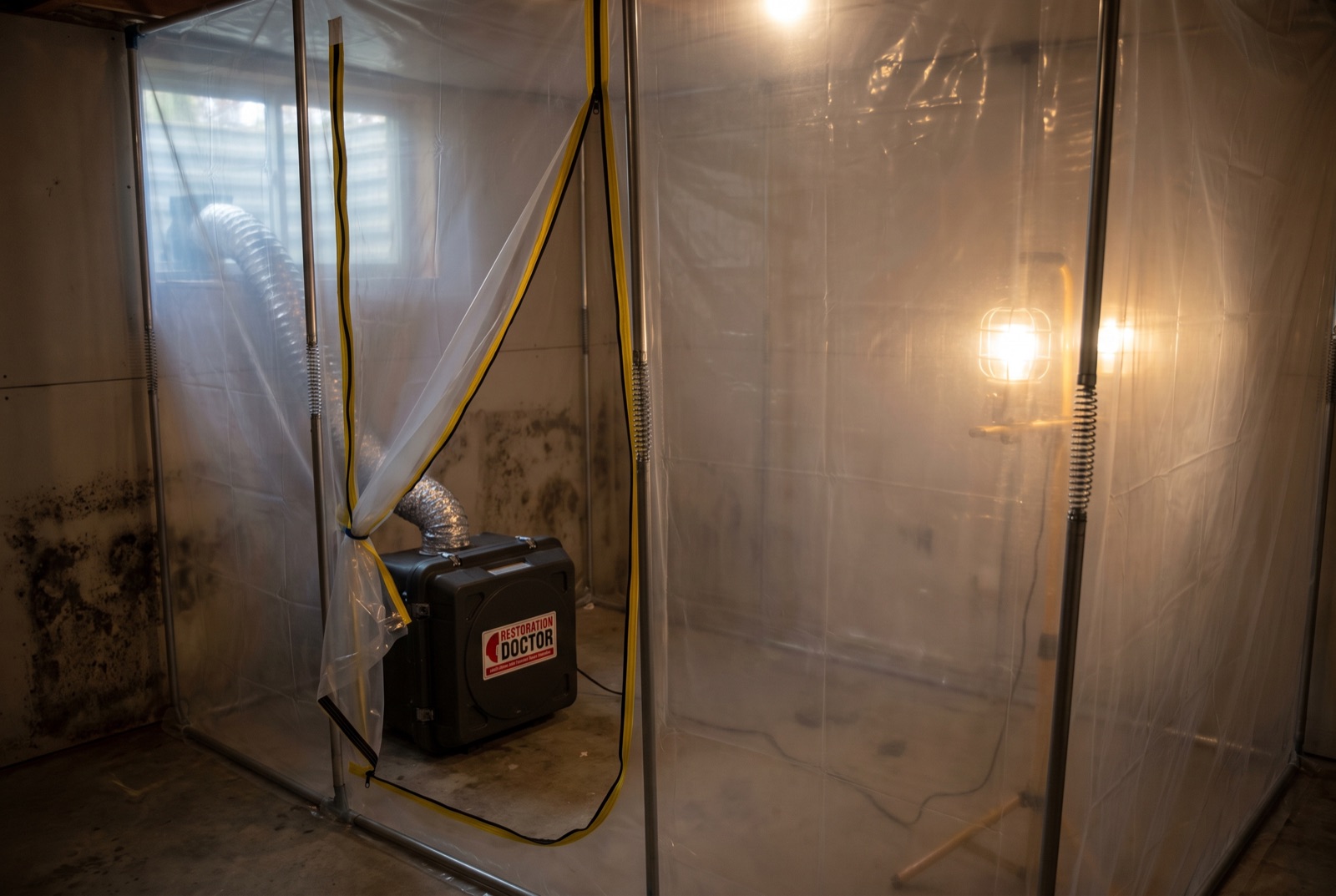
Visible mold doesn't need a test
The EPA's practical position is straightforward: if you can see mold, you don't need to test it to know you have a problem — you need to remove it and fix the moisture. Since remediation is essentially the same regardless of species, paying to identify what type of visible mold you have rarely changes the response.
This matters because mold testing is sometimes oversold. Spending on a test that tells you "yes, that visible patch is mold" adds cost without adding action. The money is better put toward removal and source correction.
When testing is genuinely useful
Testing earns its cost in specific situations. First, suspected hidden mold: when there's a musty odor, symptoms, or a known water event but no visible growth, sampling can help confirm whether a concealed problem exists — usually alongside moisture mapping and inspection. Second, post-remediation clearance: after a large remediation, independent verification testing confirms the area was successfully cleaned before rebuilding.
Third, documentation and disputes: when there's disagreement — with an insurer, a landlord, a buyer or seller — objective test results can establish conditions for the record. In these cases the test answers a real question that observation alone can't.
A note on independence
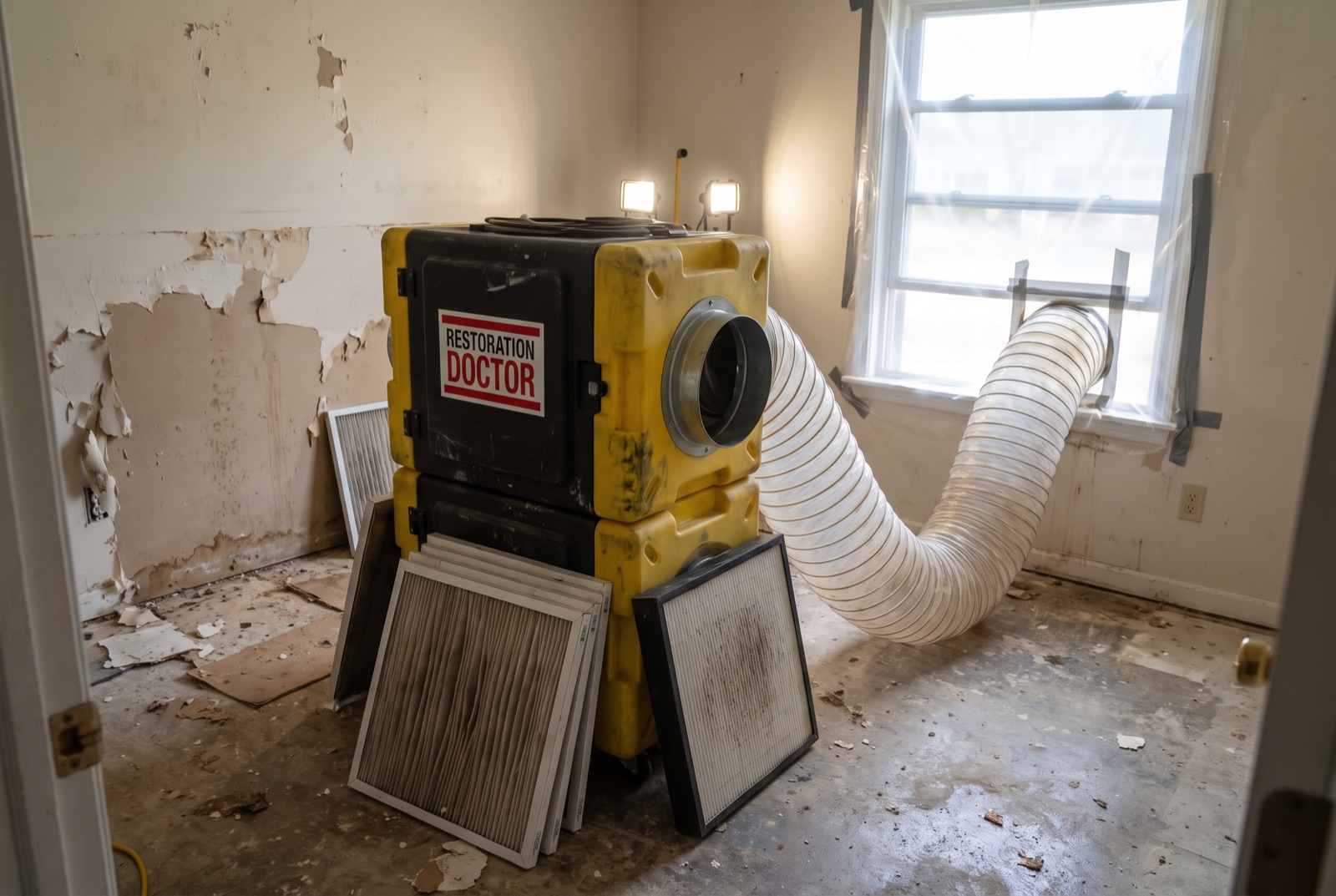
For clearance testing especially, independence adds value: having testing performed by a party separate from whoever did the remediation avoids the obvious conflict of a company grading its own work. When testing is warranted, that separation strengthens the result's credibility.
It's also worth understanding what tests can and can't do. Spore counts and surface samples are snapshots that require careful interpretation; results are most meaningful in the hands of someone who can put them in context, not read in isolation.
Focus on moisture first
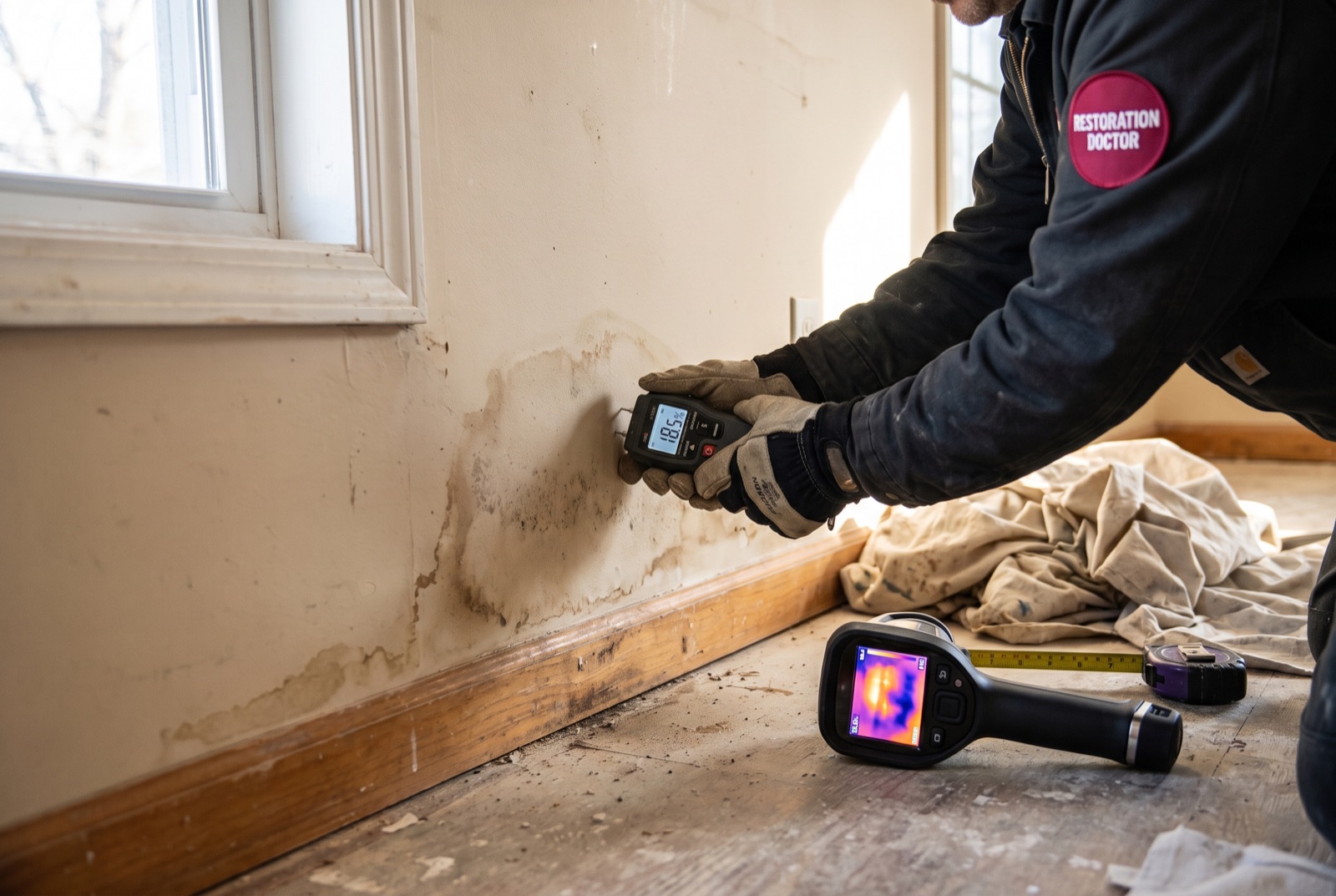
After water damage, the highest-value actions are almost always the same: dry the structure fast, look for hidden moisture with meters and thermal imaging, remove any colonized materials, and correct the source. Testing is a targeted tool layered on top when there's a specific question to answer — not a default step.
Restoration Doctor uses moisture mapping and inspection to determine whether hidden mold is likely across Northern Virginia, Maryland, and D.C., and can advise when independent testing is actually worth it. Call 1-888-29-FLOOD to talk through your situation.
Mold Remediation
IICRC S520 containment, HEPA filtration, safe removal, and post-remediation clearance verification.
Frequently asked
Related questions
How do I know if mold is growing behind my walls?
What does black mold look like?
How much does mold remediation cost?
How fast does mold grow after water damage?
Active water, mold, fire, or sewage event?
Connect directly with the Restoration Doctor team for your region. Crews are on standby 24/7 with documented response protocols.