
How long do walls take to dry after a leak?
With professional drying equipment, wet walls typically dry in two to three days; relying on household fans and ambient airflow takes five to ten days or more, and moisture inside insulated cavities often never fully clears without help. Wall type, how high the water wicked, and cavity insulation are the biggest variables.
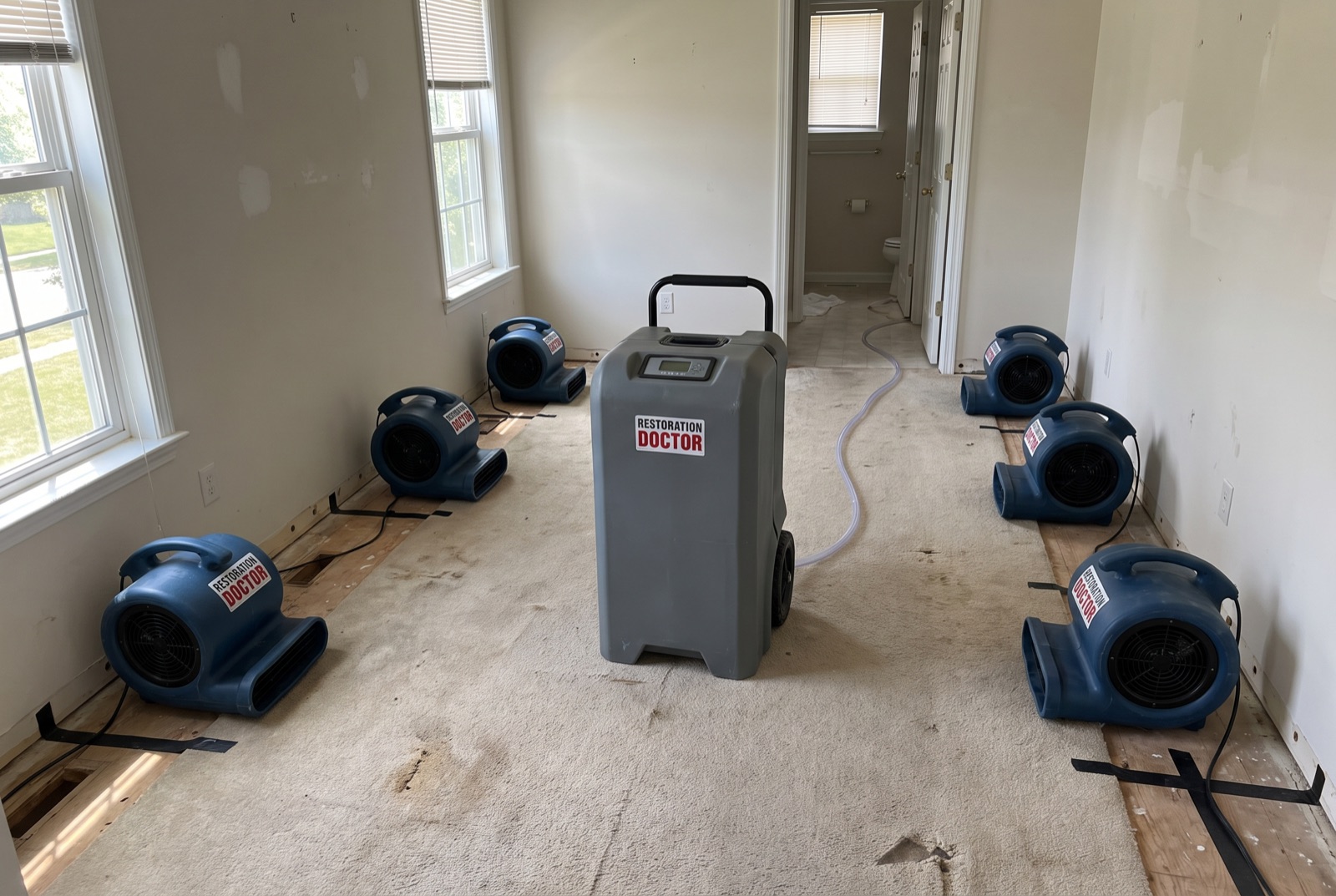
The professional timeline: two to three days, verified
Under a properly designed drying system — air movers sweeping the wall surface, low-grain refrigerant dehumidifiers holding the room at aggressive dryness, and vent holes giving airflow a path into the cavity — standard drywall-on-wood-frame walls come back to dry standard in about two to three days. Technicians confirm it with daily moisture readings at the wall base and inside the cavity, per IICRC S500 practice, rather than calling it by look or feel.
That timeline assumes the response started promptly. Drywall that wicked water for hours dries faster than drywall that sat wet for days, because moisture keeps climbing and spreading until drying begins — a wall wet to six inches is a much smaller project than the same wall wet to two feet.
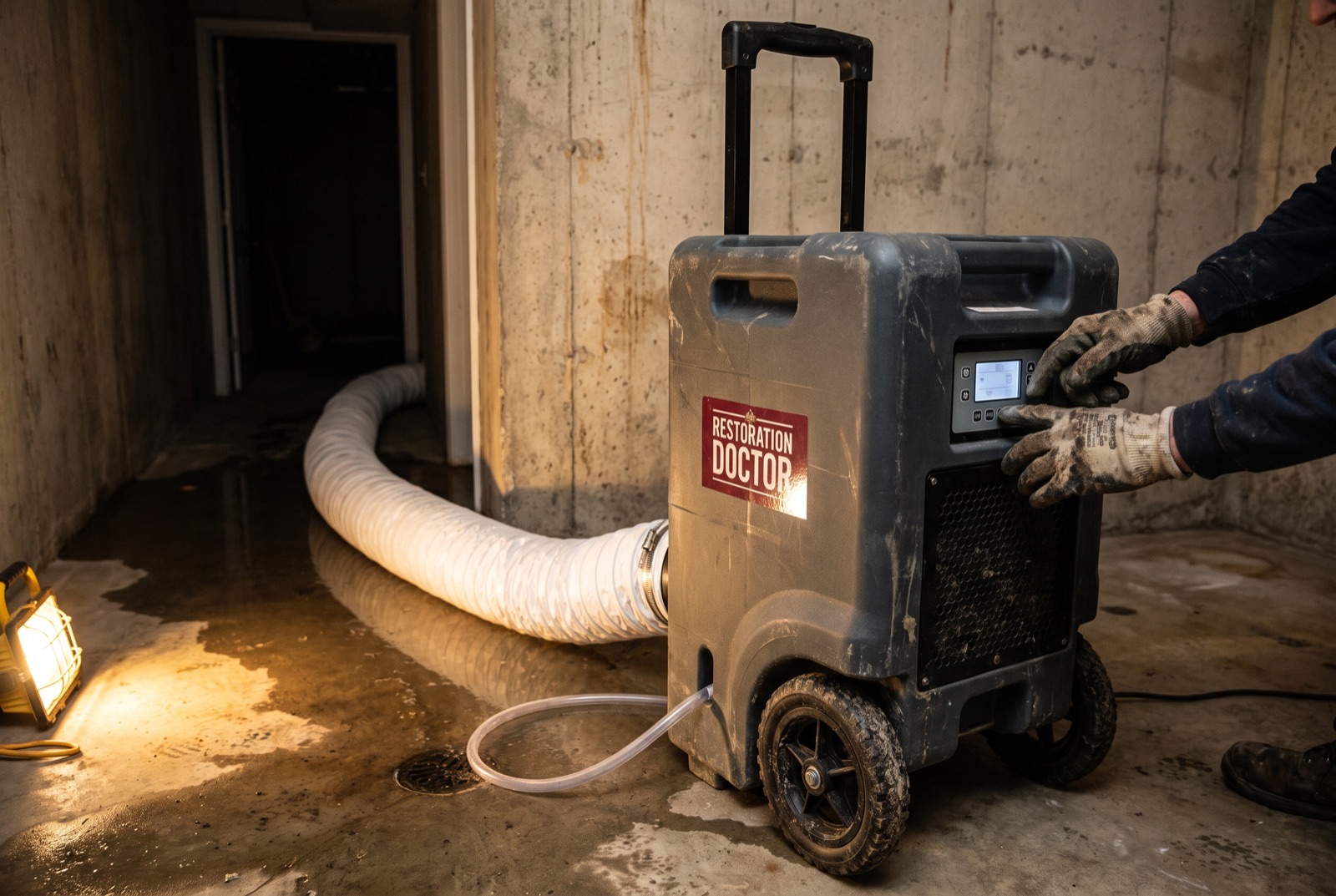
What makes a wall dry slower
Insulation is the biggest single factor. An empty stud cavity dries readily once air can move through it; a cavity full of wet fiberglass holds moisture like a blanket, and wet cellulose slumps, compacts, and generally can't be dried in place at all — it's removed. If a leak filled an insulated exterior wall, expect the drying plan to involve opening it.
Wall construction adds layers of delay. Plaster walls (common in older homes across the D.C. region) absorb more water than drywall and release it far more slowly — plaster drying is routinely a week-plus. Tile-backed walls, vinyl wallpaper, multiple paint layers, and vapor barriers all trap moisture behind low-permeability surfaces; double-layer drywall and shear-panel walls dry from one side only. Each of these can double a wall's timeline or force a change of strategy.
Finally, the source pattern matters: a one-time splash wets the surface; a supply line that sprayed inside the cavity for hours loads the framing, insulation, and both faces of the drywall — same wall, very different project.
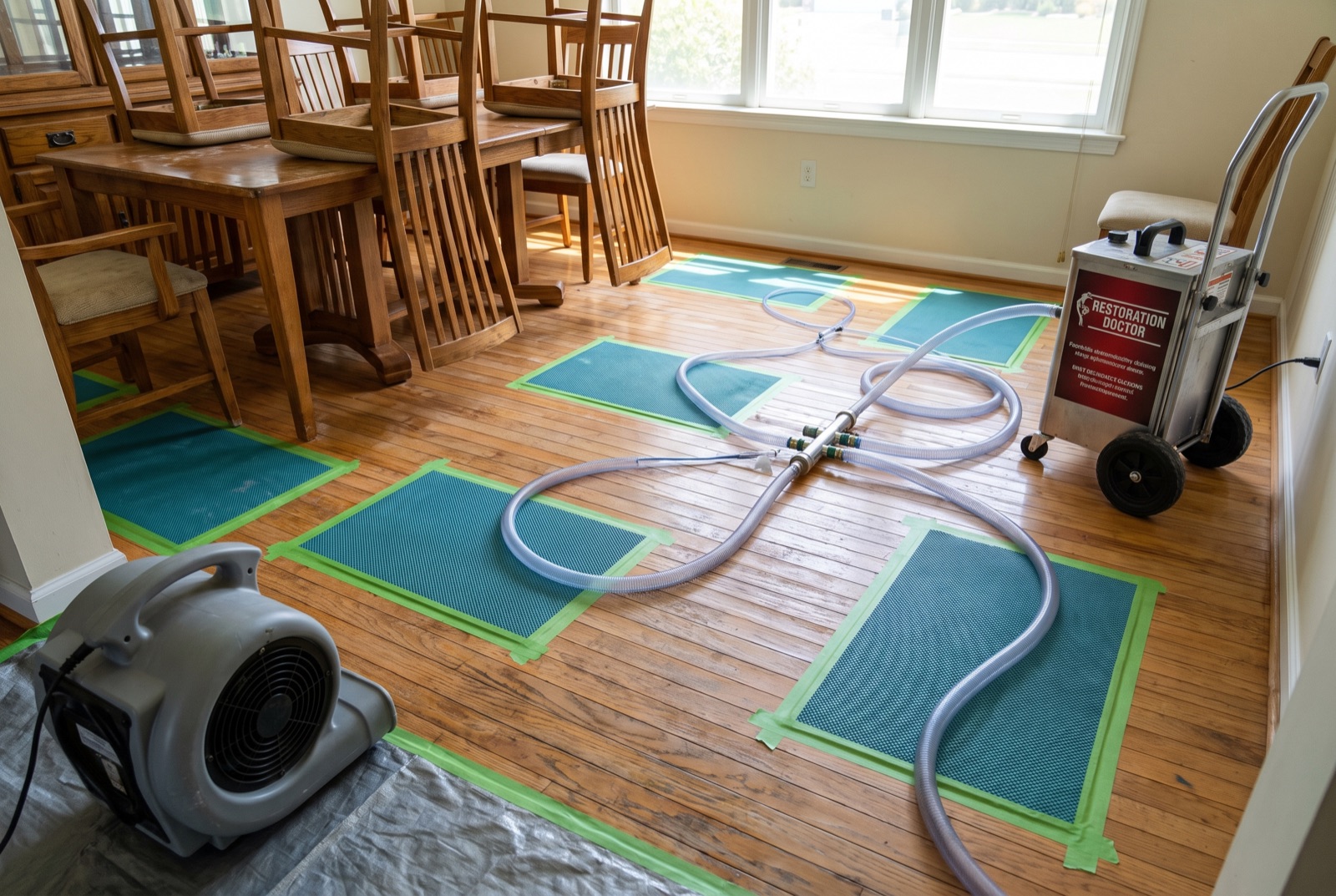
The DIY timeline — and its blind spot
With household fans and a consumer dehumidifier, a lightly wetted wall surface may recover in five to ten days. The blind spot is the cavity: room-side airflow doesn't reach inside a closed wall, so water at the wall base, on the back of the drywall, and in the insulation dries on its own schedule — weeks, in humid Mid-Atlantic conditions — while the surface feels fine within days.
That gap is precisely where post-leak mold problems come from. Materials that stay wet past 24 to 48 hours are at risk for mold growth, and a cavity that stays damp for two or three weeks provides ample opportunity. The wall looks recovered, and the problem announces itself a month later as musty odor or staining through fresh paint.
If a wall took real water — more than surface splash — either get it professionally dried or, at minimum, verify it yourself with a moisture meter at the wall base against a reading from a dry room, and keep drying until they match.
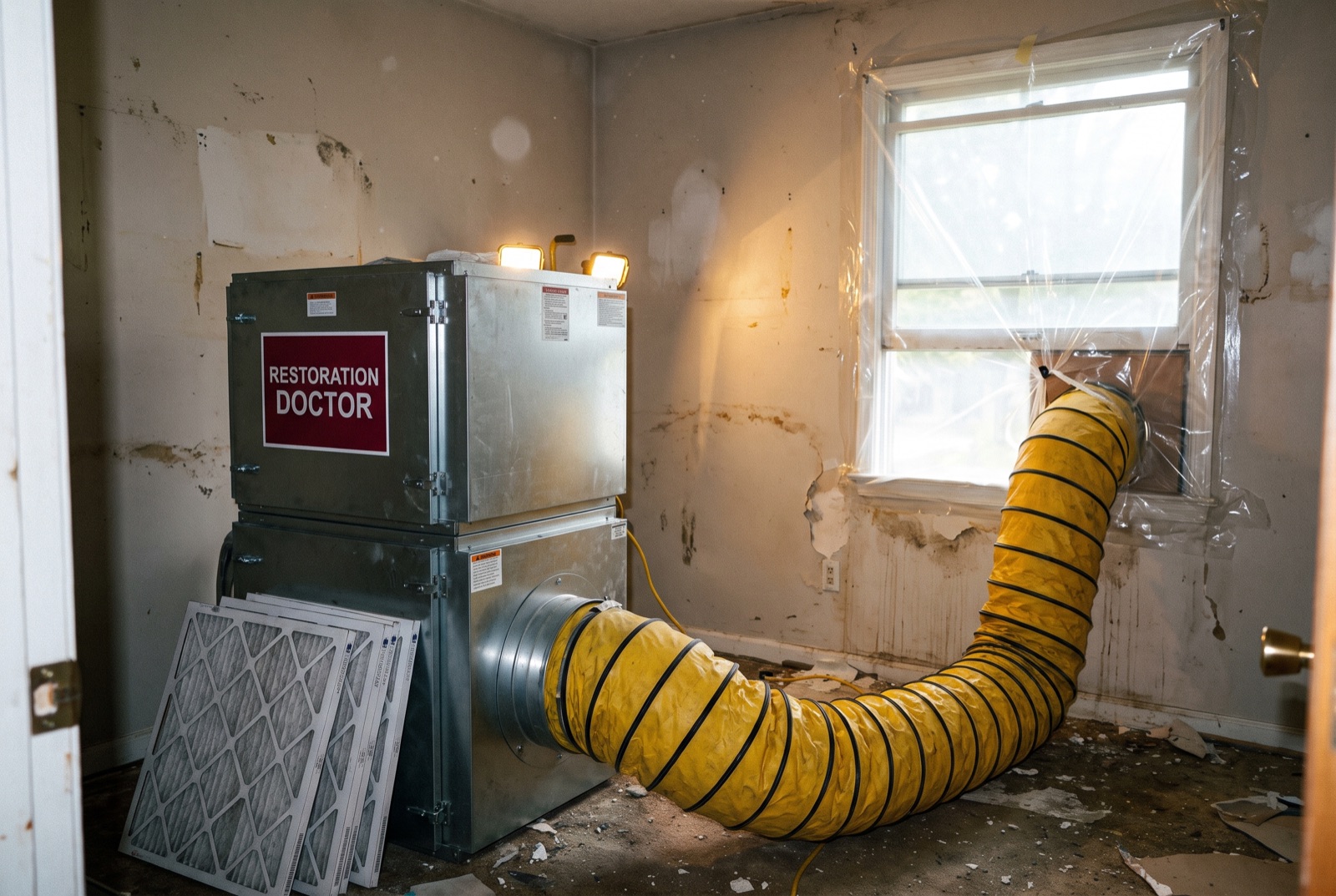
Getting walls dry the reliable way
The dependable sequence is the professional one: assess how high and how deep the moisture goes, remove the baseboard and vent the cavity, dry with engineered airflow and dehumidification, and verify daily with meters until the wall matches its dry standard. Done promptly, that saves most wet walls from any demolition at all — and produces the documentation an insurance claim needs.
Restoration Doctor dries walls in place wherever the materials allow it, across Northern Virginia, Maryland, and D.C. If your walls took water — or you're not sure whether a past leak ever really dried — call 1-888-29-FLOOD for a moisture inspection.
Water Damage Restoration
Extraction, structural drying, and moisture verification for burst pipes, appliance leaks, and basement flooding.
Frequently asked
Related questions
How do you know when walls are completely dry?
Does water damaged drywall need to be replaced?
How long does it take for water to damage drywall?
Can wet insulation be dried out?
Active water, mold, fire, or sewage event?
Connect directly with the Restoration Doctor team for your region. Crews are on standby 24/7 with documented response protocols.