
How long does it take for water to damage drywall?
Drywall begins absorbing water within minutes and wicks it upward within the first hour. Damage becomes serious after roughly 24 to 48 hours of saturation — the gypsum core softens, paper faces delaminate, and mold risk climbs sharply. Drywall dried inside that window is frequently saved; beyond it, removal becomes far more likely.
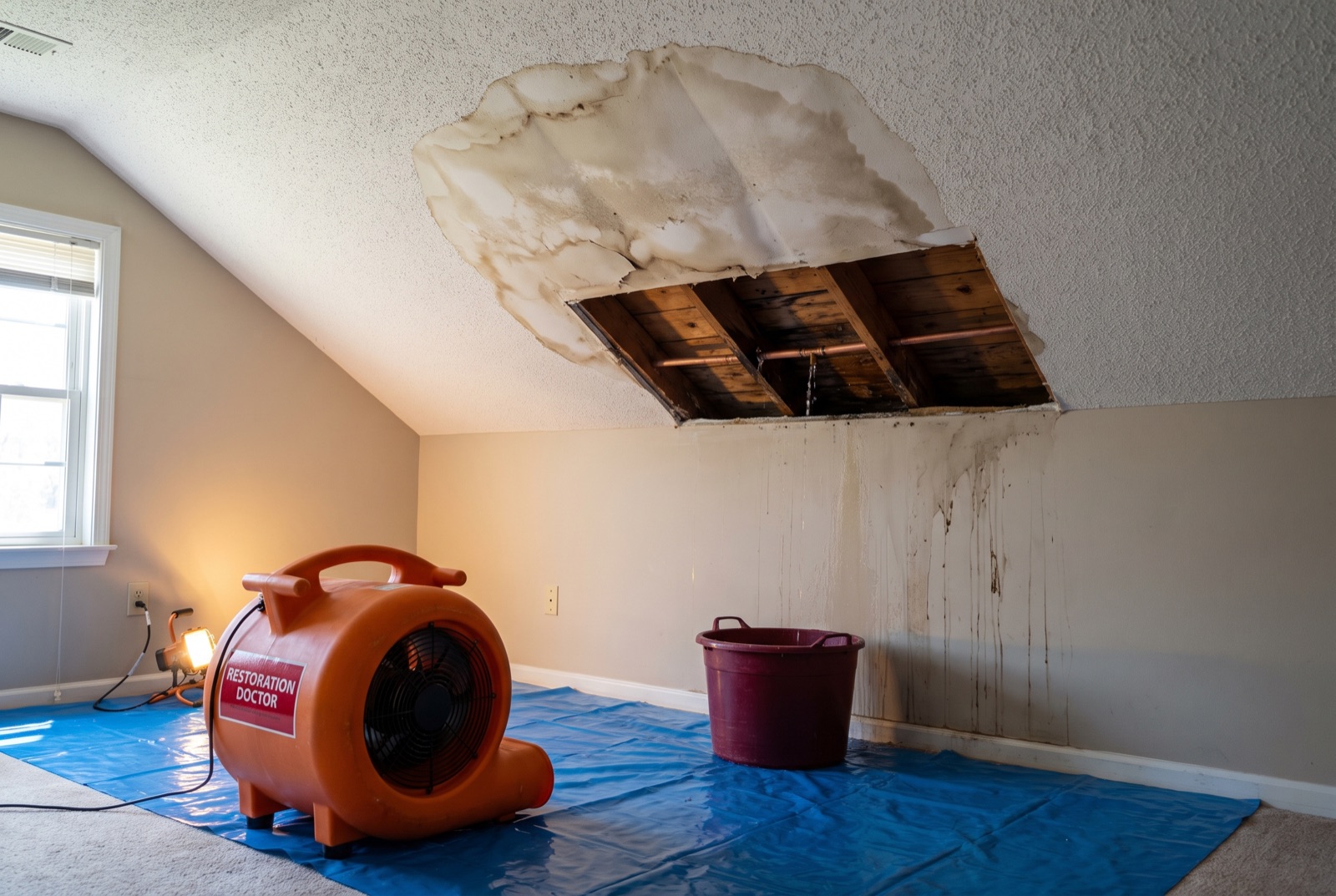
The first hour: absorption and wicking
Drywall is one of the most absorbent materials in your house. Its paper faces draw water by capillary action and its gypsum core soaks it up like chalk. Standing water at the base of a wall doesn't stay at the base — the board wicks it vertically, commonly reaching several inches to a couple of feet above the waterline within hours. This is why restoration crews assess walls well above the visible tide line, and why a "little" floor leak routinely becomes a wall project.
In the first hour, though, almost nothing irreversible has happened. Water has entered the board but the gypsum structure is intact. Drywall extracted, opened at the base, and put under directed airflow this early has an excellent save rate. The clock is running, but it hasn't run out.
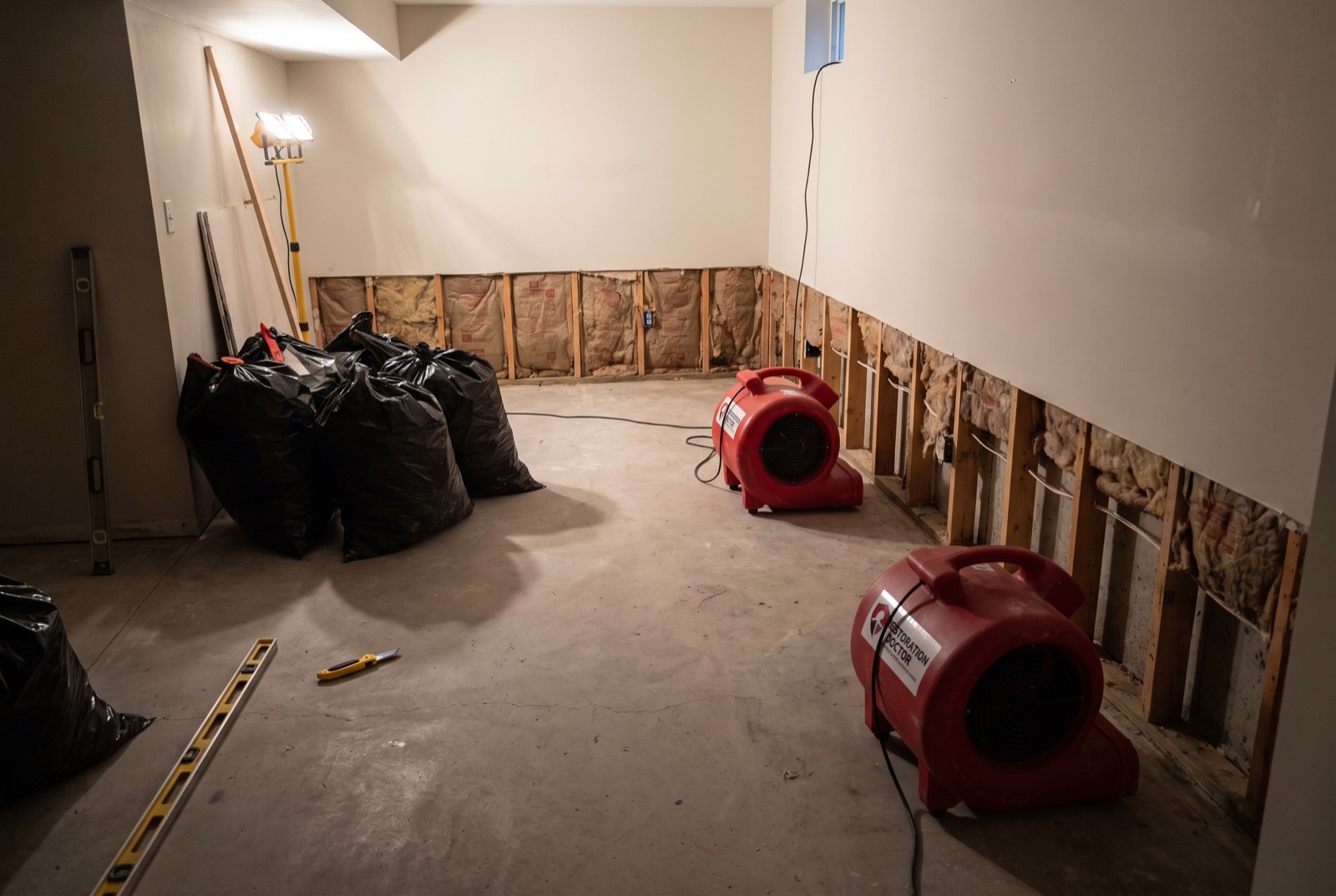
24 to 48 hours: the structural and biological turning point
Saturation held for a day or two is where drywall starts crossing one-way thresholds. The gypsum core softens and loses compressive strength — you can feel it as sponginess under light thumb pressure. The bond between core and paper faces begins failing, which shows up later as bubbling and delamination even after drying. Fastener areas weaken, and ceiling board — carrying its own weight plus the water's — begins to sag between framing members.
The same window is mold's opening. Spores are always present indoors; wet drywall paper is among their preferred foods. EPA guidance is to dry water-damaged materials within 24 to 48 hours to prevent mold growth; board left wet past that window is at risk, often on the hidden back face inside the wall cavity where there's no airflow and no light. This biological clock, more than the structural one, is why professional drying is treated as an emergency rather than a scheduling item.
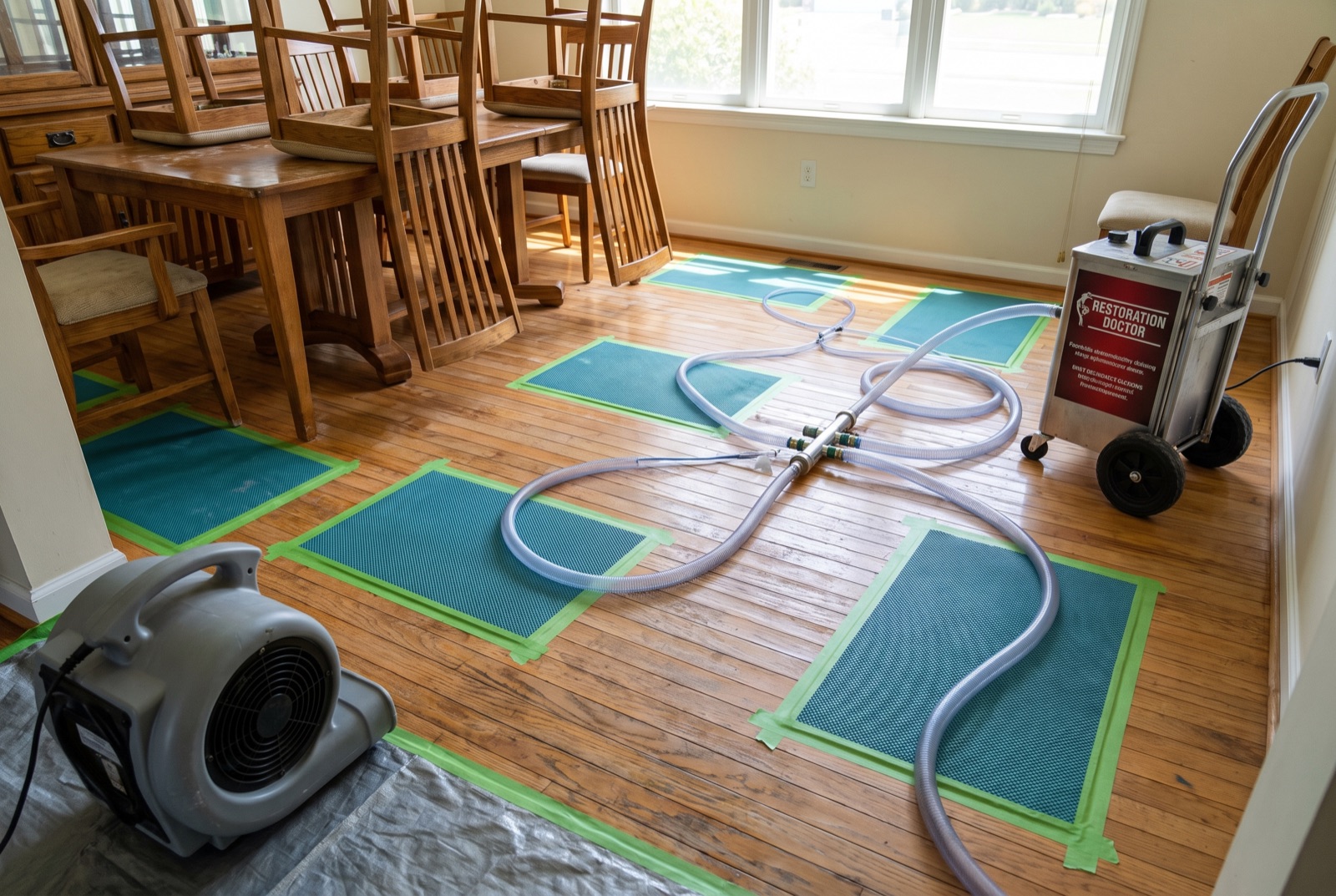
Days to weeks: when the outcome is decided
Drywall left wet for several days typically shows visible failure: sagging, bulging, crumbling edges, brown staining, and paper that slides under pressure. By this point drying no longer restores the material — the affected sections are cut out, commonly as a flood cut to a clean line above the wicking height, and the framing and cavity behind them are dried and treated.
Left for weeks — the slow-leak scenario, or the vacation discovery — the problem usually stops being a drywall question at all. Established mold colonization brings IICRC S520 remediation practice into play, with containment and removal of colonized porous materials, and moisture has had time to migrate into framing, insulation, and adjacent rooms. The cost difference between day-one drying and week-three remediation on the same original leak is routinely several multiples.
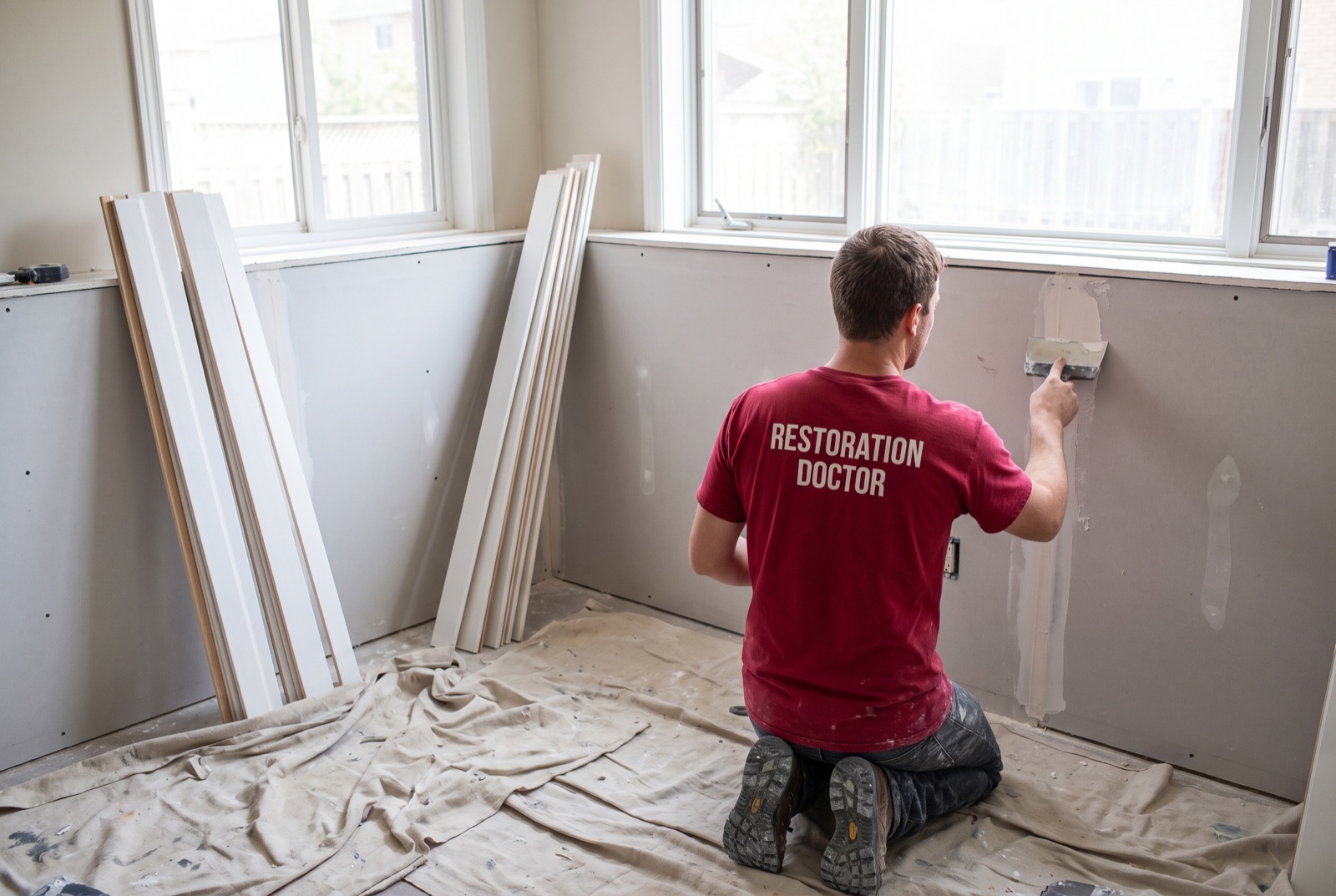
What to do inside the window
Stop the source, get standing water extracted, and get the wall assessed with a moisture meter before deciding anything by eye — wet drywall frequently looks fine while reading saturated, and the reverse is rarer but happens. If the loss is fresh, in-place drying (baseboard off, ventilation holes at the base, directed airflow, dehumidification) can often save the entire wall.
Restoration Doctor crews respond 24/7 across Northern Virginia, Maryland, and D.C., map every affected wall with meters, and document the loss in CompanyCam from arrival photos through daily drying logs — the record that supports both the save-versus-replace decision and your insurance claim. If a wall in your home got wet today, call 1-888-29-FLOOD today; with drywall, the calendar is the cost.
Water Damage Restoration
Extraction, structural drying, and moisture verification for burst pipes, appliance leaks, and basement flooding.
Frequently asked
Related questions
Does water damaged drywall need to be replaced?
Should baseboards be removed after water damage?
How fast does mold grow after water damage?
How long does it take for water to cause damage?
Active water, mold, fire, or sewage event?
Connect directly with the Restoration Doctor team for your region. Crews are on standby 24/7 with documented response protocols.