
How long does it take for water to cause damage?
Water begins causing damage within minutes of contact. Drywall, carpet pad, and subfloor saturate within the first few hours; finishes stain and wood begins swelling the same day; and anything still wet past 24 to 48 hours is at risk for mold. The response clock is measured in hours, not days — faster drying means dramatically less damage.
The first minutes and hours
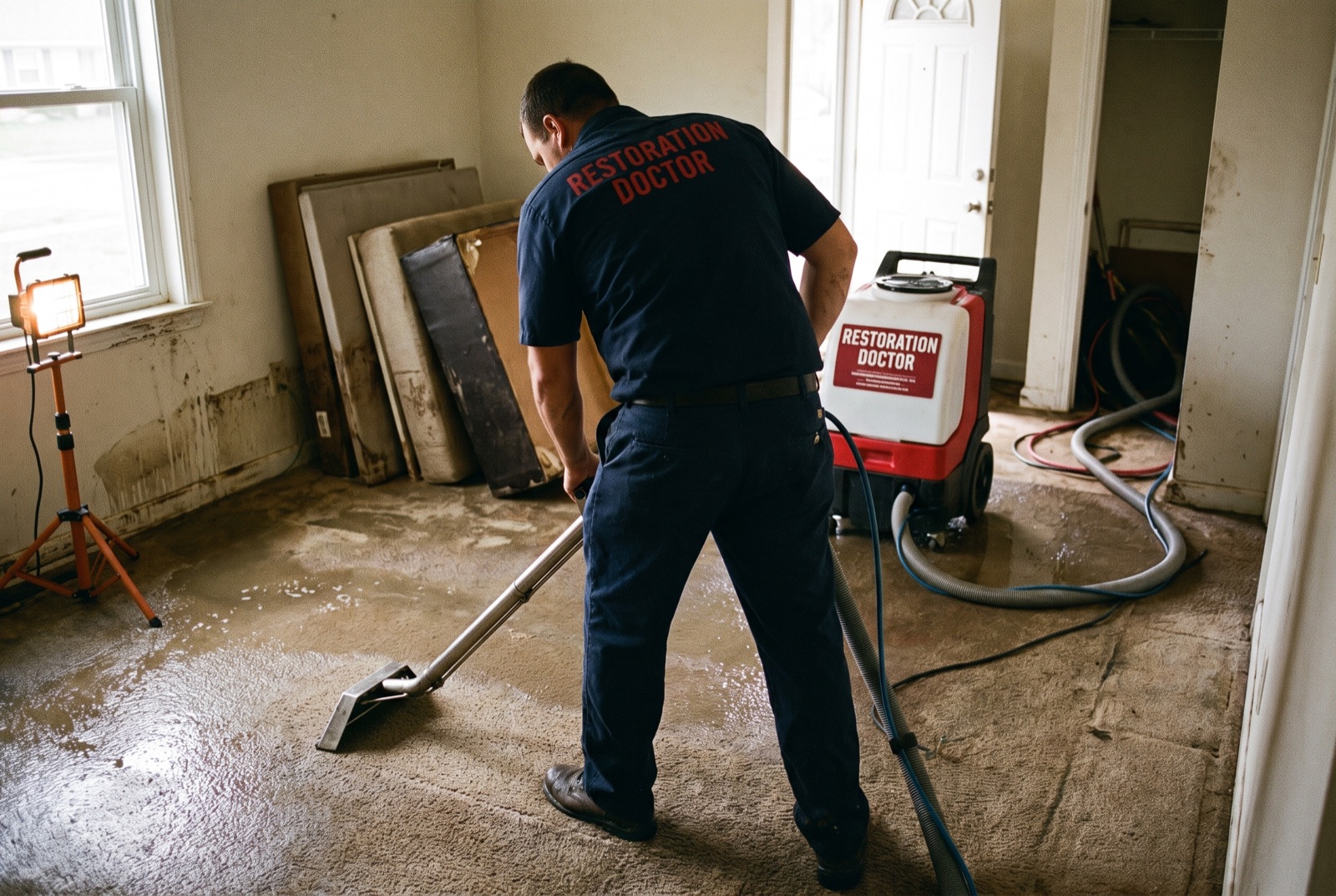
Water damage is not a slow process that politely waits for business hours. Within minutes of a release, water spreads across floors following gravity and the slope of the structure, wicks into the bottom edge of drywall, and soaks into carpet and pad. Furniture in contact with wet carpet begins absorbing water through its legs, and stain or dye transfer from furniture bases onto carpet can happen within the first hour.
Within the first several hours, absorption accelerates. Drywall wicks water upward well above the visible waterline. Particleboard and MDF — common in cabinet bases, trim, and furniture — begin swelling almost immediately and do not recover. Paper goods, books, and photographs in the water's path are damaged quickly. Water also finds every penetration in a floor system: around pipes, at seams, through recessed lights — which is how a second-floor laundry leak becomes a first-floor ceiling problem in under an hour.
The first 24 to 48 hours: the critical window
This window is the reason restoration is an emergency service. By the end of day one, saturated drywall is softening, wood framing and subfloor have absorbed significant moisture, hardwood flooring begins cupping as the boards take on water unevenly, and metal surfaces in contact with moisture start to tarnish and corrode.
Between 24 and 48 hours, mold enters the picture. Mold spores are present in virtually all indoor air; sustained surface moisture is the missing ingredient, and drywall paper, wood, and dust films still damp when this window closes are the ones at risk. Once growth establishes, the project changes character — affected porous materials shift from drying candidates to removal candidates under IICRC S520 remediation practice.
Water quality degrades on the same clock. Clean Category 1 water that sits in contact with soiled carpet, building materials, and their contaminants degrades toward Category 2 over time, raising the required response from straightforward drying toward more aggressive cleaning and removal.
Days to weeks: compounding damage
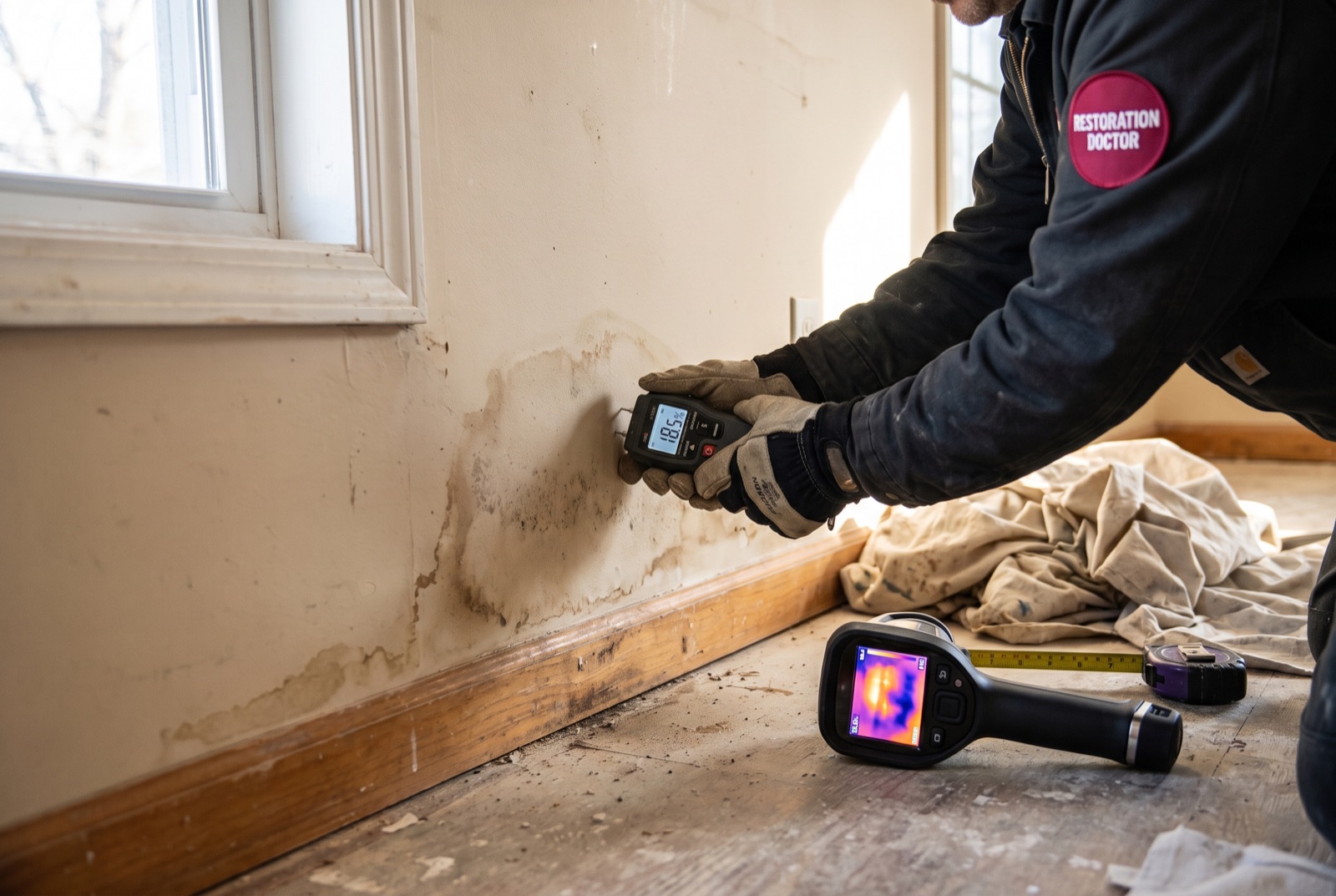
After 48 to 72 hours untreated, damage compounds quickly. Mold growth can spread and become visible. Drywall sags and crumbles. Hardwood progresses from cupping to buckling — boards lifting entirely off the subfloor. Subfloor delaminates and loses fastener grip. Windows and doors swell and stick. Odor sets into porous contents.
Beyond a week, structural concerns join the list: prolonged saturation promotes wood decay in framing and sill plates, corrodes fasteners, and can compromise ceiling assemblies to the point of collapse risk under the weight of waterlogged drywall and insulation.
The cost curve follows the damage curve. The same loss extracted and dried on day one might involve no demolition at all; addressed on day ten, it can require removing flooring, drywall, and insulation across every room the water touched, plus mold remediation and full reconstruction.
What this means for your response
Treat any significant water release as same-day urgent: stop the source, get standing water extracted, and get professional drying equipment running before the first night if at all possible. Every hour of delay quietly moves materials from the save column to the replace column.
Restoration Doctor dispatches 24/7 across Northern Virginia, Maryland, and D.C. precisely because this timeline doesn't pause for weekends. Crews arrive with truck-mounted extraction and commercial drying equipment and document the loss to IICRC S500 practice from the first hour. If water is loose in your home right now, call 1-888-29-FLOOD — the clock started when the water did.
Water Damage Restoration
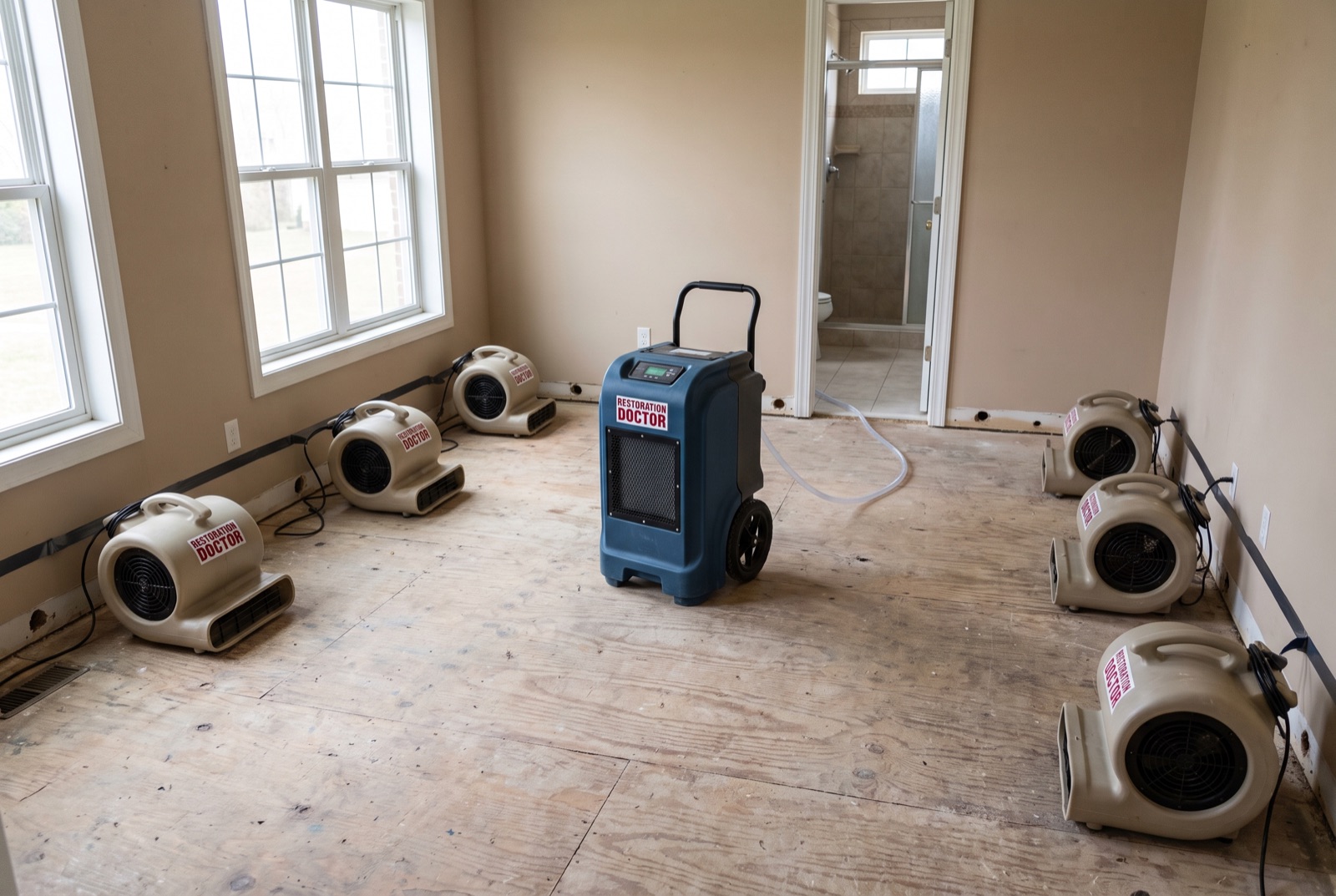
Extraction, structural drying, and moisture verification for burst pipes, appliance leaks, and basement flooding.
Frequently asked
Related questions
What should I do immediately after water damage?
Does water damage get worse over time?
How fast does mold grow after water damage?
How much water damage can a burst pipe cause?
Active water, mold, fire, or sewage event?
Connect directly with the Restoration Doctor team for your region. Crews are on standby 24/7 with documented response protocols.