
Does water damage get worse over time?
Yes, reliably. Untreated water damage compounds on a predictable timeline: mold risk climbs once materials stay wet past 24 to 48 hours, absorption and degradation continue over days, wood rot and corrosion develop over weeks, and structural problems follow over months. Every day of delay expands the affected area and shifts more materials from salvageable to replaceable.
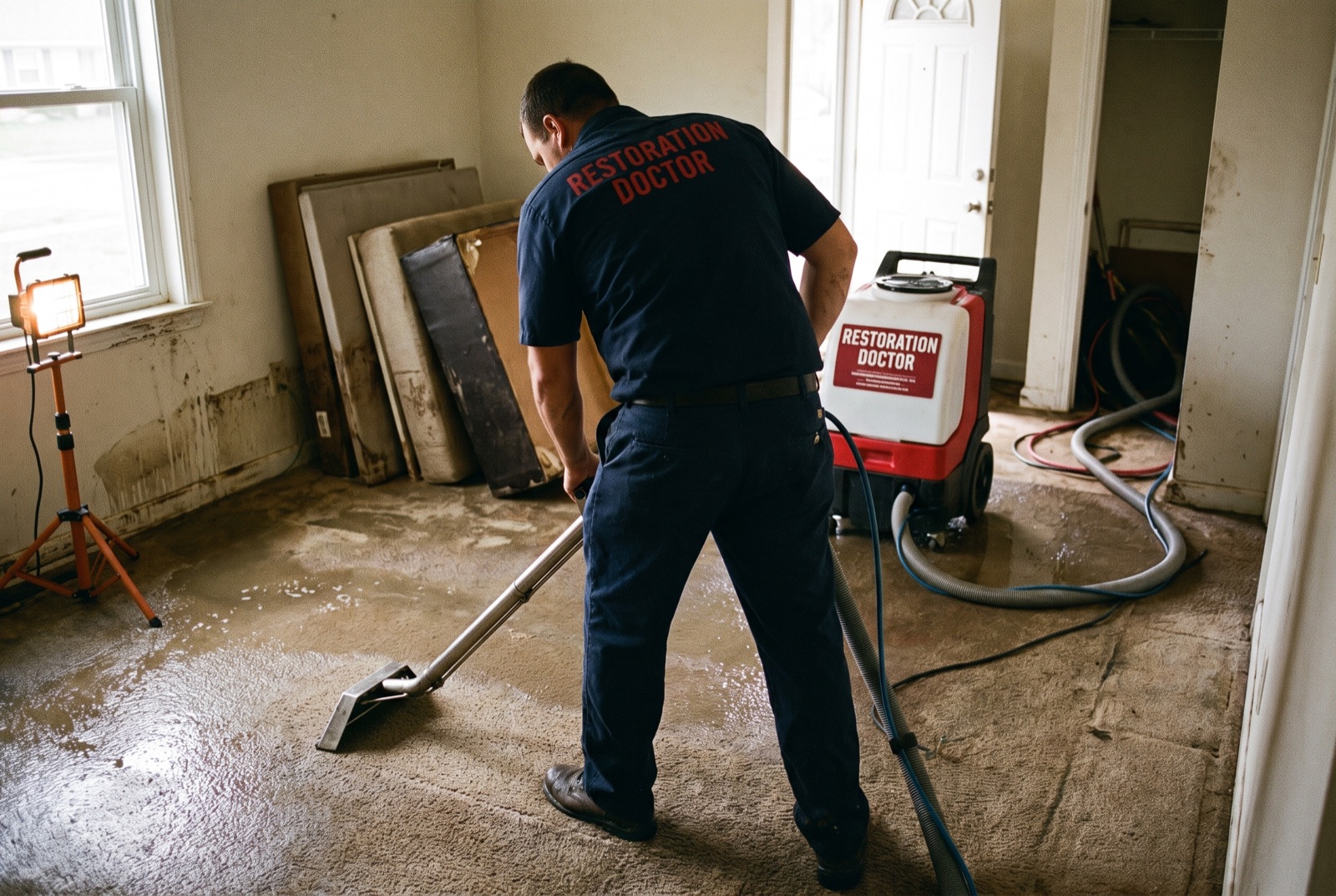
Why water damage never plateaus on its own
It's natural to hope a water problem has stabilized — the puddle is gone, the carpet feels dryish, the stain hasn't grown this week. But moisture inside a structure doesn't sit still. It migrates by wicking and vapor diffusion into adjacent dry materials, it feeds biological growth, and it sustains chemical and physical processes — corrosion, swelling, delamination — for as long as it's present.
The enclosed nature of building assemblies is what defeats passive drying. Room air may hold modest humidity, but inside a wet wall cavity or under a saturated floor, humidity stays near saturation because there's virtually no air exchange. Materials in those spaces can stay wet for weeks after every visible surface looks fine — and the whole time, the damage processes keep running.
The timeline of compounding damage
Hours: water spreads and absorbs. Drywall wicks, carpet pad saturates, MDF and particleboard begin swelling irreversibly, and finishes start staining.
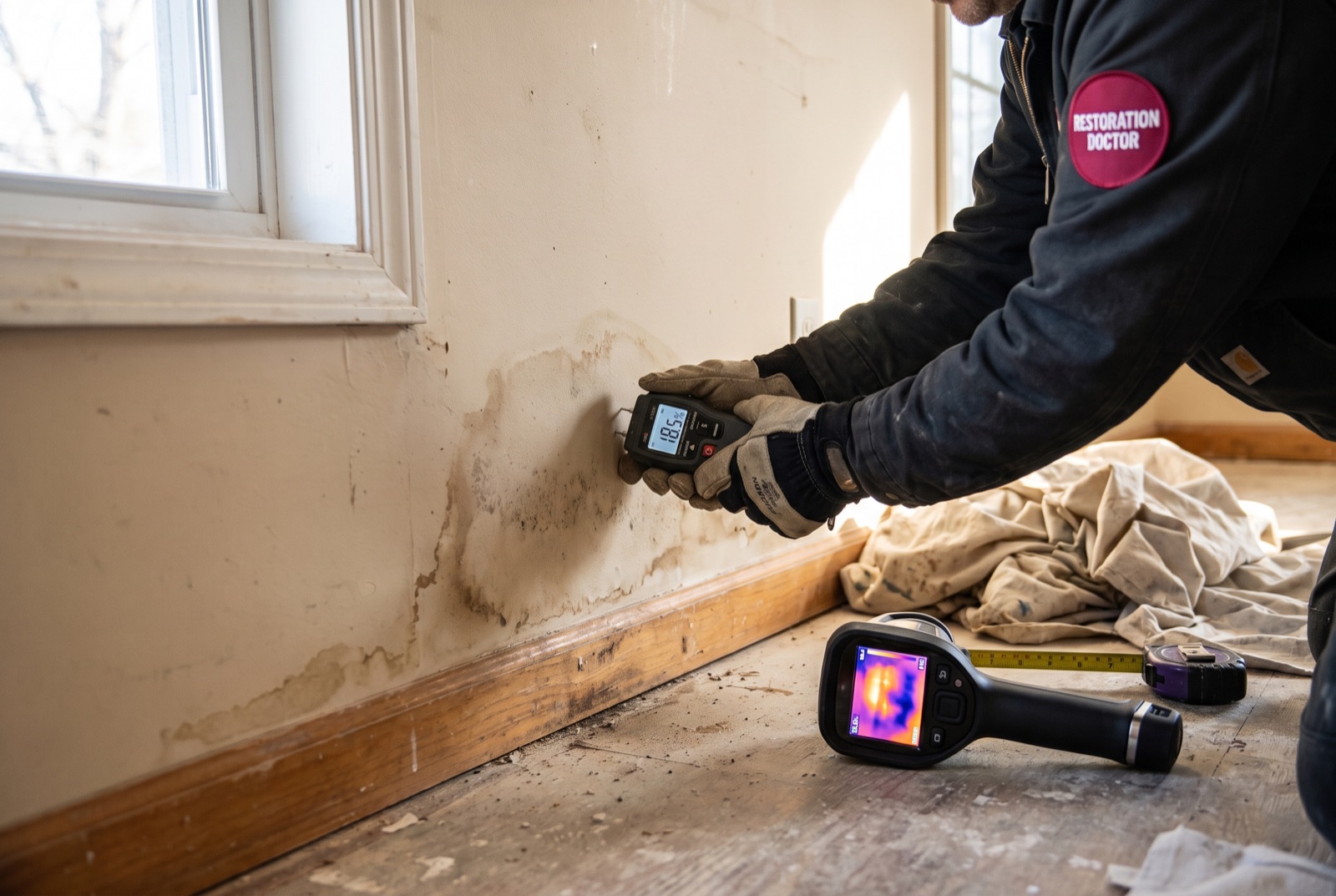
Days one to two: the drying window closes. Water-damaged materials should be dry within 24 to 48 hours to prevent mold growth; drywall paper, wood, and dust films still damp past that point are at risk for colonization. Clean water degrades toward gray as it dwells in contact with soiled materials.
Days three to seven: mold becomes established and may become visible; odor develops. Hardwood progresses from cupping toward buckling. Drywall softens and sags. Swollen doors and trim stop fitting.
Weeks: decay fungi establish in chronically wet framing and subfloor — the beginning of rot. Fasteners and corner bead corrode. Delaminating subfloor loses strength. What began as a drying project is now demolition, remediation, and reconstruction.
Months: structural deterioration, entrenched mold reservoirs in cavities, and secondary damage well beyond the original footprint. At this stage the original leak is often a minor line item compared to what the time did.
The cost curve — and the insurance angle
Cost tracks that timeline directly. A promptly extracted and dried clean-water loss may need little or no demolition; the identical loss addressed two weeks later can require flooring, drywall, and insulation removal across every affected room, plus mold remediation under containment. Restoration professionals see this comparison play out constantly — response speed is the single biggest cost variable a homeowner controls.
Delay also complicates insurance. Policies require the insured to take reasonable steps to prevent further damage after a loss; damage that worsened because nothing was done can be contested, even when the original event was covered. Prompt, documented mitigation — extraction, drying equipment, moisture logs — is both the physical and the contractual answer.
Breaking the curve
The compounding stops the moment materials are actually dry — not surface-dry, but verified dry with moisture meters against a documented dry standard, per IICRC S500 practice. That's what professional mitigation delivers: extraction to remove the bulk of the water fast, engineered airflow and commercial dehumidification to strip the rest, and daily readings proving the trend until every material is back to normal.
Whether your loss happened an hour ago or a month ago, the best day to interrupt the curve is today. Restoration Doctor serves Northern Virginia, Maryland, and D.C. around the clock — call 1-888-29-FLOOD and stop the damage where it stands.
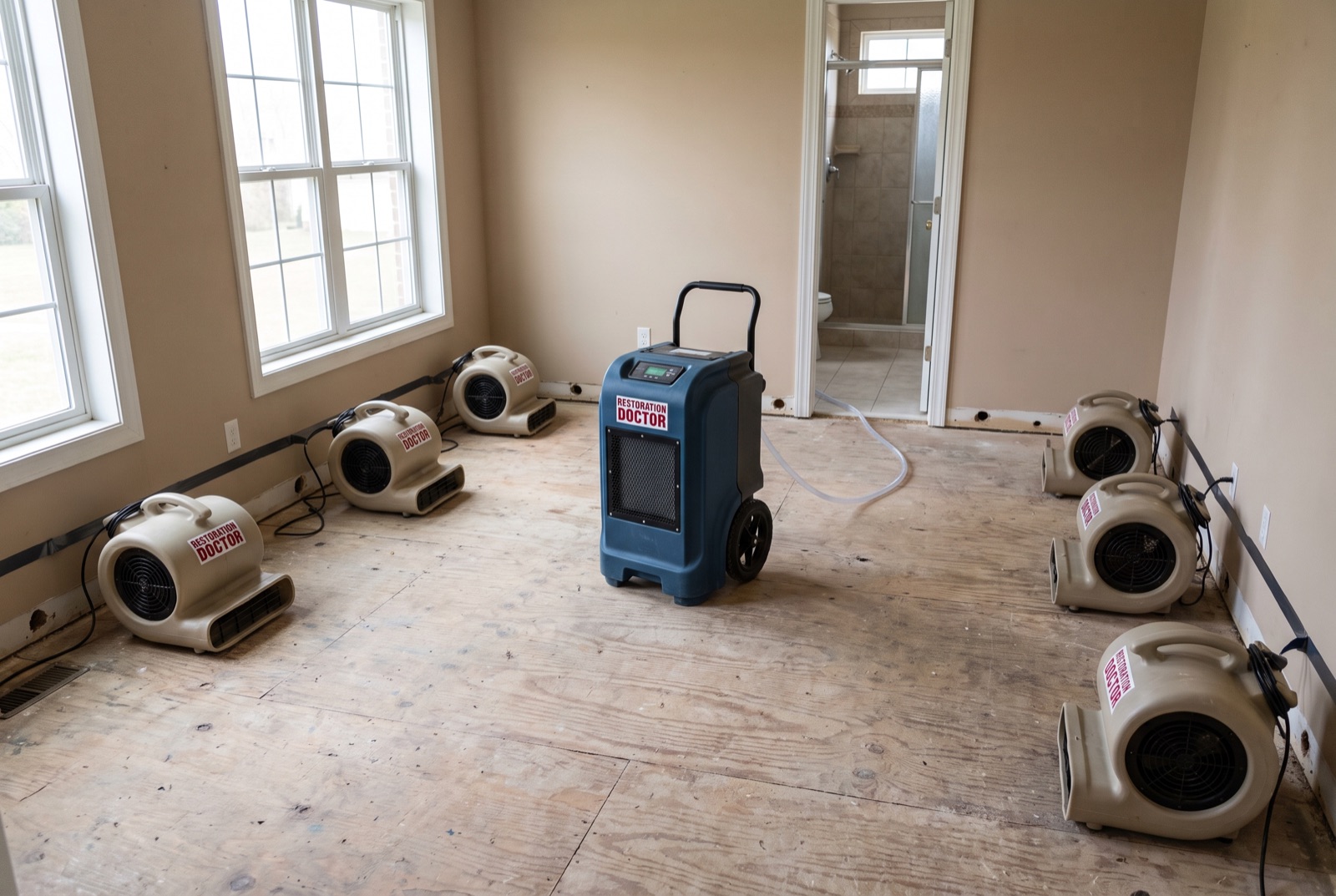
Water Damage Restoration
Extraction, structural drying, and moisture verification for burst pipes, appliance leaks, and basement flooding.
Frequently asked
Related questions
Will water damage go away on its own?
How long does it take for water to cause damage?
What happens if mold is left untreated?
Is water damage expensive to fix?
Active water, mold, fire, or sewage event?
Connect directly with the Restoration Doctor team for your region. Crews are on standby 24/7 with documented response protocols.