
How much water damage can a burst pipe cause?
A lot — a burst supply line at household pressure can release several hundred gallons per hour. An unnoticed burst running overnight or over a vacation can put thousands of gallons through a home, soaking multiple floors, collapsing ceilings, and driving restoration costs into five figures. Response time is the single biggest factor in the final number.
The math: why bursts escalate so fast
Residential water systems run at roughly 40 to 80 PSI. At those pressures, a fully severed half-inch supply line can discharge on the order of several hundred gallons per hour, and even a substantial split releases water far faster than most people expect. Run that overnight — eight hours — and you're in the thousands of gallons. Run it over a week-long vacation and the volume rivals a swimming pool.
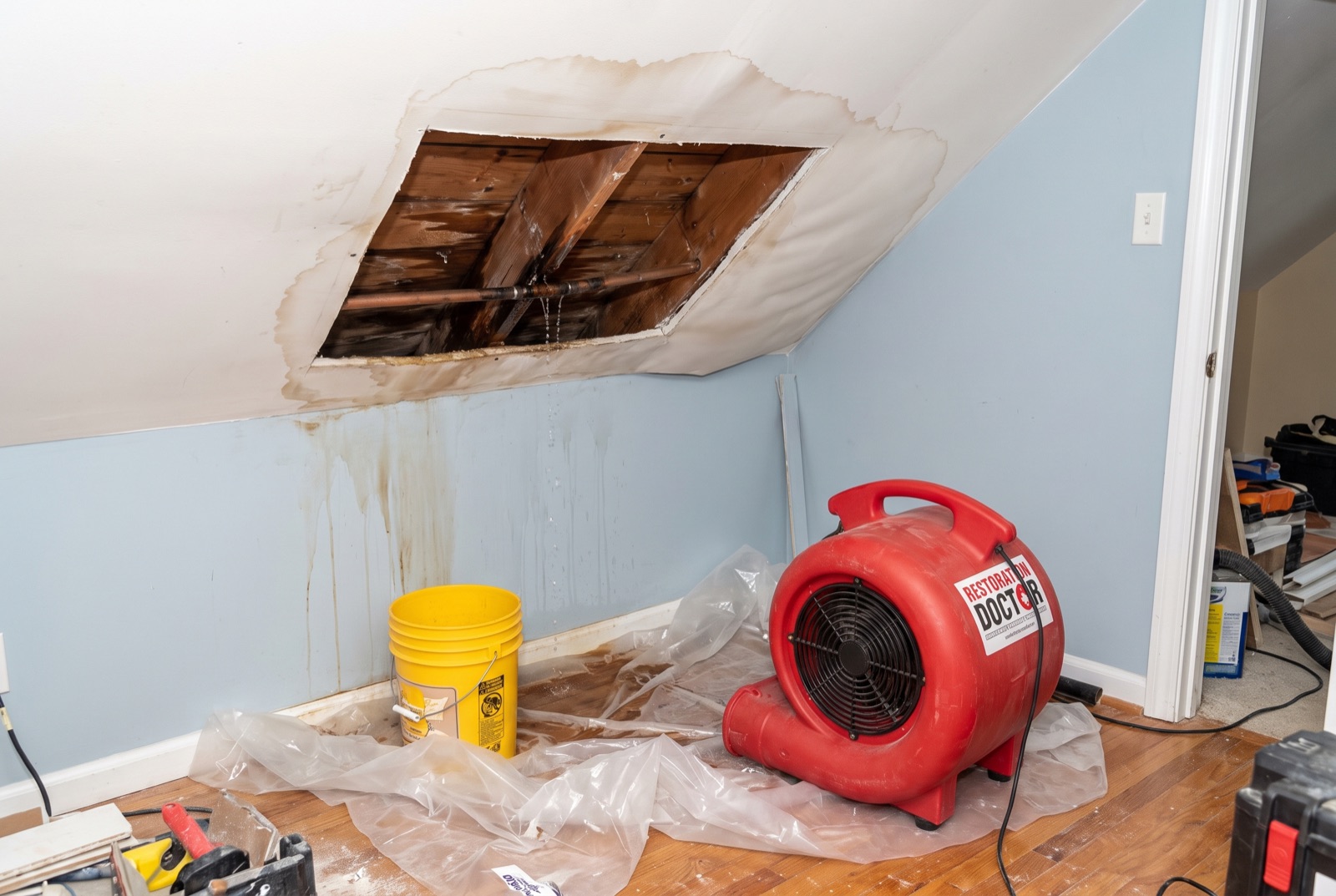
Volume is only half the story; placement is the other half. A burst on an upper floor sends water down through ceiling cavities, wall assemblies, and floor systems on every level below it. The classic worst case — a second-floor or attic supply line failing while the house is empty — routinely damages the upper bathroom, the bedrooms and hallway below, the main-level ceilings and kitchen, and the finished basement, all from one failed fitting.
What the water does to the structure
In the first hours, water saturates carpet and pad, wicks up drywall from the floor line, pours through can lights and ceiling fixtures, and pools on subfloor. Drywall ceilings holding water sag and can collapse. Within the first day or two, moisture trapped in wall cavities, insulation, and layered floor assemblies begins the secondary phase: materials still wet past 24 to 48 hours are at risk for mold, hardwood begins cupping, MDF trim and cabinet boxes swell permanently, and subfloor starts delaminating.
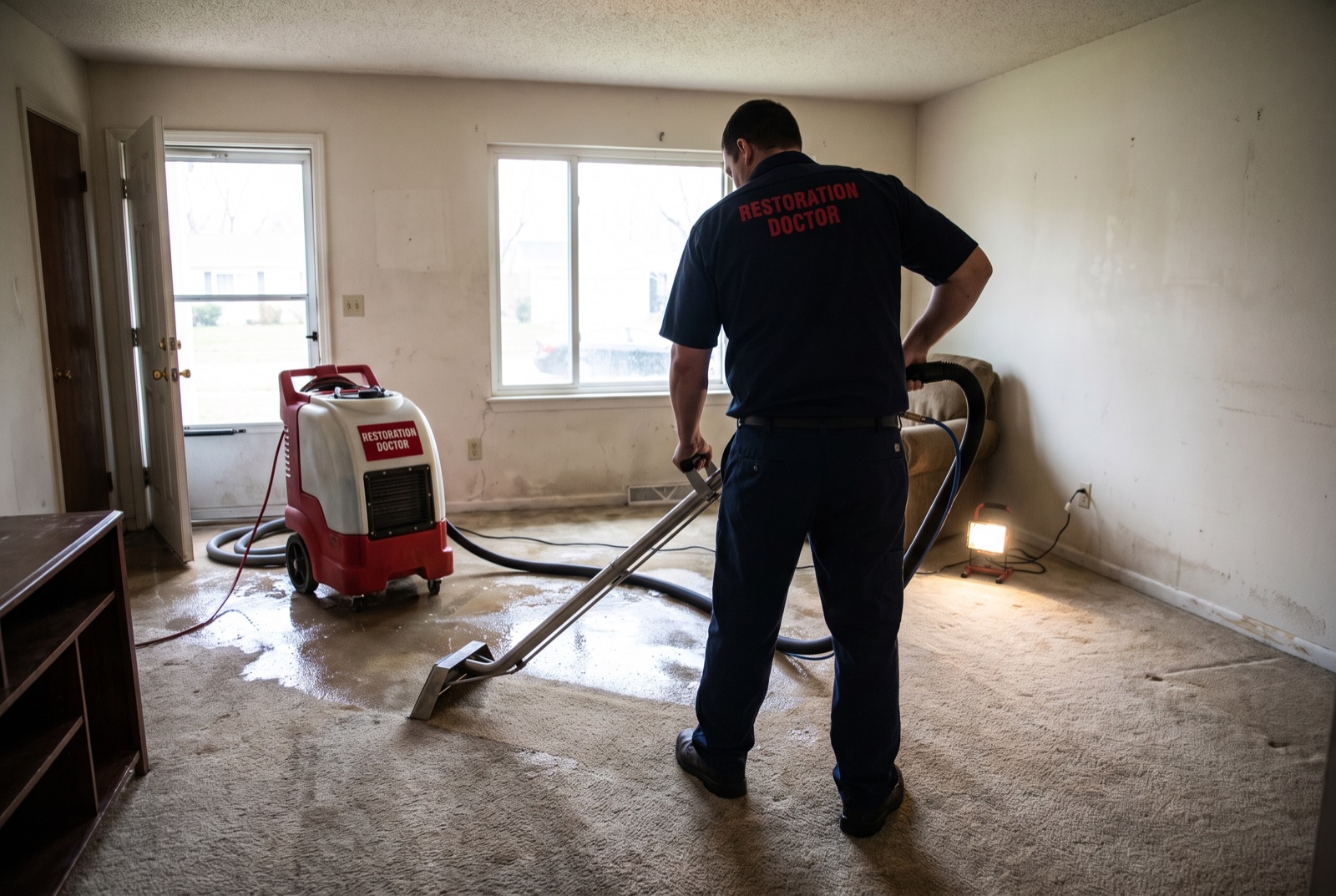
The gap between a caught-in-minutes burst and a caught-next-morning burst is dramatic. The first is often an extraction-and-dry project measured in days. The second frequently involves removing ceilings, flooring, and sections of drywall across multiple rooms, followed by weeks of reconstruction. The same pipe, the same water pressure — the difference is purely how long it ran.
What the damage typically costs
Costs vary widely with volume, dwell time, and finishes, so ranges are the honest way to talk about it. A small, quickly caught burst affecting one room might run in the low thousands for mitigation and repair. A multi-room loss with ceiling damage and flooring replacement commonly lands in the mid four figures to low five figures. Large multi-floor losses in finished homes — the vacation-burst scenario — regularly reach well into five figures once mitigation, demolition, and full reconstruction are counted.
The good news: sudden burst-pipe losses are among the most commonly covered homeowners claims (policies vary — review yours), and well-documented mitigation with moisture maps and daily drying logs per the IICRC S500 standard is exactly what carriers need to approve an appropriate scope.
Limiting the damage
Three things shrink the final bill more than anything else: knowing where your main shut-off valve is before you need it, catching the leak early (smart leak detectors and automatic shut-off valves have become inexpensive relative to one deductible), and getting extraction and structural drying started within hours rather than days. If a pipe has burst in your home, shut the main and call 1-888-29-FLOOD — Restoration Doctor responds 24/7 across Northern Virginia, Maryland, and D.C., and every hour saved moves materials from the replace column back to the save column.
Water Damage Restoration
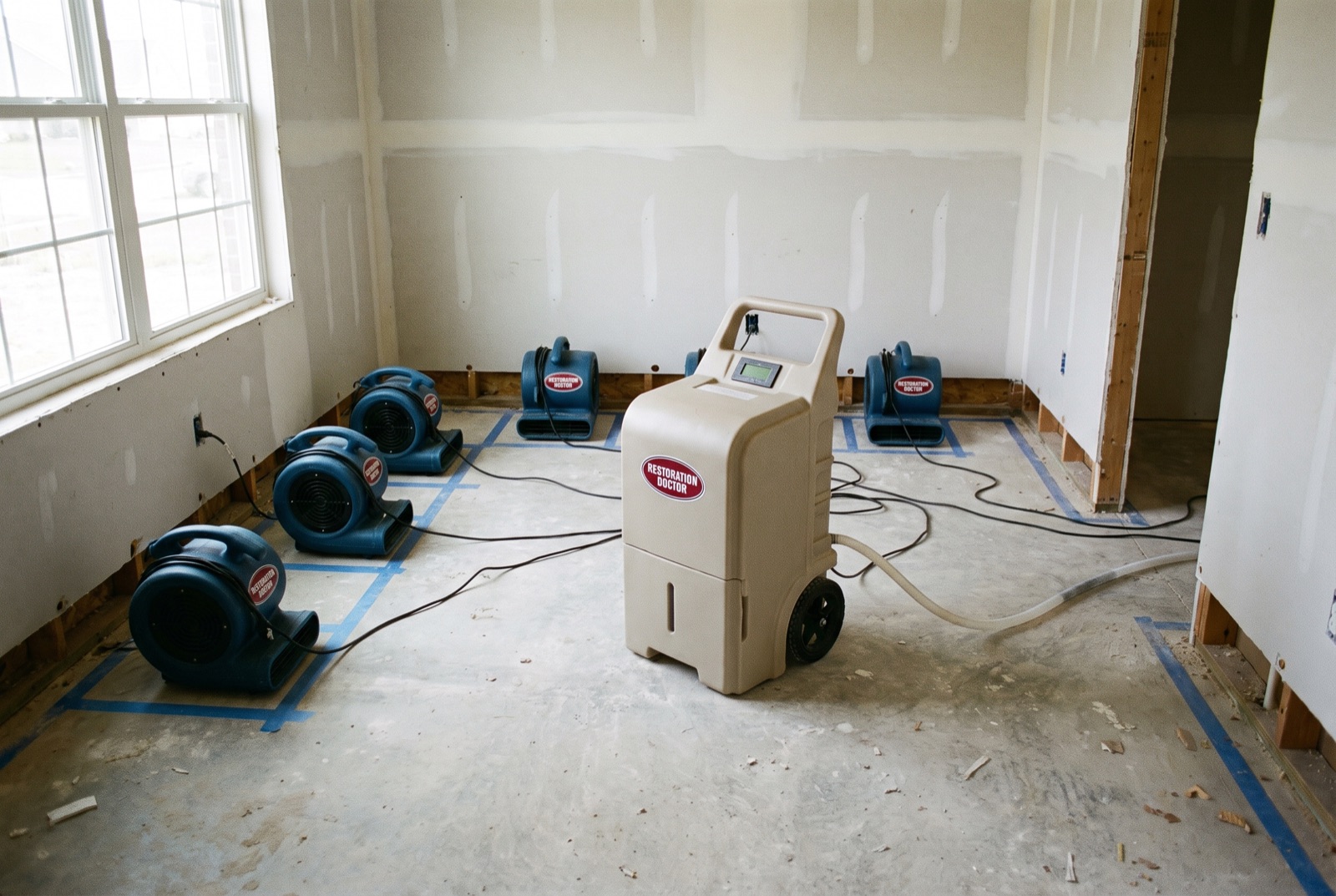
Extraction, structural drying, and moisture verification for burst pipes, appliance leaks, and basement flooding.
Frequently asked
Related questions
What do you do when a pipe bursts in your house?
Does insurance cover burst pipes?
How much does it cost to repair a burst pipe?
How long does it take for water to cause damage?
Active water, mold, fire, or sewage event?
Connect directly with the Restoration Doctor team for your region. Crews are on standby 24/7 with documented response protocols.