
How much does it cost to repair a burst pipe?
Two costs hide in this question. Industry guides put the plumbing repair itself — cutting out and replacing the failed section — in the hundreds to low thousands depending on access and location. The water damage restoration is the larger variable: it hinges on how much water escaped and how quickly extraction and drying began.
Cost one: fixing the pipe
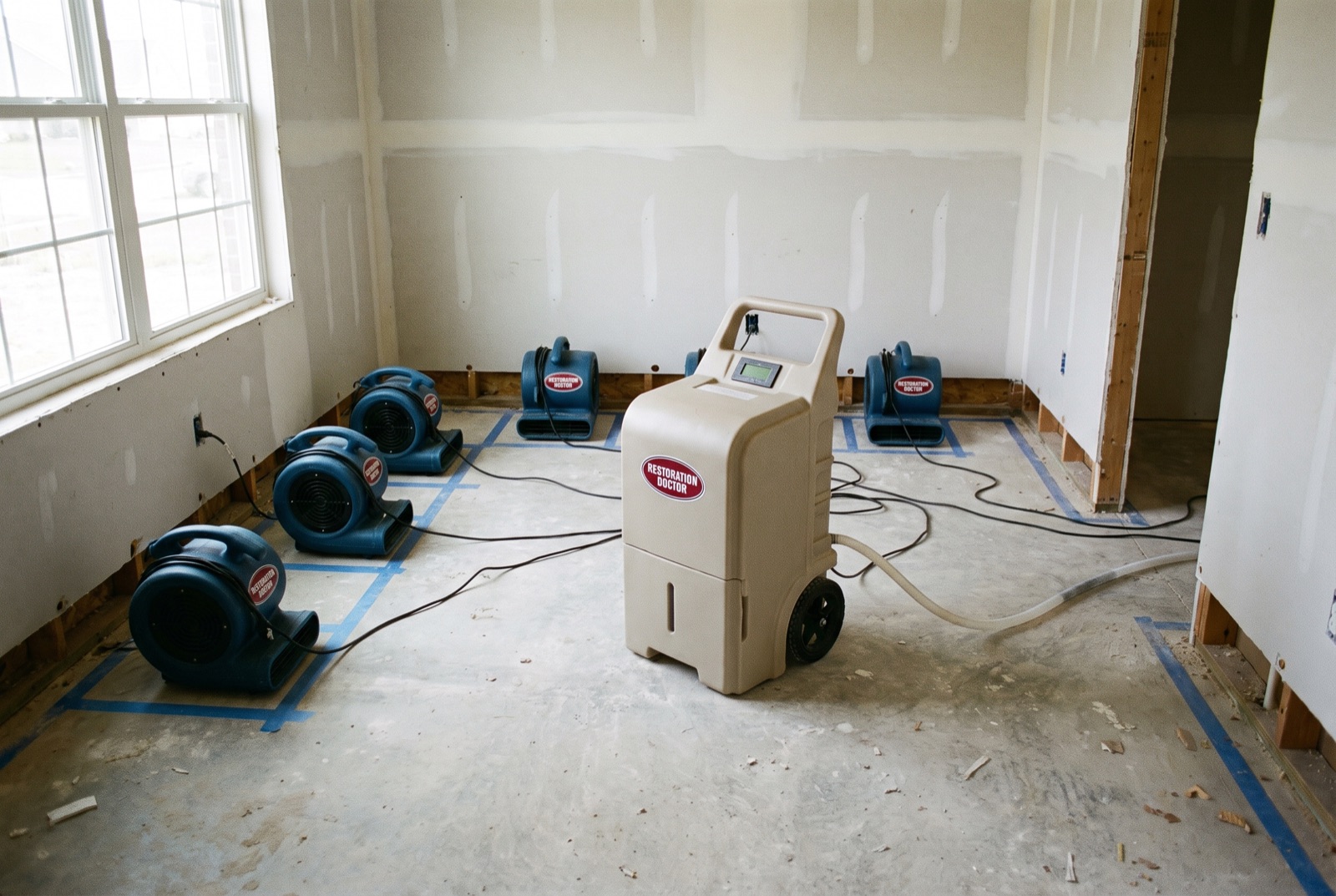
The plumbing repair is usually the smaller and more predictable half. A burst section in an accessible location — an exposed basement run, under a sink — is a straightforward cut-and-replace that industry guides price in the hundreds. Cost climbs with access difficulty: pipes inside finished walls or ceilings require opening and later repairing the surface; slab leaks and underground lines can require significant excavation and land at the top of the range, sometimes into the low thousands.
Material and cause matter too. A single freeze-split in copper is a local repair; widespread polybutylene or aging galvanized lines that burst are often a sign the system needs broader replacement, which is a repiping conversation rather than a repair one. Emergency after-hours plumbing rates also add a premium — one reason to know where your main shut-off is, so the emergency can at least stop flowing while repairs are scheduled.
Cost two: the water — and why it dominates
A burst supply line under household pressure releases water at a startling rate — hundreds of gallons per hour is realistic. A burst discovered in minutes might wet one room's flooring; a burst that ran overnight, or while the house was empty, can flood multiple rooms and pour through floor systems to the levels below. The restoration side of the bill scales with exactly that spread: from a modest extraction-and-dry scope in the hundreds to a multi-room, multi-floor loss in the five figures.
Between those extremes, the usual variables apply: what the water touched (hardwood, cabinetry, and finished basements are expensive; tile and unfinished space are forgiving), whether it reached wall cavities and subfloor, and — decisively — how fast drying started. The drying clock runs from the moment of the burst, and delay converts salvageable materials into demolition line items.
Who pays: usually your insurer, for the damage
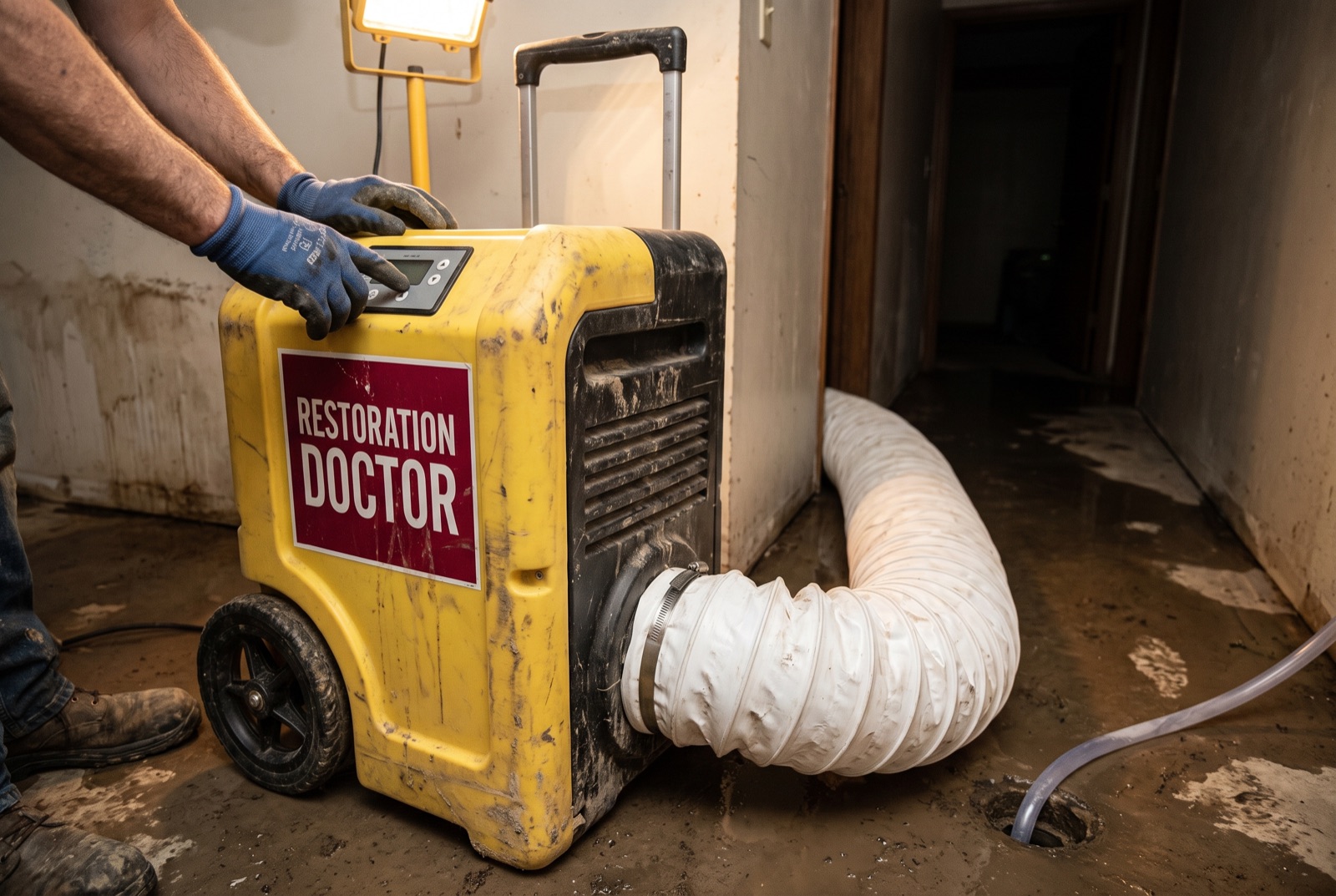
Burst pipes are the classic covered water loss: sudden, accidental, and squarely within standard homeowners policies — including freeze-bursts in homes that were kept heated. The coverage typically applies to the resulting damage (extraction, drying, demolition, repairs) minus your deductible; the pipe repair itself is commonly the homeowner's expense, since policies cover what the failure damaged rather than the failed component. Freeze losses in homes left unheated or vacant can be excluded, and policies vary — confirm specifics with your carrier.
Protect the claim from minute one: photograph the burst and the water before cleanup, keep the failed pipe section as evidence of sudden failure, and get mitigation started promptly — it's both a policy duty and the thing that caps the loss.
Handle both costs in the right order
The sequence that minimizes the total: shut the main valve immediately, get the water documented, get extraction and drying running within hours, and have the plumbing repaired in parallel. Restoration Doctor coordinates burst-pipe losses across Northern Virginia, Maryland, and D.C. end to end — emergency extraction, structural drying with daily moisture verification, demolition only where readings justify it, and itemized carrier-ready documentation throughout. When a pipe lets go, call 1-888-29-FLOOD; the restoration bill is being written by the minute until the water stops and the drying starts.
Water Damage Restoration
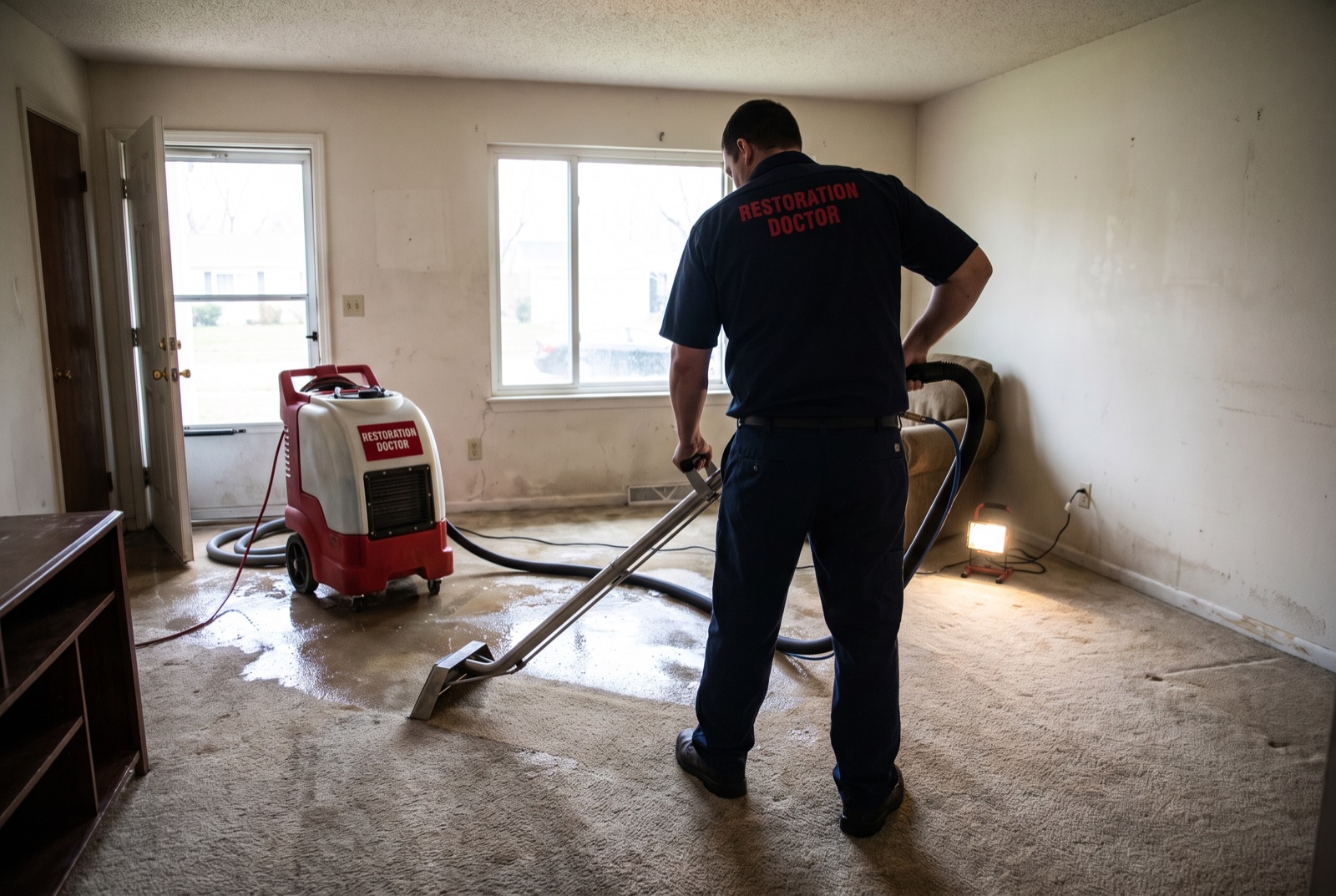
Extraction, structural drying, and moisture verification for burst pipes, appliance leaks, and basement flooding.
Frequently asked
Related questions
What do you do when a pipe bursts in your house?
Does insurance cover burst pipes?
How much water damage can a burst pipe cause?
How much does water damage restoration cost?
Active water, mold, fire, or sewage event?
Connect directly with the Restoration Doctor team for your region. Crews are on standby 24/7 with documented response protocols.