
What do you do when a pipe bursts in your house?
Shut off the main water valve immediately — every minute of flow adds gallons of damage. Cut electricity to affected areas, open faucets to drain remaining water from the lines, and move belongings out of the water's path. Photograph everything, then call an emergency water mitigation company; extraction and drying are time-critical.
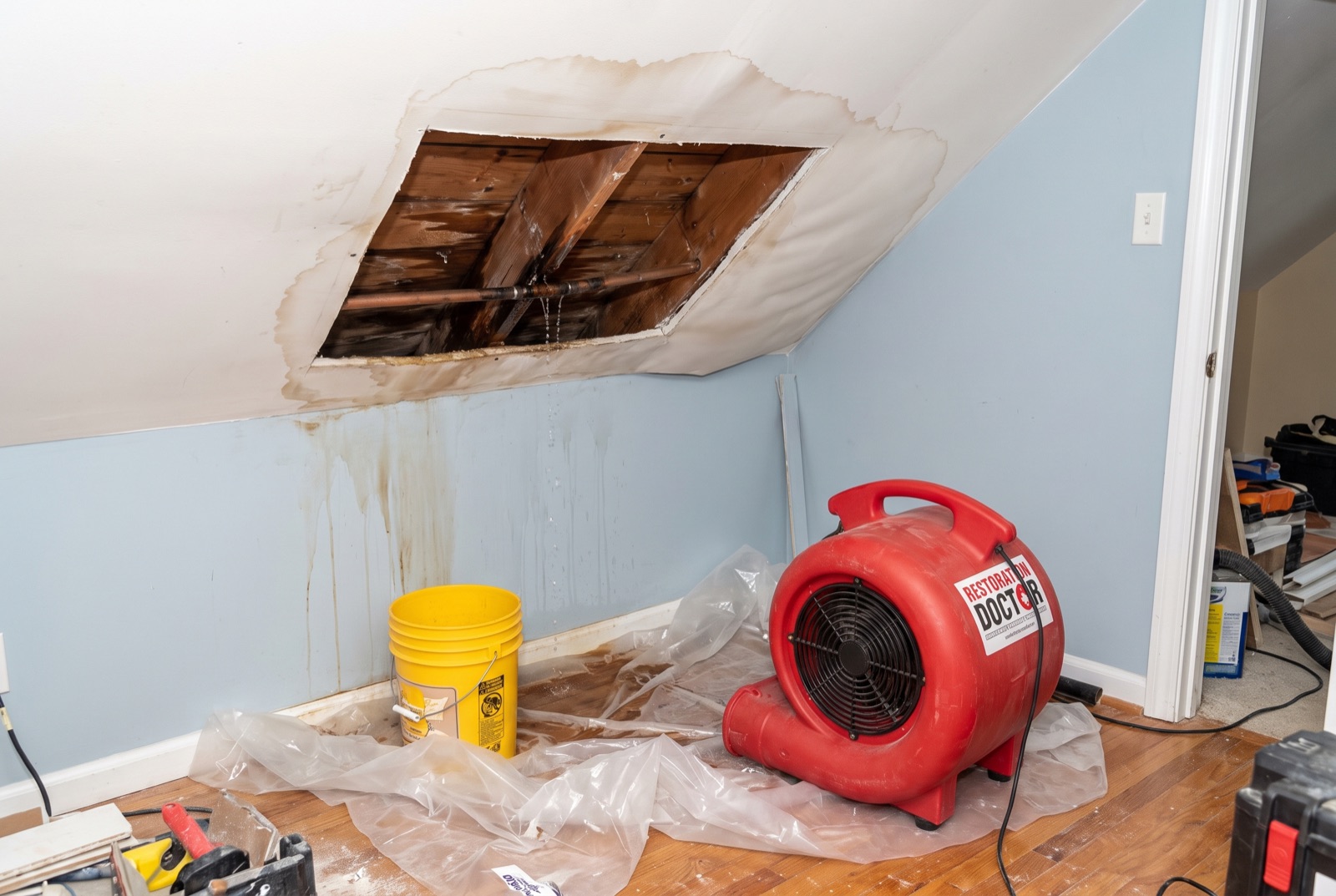
Step one: stop the water at the main valve
A burst supply line runs at full household pressure until someone closes the main shut-off valve. In most Northern Virginia, Maryland, and D.C. homes, that valve sits where the water service enters the house — commonly in the basement near the front foundation wall, in a utility room, or in a crawl space. Homes on wells shut off at the pressure tank; some townhomes and condos have the shut-off in a mechanical closet or behind an access panel.
Turn the valve clockwise until it stops (gate valves take several full turns; ball valves rotate a quarter turn until the handle sits perpendicular to the pipe). If the valve is stuck or you can't find it, the curb stop at the street can be closed by your water utility — call them while you contain what you can with buckets and towels.
Once the main is off, open the lowest faucet in the house and a couple of upper-floor faucets. This drains the water still sitting in the pipes, which otherwise keeps feeding the leak for several more minutes.
Make the area safe before you wade in
Water follows gravity into places where electricity lives — outlets, junction boxes, light fixtures, the panel itself. If water is pooling near anything electrical, or came through a ceiling with wiring above it, switch off the breakers serving those areas before you start moving furniture. If reaching the panel means standing in water, stay out and call an electrician or your utility.
Watch ceilings. Drywall holding water sags, bulges, and can drop suddenly. If a ceiling below the burst is bellied, keep people out of the room; a professional crew will relieve the water in a controlled way rather than letting it collapse.
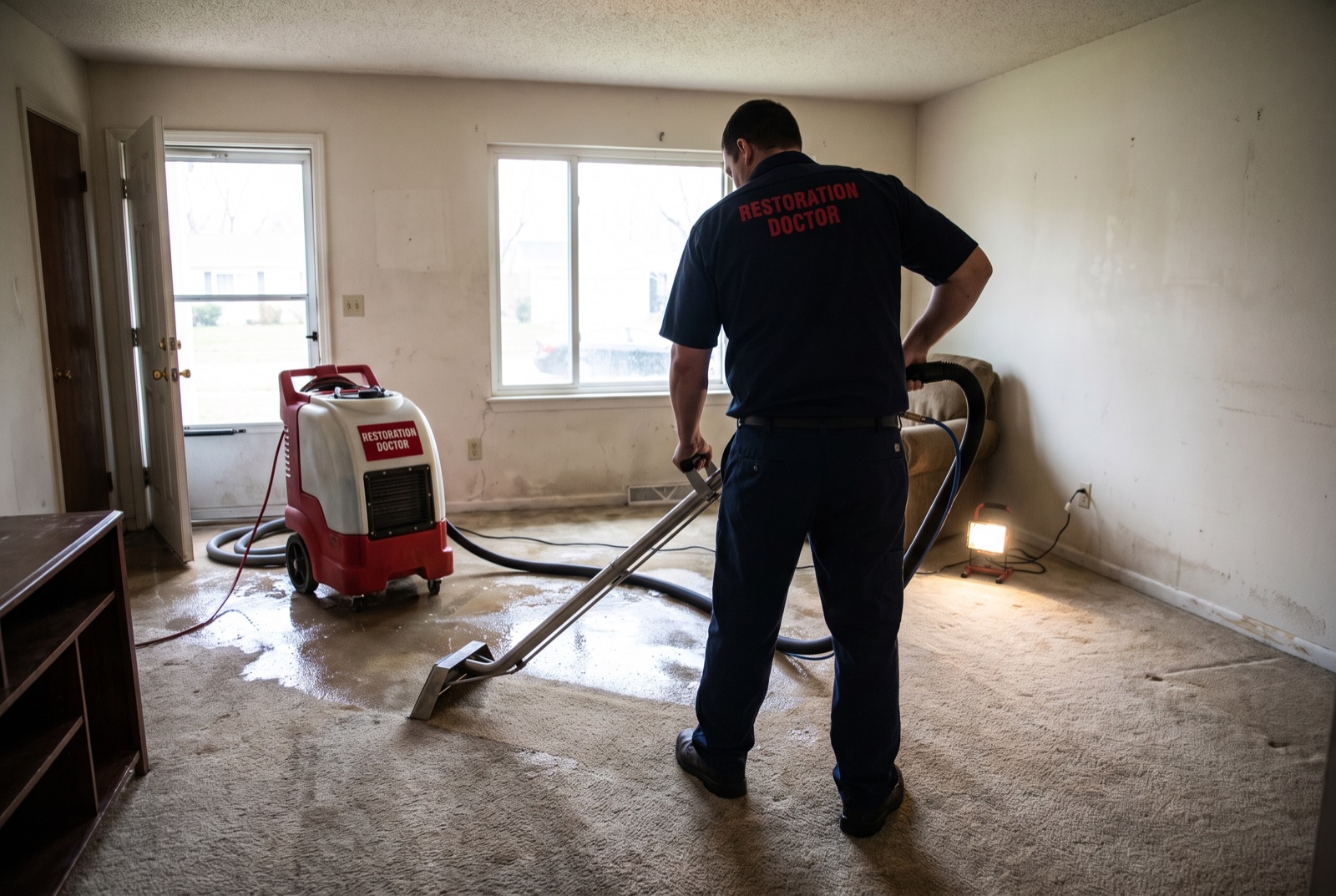
Document, then start mitigation immediately
Before major cleanup, photograph and video the burst pipe itself, the standing water, and every affected room and item. Keep the failed pipe section if it gets cut out — adjusters and, occasionally, subrogation investigators want to see it. Sudden pipe bursts are among the most commonly covered perils on homeowners policies, and the condition of your home in the first hour is evidence you can never recreate.
Then get drying started. Water from a burst wicks into drywall, subfloor, and wall cavities within minutes, and EPA guidance is to dry water-damaged areas and items within 24 to 48 hours to prevent mold growth. Professional crews extract standing water, map moisture with meters and thermal imaging, and set air movers and commercial dehumidifiers per the IICRC S500 standard — with daily readings that document the structure returning to dry for your insurance file.
Get a 24/7 crew on the way
Once the water is off and people are safe, call for emergency mitigation — don't wait for business hours or an adjuster's callback, since most policies require you to take prompt steps to prevent further damage. Restoration Doctor responds 24/7 across Northern Virginia, Maryland, and D.C. with truck-mounted extraction and full drying documentation. Call 1-888-29-FLOOD and a crew can typically be on site within hours.
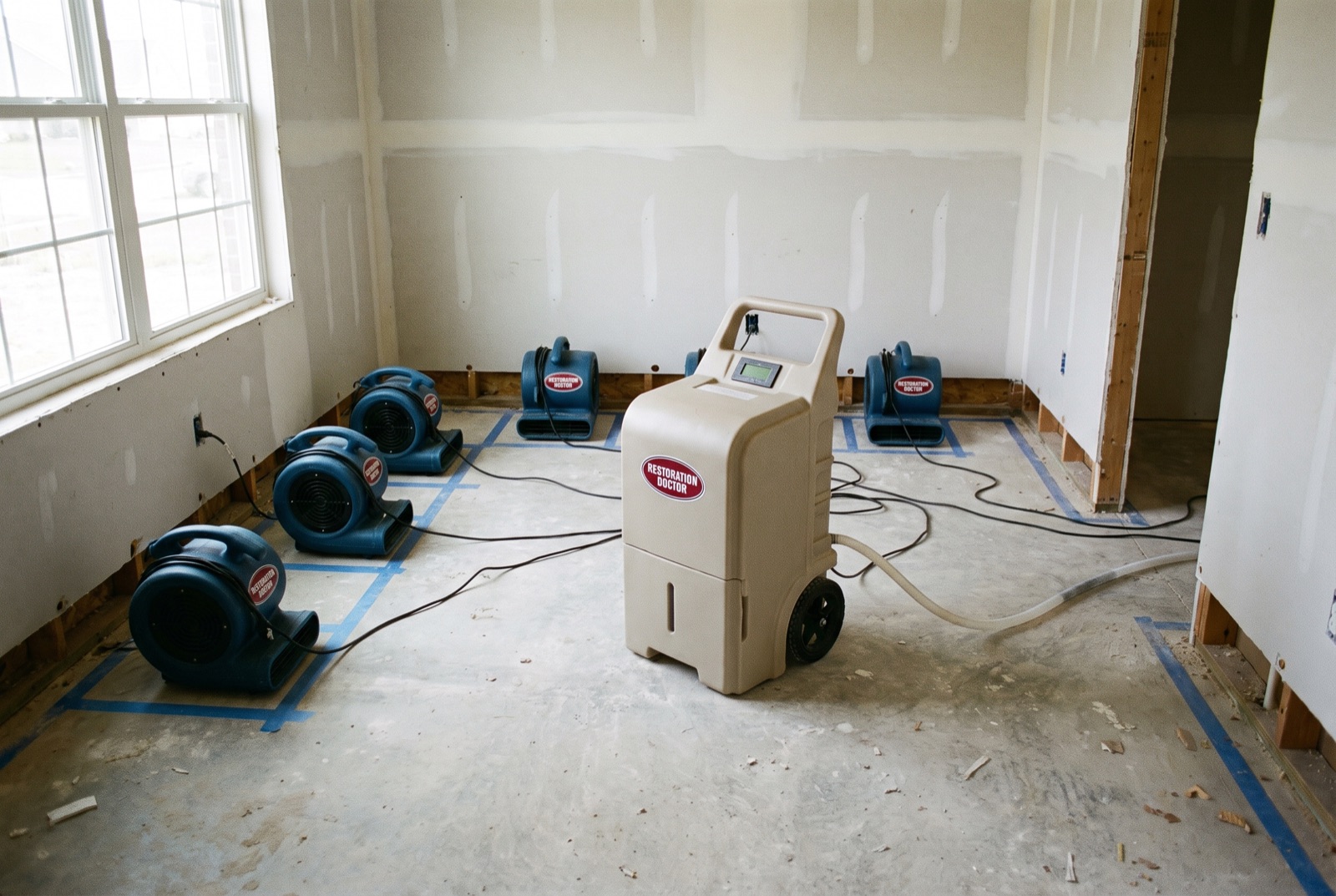
Water Damage Restoration
Extraction, structural drying, and moisture verification for burst pipes, appliance leaks, and basement flooding.
Frequently asked
Related questions
How much water damage can a burst pipe cause?
Does insurance cover burst pipes?
What should I do immediately after water damage?
How much does it cost to repair a burst pipe?
Active water, mold, fire, or sewage event?
Connect directly with the Restoration Doctor team for your region. Crews are on standby 24/7 with documented response protocols.