
Does water damaged drywall need to be replaced?
Not always. Drywall that got damp but stayed structurally intact, and that dries within roughly 24 to 48 hours, can usually be saved in place. Drywall that is sagging, crumbling, saturated above the tide line, colonized by mold, or touched by sewage-contaminated water must be cut out and replaced.
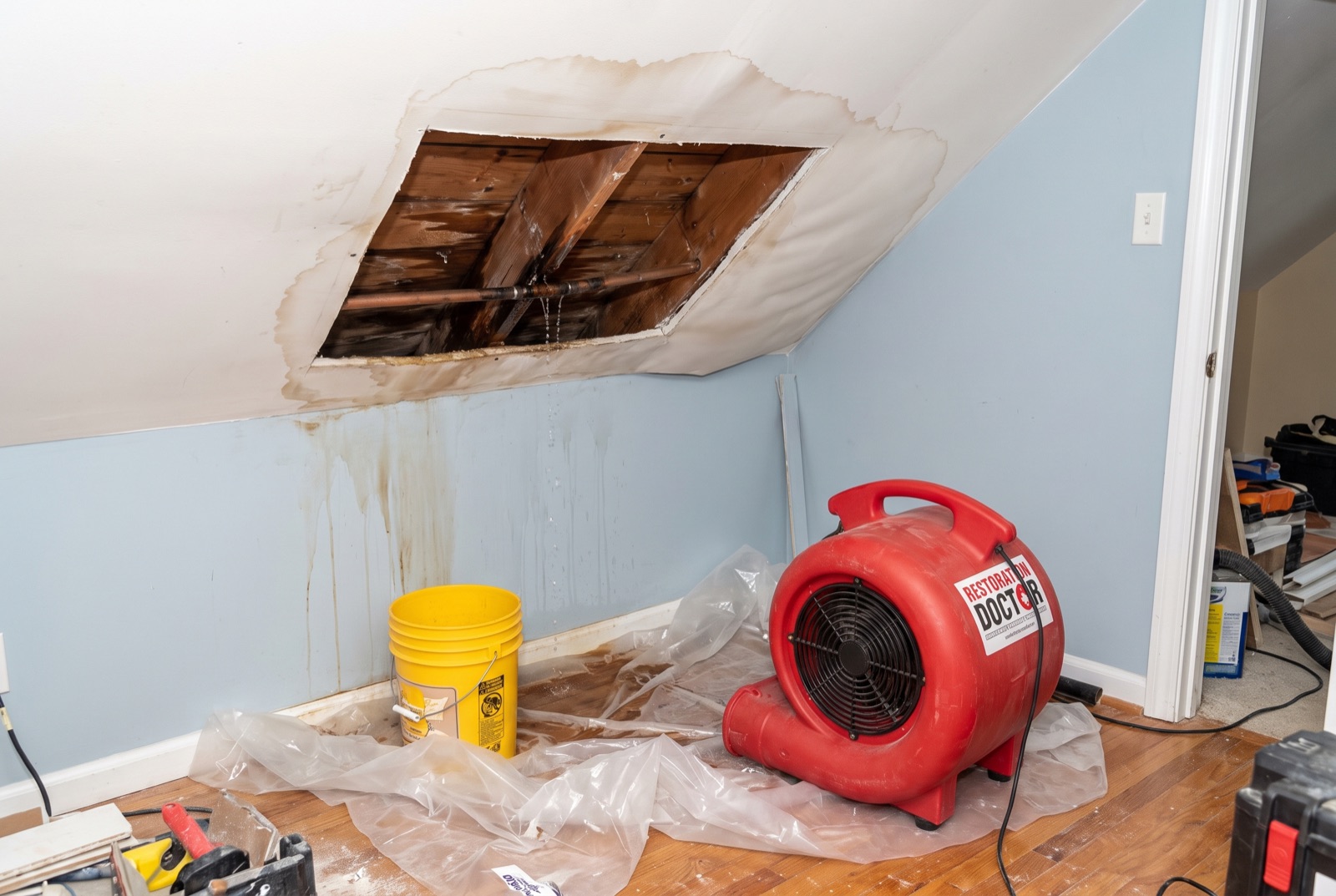
The save-or-replace decision, in plain terms
Drywall is gypsum pressed between two paper faces. The gypsum core tolerates a brief wetting surprisingly well; the paper faces and joint compound are the weak points. When water exposure is short and drying starts fast, the board can return to its original strength and never needs to come out. When the board stays saturated, the core softens, the paper delaminates, and fastener heads pull through — at that point no amount of drying restores it.
Restoration crews don't make this call by eye. They measure moisture content with penetrating meters, compare readings against an unaffected reference wall, and track whether the material is actually releasing moisture day over day. Drywall that holds firm, reads as drying on schedule, and shows no biological growth typically stays. Drywall that reads saturated after extraction, feels soft under light pressure, or bulges gets scheduled for removal.
How water moves through a wall: wicking and the flood cut
Water on a floor doesn't just wet the bottom edge of the wall — drywall wicks it upward like a paper towel, often well above the visible water line. That's why crews frequently make a "flood cut": removing the bottom section of drywall, commonly to a clean horizontal line at two or four feet, even when only an inch of water stood in the room.
A flood cut does three jobs at once. It removes the board that wicked water and can no longer be trusted, it exposes the wall cavity so insulation can be inspected or removed, and it opens the framing to direct airflow so the studs and sill plate dry quickly. Cutting to a standard height also makes the eventual repair clean — a straight seam at four feet is far easier to finish invisibly than a ragged patch.
Not every wet wall needs a flood cut. When Category 1 clean water is caught early, crews often dry walls in place by removing baseboard, drilling small ventilation holes at the wall base, and directing air into the cavity — saving the drywall and the repair cost entirely.
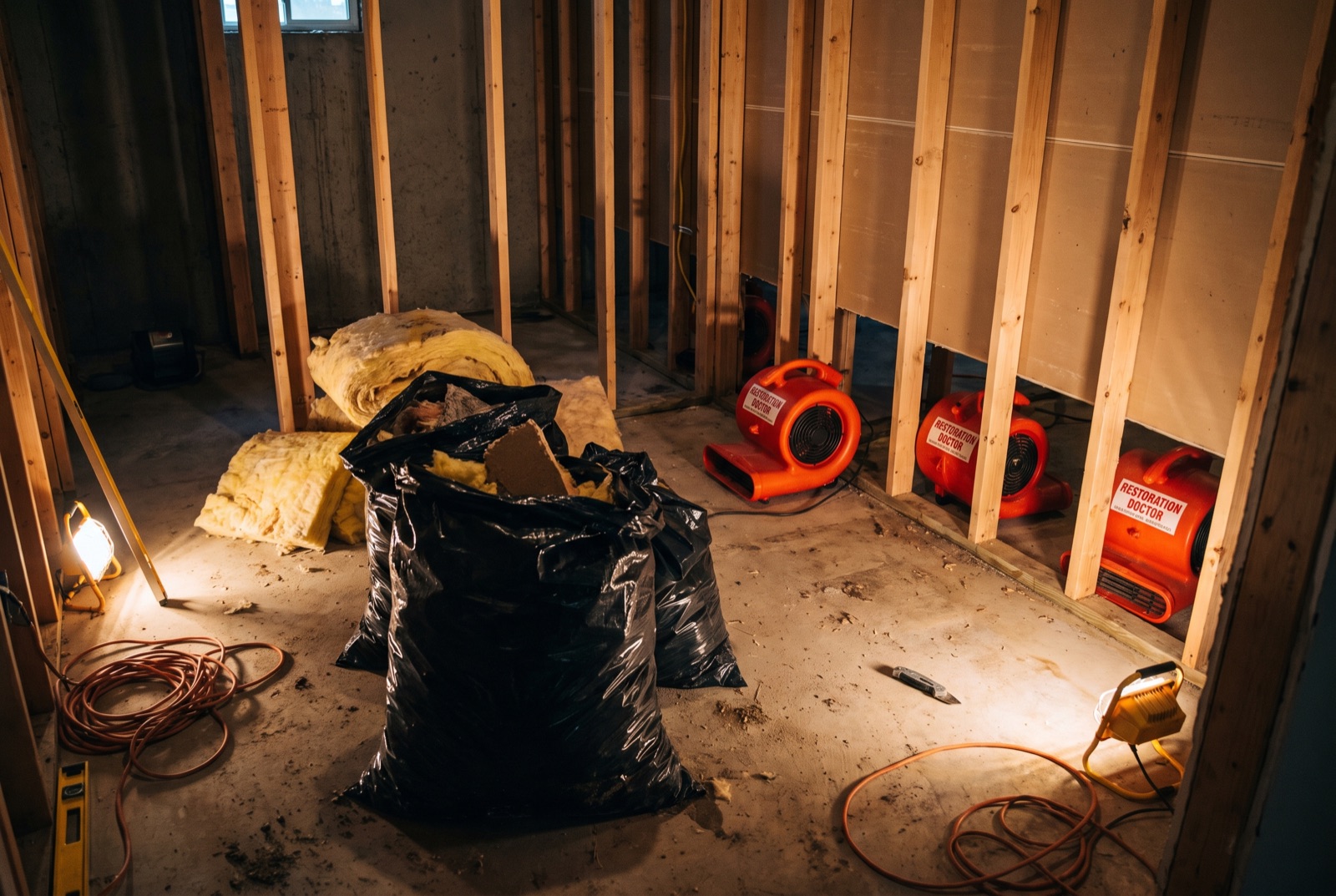
When replacement is not optional
Some conditions take the decision out of everyone's hands. Sewage backups and outdoor floodwater are Category 3 losses under the IICRC S500 standard: porous materials the water touched, including drywall and insulation, are removed for hygiene reasons regardless of how well they might dry. Visible mold growth on or behind drywall likewise means removal under IICRC S520 remediation practice — colonized porous board is not a cleanable surface.
Physical failure is the other bright line. Sagging ceiling board, crumbling or chalky texture, paper that slides off under a thumb, and boards that have bowed between studs are all past recovery. Wet insulation behind the wall changes the math too: soaked fiberglass batts lose their loft and cellulose slumps, and pulling them usually requires opening the wall anyway.
Why fast, documented drying decides the outcome
The same sheet of drywall can land in either column depending on response time. Board that gets extraction and directed airflow on day one routinely dries in place; the identical board left wet for a week becomes demolition plus mold remediation. Speed is the variable you control.
Documentation decides how smoothly the insurance side goes. A moisture map showing exactly which walls were affected, daily meter readings showing what dried and what didn't, and photos of every removal give your adjuster a verifiable record of why each square foot was saved or replaced. Restoration Doctor documents every loss this way — meter logs, a CompanyCam photo trail from first arrival through completion, and IICRC S500-aligned drying records — and runs its own in-house crews for both the drying and the rebuild. If you're looking at wet drywall and wondering which way it goes, call 1-888-29-FLOOD for an assessment.
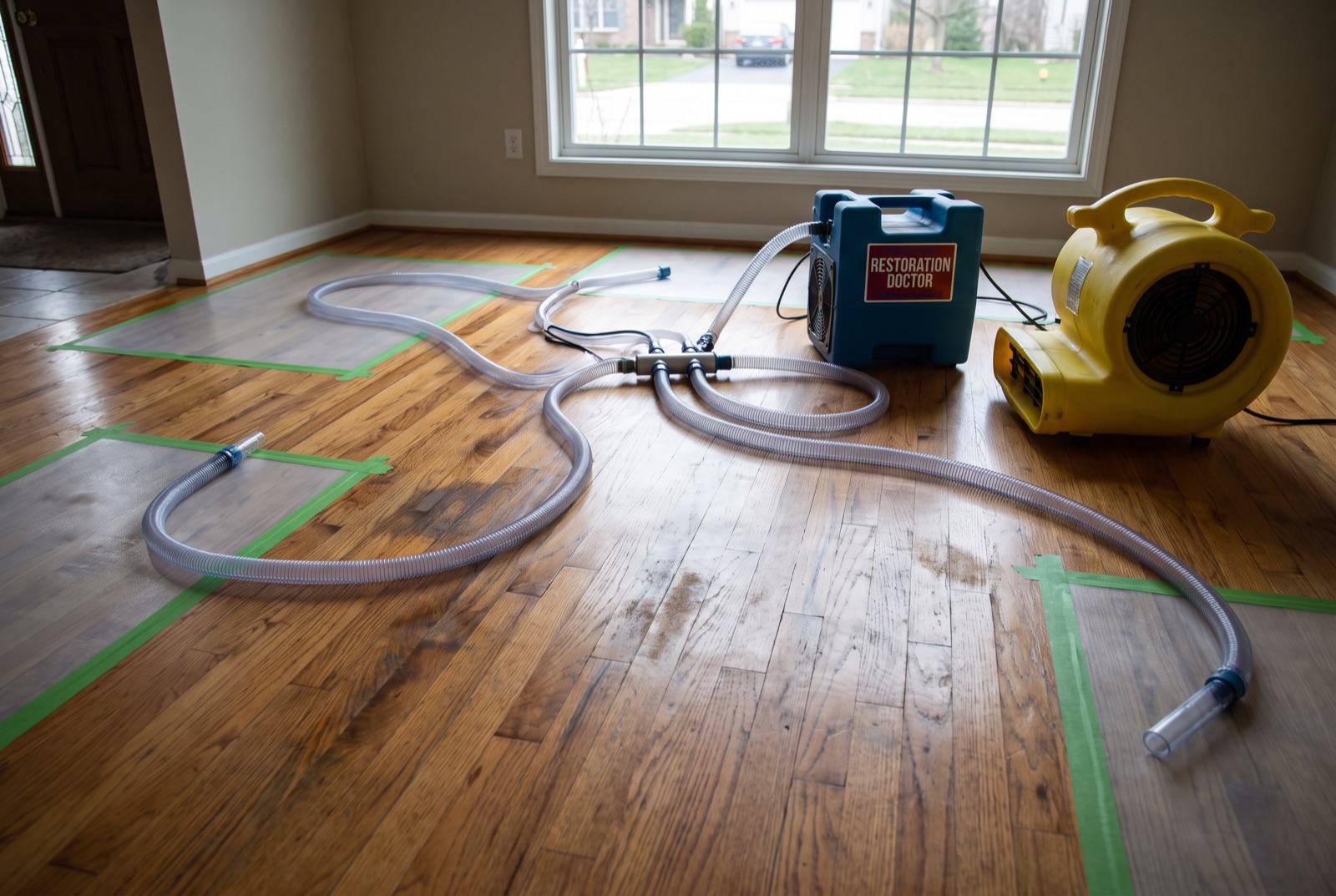
Water Damage Restoration
Extraction, structural drying, and moisture verification for burst pipes, appliance leaks, and basement flooding.
Frequently asked
Related questions
How long does it take for water to damage drywall?
Should baseboards be removed after water damage?
Can you just paint over water damage?
How can you tell if a ceiling has water damage?
Active water, mold, fire, or sewage event?
Connect directly with the Restoration Doctor team for your region. Crews are on standby 24/7 with documented response protocols.