
Should baseboards be removed after water damage?
Usually, yes. Baseboards trap moisture against the bottom of the wall — exactly where drywall wicks water — so removing them exposes the wall base for inspection and drying and lets crews vent the wall cavity. Solid wood trim often reinstalls afterward; MDF baseboard that has swelled is replaced.
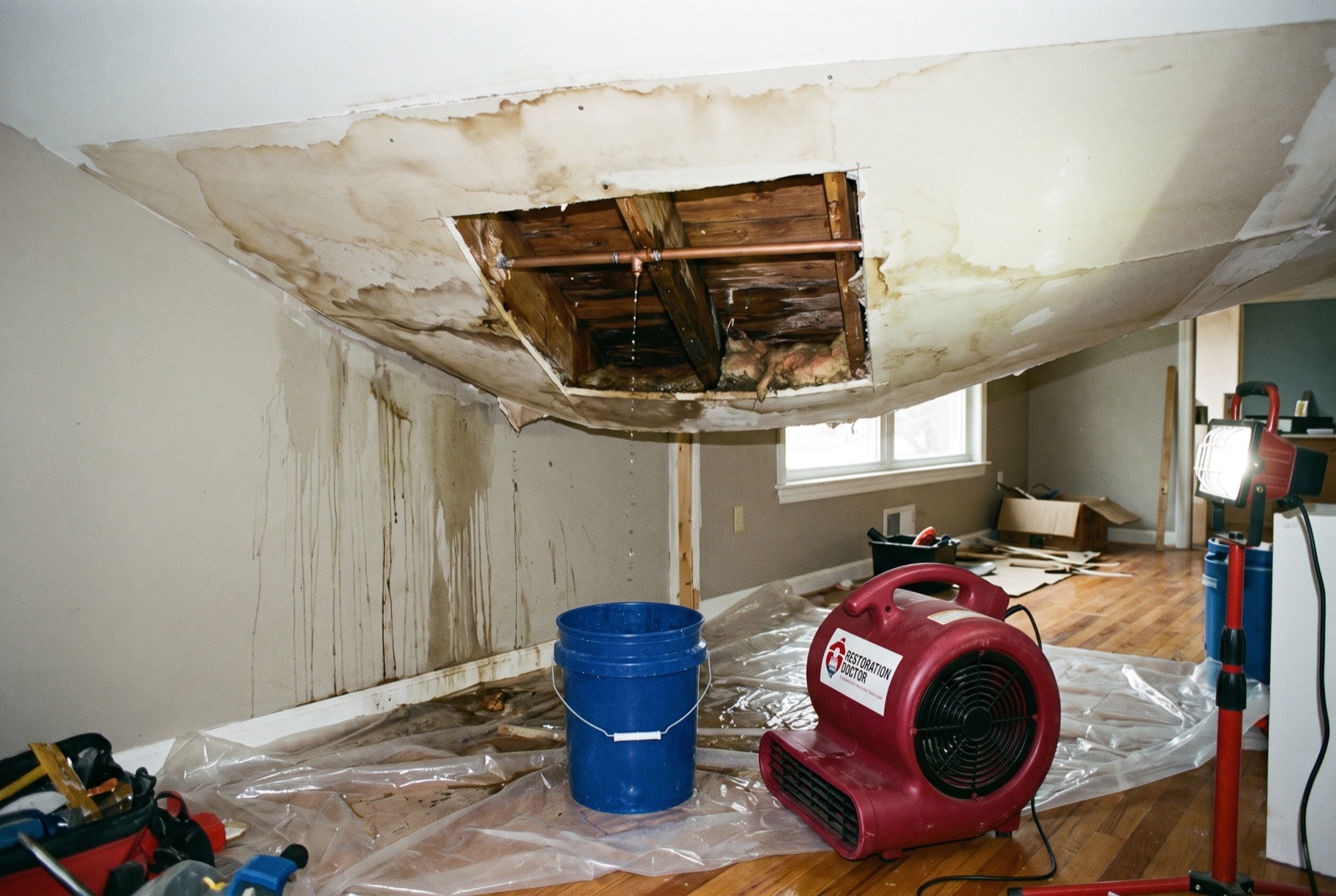
Why the baseboard comes off
When water crosses a floor, the bottom few inches of every wall it touches get wet — and that zone is hidden behind trim. Baseboards, their caulk lines, and the paint sealing them to the wall form a moisture trap: water gets behind them easily and evaporates from behind them very slowly. Leaving trim in place over a wet wall base is one of the most common reasons DIY dry-outs fail and mold appears at the floor line weeks later.
Removing the baseboard does three things at once. It reveals the true condition of the drywall base — staining, swelling, and softness that were invisible behind the trim. It exposes the gap at the bottom of the drywall so crews can check whether water entered the wall cavity. And it opens the surface for airflow, which is where the actual drying happens.
The vent-and-dry technique behind the trim line
With the baseboard off, crews can dry a wet wall from the inside without demolishing it. The standard technique is to drill small ventilation holes through the drywall at the wall base — in the strip that the reinstalled baseboard will cover — and direct air from air movers into the cavity while dehumidifiers strip the moisture from the room air. This turns a sealed, stagnant cavity into a ventilated one, and it's frequently the difference between saving a wall and flood-cutting it.
Progress gets verified, not assumed: daily moisture readings at mapped points along the wall, compared against an unaffected reference, until the assembly reaches dry standard under IICRC S500 practice. When the wall dries on schedule, the holes disappear behind the reinstalled trim and the wall never shows it was wet.
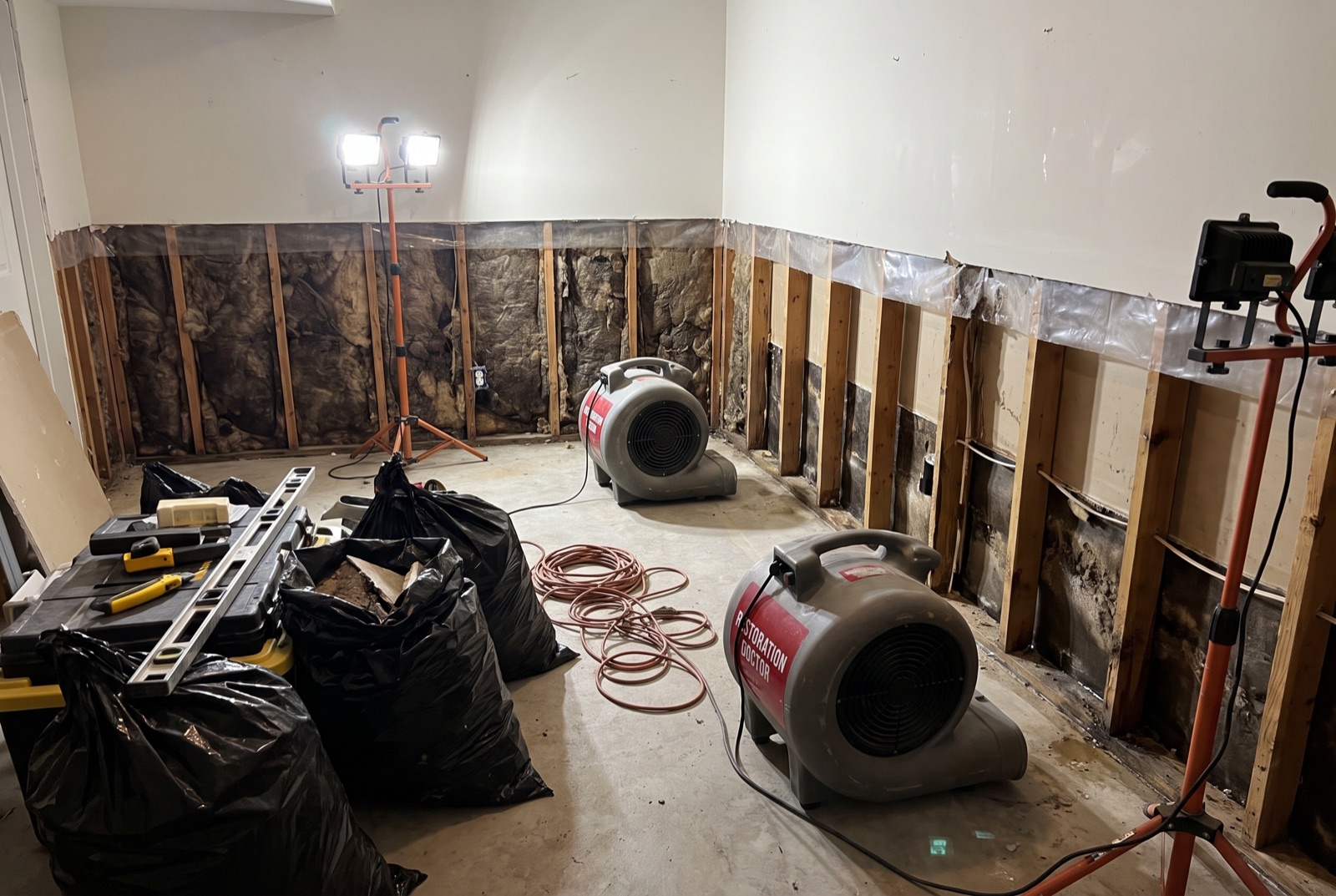
Which baseboards survive removal — and which don't
Material decides the trim's fate more than technique does. Solid wood baseboard is dense, tolerates a brief wetting, and usually pries off intact for reinstallation after drying. MDF — the most common baseboard material in homes built or renovated in recent decades — is compressed wood fiber that swells on contact with water and stays swollen; once you see the bottom edge bloated or the profile softened, that trim is a replacement item no matter how carefully it's removed.
Replacement is not a bad outcome. Baseboard is inexpensive relative to wall repair, and standard profiles are readily matched. Where a discontinued or custom profile can't be matched, the practical standard is to replace trim to a logical visual break so the room reads consistent — a scoping detail worth getting in writing on larger losses.
What removal reveals — and why documentation matters
Pulling trim is often the moment a loss shows its real size: swollen drywall base, wet sill plate, damp insulation slumping at the bottom of the cavity, or early mold on the back of the board. Finding that on day two is vastly better than finding it after a rebuild — it changes the drying plan while the change is still cheap.
Every step should be documented: photos of trim as found, the wall base after removal, meter readings before and during drying, and the material disposition (dry and reinstall versus replace). Restoration Doctor's crews photograph this entire sequence in CompanyCam and log readings daily, producing the itemized record insurance adjusters can verify line by line. If water has reached your walls, call 1-888-29-FLOOD — the right first cut is usually just a pry bar behind the baseboard.
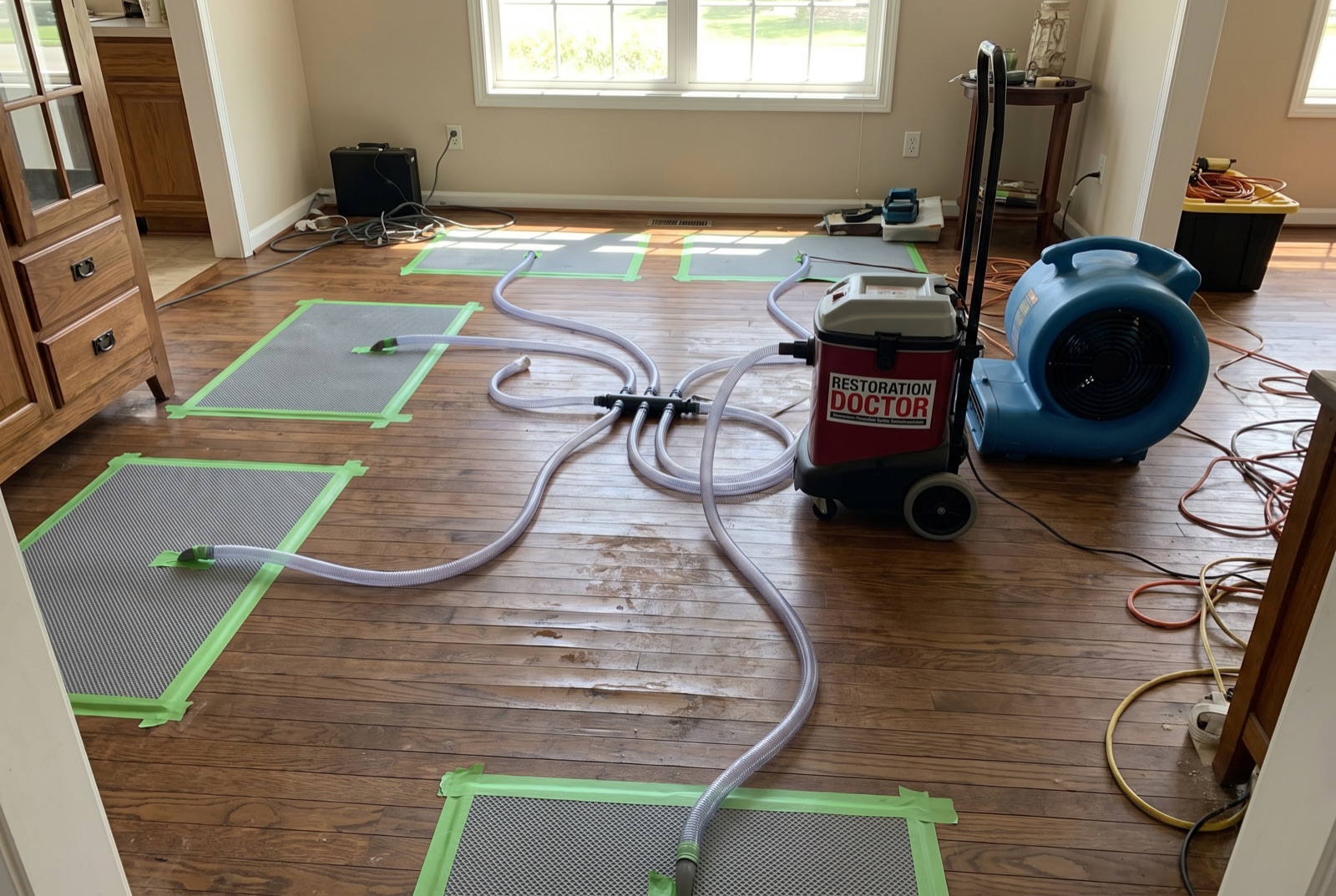
Water Damage Restoration
Extraction, structural drying, and moisture verification for burst pipes, appliance leaks, and basement flooding.
Frequently asked
Related questions
Does water damaged drywall need to be replaced?
How long does it take for water to damage drywall?
How do you know when walls are completely dry?
How do you know if there is water damage under your floor?
Active water, mold, fire, or sewage event?
Connect directly with the Restoration Doctor team for your region. Crews are on standby 24/7 with documented response protocols.