
How do you know if there is water damage under your floor?
The tell-tale signs are cupped or lifting boards, soft or spongy spots underfoot, gaps or peaking at seams, discoloration at edges, a musty odor, and hollow sounds when tapped. A moisture meter reading through the flooring — or thermal imaging — confirms trapped water without pulling the floor up.
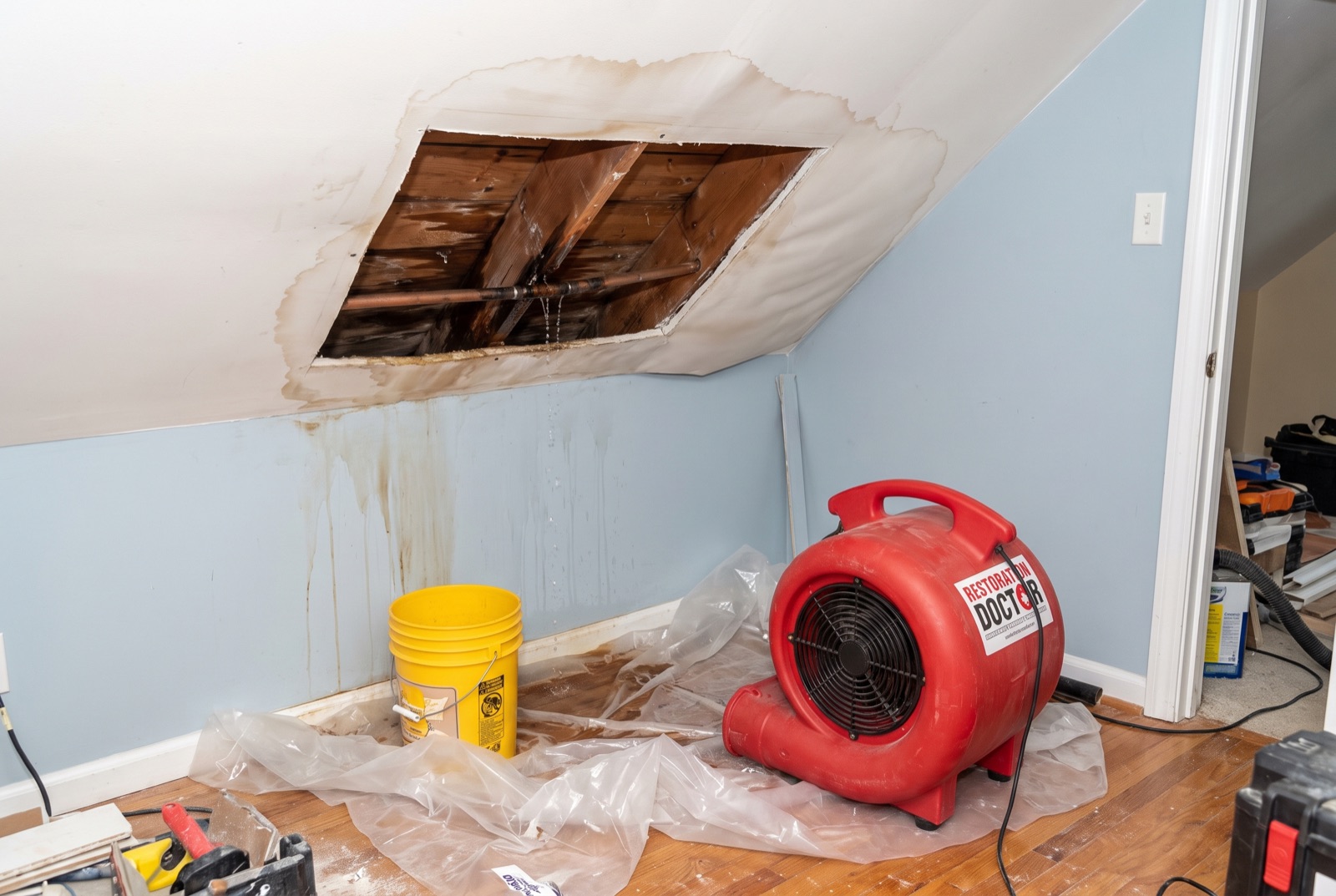
What your feet and eyes can detect
Water under a floor changes how the floor behaves before it changes how it looks. Sponginess or flex underfoot — a spot that gives slightly where the floor used to feel solid — is the classic sign of a wet subfloor losing stiffness. A new squeak or a hollow, drummy sound in one area points to flooring separating from subfloor as adhesives fail or fasteners lose grip.
Visually, each flooring type telegraphs differently. Hardwood cups — board edges rise while centers stay low — because moisture is entering from below. Laminate swells at the seams first, with edges peaking or whitening as the fiberboard core absorbs water. Vinyl plank can lift, bubble, or show adhesive release at edges. Tile is the quiet one: the tile itself is waterproof, so the evidence is darkened or crumbling grout lines, hollow-sounding tiles, or efflorescence — white mineral deposits — appearing at grout joints.
The nose and the utility bill
A musty, earthy odor with no visible source is one of the most reliable indicators of hidden moisture — it's the smell of microbial activity in a damp, enclosed space, and the gap under flooring is exactly that. An odor that strengthens in one room, or when HVAC runs, deserves investigation even with zero visible symptoms.
Two other quiet tells: an unexplained jump in the water bill points to a supply-side leak that may be running under a slab or floor system, and persistent condensation or humidity in one room suggests ongoing evaporation from a wet assembly below. In slab-on-grade homes, a warm spot on the floor is the signature of a hot-water line leaking under the slab.
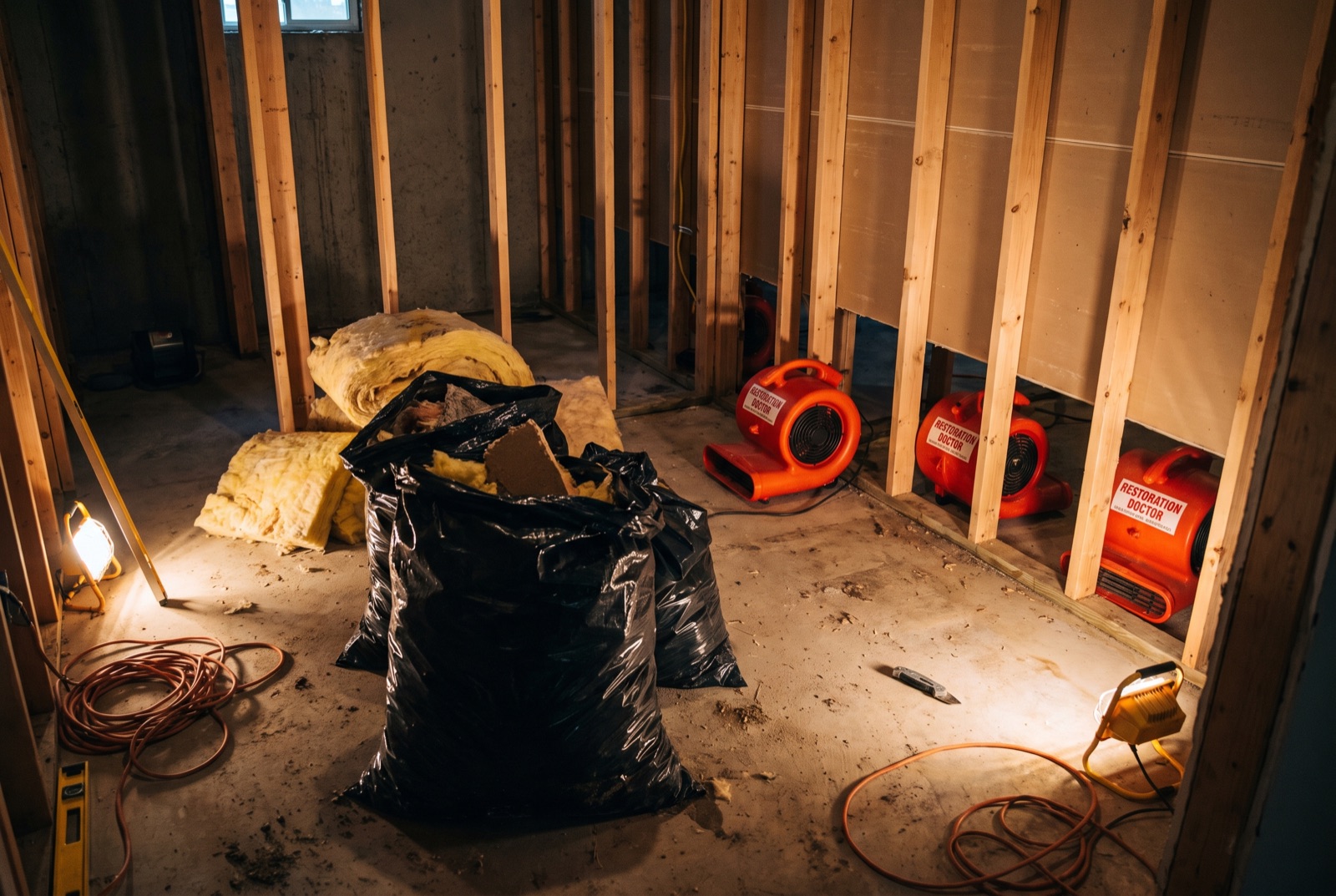
Confirming it without demolition
This is a measurement problem, and the tools solve it non-destructively. Non-penetrating moisture meters read through most floor coverings and map the wet footprint by comparing readings across a grid against a known dry area. Thermal imaging shows the cooling signature of evaporating moisture, tracing water's path under a floor in a single scan. Where readings justify it, a small inspection opening — one lifted board or a discreet cut in a closet — confirms the subfloor's condition directly.
Mapping before opening matters because water under flooring travels. It follows the subfloor seams, pools at low spots, and often surfaces far from where it entered. Pulling flooring where the symptom is, rather than where the water is, is how partial DIY tear-outs miss the real problem.
Why "wait and see" fails under floors
Water trapped between subfloor and flooring sits in a sealed sandwich with almost no airflow — it does not evaporate on a useful timeline. While it sits, plywood subfloor delaminates and OSB swells and crumbles, adhesives fail, hardwood cupping progresses toward buckling, and mold risk under the flooring climbs by the day. The materials above and below the water line degrade simultaneously.
Confirmed water under flooring calls for professional drying — specialty floor-drying mats that pull moisture up through the flooring, or targeted removal where the covering (laminate, saturated pad) can't be saved — with daily meter readings until the assembly reaches dry standard. Restoration Doctor maps, dries, and documents these losses end to end, CompanyCam photo trail included, and handles any flooring replacement with in-house crews. If your floor feels different underfoot or smells wrong, call 1-888-29-FLOOD for a moisture inspection before the subfloor makes the decision for you.
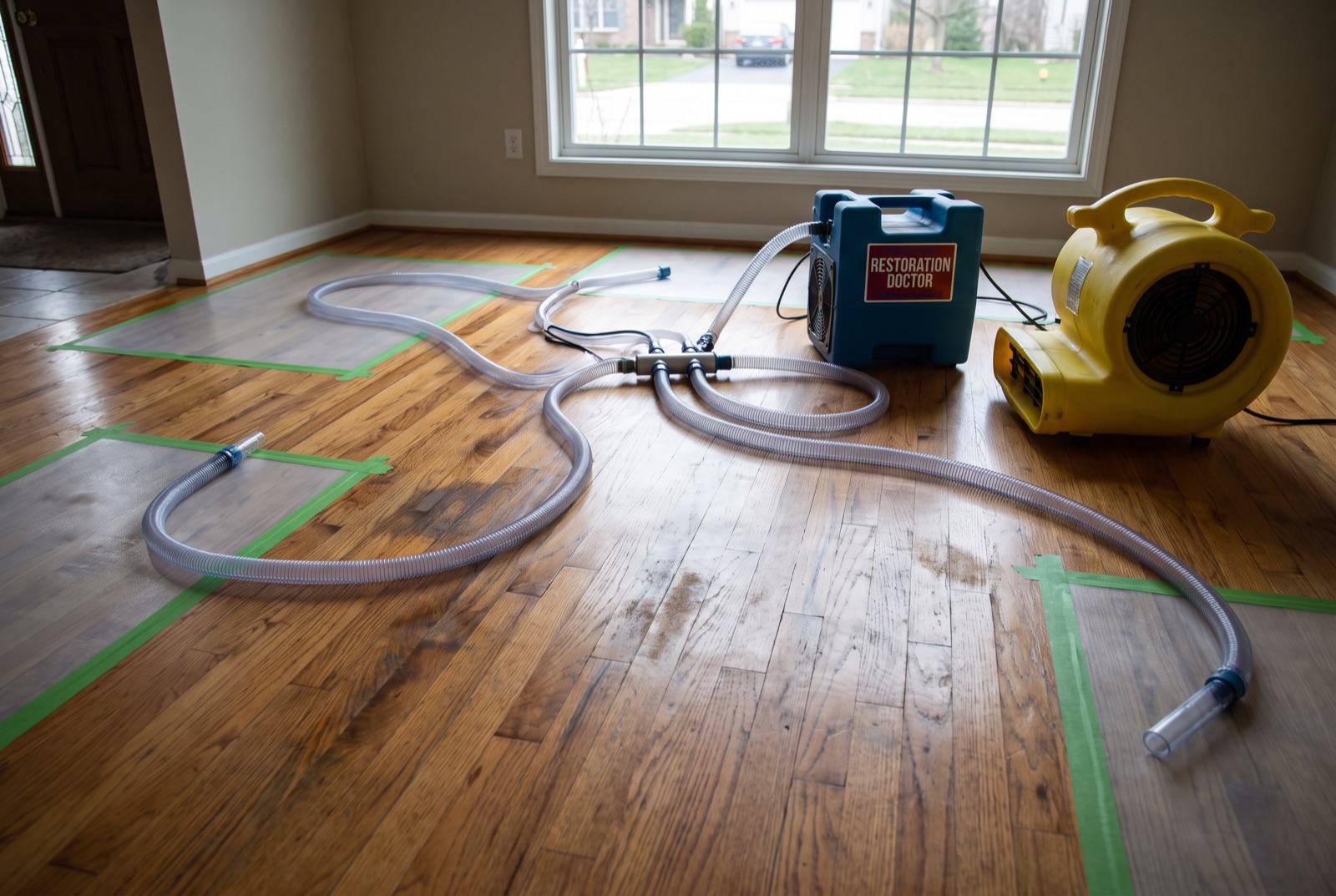
Water Damage Restoration
Extraction, structural drying, and moisture verification for burst pipes, appliance leaks, and basement flooding.
Frequently asked
Related questions
What happens if water gets under flooring?
Can hardwood floors be saved after water damage?
What causes wood floors to buckle?
Does laminate flooring need to be replaced after water damage?
Active water, mold, fire, or sewage event?
Connect directly with the Restoration Doctor team for your region. Crews are on standby 24/7 with documented response protocols.