
Can hardwood floors be saved after water damage?
Often, yes — if drying starts fast. Solid hardwood that has cupped but not buckled can frequently be saved with prompt extraction and specialty drying mats that pull moisture through the boards. Buckled boards that have lifted off the subfloor, and most engineered or laminate floors with saturated cores, typically need replacement.
What water actually does to a wood floor
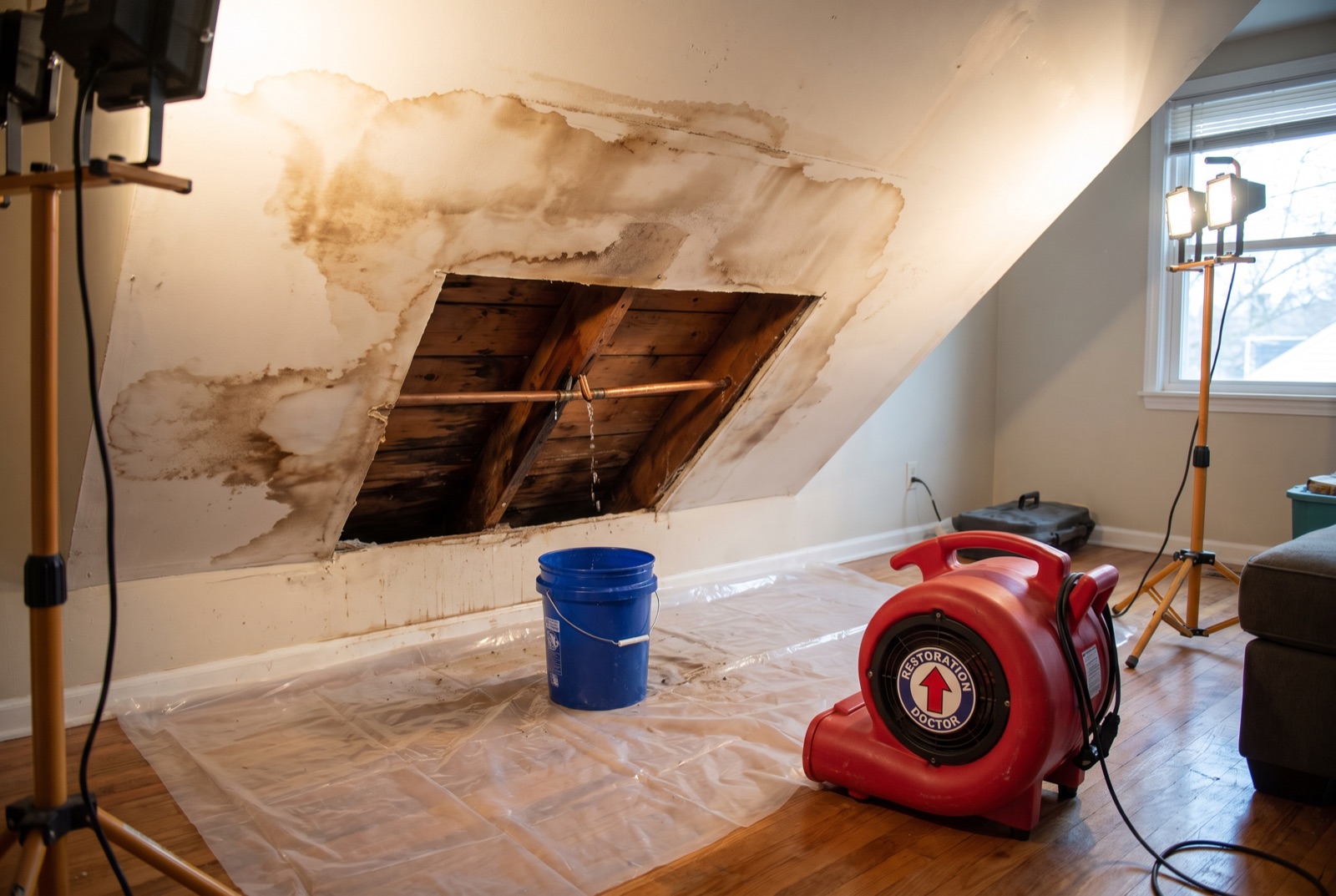
Wood moves with moisture, and it moves in a predictable sequence. First comes cupping: the bottom of each board absorbs moisture from below or through the seams faster than the top, so the edges swell and rise while the center stays low — the floor takes on a washboard feel across the boards. Cupping is the early, often reversible stage.
Crowning is the mirror image: the center of the board sits higher than its edges. It usually appears when a floor that cupped is dried from the top too aggressively or sanded flat while the bottom is still wet — when the board finally equalizes, the material removed from the edges leaves the center proud. This is exactly why nobody should sand a water-damaged floor until moisture readings confirm the boards and subfloor have fully equalized.
Buckling is the end stage: boards swell enough to overcome their fastening and lift entirely off the subfloor, sometimes tenting several inches. A buckled board has broken its attachment and usually its integrity; buckled sections are nearly always replaced.
The salvage window and what decides it
The realistic salvage window for hardwood is roughly the first 24 to 48 hours, and every variable pushes it one way or the other. Clean Category 1 water, quick extraction, solid (not engineered) boards, and a site-finished floor all favor saving it. Contaminated water, water that stood for days, glue-down engineered flooring with a swollen core, and water trapped beneath the floor all push toward replacement.
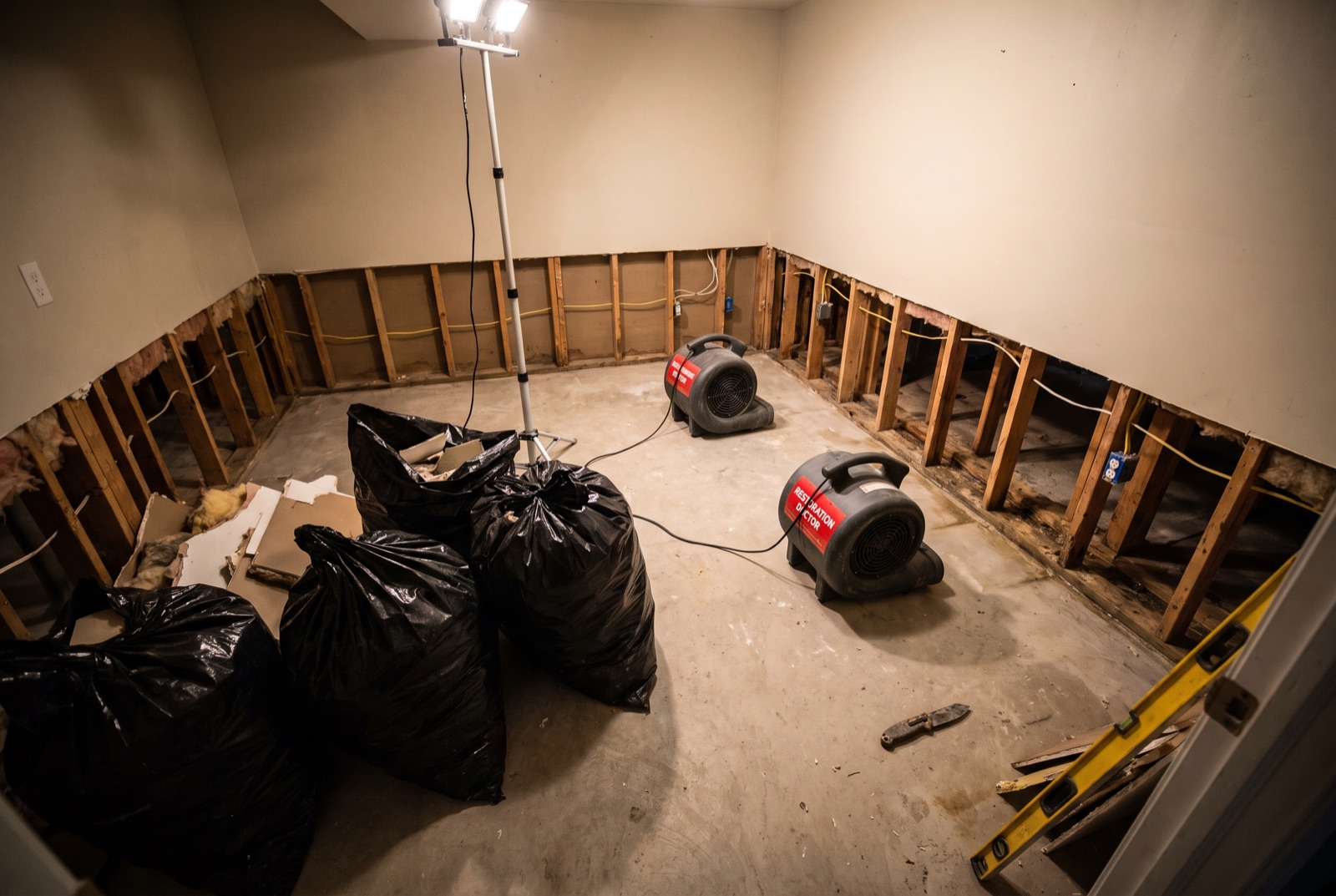
What's under the floor matters as much as the boards themselves. Water that reaches the subfloor sits in a sandwich — trapped between plywood below and finished wood above — with nowhere to evaporate. If the subfloor stays wet, it delaminates, loses fastener grip, and feeds moisture back into the flooring for weeks. No hardwood save is real until the subfloor reads dry too.
How professionals dry hardwood in place
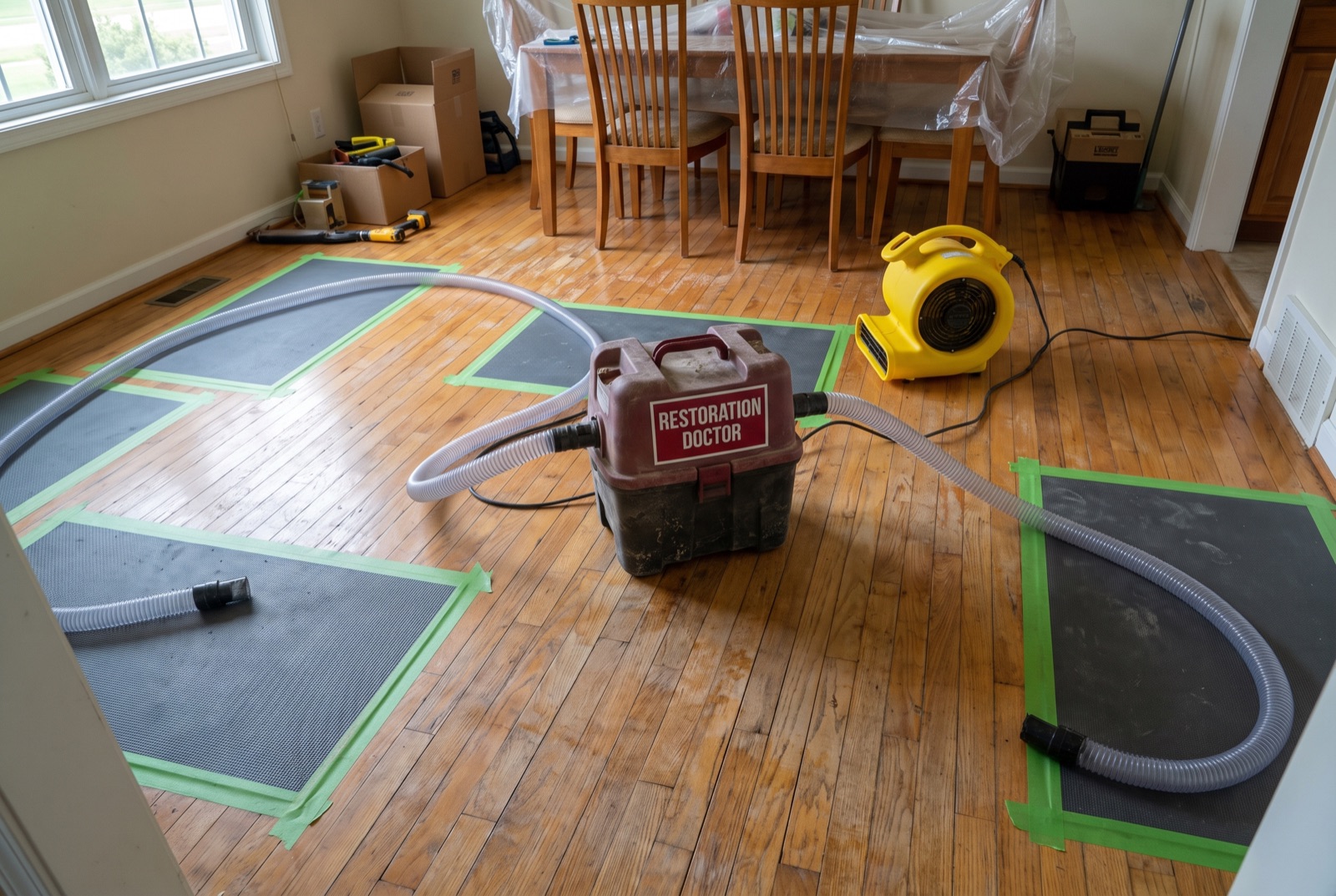
The specialty tool for wood floors is the drying mat system: sealed mats laid over the affected boards and connected by hoses to a high-vacuum extractor or dehumidifier. The system pulls air through the seams and pores of the wood, drawing moisture up from the board bottoms and the subfloor beneath — the areas ordinary airflow can't touch. Combined with low-grain refrigerant dehumidification controlling the room air, mats can bring a cupped floor back over several days to a couple of weeks.
Progress is tracked by the numbers, not the eye. Crews take moisture readings across a mapped grid of the floor and compare against dry, unaffected wood in the same home, continuing until the boards and subfloor equalize. Cupping frequently relaxes substantially as moisture leaves; minor residual unevenness can then be addressed by refinishing — but only after readings confirm full equalization, which can lag the visible improvement by weeks.
Costs, insurance, and the matching question
Saving a hardwood floor in place generally costs a fraction of replacement — in-place drying commonly runs in the hundreds to a few thousand dollars depending on area, while tearing out and replacing hardwood typically runs several thousand to well over ten thousand for larger spaces. That gap is why insurers generally support a legitimate drying attempt.
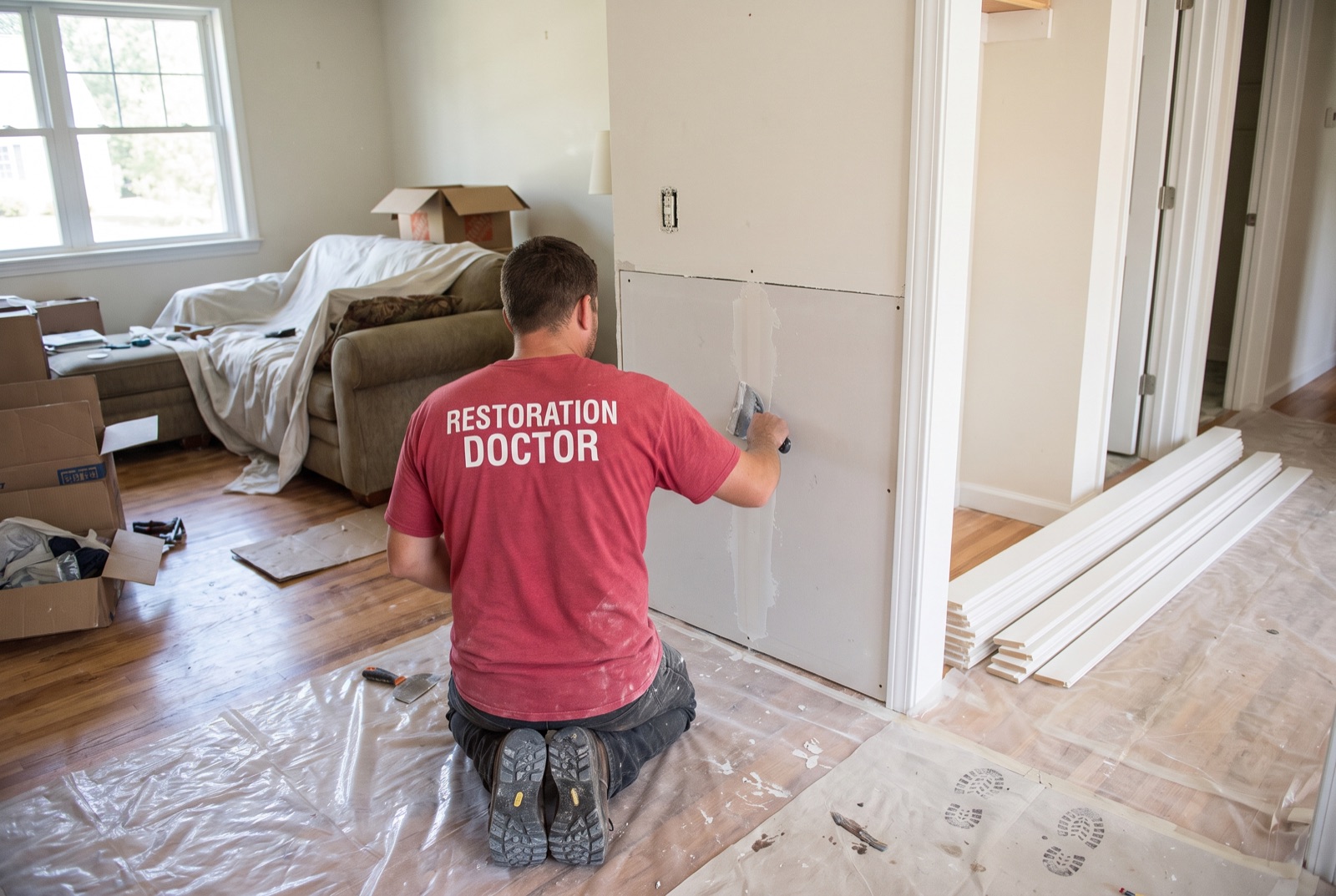
When boards do need replacement, the question becomes matching. Wood floors run continuously room to room, and replacement boards rarely match a decades-aged floor exactly; the industry-standard approach is to replace and refinish to a logical break — a doorway, a transition strip — so the repaired area reads uniform. Documenting the affected area precisely is what supports the right scope. Restoration Doctor maps every wet floor with meters, photographs it in CompanyCam from first arrival, and handles both the drying attempt and, when needed, the replacement with in-house crews. If your hardwood is showing cupping, call 1-888-29-FLOOD — the save window is short.
Water Damage Restoration
Extraction, structural drying, and moisture verification for burst pipes, appliance leaks, and basement flooding.
Frequently asked
Related questions
What causes wood floors to buckle?
How do you know if there is water damage under your floor?
Does laminate flooring need to be replaced after water damage?
What happens if water gets under flooring?
Active water, mold, fire, or sewage event?
Connect directly with the Restoration Doctor team for your region. Crews are on standby 24/7 with documented response protocols.