
What happens if water gets under flooring?
Water trapped under flooring does not evaporate on its own — the flooring above seals it in. It delaminates subfloor, cups and buckles hardwood, swells laminate, and becomes a hidden mold risk within days. Drying requires specialty equipment like floor-drying mat systems, or removing the flooring; ignoring it guarantees progressive damage.
Why under-floor water is a trap, literally
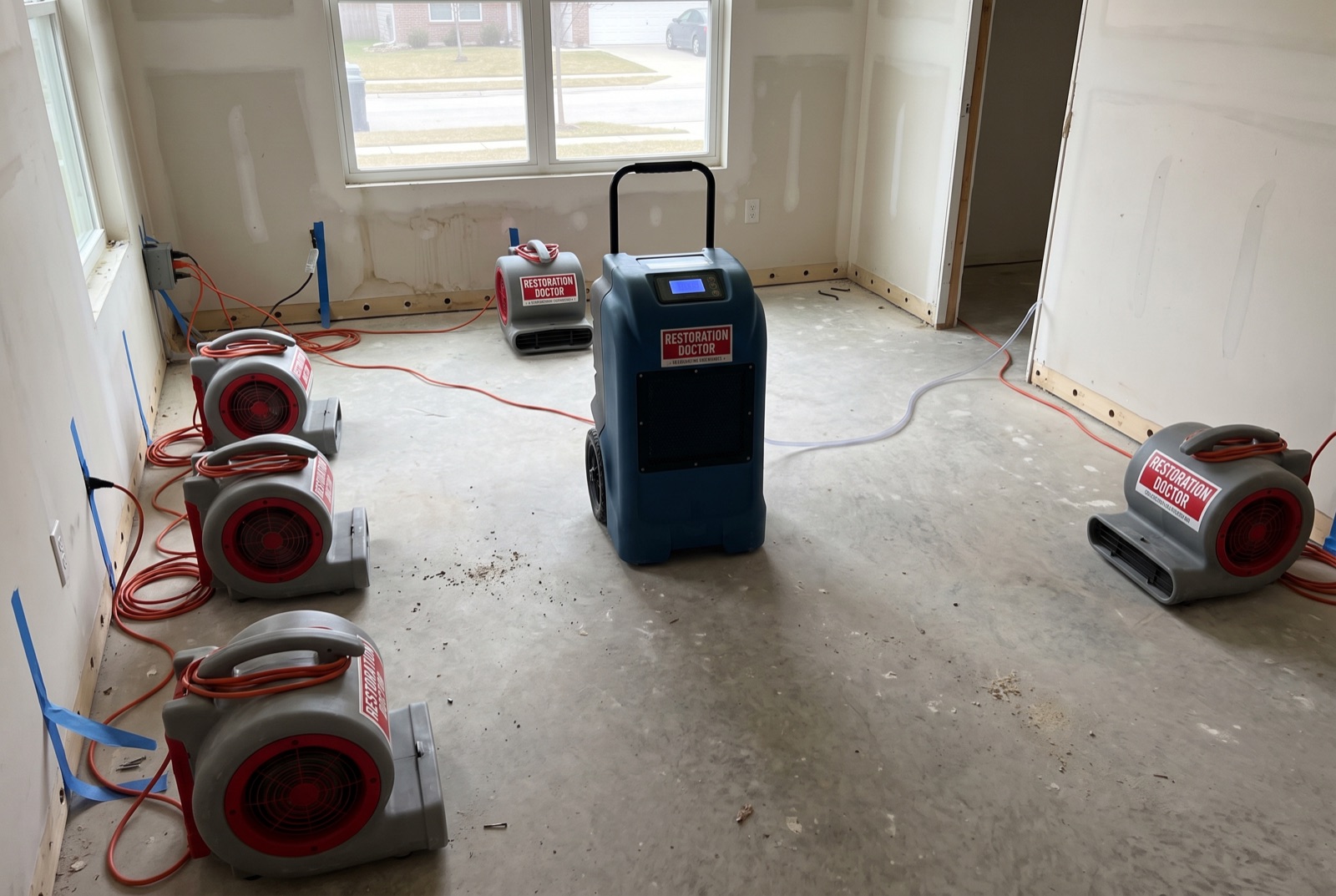
Floors are built to keep water out — which makes them equally good at keeping water in. Once water penetrates through seams, edges, or transitions and reaches the space between the finished floor and the subfloor, the flooring above acts as a lid: airflow can't reach the moisture, evaporation essentially stops, and the water sits in sustained contact with wood-based materials that were never meant to be wet.
That's the core problem with the wait-and-see instinct. A wet floor surface dries in hours; the same water under the floor persists for weeks. The room looks recovered while a sealed, humid micro-environment underneath works on the subfloor, the underside of the flooring, and — once it runs past the 24-to-48-hour drying window — builds a mold risk in a space you can't see or smell until it's well established.
What the damage looks like, floor type by floor type
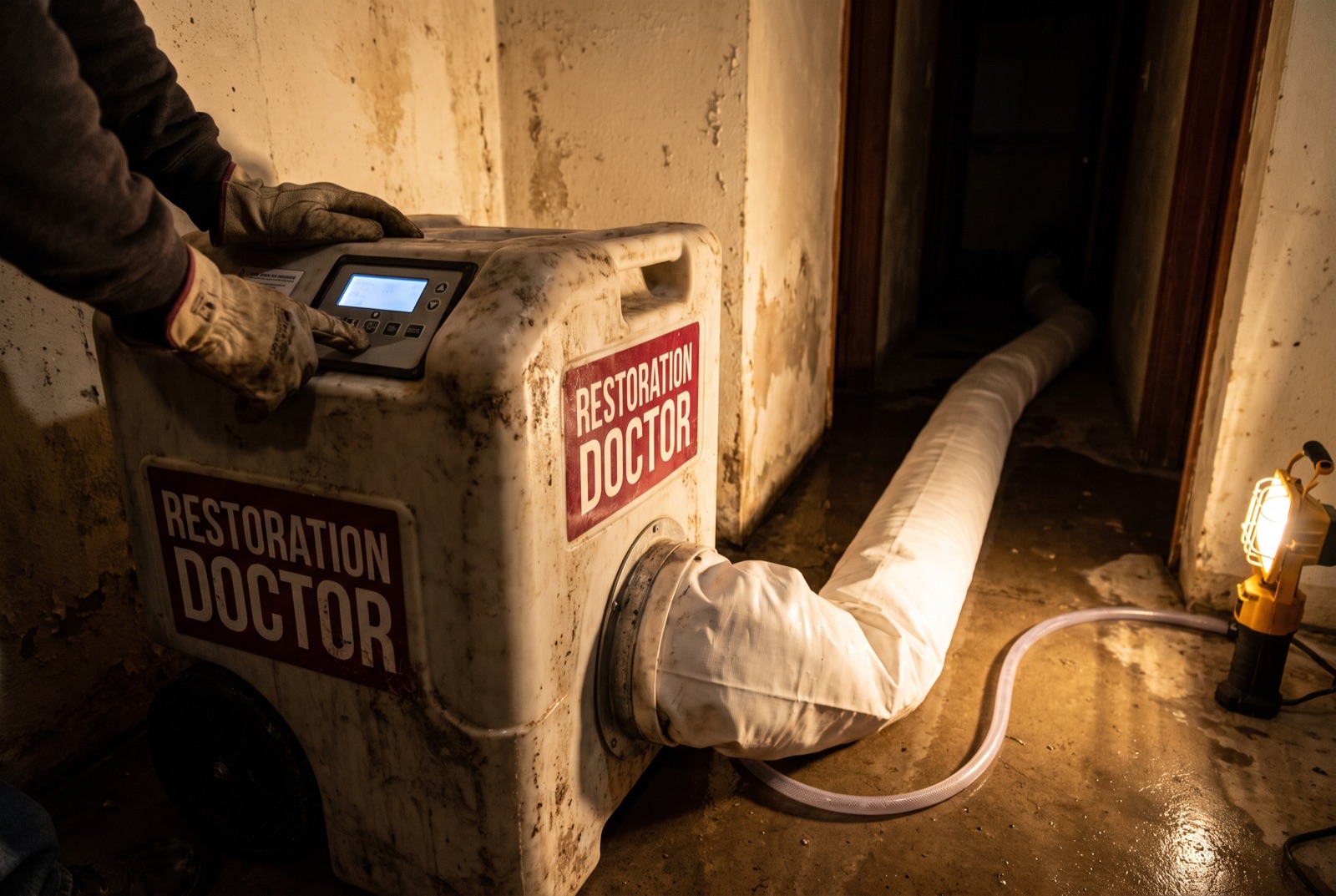
Hardwood telegraphs trapped moisture from below as cupping — board edges rising above their centers, because the wet underside expands more than the dry top. Left alone, cupping progresses to crowning and then buckling, where boards lift off the subfloor entirely. Caught early, cupped hardwood is one of restoration's best save stories; buckled hardwood is a replacement.
Laminate fails fastest: its fiberboard core swells permanently on soaking, and click-lock seams wick water throughout the installation. Swollen laminate cannot be dried back to shape — affected boards are replaced. Engineered wood falls in between, depending on core construction.
Vinyl plank, sheet vinyl, and tile resist water themselves but seal it below better than anything — water under vinyl or tile stays until it's dealt with, quietly saturating the subfloor. The subfloor is the real victim across all types: OSB swells at the edges, flakes, and loses fastener grip; plywood delaminates ply by ply. A spongy, bouncy, or squeaky-after-a-leak floor is subfloor damage announcing itself.
How professionals find and dry it
Detection comes first, without demolition: moisture meters read through flooring into the substrate, thermal imaging shows the cooled signature of trapped moisture spreading beyond the visible spill, and readings at transitions, cabinets, and baseboards map the true footprint — which is routinely two or three times the wet spot the homeowner saw.
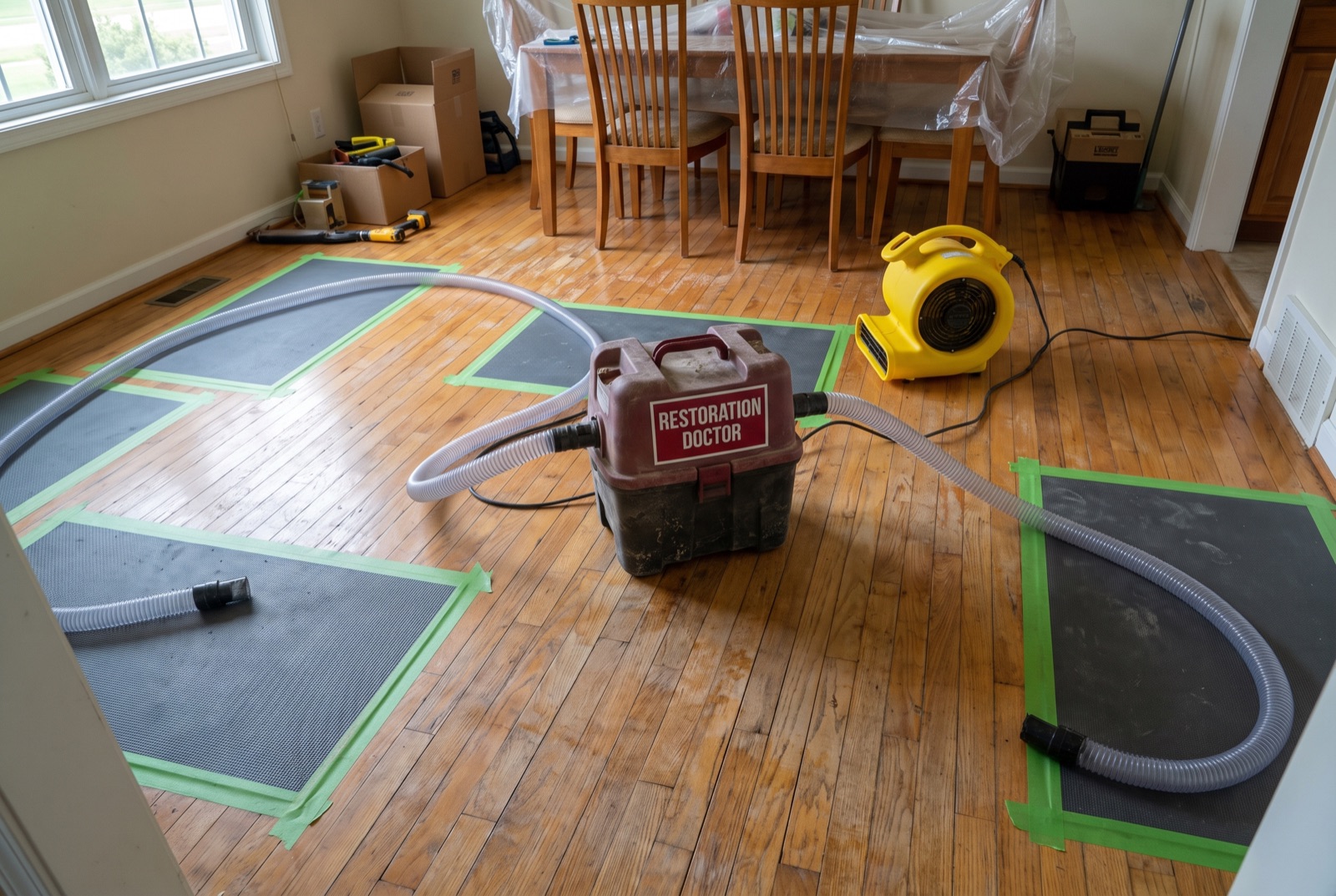
For salvageable hardwood, the tool of choice is a floor-drying mat system: sealed mats laid on the floor surface and connected to high-static-pressure blowers that pull air up through the wood's seams and pores, extracting moisture from the board undersides and the subfloor below. Combined with LGR dehumidification and monitored daily against meter readings per IICRC S500 practice, mat systems regularly rescue floors that would otherwise be torn out.
Where flooring can't be saved — swollen laminate, contaminated materials, delaminated substrate — targeted removal exposes the subfloor for direct drying and honest assessment. Category 3 water under flooring (sewage, outside flooding) shifts the calculus toward removal regardless of material, since contamination trapped under a floor can't be sanitized in place.
The move that saves your floor
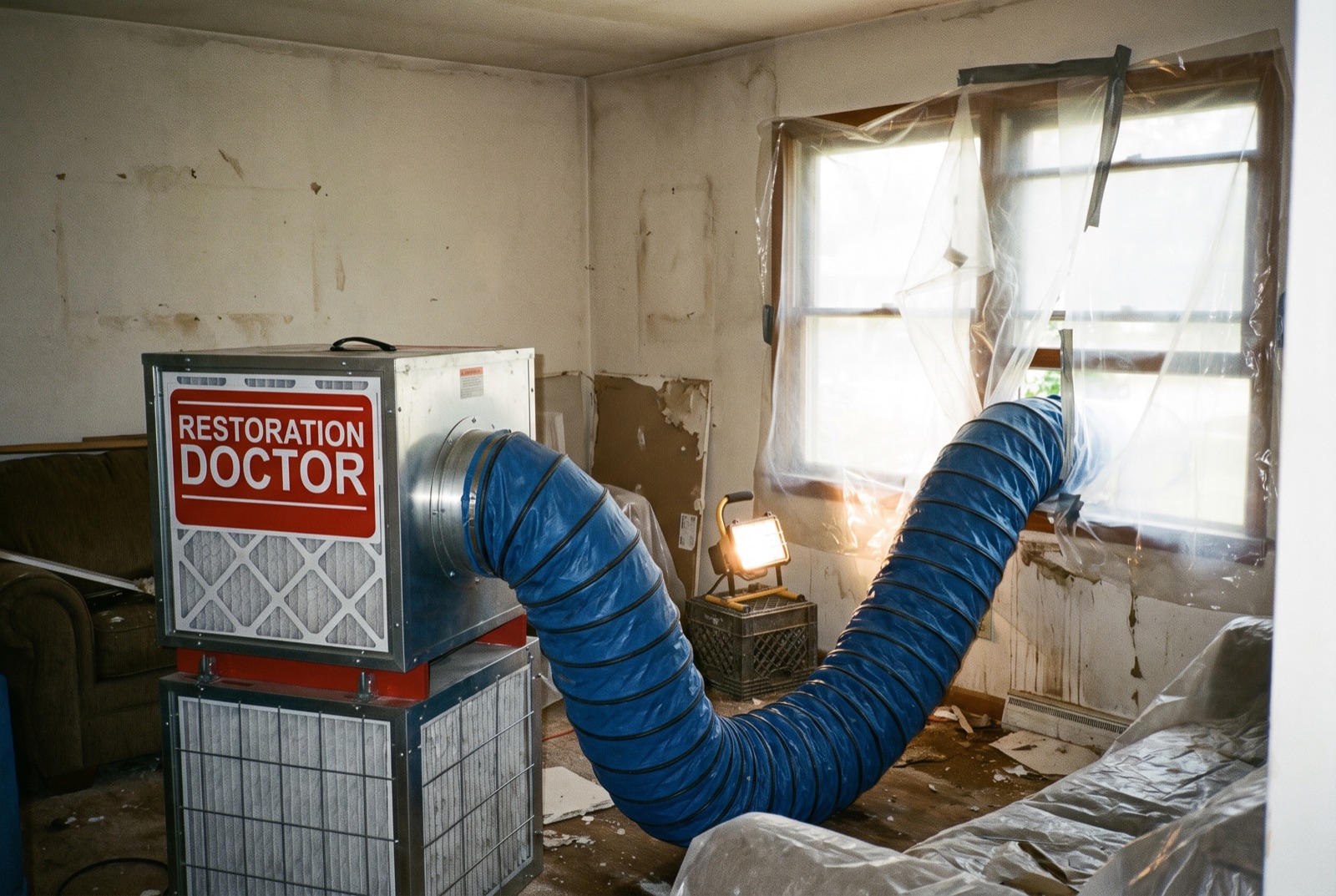
Speed decides the outcome. Hardwood extracted and matted within a day or two usually survives; the same floor a week later is often past recovery. If water has gone under any flooring in your home — a dishwasher line, an overflowed tub, a supply leak that ran across the kitchen — treat it as under-floor water even though the surface looks fine, and get it measured.
Restoration Doctor uses mat drying systems, thermal imaging, and meter-verified monitoring to save floors across Northern Virginia, Maryland, and D.C. wherever the material allows. Call 1-888-29-FLOOD — the difference between drying your floor and replacing it is usually measured in days.
Water Damage Restoration
Extraction, structural drying, and moisture verification for burst pipes, appliance leaks, and basement flooding.
Frequently asked
Related questions
How do you know if there is water damage under your floor?
Can hardwood floors be saved after water damage?
Does laminate flooring need to be replaced after water damage?
What is structural drying?
Active water, mold, fire, or sewage event?
Connect directly with the Restoration Doctor team for your region. Crews are on standby 24/7 with documented response protocols.