
Does laminate flooring need to be replaced after water damage?
Usually, yes. Laminate's core is high-density fiberboard — compressed wood fiber that swells permanently once saturated — and its click-lock seams let water through to the underlayment and subfloor, where it stays trapped. Brief surface spills wiped up quickly are fine; real water events almost always mean replacing the affected boards.
Why laminate loses the water fight
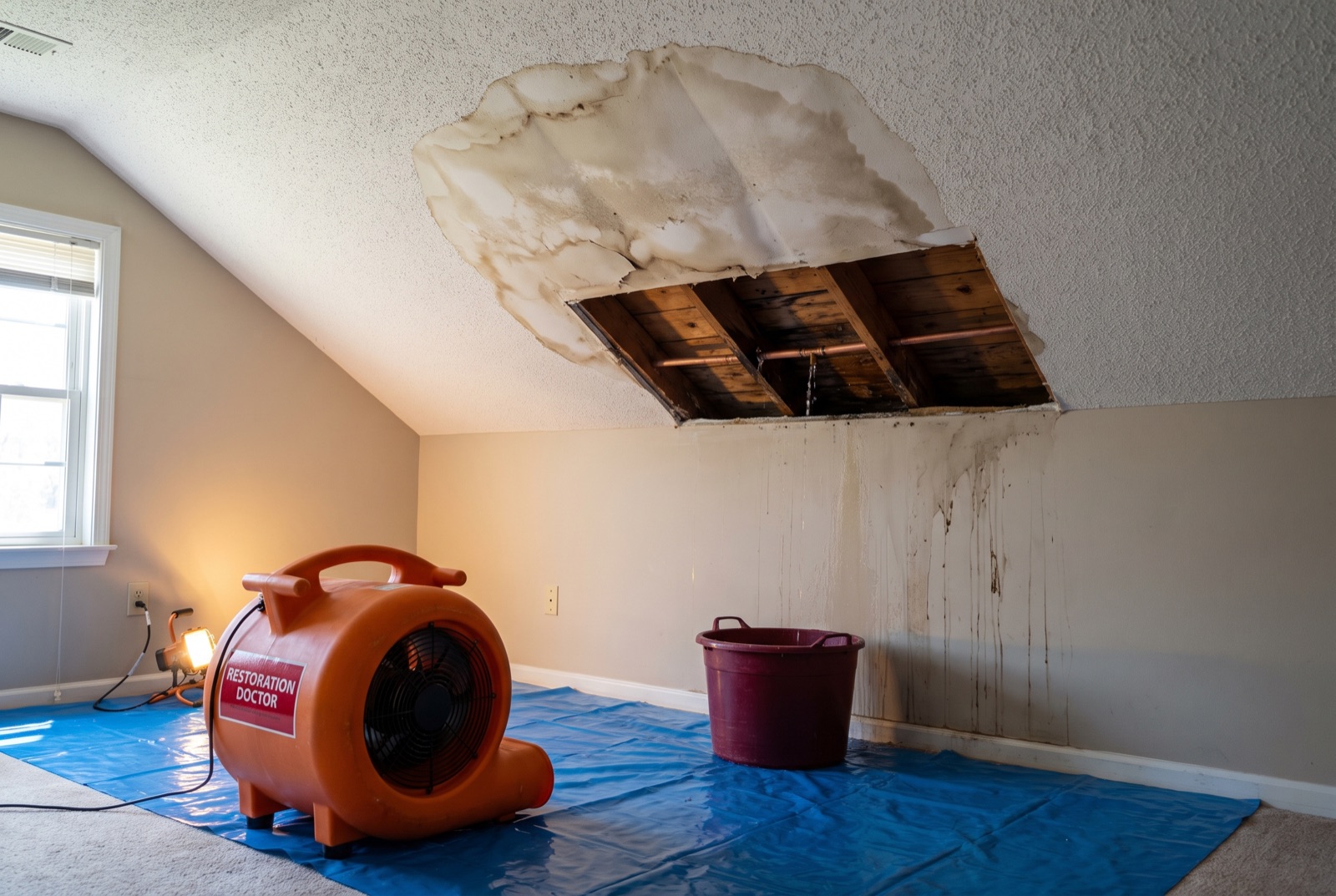
Laminate flooring is a photographic wear layer over a core of high-density fiberboard (HDF) — wood fibers compressed with resin. That core is laminate's Achilles' heel: when it absorbs water it swells, and the swelling is mechanical and permanent. Unlike solid hardwood, which can release moisture and substantially return to shape, a swollen HDF core never shrinks back. Once you see peaked seams, whitened or bubbled edges, or boards that feel thick and soft, that material is finished.
The seams complete the problem. Click-lock joints are water paths, not water barriers — standing water finds them within minutes and drains through to the underlayment and subfloor below. So a laminate floor that took real water has usually been compromised twice: the boards from within, and the assembly beneath from trapped water that has no evaporation path under the planks.
The narrow cases where laminate survives
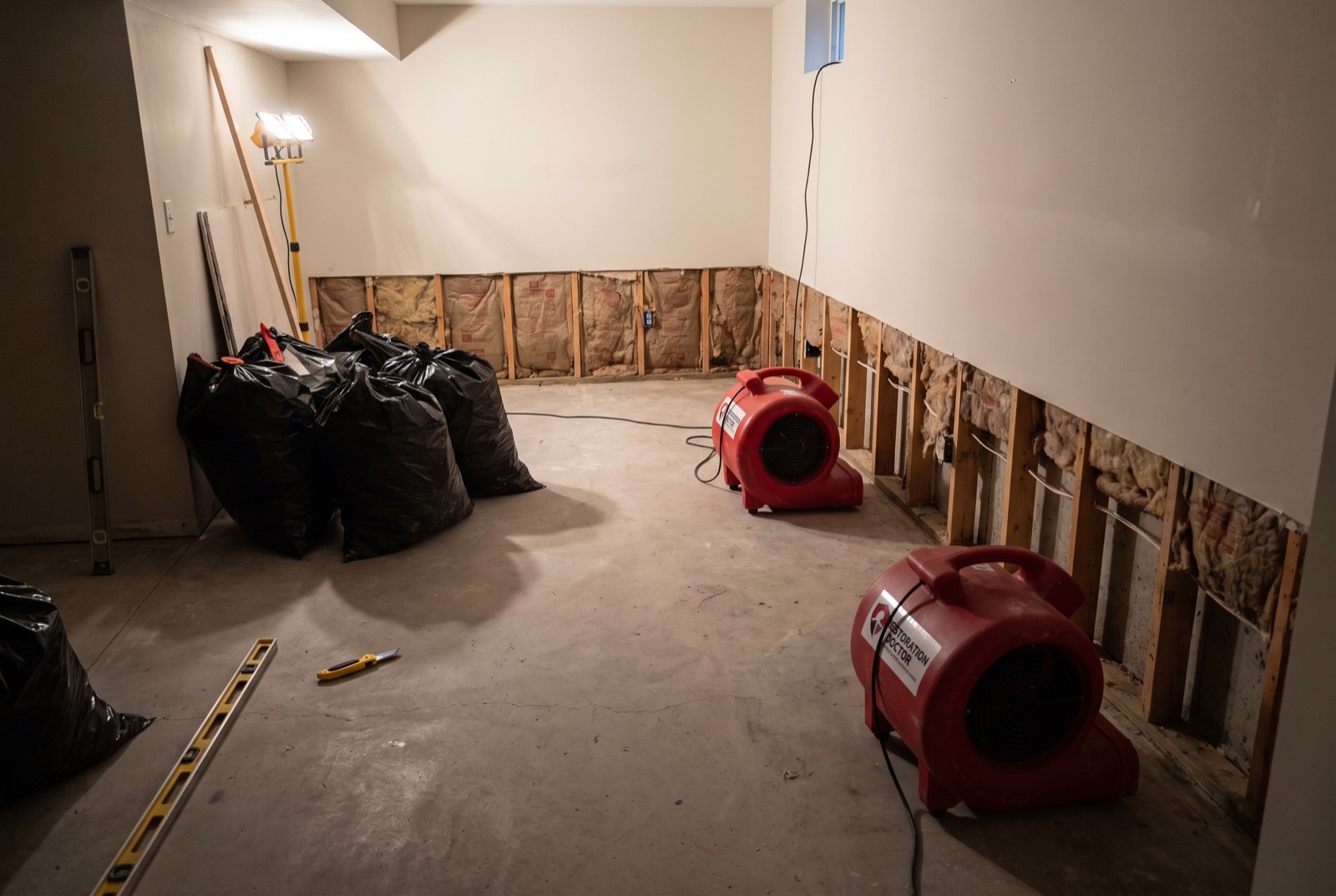
Time and volume decide the exceptions. A surface spill wiped up within minutes, on a floor with tight seams and intact edge sealing, typically does no harm — the wear layer is genuinely water-resistant from above for short exposures. Some newer products sold as water-resistant laminate tolerate surface water for hours rather than minutes, though their cores remain vulnerable once water reaches them through seams or edges.
The honest test after any larger event is measurement, not appearance: moisture readings through the floor, and a check of a few boards at the wet area's edge. Boards that read dry, lie flat, and show no seam swelling can stay. But partial survival has a catch — laminate is installed as an interlocked floating field, so replacing a damaged section means disassembling the floor from the nearest wall to reach it, and discontinued patterns often can't be matched. In practice, damage in the middle of a room frequently means replacing the room's floor to keep the finish uniform.
What matters more than the laminate: what's underneath
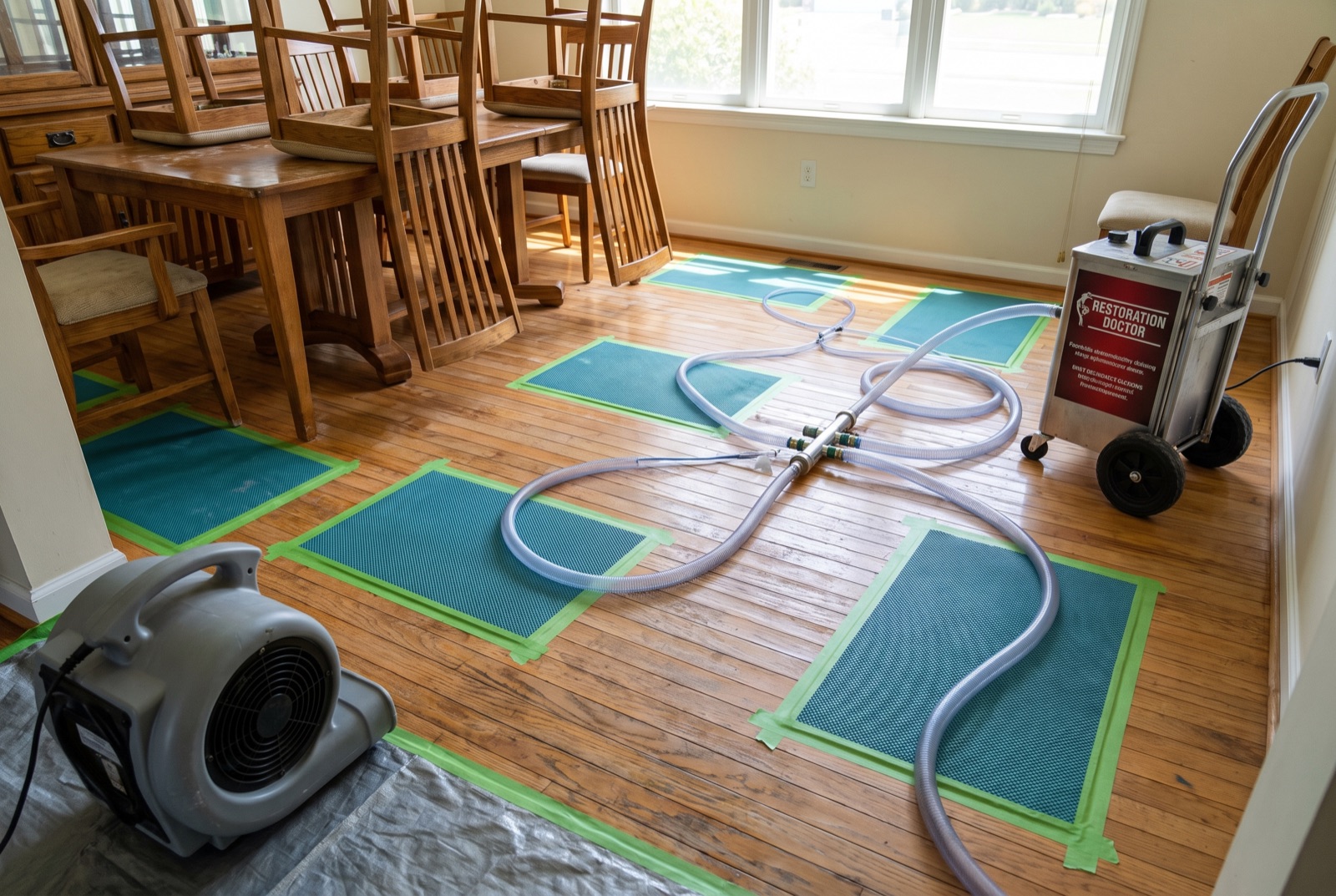
Laminate is comparatively cheap; the assembly under it is not. Water that penetrated the seams is now in the foam underlayment — which holds water like a sponge and is always discarded once soaked — and against the subfloor. Wet plywood delaminates; wet OSB swells, flakes, and goes soft; and the dark, damp gap under the planks becomes a mold risk with every day it stays wet.
This is why the correct response to a soaked laminate floor is removal and assessment, not fans on top. The affected planks come up quickly (a floating floor's one advantage in a loss), the underlayment is discarded, and the exposed subfloor is dried under air movers and dehumidification with daily meter readings until it hits dry standard. Skipping that step and installing new flooring over a damp subfloor is how a flooring problem becomes a mold problem with new flooring on top of it.
Insurance and replacement done right
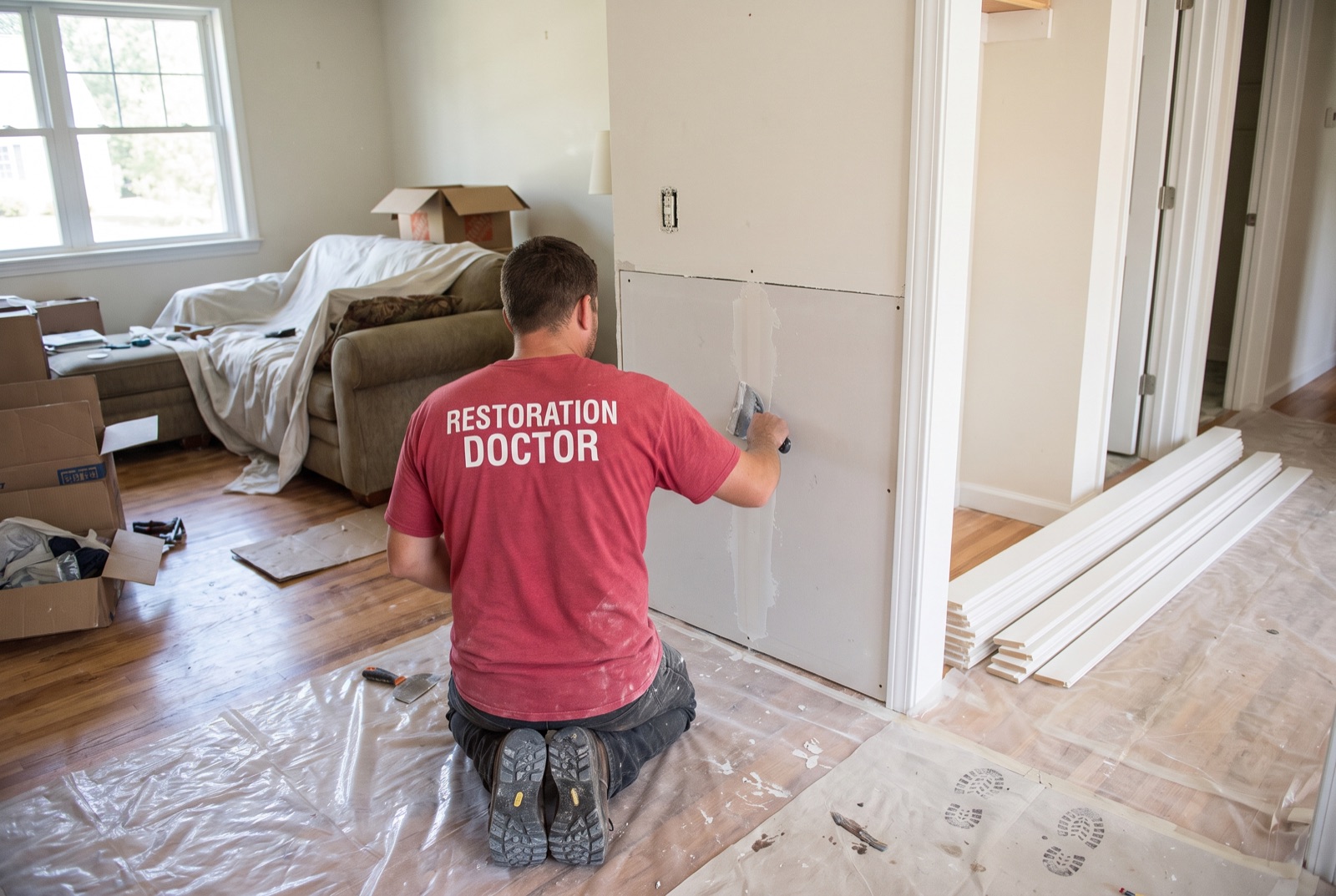
For covered sudden losses, laminate replacement is a routine scope item: removal and disposal, subfloor drying with documented readings, new underlayment, and new flooring. Where the original product is discontinued, the pre-loss-condition standard supports replacing to a logical break — a doorway or transition — so the finished floor reads uniform rather than patchworked.
Documentation carries the scope: photos of the damage as found, the wet underlayment during removal, and drying logs for the subfloor. Restoration Doctor documents every stage in CompanyCam and handles removal, structural drying, and reinstallation with in-house crews across Northern Virginia, Maryland, and D.C. If your laminate has taken on water, call 1-888-29-FLOOD — the boards may be a loss, but a fast response keeps the subfloor from joining them.
Water Damage Restoration
Extraction, structural drying, and moisture verification for burst pipes, appliance leaks, and basement flooding.
Frequently asked
Related questions
How do you know if there is water damage under your floor?
Can hardwood floors be saved after water damage?
What happens if water gets under flooring?
How fast does mold grow after water damage?
Active water, mold, fire, or sewage event?
Connect directly with the Restoration Doctor team for your region. Crews are on standby 24/7 with documented response protocols.