
What causes wood floors to buckle?
Wood floors buckle when boards absorb enough moisture to swell against each other and lift off the subfloor. The moisture can come from a plumbing leak, an appliance failure, slab or crawl-space dampness below, or sustained high humidity. The source must be found and corrected before any flooring repair, or the buckling returns.
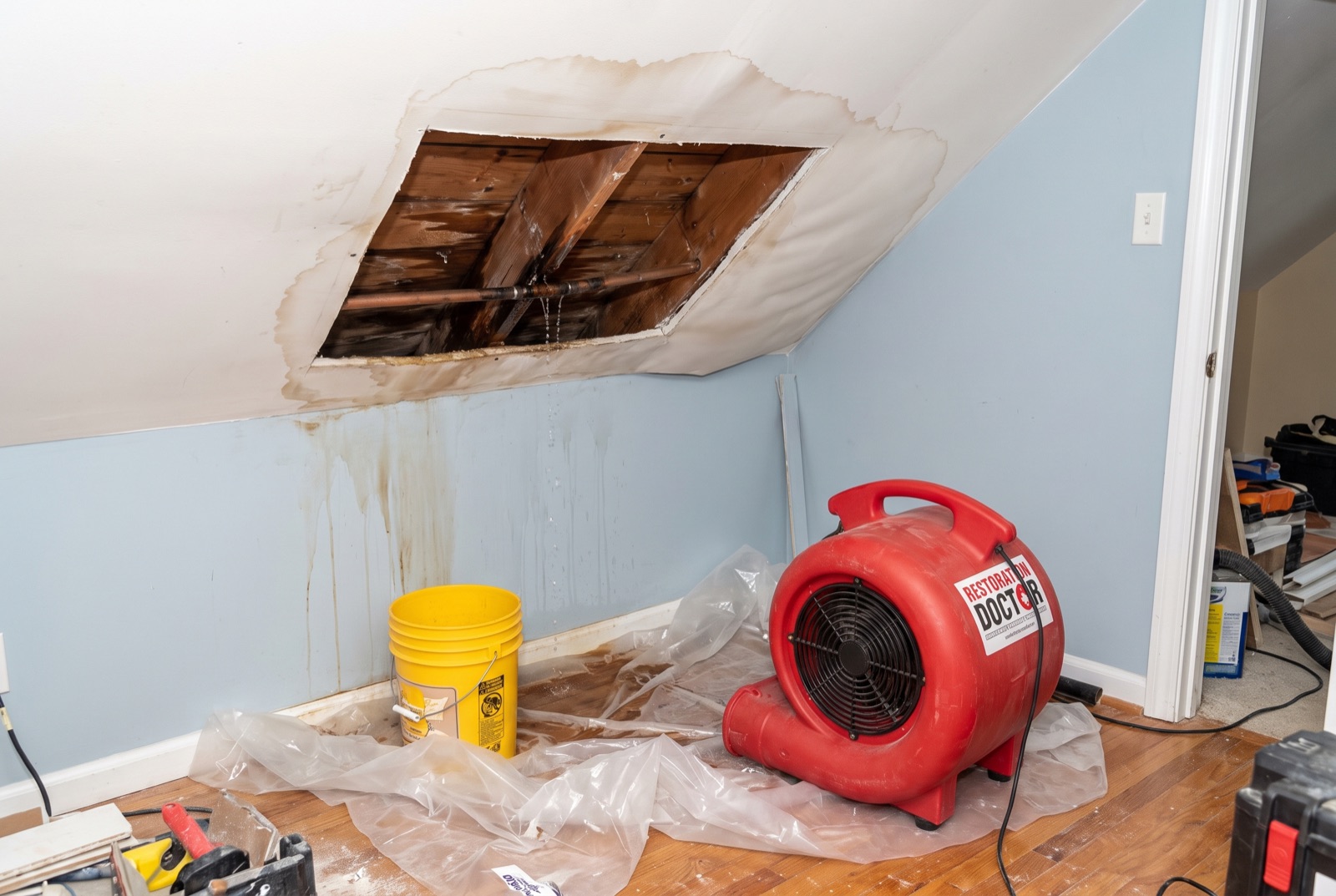
The mechanics: why swelling makes floors lift
Wood expands across its width as it absorbs moisture. A floor is hundreds of boards fitted edge to edge, so when they all swell at once there's nowhere for that expansion to go — the boards press against each other, and against the walls, until the pressure exceeds the strength of the nails or glue holding them down. The floor relieves the pressure the only way it can: upward. That's a buckle, and by the time it happens the boards have typically absorbed a serious amount of water.
The milder stages come first. Cupping — edges raised, centers low — shows moisture entering from below. Gapping and peaking at seams, doors that start rubbing, and a hollow sound underfoot are all earlier warnings. A floor that skips straight to tenting overnight almost always means a significant active leak underneath.
Where the moisture comes from
Obvious sources: a burst or leaking supply line, a dishwasher or refrigerator line failure, an overflowed fixture, or water migrating from an adjacent room's loss. These produce localized buckling near the source, spreading along the water's path.
Less obvious sources cause the confusing cases. A concrete slab without an effective vapor barrier wicks ground moisture into flooring glued or nailed above it. An unconditioned crawl space breathes humid air against the subfloor all summer. A slow drain or supply leak inside a floor system can feed a floor for months, and radiant-heat line failures wet floors from directly beneath. Even whole-house humidity — a failed HVAC system or a persistently damp basement — can swell floors evenly across entire rooms with no "leak" to find.
The pattern is diagnostic: buckling concentrated in one area points to a point-source leak; uniform movement across a whole floor points to slab moisture, crawl-space humidity, or ambient conditions.
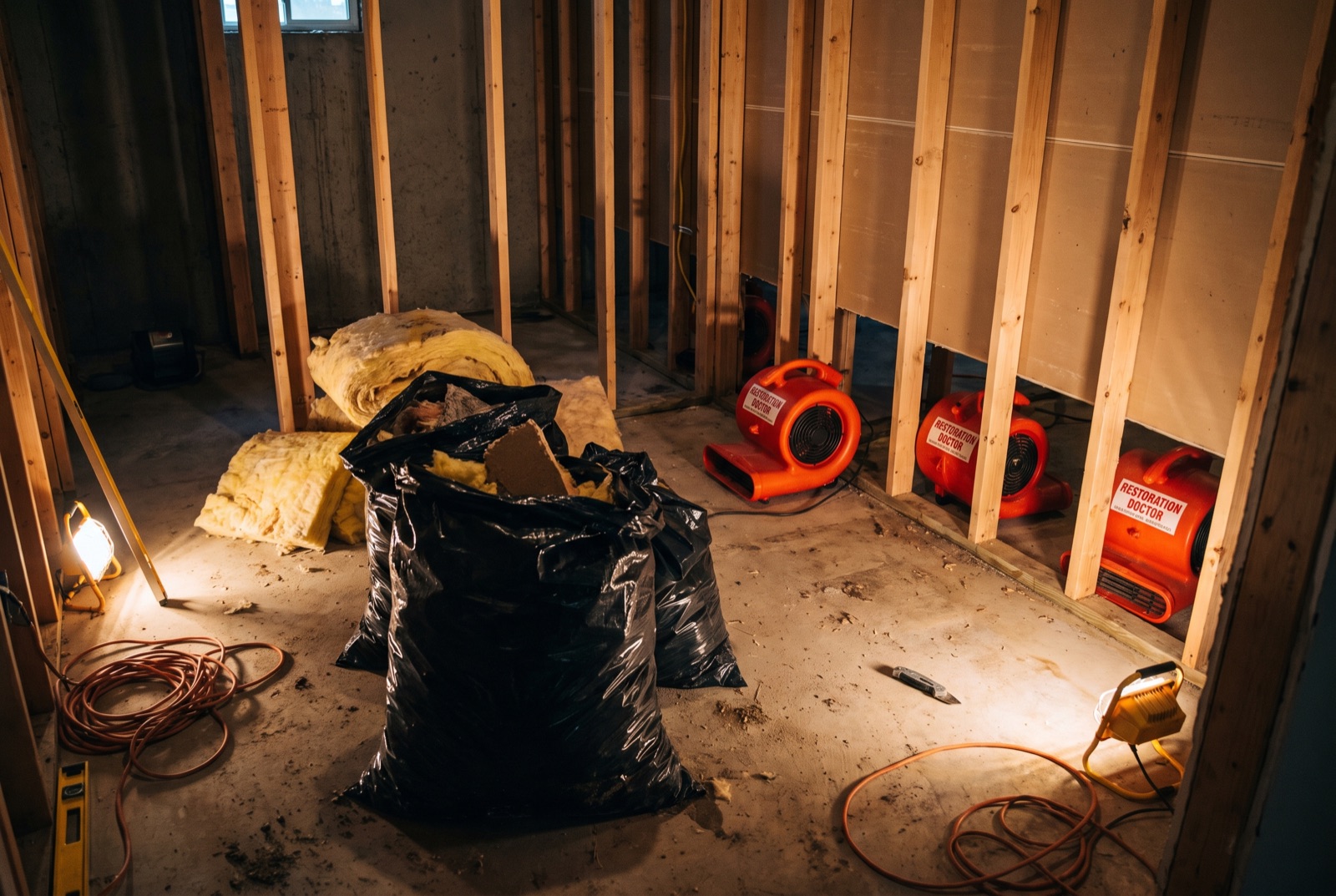
Why fixing the floor first is the classic mistake
Replacing buckled boards without correcting the moisture source is paying for the same repair twice. New wood installed over a wet subfloor or a vapor-emitting slab absorbs the same moisture and moves the same way — sometimes within weeks. The correct order is: identify the source, stop it, dry the assembly to verified moisture targets, and only then repair the flooring.
Diagnosis is measurement, not guesswork. A professional assessment reads moisture content in the flooring, the subfloor, and — for slab-on-grade homes — the concrete itself, then compares against dry reference areas. Thermal imaging helps trace hidden plumbing leaks; a meter grid across the room establishes whether the moisture is localized or ambient. Getting this map right is the difference between a targeted plumbing repair and futile rounds of floor replacement.
What repair looks like once the source is fixed
Truly buckled boards — lifted off the subfloor — are replaced; their fastening and usually their shape are gone. Surrounding boards that only cupped often recover with professional drying and can be refinished once readings confirm full equalization. The subfloor is inspected and any delaminated or soft sections replaced, because a compromised subfloor telegraphs through any new floor above it.
Where the loss is insurance-related — a burst pipe, an appliance failure — documentation drives the scope: moisture maps showing the affected footprint, photos of the damage as found, and drying logs proving the assembly reached dry standard. Restoration Doctor handles the full sequence with in-house crews — source identification, structural drying, and the floor repair itself — with a CompanyCam photo trail from first visit to final board. If your floor is cupping or starting to lift, call 1-888-29-FLOOD before the buckle finishes the job.
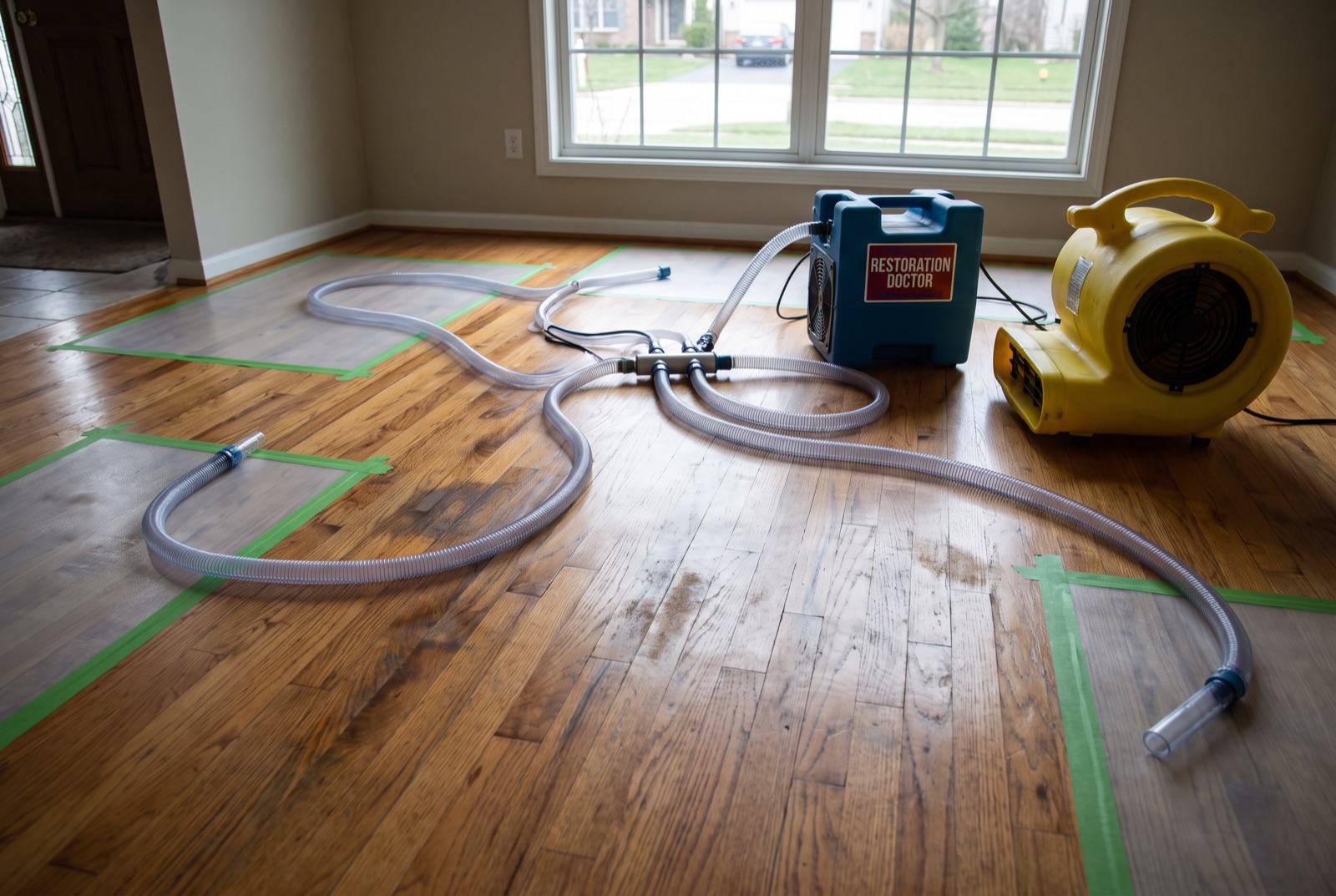
Water Damage Restoration
Extraction, structural drying, and moisture verification for burst pipes, appliance leaks, and basement flooding.
Frequently asked
Related questions
Can hardwood floors be saved after water damage?
How do you know if there is water damage under your floor?
What happens if water gets under flooring?
Does laminate flooring need to be replaced after water damage?
Active water, mold, fire, or sewage event?
Connect directly with the Restoration Doctor team for your region. Crews are on standby 24/7 with documented response protocols.