
Can wet insulation be dried out?
Sometimes — it depends on the type and the water. Fiberglass batts that got damp from clean water can occasionally be dried in place; cellulose that slumps when wet, and any insulation soaked by sewage or floodwater, must be replaced. Wet insulation loses R-value, holds moisture against framing, and can harbor mold, so the save-or-replace call should be made with moisture readings, not hope.
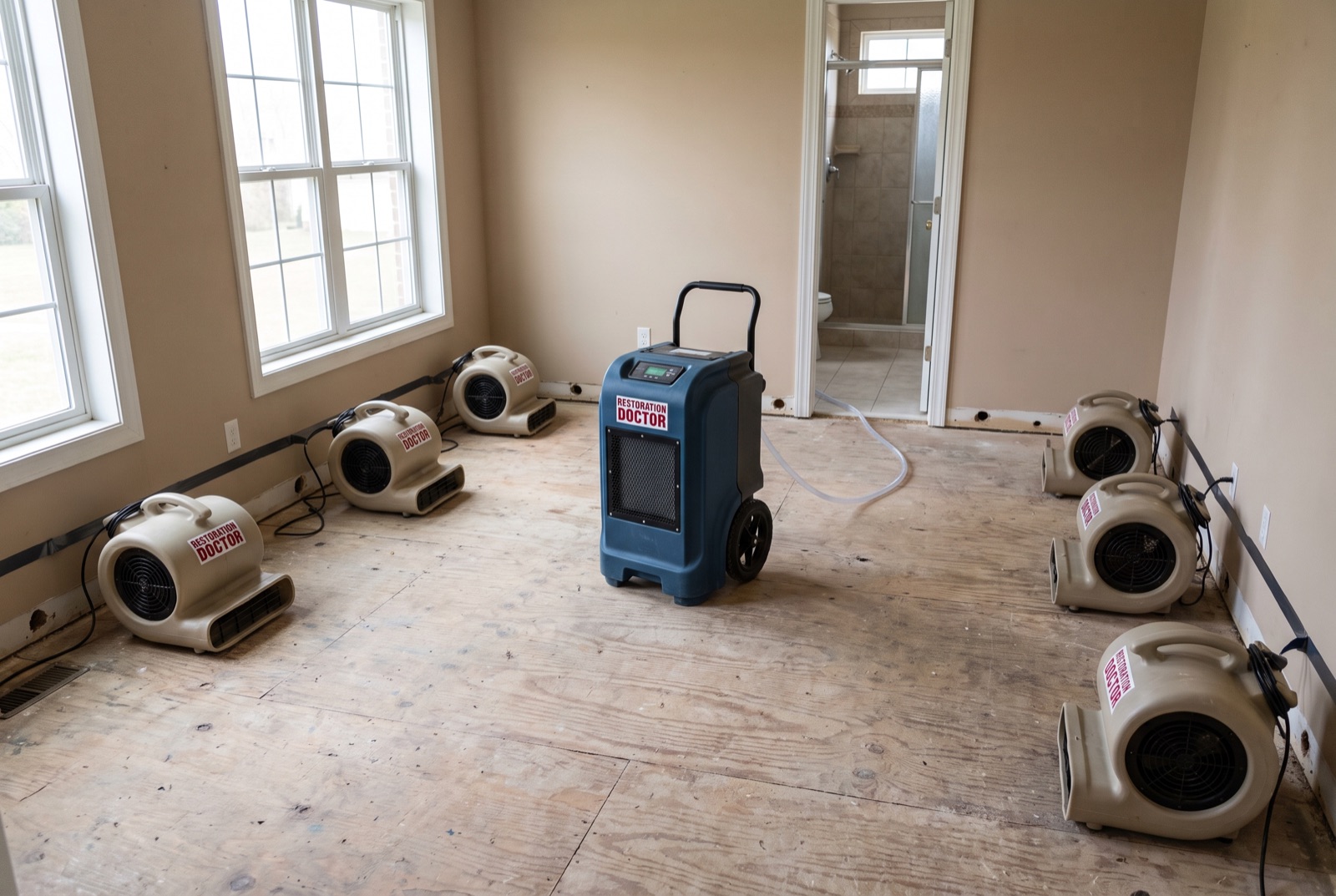
Why wet insulation is a bigger problem than it looks
Insulation works by trapping still air in a fluffy structure; water collapses that structure and fills the air spaces, which is why wet insulation stops insulating — its R-value drops sharply and, for some types, never fully returns. But the performance loss is the lesser problem.
The greater one is what wet insulation does to everything around it. Inside a wall or ceiling cavity, soaked insulation acts as a saturated sponge pressed against framing, sheathing, and the back of the drywall — holding moisture in exactly the enclosed, unventilated space where drying is slowest and mold grows most freely. A wall that would dry in two or three days empty can stay wet for weeks with saturated insulation in the cavity, quietly holding every surface it touches past the 24-to-48-hour drying window. That's why wet insulation is one of the first save-or-replace decisions on any loss where water entered the assemblies.
Type by type: what survives wetting
Fiberglass batts are the best-case scenario. Glass fibers don't absorb water themselves, so a batt that got damp — not saturated — from clean Category 1 water can sometimes be dried in place with cavity airflow and dehumidification, or removed, dried, and reinstalled. Saturated batts that have compressed and matted, though, rarely recover their loft or their R-value, and the practical economics (insulation is cheap; repeated drying visits aren't) often favor replacement even when drying is technically possible.
Cellulose — blown or dense-packed recycled paper fiber — is the worst case. It absorbs water eagerly, slumps and compacts under the weight, loses its fire-retardant treatment effectiveness, and cannot be restored by drying. Wet cellulose is a removal, full stop.
Blown fiberglass falls between: it mats and settles when soaked and usually gets replaced. Closed-cell spray foam and rigid foam boards (XPS, polyiso) essentially don't absorb water and typically survive wetting, though water trapped behind rigid boards still has to be found and dried. Mineral wool sheds light moisture well but saturated batts are usually replaced like fiberglass.
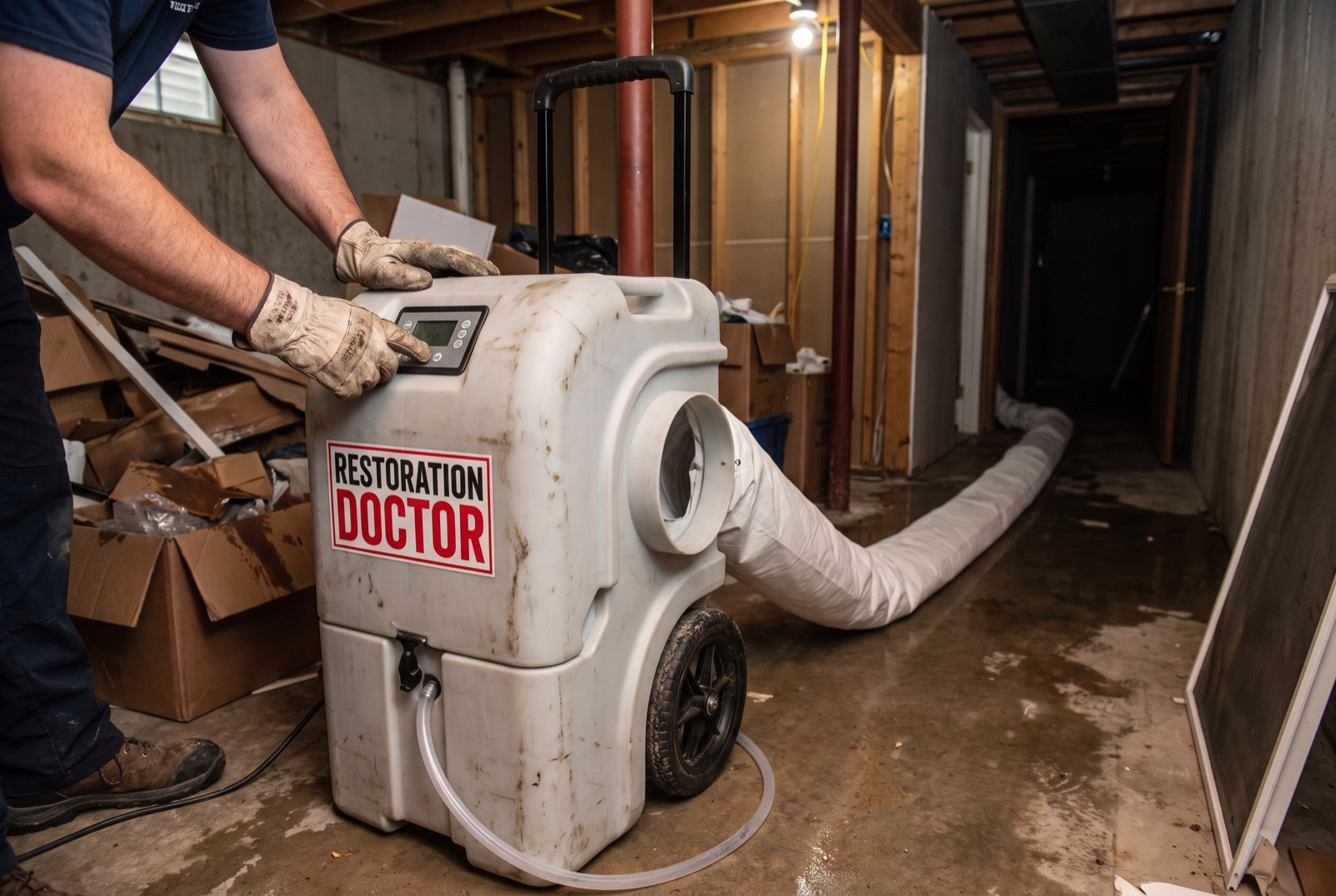
The two override rules: contamination and time
Two factors settle the question regardless of insulation type. The first is contamination: insulation soaked by Category 3 water — sewage backups, rising floodwater — is removed, period. Porous materials cannot be reliably sanitized, and no R-value is worth entombing sewage residue in your walls. Category 2 (gray water) exposure pushes strongly the same direction under IICRC S500 practice.
The second is time. Insulation that stayed wet for days before anyone addressed it has likely already supported mold growth, and mold-colonized insulation is a removal under IICRC S520 remediation practice — drying it just leaves a dormant colony in the cavity. Insulation caught wet within the first day or two has a chance; insulation discovered wet after a slow leak ran for weeks does not.
The assessment tool is the same as everywhere else in drying: moisture readings, plus eyes on the material once the cavity is opened. Guessing from the room side — 'the wall feels dry now' — is how wet insulation gets sealed into rebuilt walls.
The right sequence when insulation gets wet
Handled properly, wet insulation is a straightforward subplot of the larger drying project: open the affected cavities (which usually need drying access anyway), remove insulation that fails the type, contamination, or time tests, dry the now-exposed framing and sheathing to verified dry standard, and install fresh insulation during the rebuild. Replacement insulation is one of the least expensive materials in the entire scope — which is why experienced crews rarely gamble a wall's future on marginal batts.
Restoration Doctor makes these calls with meters and documented readings on losses across Northern Virginia, Maryland, and D.C., and handles the full sequence from cavity drying through reinsulation and rebuild. If water got into your walls, ceilings, or attic, call 1-888-29-FLOOD — what's in the cavity matters more than what you can see from the room.
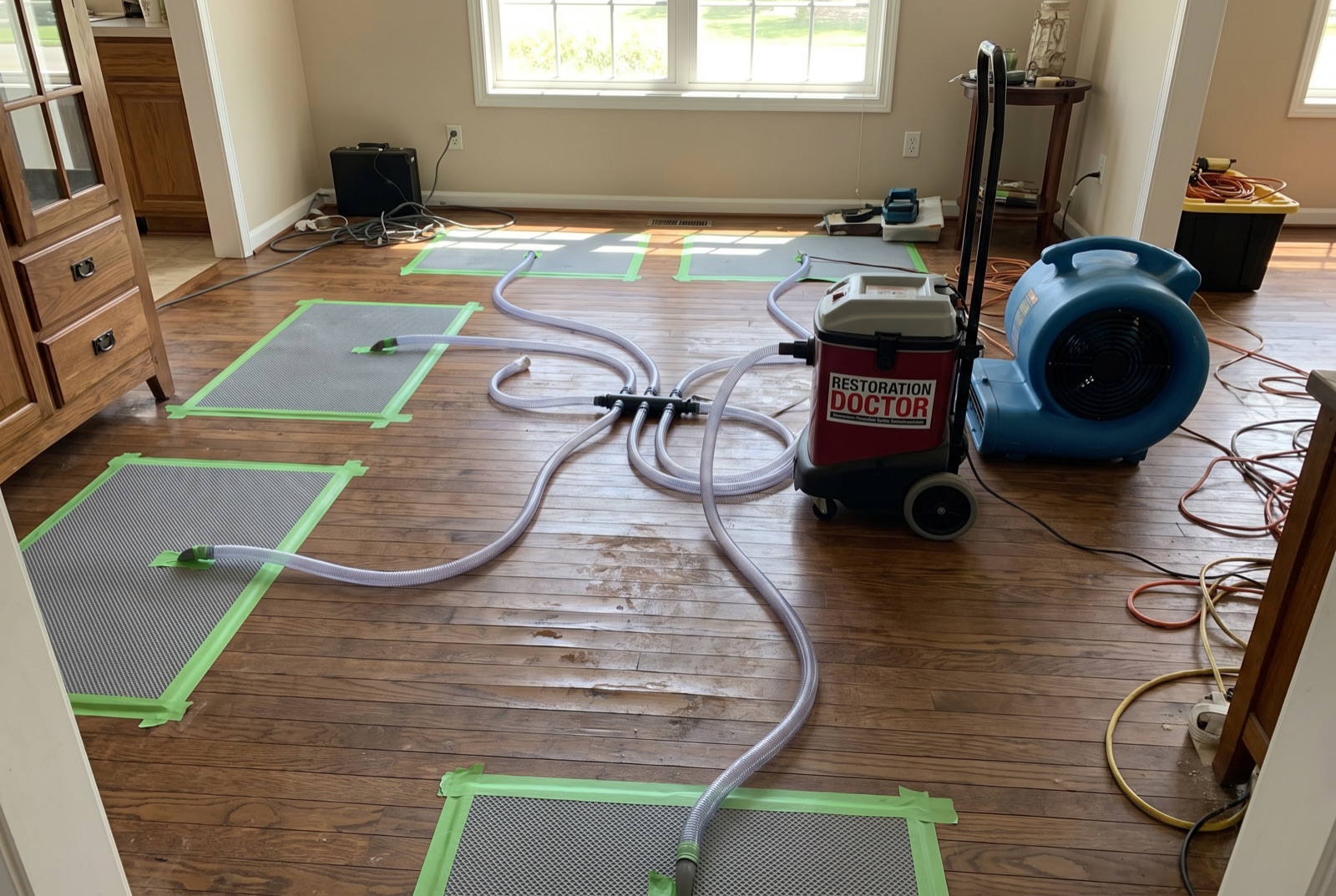
Water Damage Restoration
Extraction, structural drying, and moisture verification for burst pipes, appliance leaks, and basement flooding.
Frequently asked
Related questions
How long do walls take to dry after a leak?
Does water damaged drywall need to be replaced?
How do you know when walls are completely dry?
How do I know if my roof has storm damage?
Active water, mold, fire, or sewage event?
Connect directly with the Restoration Doctor team for your region. Crews are on standby 24/7 with documented response protocols.