
Can a house collapse from water damage?
A full house collapse from a single water event is rare. The realistic risks are partial failures: waterlogged ceilings collapsing under the weight of saturated drywall and insulation, subfloors giving way after prolonged rot, and long-term foundation or framing deterioration from chronic moisture. Sagging ceilings and spongy floors are warning signs that need immediate attention.
What water actually does to structure
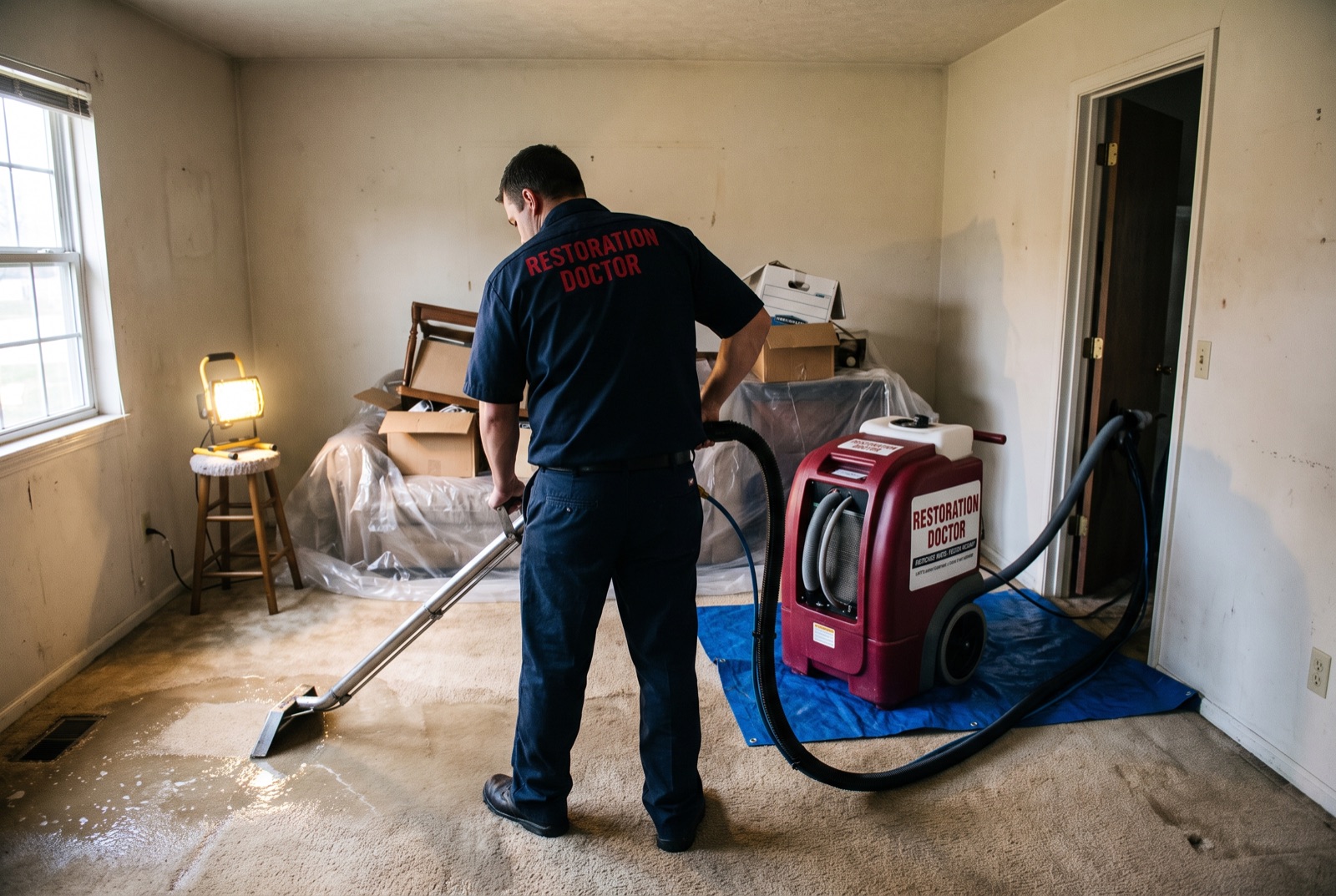
Wood-framed homes tolerate getting wet surprisingly well in the short term — framing lumber can absorb significant moisture and, if dried promptly, return to full service. The structural problems come from duration and repetition: wood that stays saturated for weeks becomes hospitable to decay fungi, which consume the wood's structure and progressively destroy its strength. That process — rot — is how water eventually compromises joists, sill plates, studs, and subfloor.
Moisture also attacks the connections that hold a structure together. Fasteners corrode, construction adhesives release, and engineered materials behave worse than solid lumber: OSB subfloor and particleboard swell, delaminate, and lose fastener grip when saturated, well before solid framing is in any danger.
Masonry and foundations have their own failure mode: chronic water against a foundation wall creates hydrostatic pressure that can crack, bow, or displace it over years — a drainage problem wearing a structural costume.
The most common real-world failure: ceiling collapse
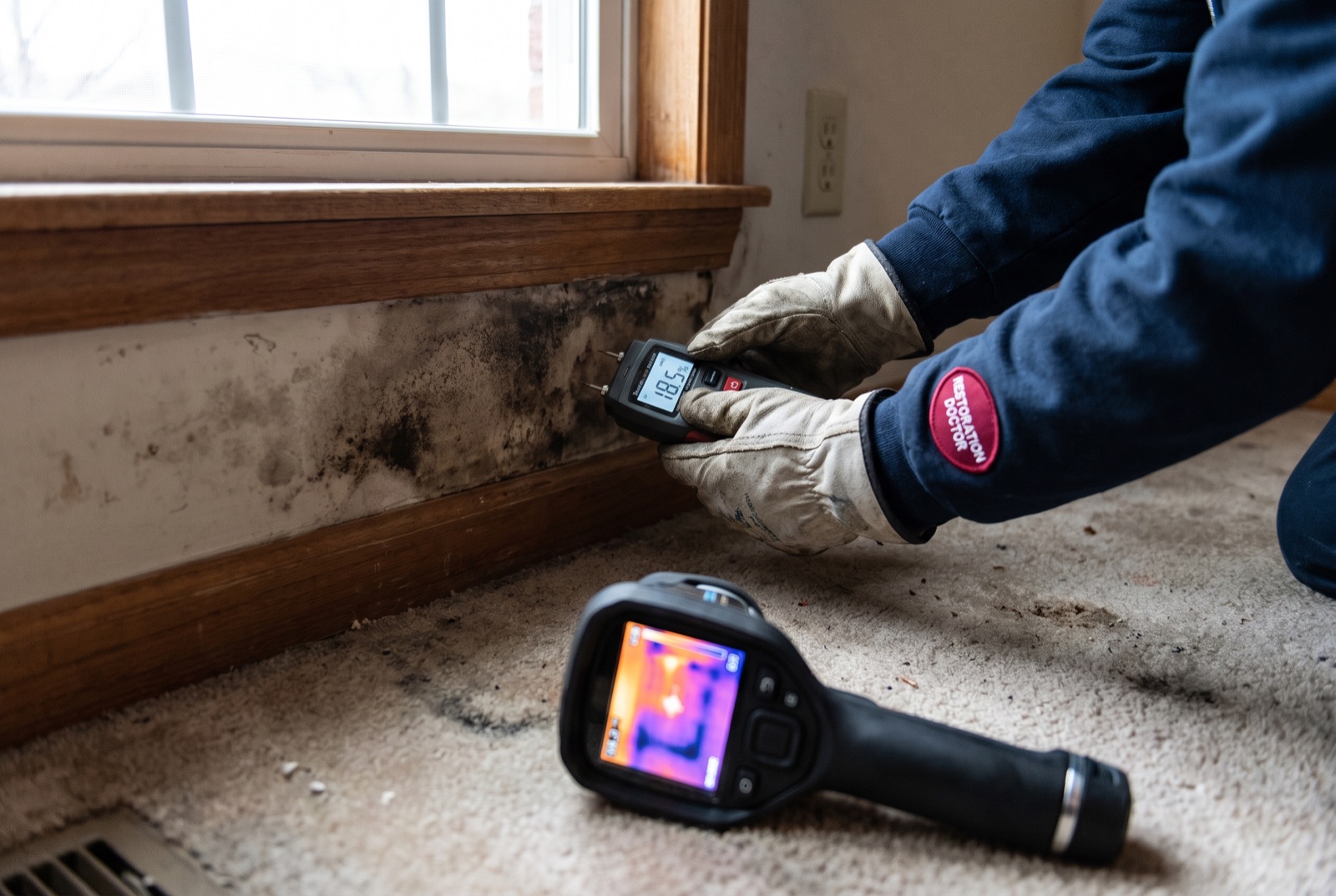
The structural failure homeowners are most likely to actually experience is a ceiling coming down. Drywall is heavy when saturated — water pooling above a ceiling from a roof leak, an upstairs plumbing failure, or an overflowed tub adds tens of pounds of water weight to material that was never designed to carry a load, plus soaked insulation on top of it.
A water-heavy ceiling telegraphs its failure: visible sagging or bellying, spreading stains, dripping at fixture penetrations, and cracks radiating from the wet area. A ceiling in that state can let go without further warning, and falling drywall and trapped water are genuinely dangerous to anyone underneath.
If you see a bulging ceiling: keep people and pets out of the room, place a bucket, and relieve the water by carefully puncturing the low point of the bulge with a screwdriver so it drains in a controlled stream rather than accumulating toward collapse. Then get the source stopped and mitigation started.
Floors, decks, and long-neglected leaks
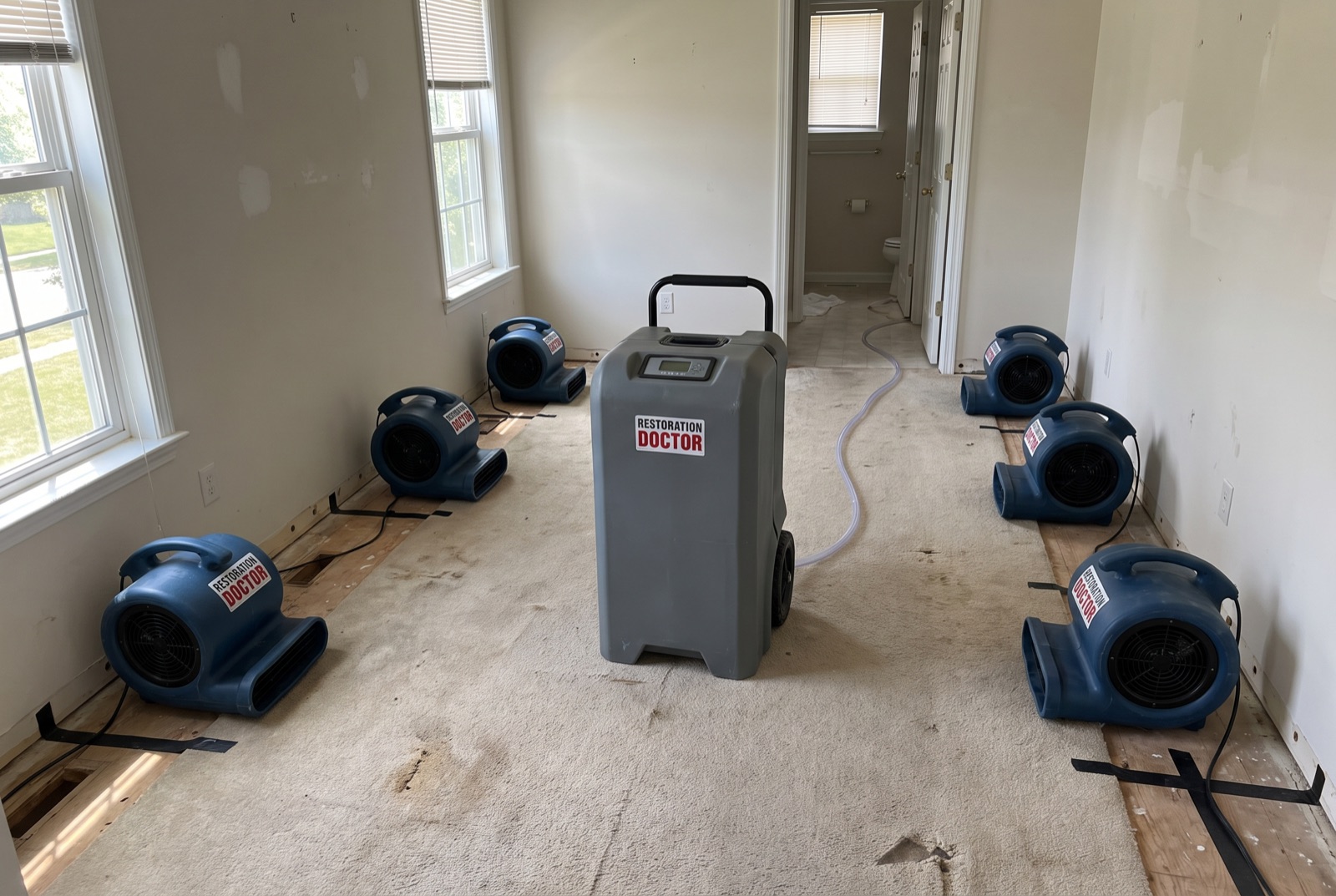
Floor failures are the slower cousin of ceiling collapse. A subfloor exposed to a chronic leak — under a failing toilet ring, a leaking shower pan, or a long-running dishwasher drip — softens over months until it feels spongy underfoot, and in advanced cases can give way locally. Bathrooms are the classic location because the leak hides under finished flooring while it works.
The pattern across all of these failures is the same: single fast events, promptly dried, almost never threaten structure. Chronic or neglected moisture is what does. A home that took an inch of clean water on Tuesday and was professionally dried by Friday faces essentially no structural risk; a crawl space that has been damp for five years may have compromised joists without a single dramatic event.
This is also why post-loss inspection matters: after a significant or long-running water event, affected framing and subfloor should be evaluated — and moisture-mapped — rather than covered back up on the assumption they're fine.
When to worry, and what to do
Act immediately on: sagging or bulging ceilings, floors that feel soft or bouncy in a specific spot, doors and windows that suddenly won't close (a possible sign of structural movement), new cracks accompanying a known water problem, and any visible rot or crushed framing. These aren't wait-and-see conditions.
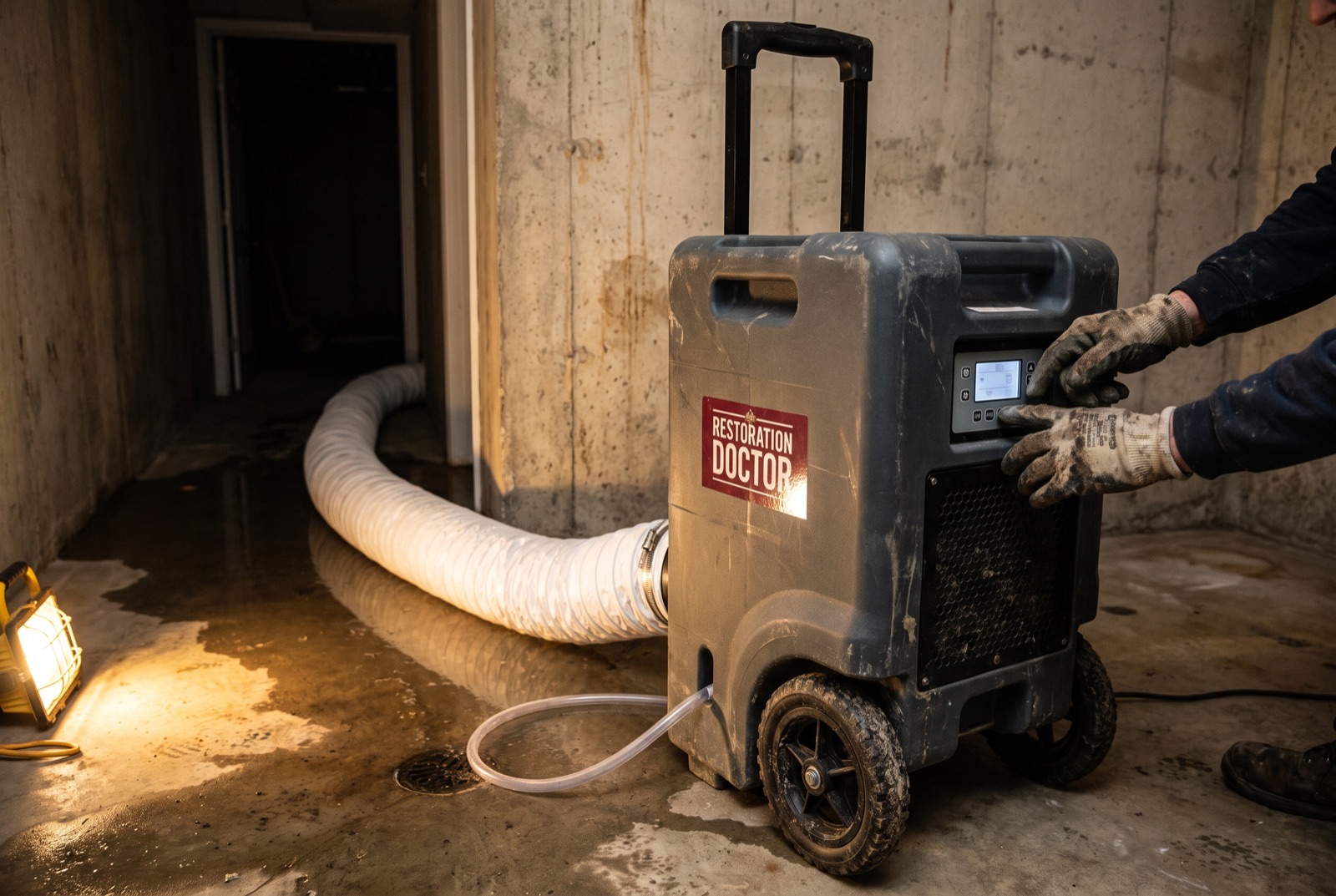
For everything short of that, the reassuring truth is that timely drying removes the structural threat entirely — wood that never stays wet never rots. Restoration Doctor mitigates active losses 24/7 across Northern Virginia, Maryland, and D.C., and when damage has progressed to compromised framing or subfloor, handles the reconstruction as well. If part of your home is sagging, soft, or freshly flooded, call 1-888-29-FLOOD and get eyes on it today.
Reconstruction & Repairs
Drywall, flooring, cabinetry, trim, and paint — the same in-house crew that dried the loss rebuilds it, with no handoff between mitigation and reconstruction.
Frequently asked
Related questions
Is a water damaged ceiling dangerous?
Does water damage get worse over time?
How to tell if water damage is permanent?
Why does my basement flood when it rains?
Active water, mold, fire, or sewage event?
Connect directly with the Restoration Doctor team for your region. Crews are on standby 24/7 with documented response protocols.