
Should I call a restoration company or my insurance company first?
Call the restoration company first. Your policy requires you to prevent further damage immediately, wet materials need to be dry within 24-48 hours to prevent mold growth, and emergency mitigation cannot wait for an adjuster's schedule. Report the claim to your carrier promptly afterward — ideally the same hour. The two calls work together; the order simply reflects urgency.
Why mitigation comes first
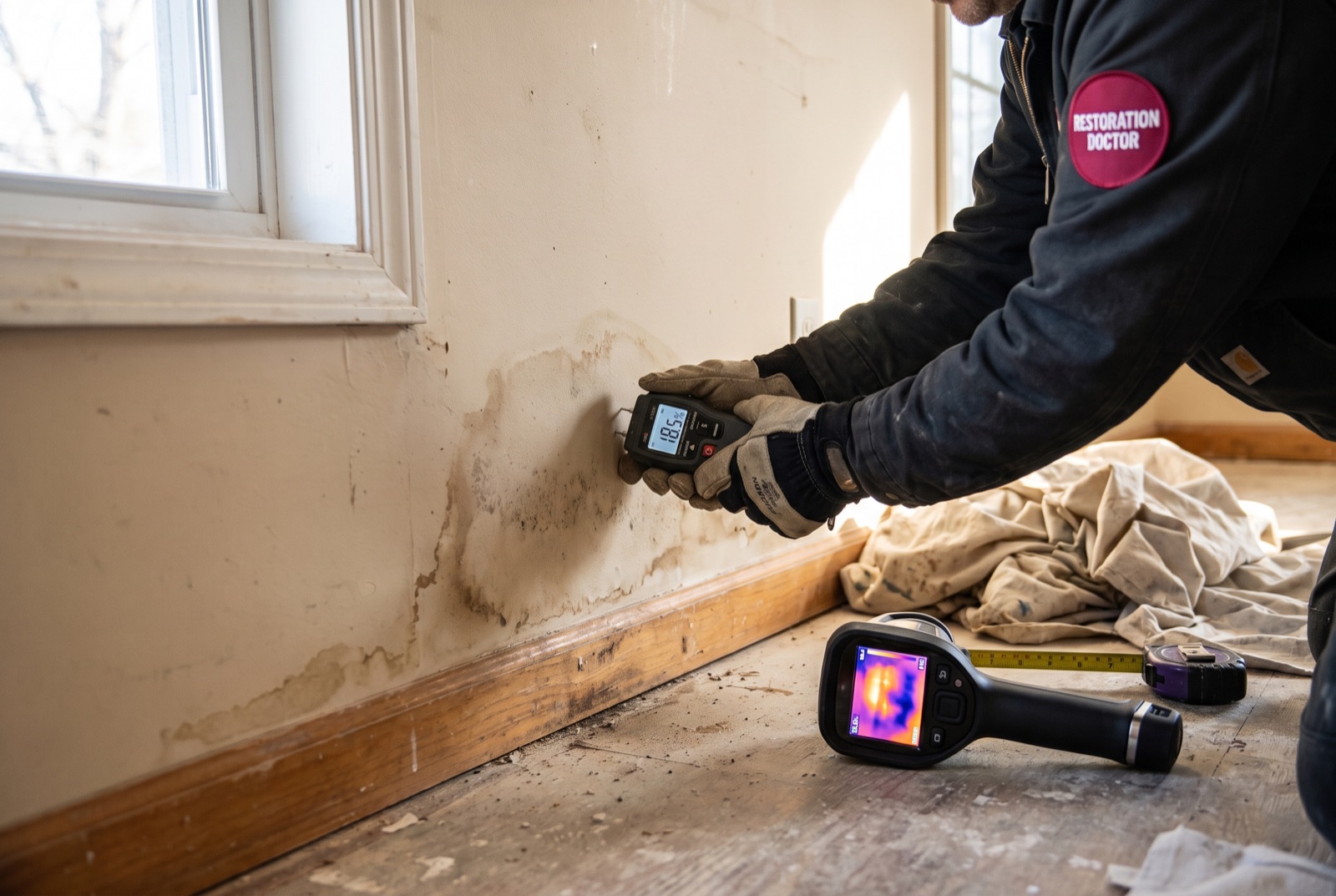
Water damage is a race against physics and biology. Water keeps migrating into walls, subfloors, and cavities for hours after the visible flooding stops, and materials that stay wet past 24 to 48 hours are at risk for mold growth. Every hour before extraction and drying begin moves more of your home from the "dry it" column to the "demolish and rebuild it" column.
Your insurance policy is built around this same reality. Standard policies impose a duty on the homeowner to take reasonable, prompt steps to protect the property from further damage after a loss. That duty is triggered by the loss itself — it does not wait for a claim number, an adjuster inspection, or anyone's sign-off. Emergency mitigation is not jumping the gun on your claim; it's performing a policy obligation, and mitigation costs are normally part of a covered claim.
What waiting for the adjuster actually costs
Adjuster inspections are commonly scheduled days after a loss is reported — sometimes longer after regional storm events when carriers are handling high claim volume. A structure that sits wet for that long risks mold, delaminating subfloor, and swollen materials that were salvageable on day one. Ironically, the delay also hurts the claim itself: carriers can attribute worsened damage to the homeowner's inaction, and mold growth that could have been prevented becomes a disputed line in the file.
Nothing about mitigating first hides anything from the carrier. Professional mitigation preserves the evidence — photos before any work, moisture readings, samples of removed materials, daily drying logs. An adjuster arriving on day four to a documented, drying structure has a better file to work with than one arriving to a moldy, still-wet one.
The right sequence, start to finish
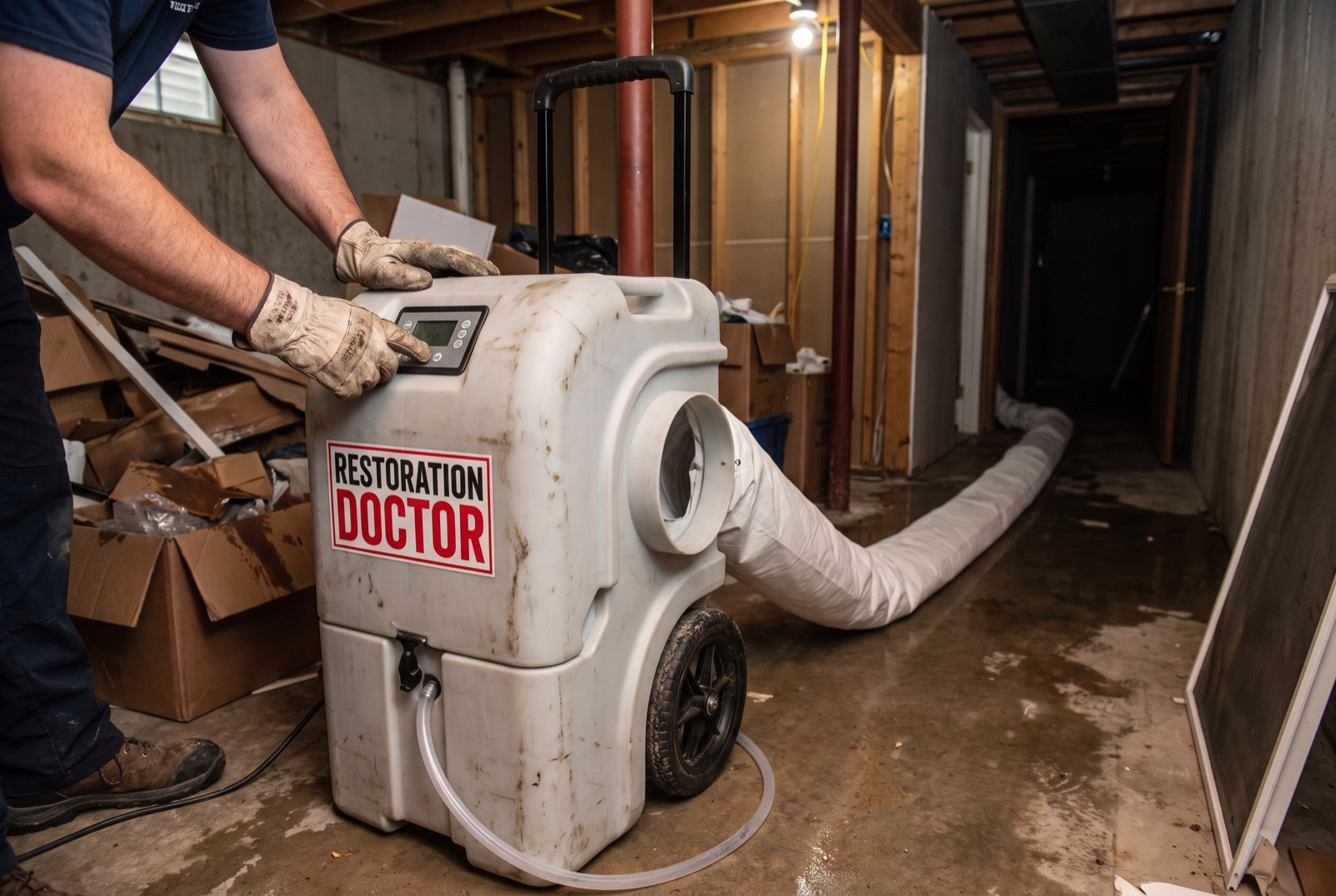
First, make the scene safe: stop the water at its source and cut power to affected areas if water is near outlets or the panel. Second, photograph and video everything before cleanup. Third, call a 24/7 restoration company — crews can typically be on site within hours with extraction and drying equipment. Fourth, report the claim to your carrier; this can happen while the crew is en route. Keep your claim number, and give it to the restoration company so their documentation flows to the right file.
From there, the two tracks run in parallel: mitigation proceeds on the physical schedule the damage demands, while the claim proceeds on the carrier's schedule. The drying records, moisture maps, and photos generated during mitigation become the factual backbone of the claim file.
One call gets both tracks moving
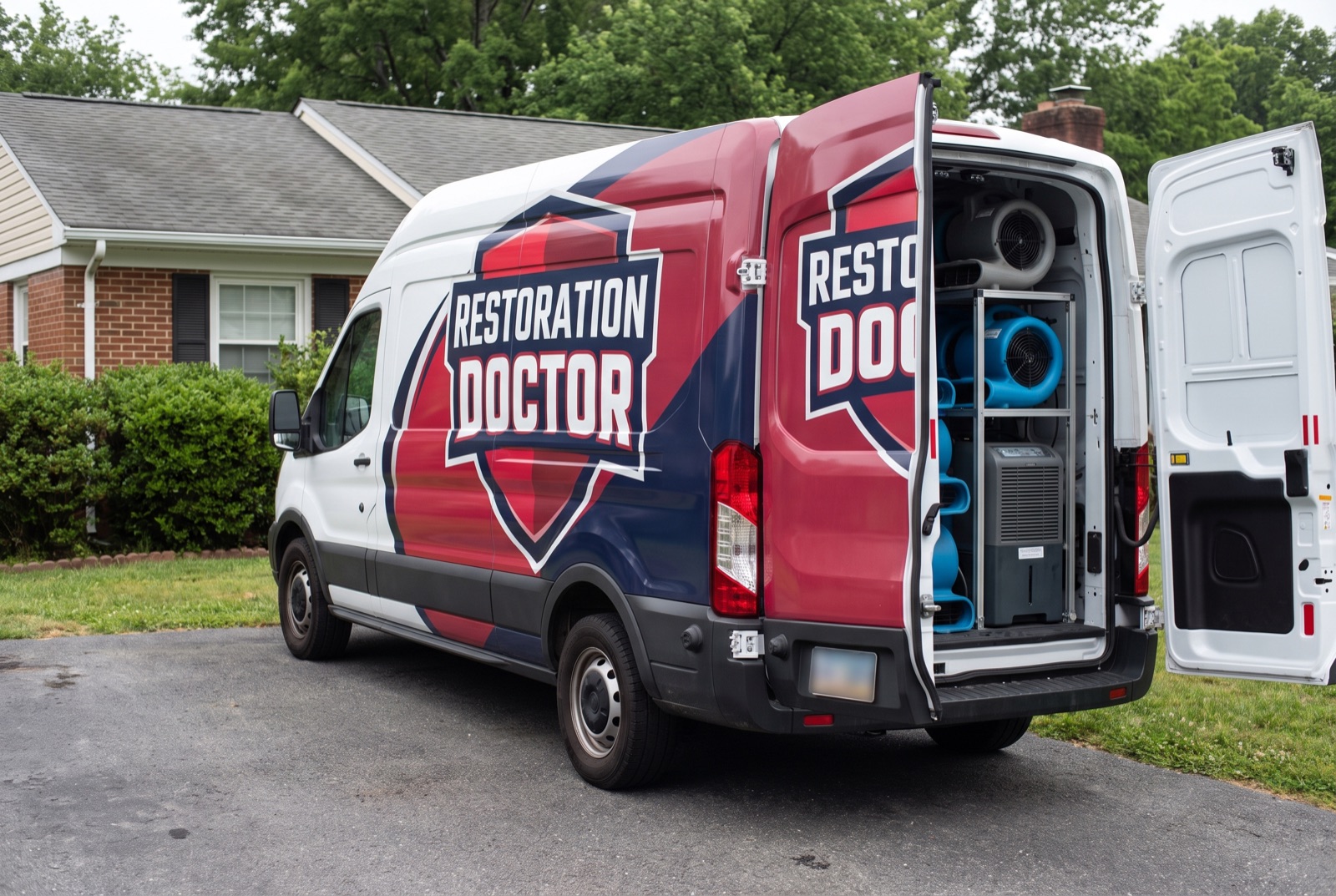
Restoration Doctor answers 24/7 across Northern Virginia, Maryland, and D.C., dispatches emergency crews for extraction and structural drying, and documents everything — cause of loss, moisture mapping, and daily drying logs — in the itemized format your carrier expects to see. You report the claim; we make sure the damage stops growing while you do. Call 1-888-29-FLOOD the moment the water is stopped and the scene is safe.
Water Damage Restoration
Extraction, structural drying, and moisture verification for burst pipes, appliance leaks, and basement flooding.
Frequently asked
Related questions
How do I file a water damage insurance claim?
What should I do immediately after water damage?
How fast can a restoration company get to my house?
Should I sign a work authorization before insurance approves the claim?
Active water, mold, fire, or sewage event?
Connect directly with the Restoration Doctor team for your region. Crews are on standby 24/7 with documented response protocols.