
At what temperature do pipes freeze and burst?
The commonly cited danger threshold is about 20°F sustained for six hours or more — that's when uninsulated pipes in unheated spaces start freezing in significant numbers. Pipes in exterior walls, attics, crawl spaces, and garages are at risk well before pipes in heated interior spaces, which rarely freeze unless the heat fails.
Why 20°F is the number to watch
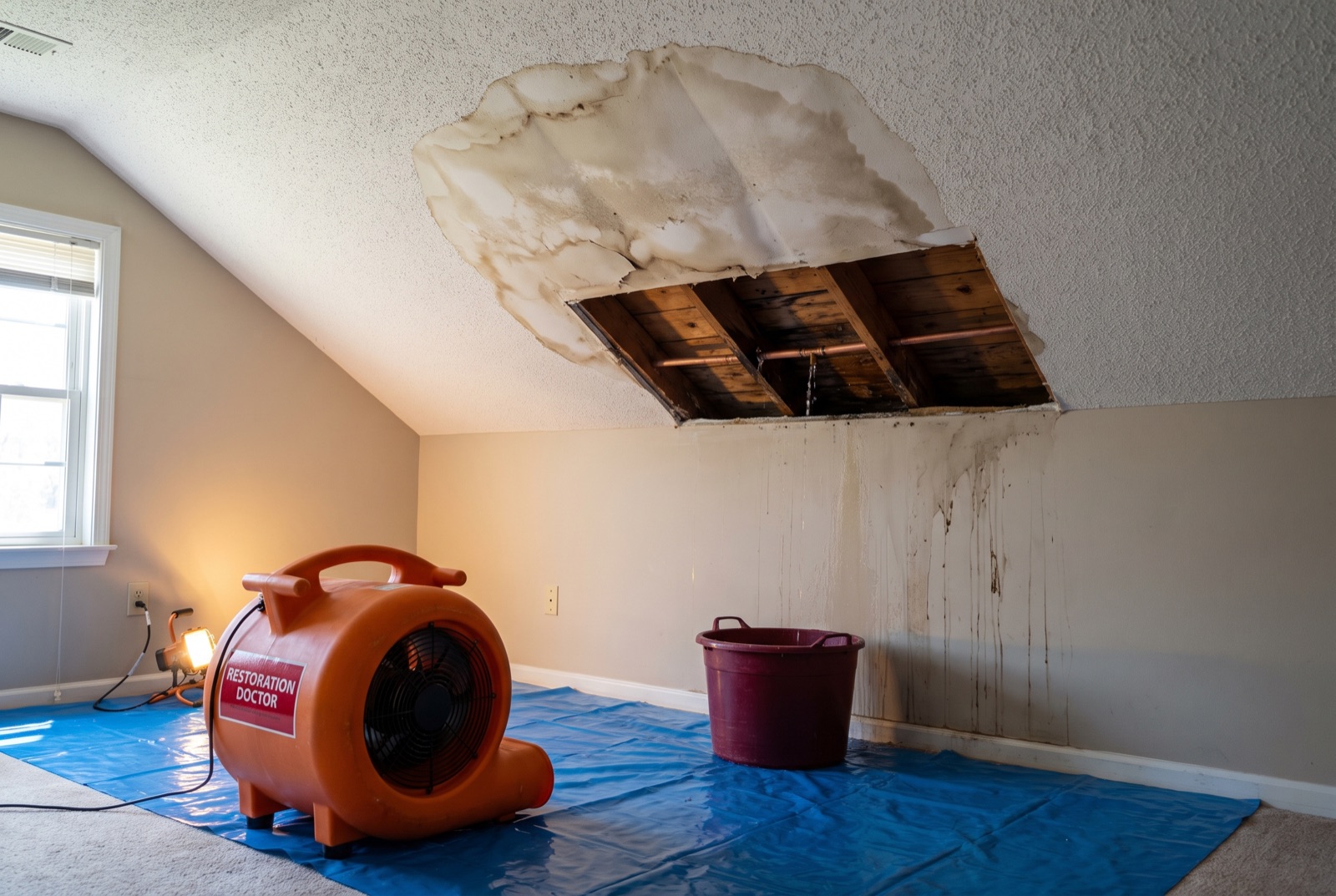
Water freezes at 32°F, but a pipe inside a building doesn't see outdoor temperature directly — it's buffered by walls, insulation, and heat leaking from the living space. Building research long ago identified roughly 20°F outdoor temperature as the practical alert threshold: below that, sustained for several hours, uninsulated pipes in vulnerable locations begin freezing in real numbers.
Duration matters as much as the reading. A brief overnight dip to 18°F that rebounds by mid-morning is far less dangerous than 48 hours parked in the teens, because it takes hours of heat loss to freeze the water inside a pipe solid. In the D.C. metro area, the classic burst-pipe events are multi-day cold snaps — especially ones with wind, which strips heat out of wall cavities and crawl spaces far faster than still air.
Location matters more than the thermometer
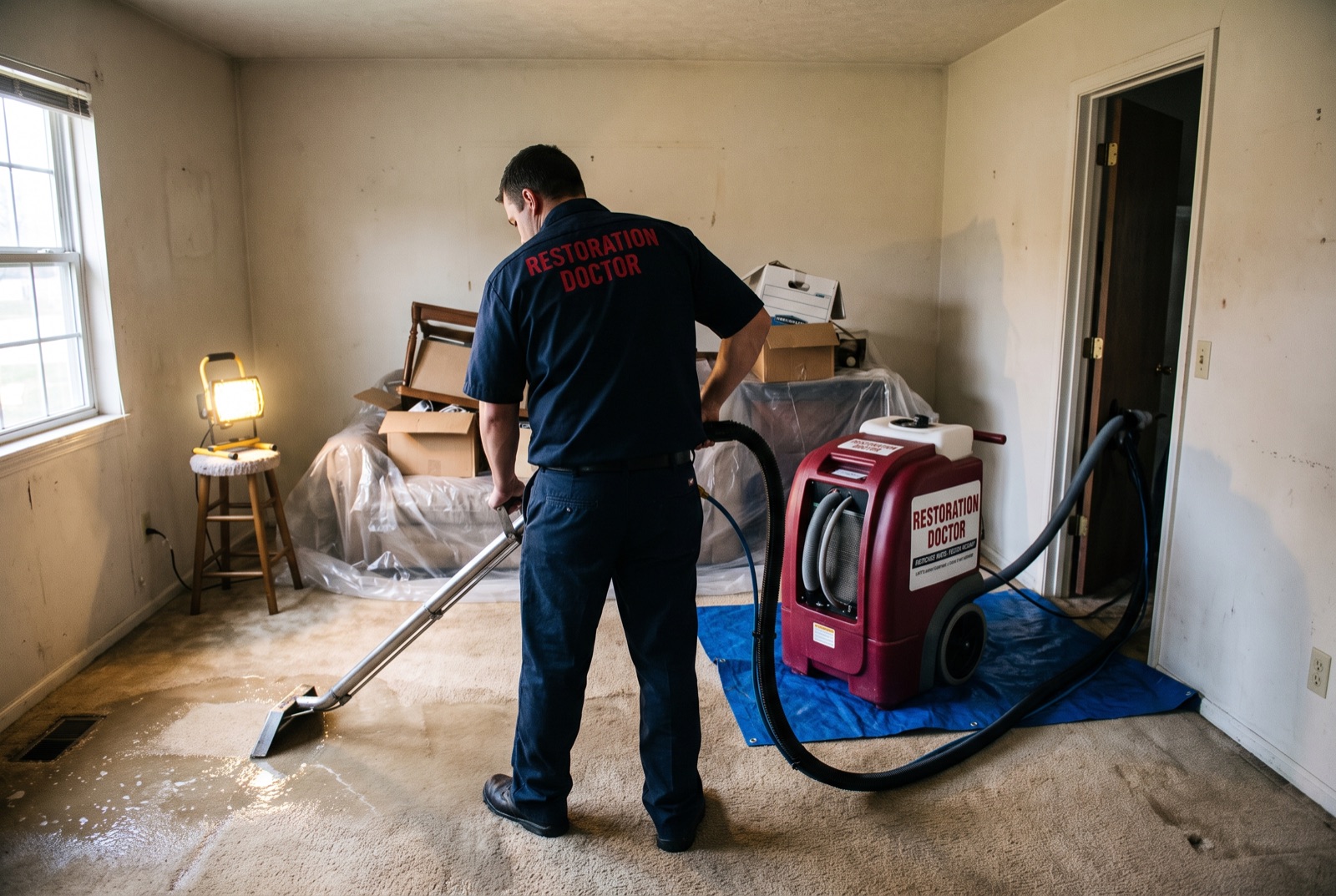
The same house can have pipes at wildly different risk. Highest risk: supply lines in exterior walls (especially kitchen and bathroom plumbing on a north-facing wall), pipes in unheated attics, crawl spaces, and garages, hose bibs with hoses still attached, and plumbing in bonus rooms over garages. These see near-outdoor temperatures with little protective heat.
Moderate risk: pipes in unfinished basements near rim joists and vents, and runs passing close to poorly sealed penetrations where cold air infiltrates. Low risk: plumbing routed through heated interior walls — these essentially never freeze while the heating system runs. That's also why a furnace failure or an extended power outage during a cold snap is a burst-pipe emergency in the making: the protection was the heat, not the pipe.
Northern Virginia and Maryland homes are, if anything, more vulnerable than New England homes at the same temperature, because plumbing here is more often routed through exterior walls and unconditioned spaces — builders in milder climates historically designed for milder cold.
From freeze to burst: what actually breaks the pipe
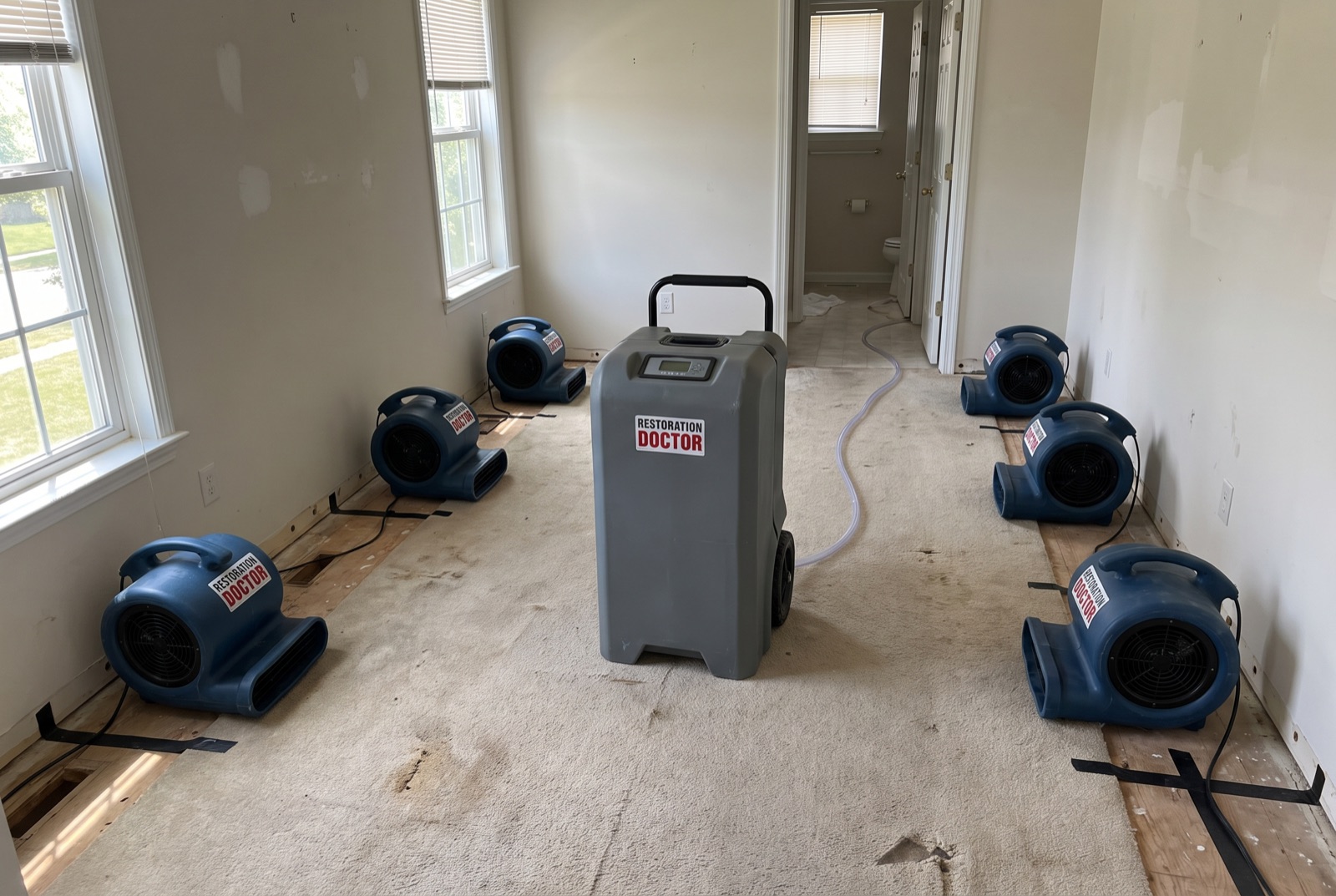
Freezing water expands roughly 9 percent. The ice itself rarely splits the pipe at the blockage point — instead, the growing ice plug traps water between itself and the closed faucet downstream, and pressure in that trapped section climbs into the thousands of PSI until the pipe wall or a joint fails. That's why bursts often appear somewhere other than the frozen spot, and why the flood frequently starts at thaw, when the ice releases and water reaches the new opening at full pressure.
Copper, PVC, and CPVC are most burst-prone; PEX tolerates more expansion but its fittings can still fail. No material is freeze-proof.
When a cold snap is coming — or a pipe has already let go
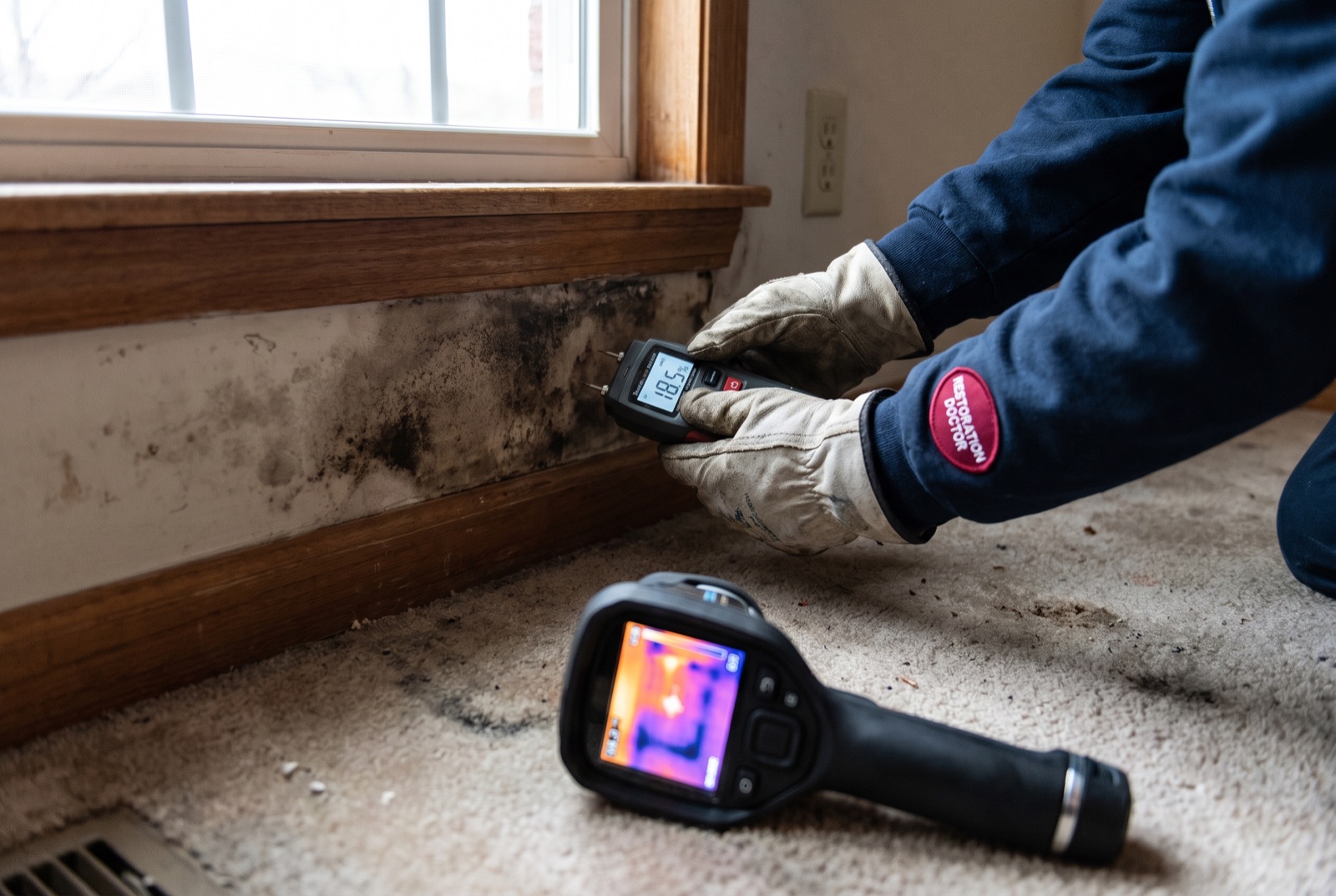
Before a hard freeze: keep the thermostat at 55°F or higher, drip faucets served by exterior-wall runs, open cabinet doors under sinks, and disconnect garden hoses. If a pipe has already frozen or burst, shut off the main water valve and get help moving — thawing carries its own flood risk, and burst losses grow by the hour. Restoration Doctor responds 24/7 across Northern Virginia, Maryland, and D.C.; call 1-888-29-FLOOD.
Water Damage Restoration
Extraction, structural drying, and moisture verification for burst pipes, appliance leaks, and basement flooding.
Frequently asked
Related questions
Why do pipes burst in winter?
How do I keep my pipes from freezing?
How do I know if my pipes are frozen?
Will a frozen pipe always burst?
Active water, mold, fire, or sewage event?
Connect directly with the Restoration Doctor team for your region. Crews are on standby 24/7 with documented response protocols.