
Why do pipes burst in winter?
Freezing water expands about 9 percent. As an ice plug grows inside a pipe, it traps water between itself and the closed faucet downstream and drives the pressure in that trapped section to extreme levels until the pipe wall or a fitting fails — usually at the weakest point, and often somewhere other than the frozen spot itself.
The physics: expansion plus trapped pressure
Water is unusual among liquids — it expands when it freezes, by roughly 9 percent in volume. But the expansion alone isn't what typically splits the pipe. Ice forming in an open-ended pipe can push water harmlessly back toward the supply. The destructive scenario is a complete ice blockage in a pipe with a closed fixture downstream: now the ice plug acts like a piston, and the water trapped between the plug and the closed faucet has nowhere to go.
As the plug keeps growing, pressure in that trapped column climbs steeply — laboratory studies of pipe freezing have measured spikes into the thousands of PSI, far beyond the few hundred PSI most residential pipe is rated for. Something has to give, and it's usually the weakest point in the run: a soldered joint, a corroded section, a fitting, or a thin spot in the pipe wall. That's why the split often shows up inches or feet away from where the ice actually formed.
Why the flood usually starts at thaw
While everything is frozen, the ice plugs its own damage — a cracked pipe full of ice doesn't leak. When the cold snap breaks and the plug melts, full household pressure of 40 to 80 PSI reaches the split, and the leak begins in earnest. This is why burst-pipe discoveries spike during the warm-up after a freeze, not during the freeze itself, and why restoration companies staff up for the thaw.
It's also why a pipe that froze but "seems fine" deserves suspicion: shut off the main before thaw, restore pressure deliberately, and inspect the run as flow returns rather than finding out from a ceiling stain two days later.
Which pipes fail, and why yours might be vulnerable
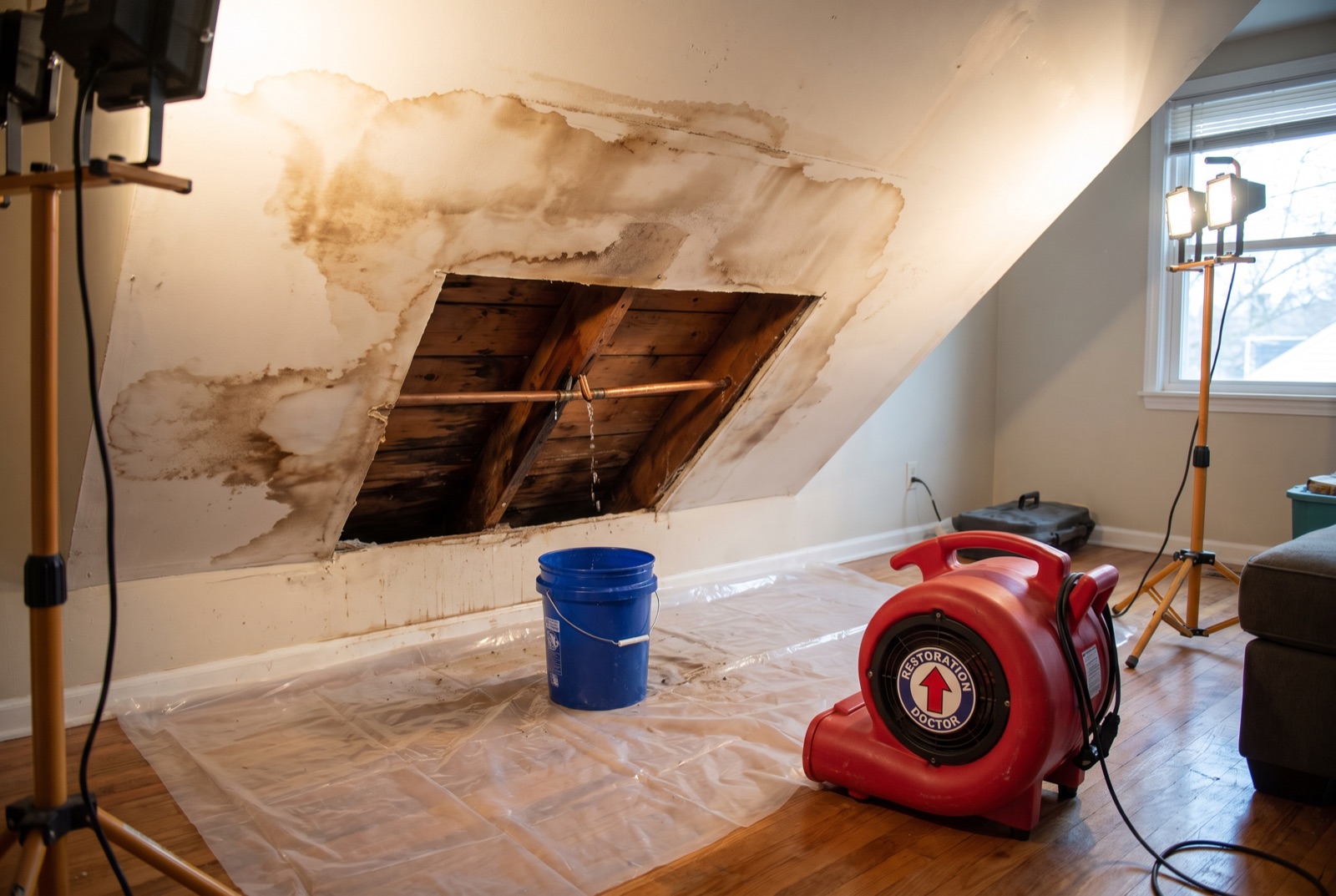
The pipes that burst are the ones that freeze, and those cluster in predictable places: supply lines routed through exterior walls (kitchen sinks and bathrooms on north-facing walls are classics), pipes in unheated attics, crawl spaces, and garages, hose bibs with hoses left attached (the trapped water freezes back into the wall), and plumbing over unconditioned spaces like garage bonus rooms.
Mid-Atlantic homes deserve particular caution. Because the D.C. region's climate is milder than New England's, builders here more often routed plumbing through exterior walls and unconditioned spaces — so when a genuine hard freeze does arrive, Northern Virginia and Maryland homes can be more vulnerable than colder-climate homes designed with deep freezes in mind. Material matters too: copper and CPVC are least forgiving of freezing; PEX tolerates more expansion but is not freeze-proof, and its fittings still fail.
Turning the mechanism into prevention — and response
Every prevention tactic targets the mechanism directly. Insulating vulnerable runs and sealing air leaks keeps pipes above freezing. Dripping faucets during cold snaps keeps water moving and, crucially, gives pressure a relief path so the trapped-column spike can't build. Keeping heat at 55°F or higher, opening cabinet doors, and disconnecting hoses protect the usual failure points.
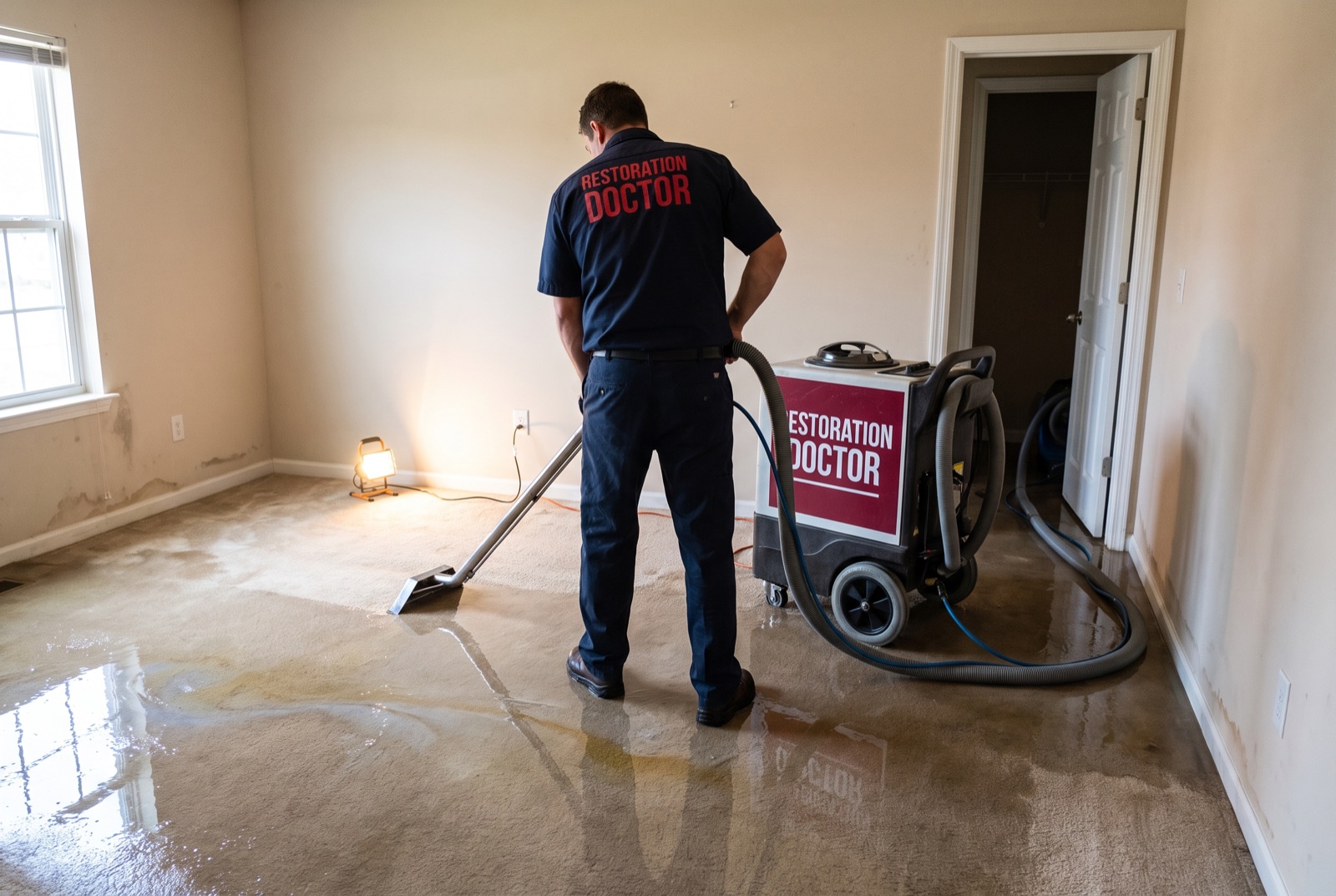
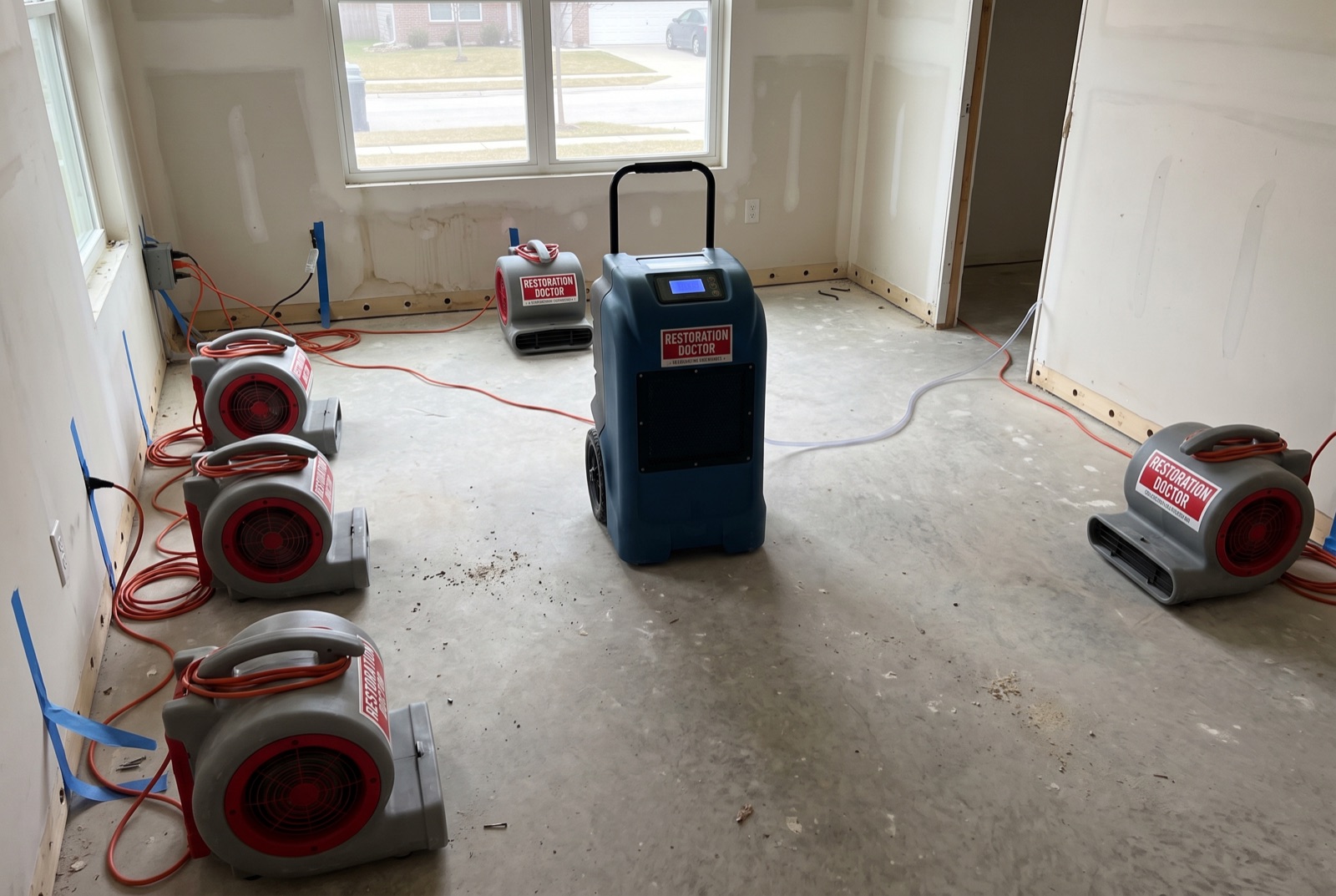
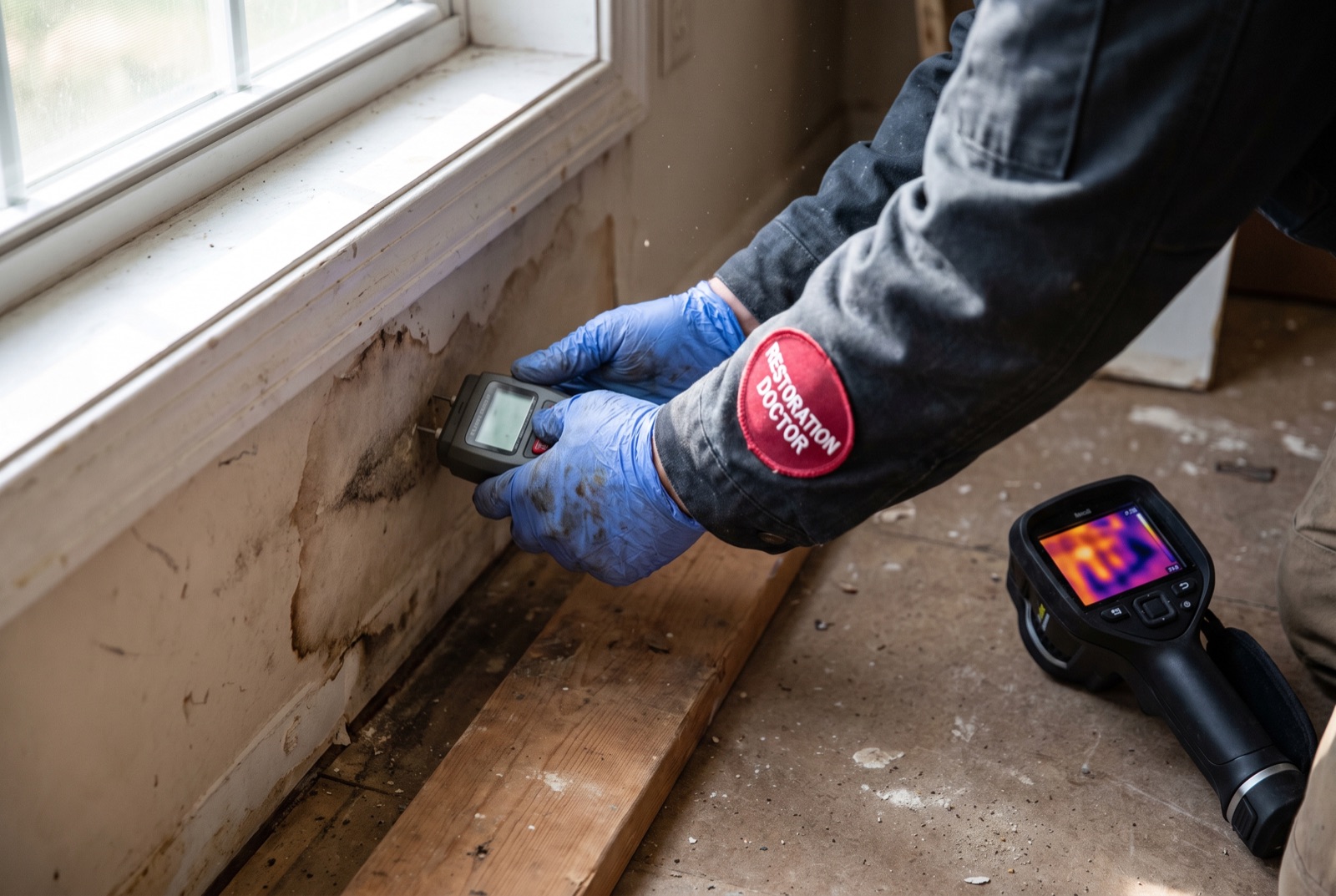
If a pipe does let go, shut the main, drain the lines through open faucets, and get mitigation moving fast — pressurized winter bursts put a lot of water into a structure quickly, and drying must start inside the 24-to-48-hour window that keeps mold out. Restoration Doctor handles freeze-burst losses 24/7 across Northern Virginia, Maryland, and D.C., with the documentation carriers expect for these typically covered sudden losses. Call 1-888-29-FLOOD.
Water Damage Restoration
Extraction, structural drying, and moisture verification for burst pipes, appliance leaks, and basement flooding.
Frequently asked
Related questions
At what temperature do pipes freeze and burst?
How do I keep my pipes from freezing?
Will a frozen pipe always burst?
What do you do when a pipe bursts in your house?
Active water, mold, fire, or sewage event?
Connect directly with the Restoration Doctor team for your region. Crews are on standby 24/7 with documented response protocols.