
Will a frozen pipe always burst?
No — many frozen pipes thaw intact, especially brief, partial freezes. But you can't tell from the outside whether the ice has already cracked the pipe, because a split frozen pipe doesn't leak until it thaws. That's why burst discoveries spike when temperatures rise, and why every suspected freeze should be treated as a possible burst.
Why some freezes burst and others don't
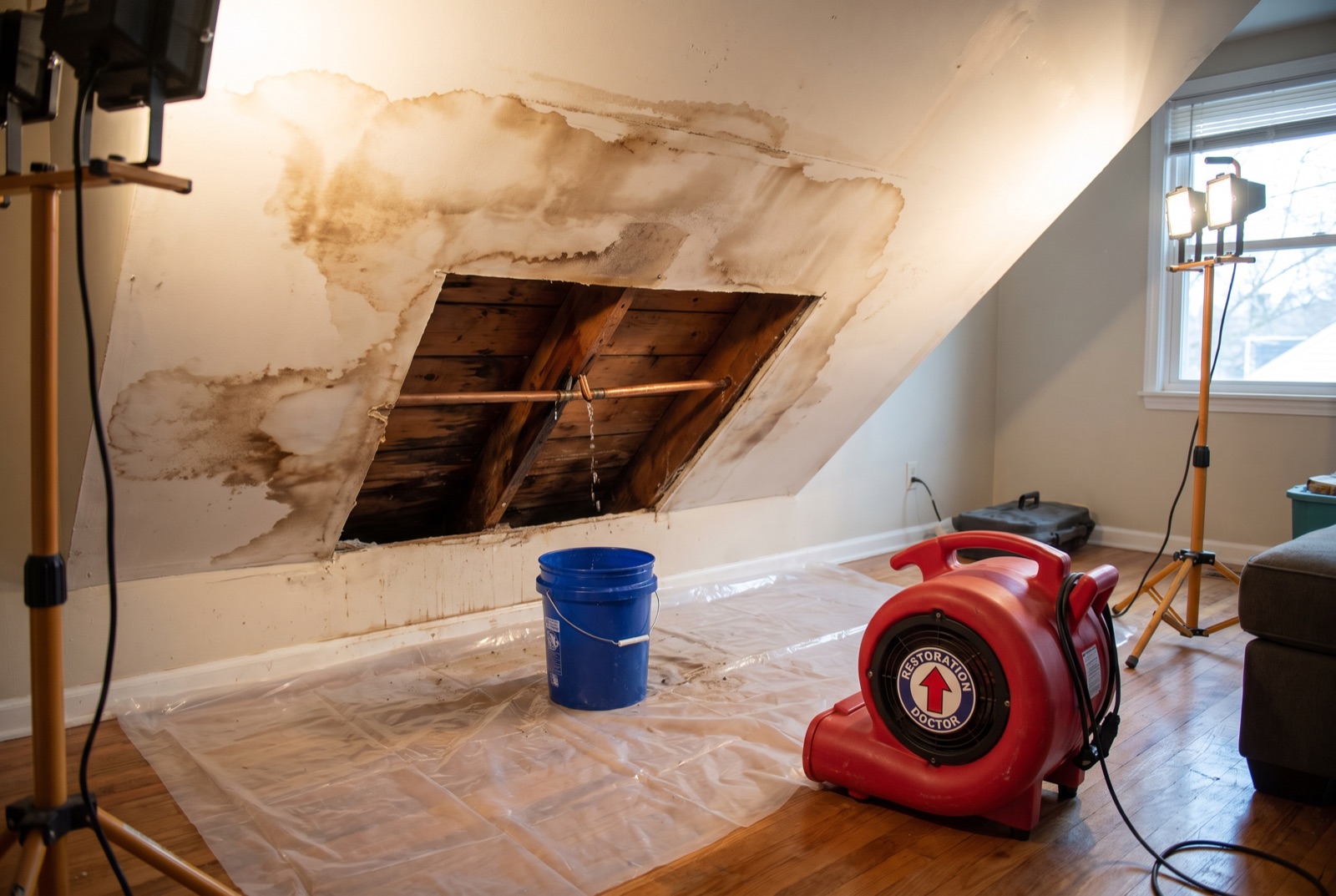
Whether a frozen pipe bursts depends on how completely it froze, where, and what the trapped water could do. The dangerous scenario is a solid ice plug in a pipe with a closed faucet downstream: as the plug grows, it pressurizes the trapped water between ice and faucet to extreme levels until the pipe wall or a fitting gives way. A partial freeze that never fully blocks the pipe, or a freeze on a line where pressure can relieve through an open or dripping faucet, often does no damage at all.
Material and age matter too. Older copper with existing corrosion, rigid CPVC, and stressed joints fail more readily; PEX tolerates significant expansion, though its fittings remain vulnerable. This is also why the classic advice to drip faucets during a cold snap works — a moving trickle both resists freezing and gives pressure somewhere to go.
The silent-crack problem: no leak until thaw
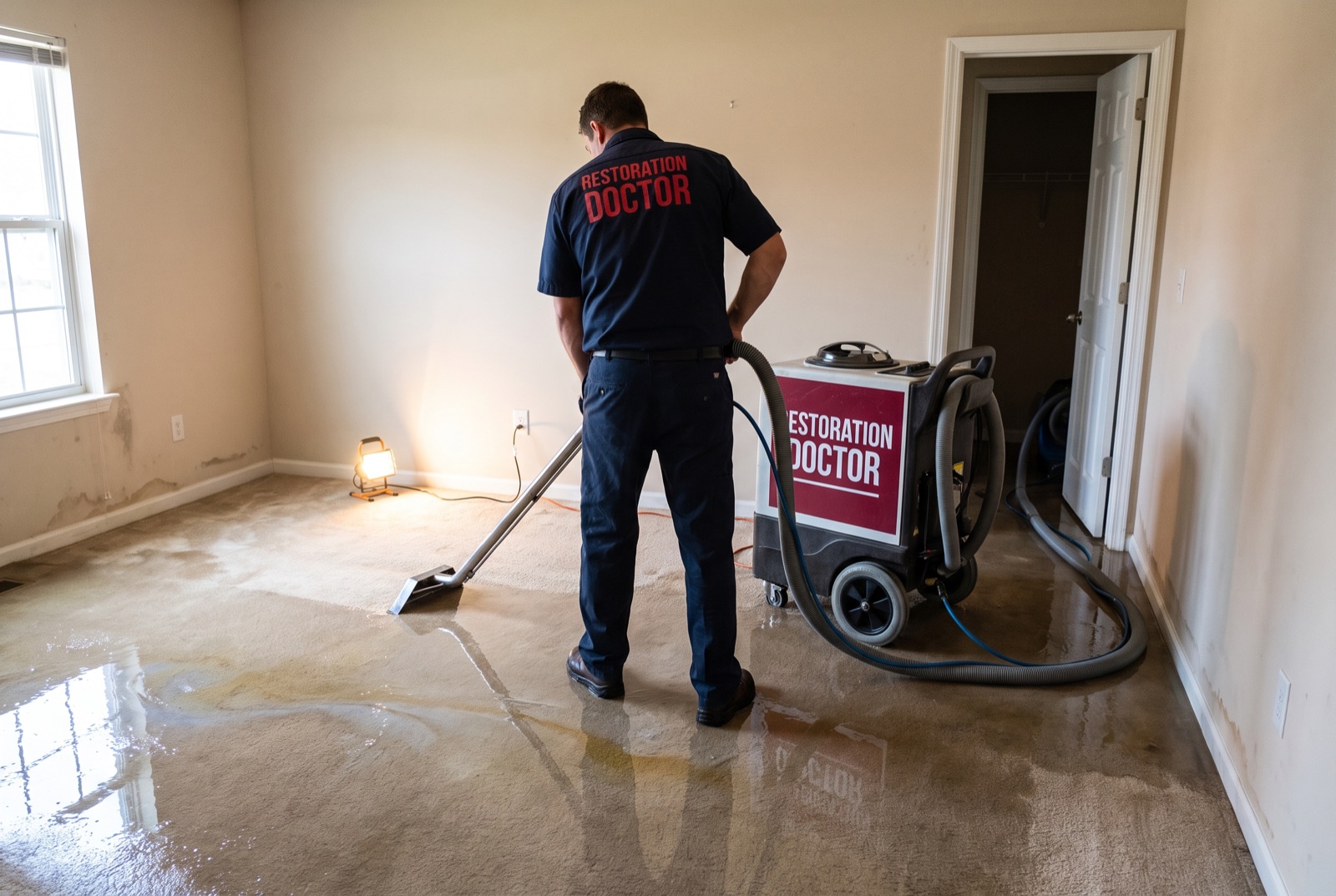
Here's the part that catches homeowners: a burst frozen pipe usually doesn't leak while frozen. The ice that split the pipe is also plugging it. Everything looks fine — until temperatures rise, the plug melts, and full household pressure reaches the crack. The flood starts hours or days after the cold snap ends, often while everyone is at work assuming the danger has passed.
This delayed failure is why restoration companies see their burst-pipe call volume peak not during the deep freeze but during the warm-up that follows, and why an unattended thaw is the riskiest window of the whole event.
How to protect yourself before and during thaw
Treat any confirmed or suspected freeze as a possible burst until proven otherwise. The cheapest insurance is shutting off the main water valve before thaw begins — if the pipe is intact, you've lost nothing; if it's split, you've limited the leak to the water already in the lines. If shutting the whole house down isn't practical, at minimum know exactly where the valve is and keep someone home during the thaw.
As flow returns, inspect everything you can reach along the frozen run: look for drips, listen for hissing inside walls, and watch ceilings and baseboards below the pipe path over the following day. A slow seep from a hairline crack can run inside a wall cavity for days before staining shows — a musty odor, bubbling paint, or an unexplained jump in your water bill are the late signals.
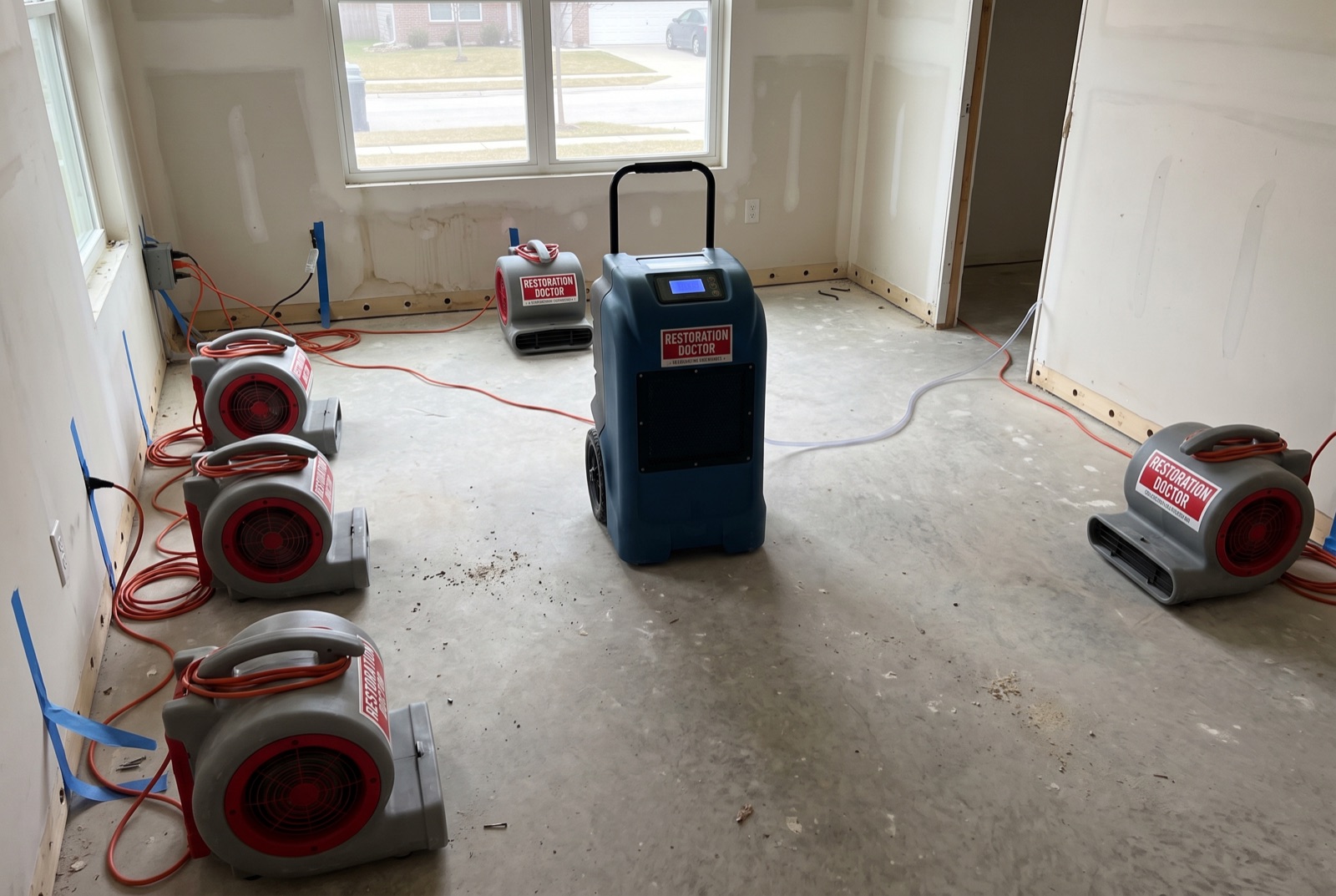
For pipes that froze inside walls or ceilings, a professional check with moisture meters or thermal imaging after thaw is a reasonable precaution — it either confirms the cavity is dry or catches hidden water while it's still a drying project rather than a demolition project.
If the thaw brings water
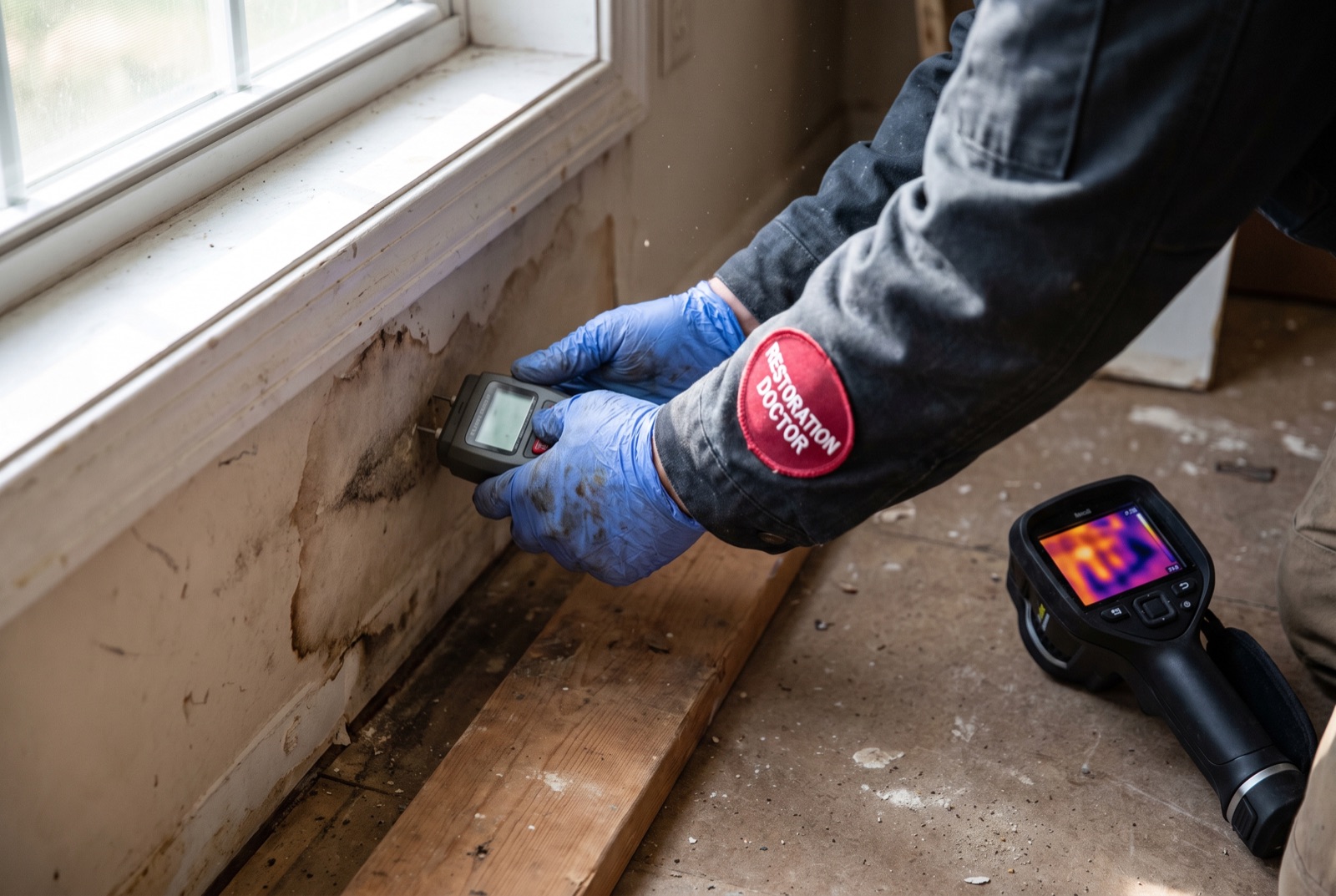
If a leak appears, shut the main, open faucets to drain the system, and move quickly on both fronts: a plumbing repair for the pipe, and professional extraction and structural drying for the water — wall cavities and subfloors that took on water will not dry on their own inside the 24-to-48-hour drying window that prevents mold. Freeze-related bursts are typically treated as sudden, covered losses on homeowners policies (policies vary, so review yours), and thorough documentation from the first hour strengthens the claim. Restoration Doctor responds 24/7 across Northern Virginia, Maryland, and D.C. — call 1-888-29-FLOOD.
Water Damage Restoration
Extraction, structural drying, and moisture verification for burst pipes, appliance leaks, and basement flooding.
Frequently asked
Related questions
How do I know if my pipes are frozen?
How do you thaw frozen pipes safely?
Why do pipes burst in winter?
Does insurance cover burst pipes?
Active water, mold, fire, or sewage event?
Connect directly with the Restoration Doctor team for your region. Crews are on standby 24/7 with documented response protocols.