
How do I know if my pipes are frozen?
The telltale sign is a faucet that produces no water or only a trickle during freezing weather. Other indicators: visible frost or ice on exposed pipes, a bulging pipe section, whistling or banging when fixtures run, and sewage odors from drains whose vent or trap has frozen. Shut off the main before thawing — the pipe may already be split.
The primary sign: little or no flow at the faucet
When an ice plug forms in a supply line, the fixtures downstream lose pressure. Turn on each faucet in the house during a cold snap: full flow means that line is fine; a weak trickle means ice is forming and partially blocking the pipe; nothing at all means a solid freeze. Checking every fixture helps you triangulate the location — if only the kitchen cold water is dead and everything else runs, the freeze is in that one branch, almost certainly where it passes through an exterior wall or unheated space.
Single-fixture freezes are the common pattern. A whole-house loss of water in freezing weather points to a freeze at the main supply line or meter — or a utility issue, which a quick call to a neighbor can rule out.
Secondary signs worth checking
Frost or ice visibly forming on an exposed pipe is a direct confirmation — check the runs in your basement, crawl space, garage, and under sinks on exterior walls. A section of pipe that looks slightly swollen or bulged is a stronger warning: that's ice expansion deforming the pipe wall, and that section may already be compromised.
Odd smells from a drain can also signal freezing: if a drain line or its vent stack ices over, sewer gas that normally exits through the roof vent has nowhere to go but back into the house. Gurgling drains and toilets during a hard freeze point the same direction.
Finally, listen. Whistling or banging in the walls when you run water suggests flow squeezing past a partial blockage. And the most urgent sound of all is running or hissing water when every fixture is off — that means a pipe has already burst somewhere, and the main needs to go off now.
What to do the moment you confirm a freeze
First, locate your main shut-off valve and be ready to close it — if the freeze has already cracked the pipe, water will start moving the moment thaw begins, and you want to be able to stop it in seconds, not minutes. Many homeowners simply shut the main preemptively before thawing; it costs nothing and removes the flood risk.
Open the affected faucet so melting water and steam can escape, then apply gentle heat working from the faucet back toward the frozen section: a hair dryer, a heat lamp at a safe distance, warm towels, or UL-listed heat tape. Never use a torch or open flame — it damages pipe, ignites framing, and can flash water to steam inside the line. Warming the room itself (opening cabinet doors, raising the thermostat) helps thaw wall-cavity freezes you can't reach directly.
If the thaw reveals a leak
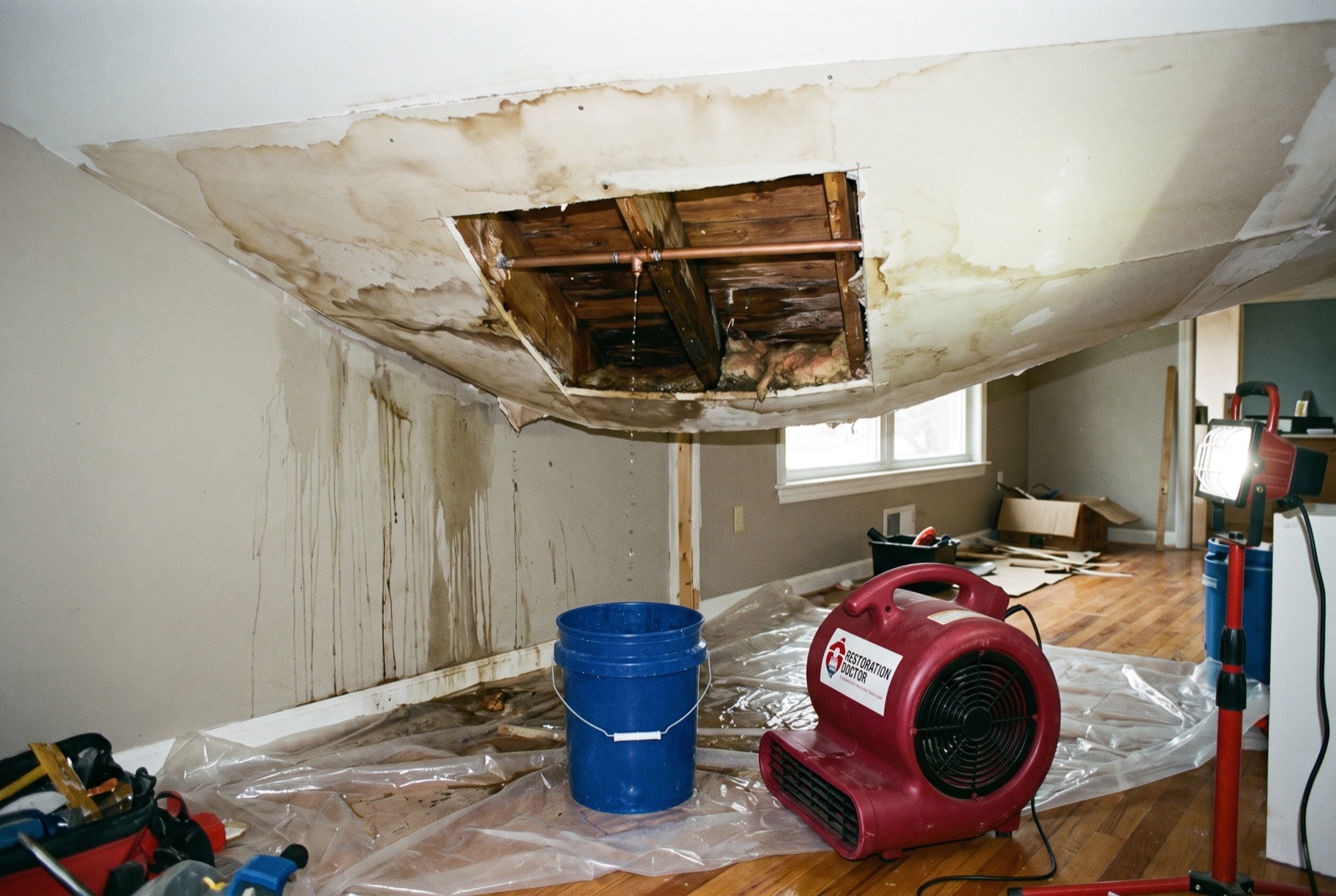
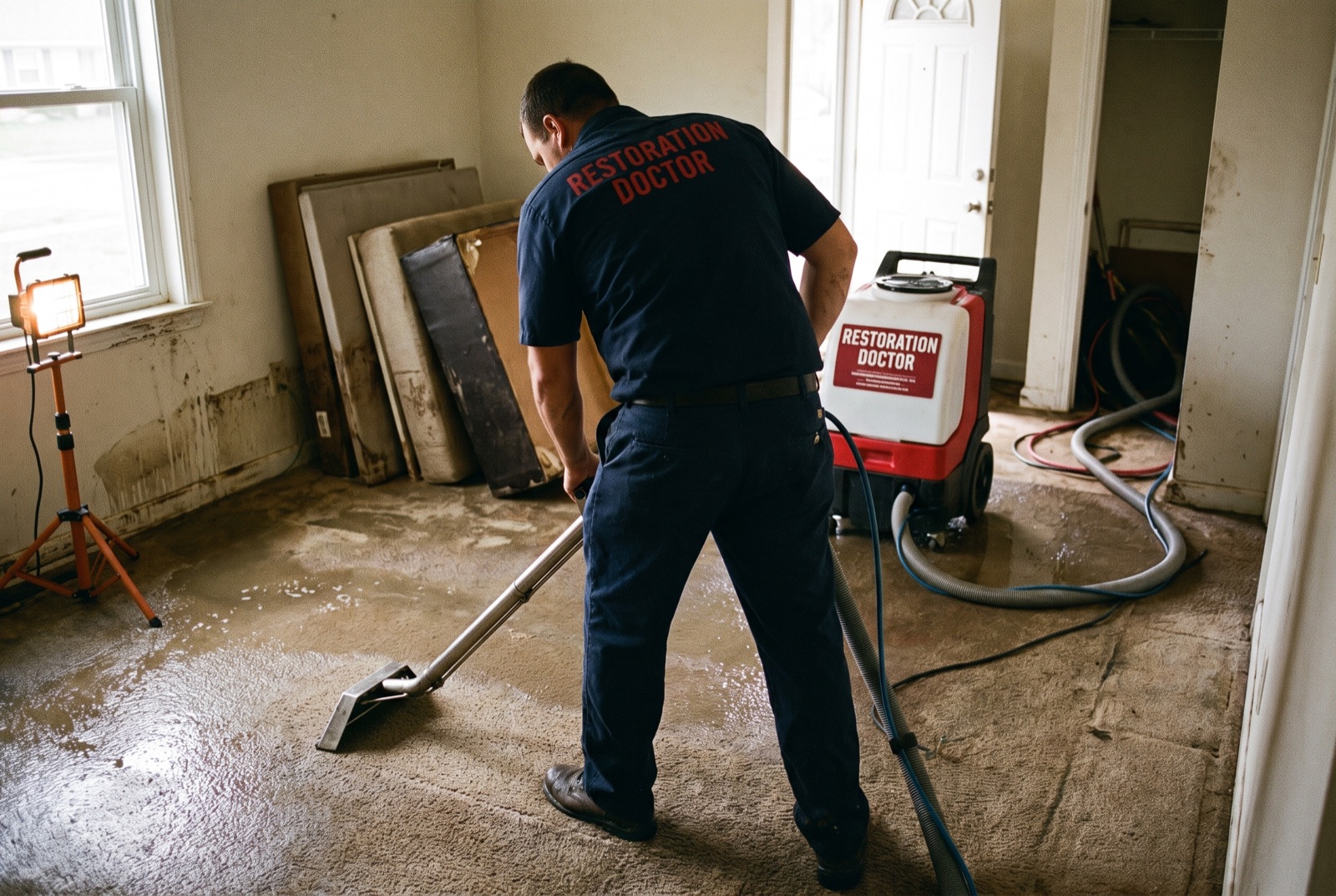
Watch and listen closely as flow returns. Any dripping, spraying, or new stains on drywall below the run means the freeze split the pipe, and every minute of pressure feeds water into the structure. Shut the main, open faucets to drain the lines, and get both a plumbing repair and professional drying started — water inside wall cavities does not dry on its own, and if it stays wet past 24 to 48 hours mold risk climbs sharply. Restoration Doctor responds 24/7 across Northern Virginia, Maryland, and D.C. at 1-888-29-FLOOD.
Water Damage Restoration
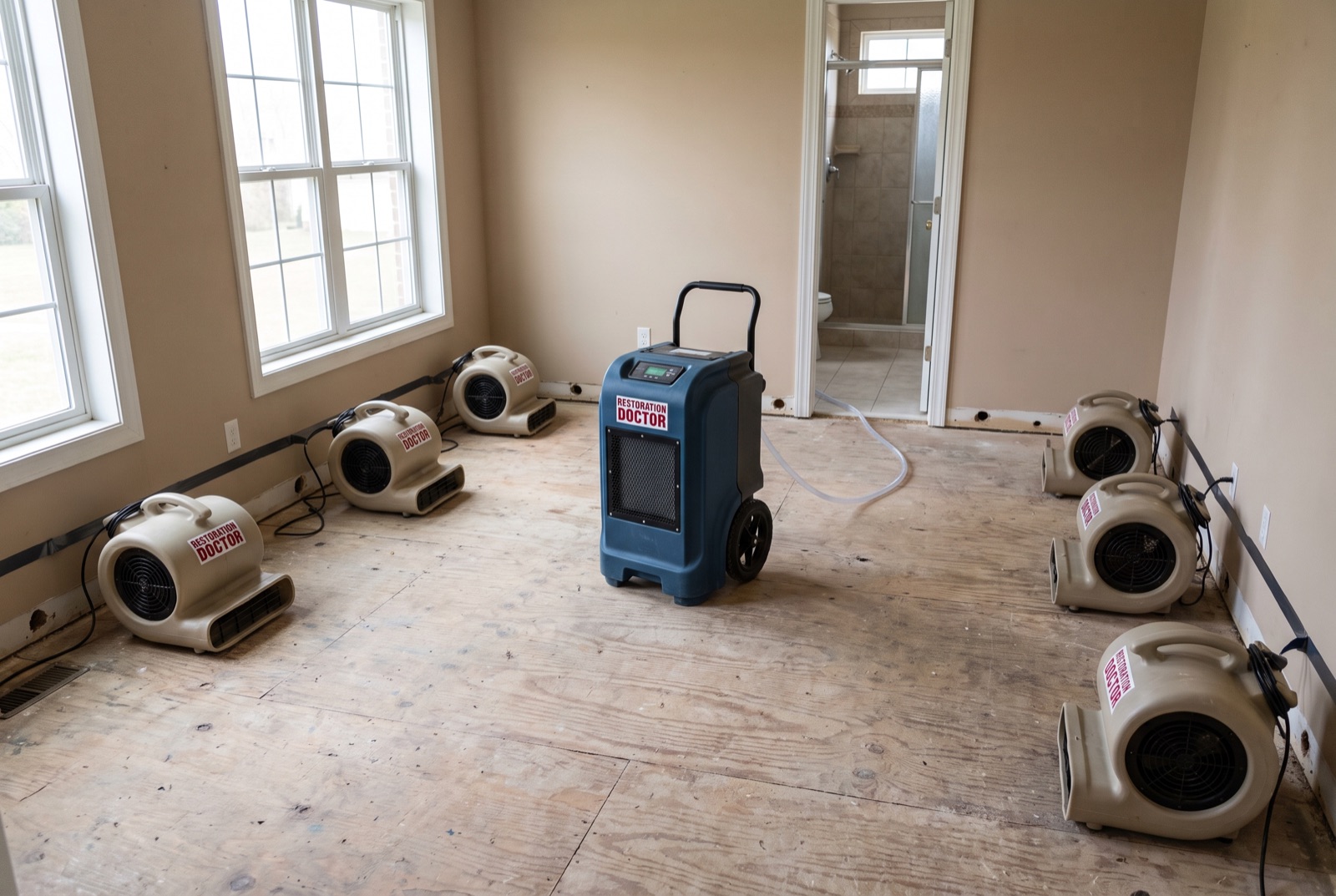
Extraction, structural drying, and moisture verification for burst pipes, appliance leaks, and basement flooding.
Frequently asked
Related questions
How do you thaw frozen pipes safely?
Will a frozen pipe always burst?
At what temperature do pipes freeze and burst?
What does a burst pipe sound like?
Active water, mold, fire, or sewage event?
Connect directly with the Restoration Doctor team for your region. Crews are on standby 24/7 with documented response protocols.