
Can I dry out water damage myself?
You can dry small, clean-water spills yourself if caught immediately and confined to surfaces you can reach. Anything that soaked into drywall, insulation, subfloor, or wall cavities needs professional drying — household fans and dehumidifiers can't dry inside assemblies fast enough to prevent mold growth. Contaminated water of any amount shouldn't be a DIY project at all.
Where the DIY line actually sits
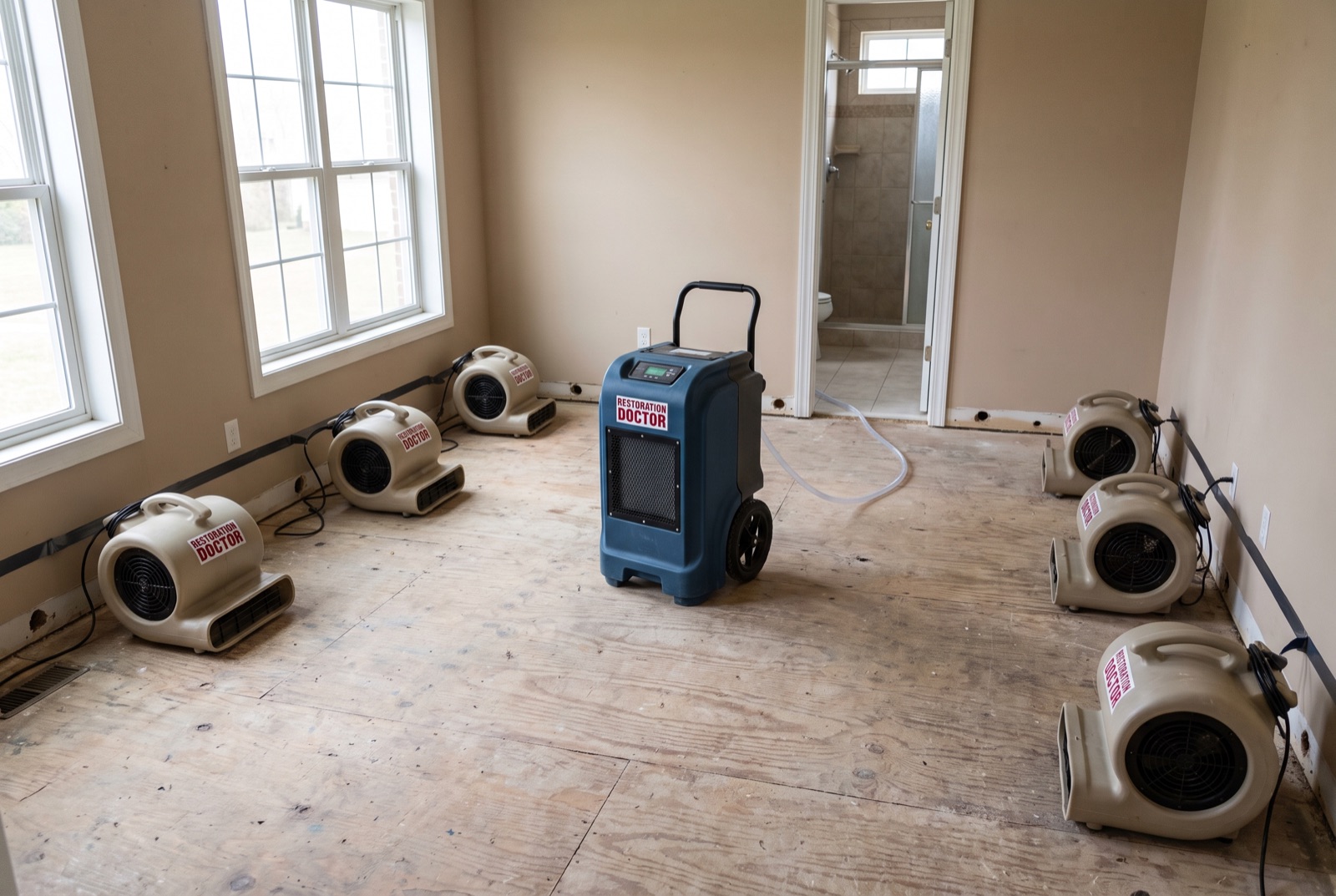
The DIY question isn't about effort — it's about reach. Household equipment dries what air can touch. If the water stayed on the surface of sealed floors, wet a small area of carpet you extracted right away, or dampened materials you can fully expose to moving air, a diligent DIY dry-down is realistic.
The line is crossed the moment water enters places room air doesn't circulate: inside wall cavities, under installed flooring, into insulation, beneath cabinets, or up into drywall beyond the bottom few inches. No arrangement of box fans can dry the inside of a closed wall, and the 24-to-48-hour drying window doesn't extend itself while you try. This is a physics limitation, not a skill one.
Contamination draws a second, harder line. Water from dishwashers, washing machines, toilet overflows, sewage backups, or outdoor flooding carries contaminants (Category 2 or 3 under the IICRC S500 standard) that make DIY drying inappropriate regardless of amount — those losses need cleaning, antimicrobial treatment, and often material removal, not just airflow.
How to do a DIY dry-down properly
If your loss is genuinely small and clean, do it right. First, remove liquid water fast — towels, mop, or a wet-rated shop vacuum (never a household vacuum). Extraction beats evaporation by orders of magnitude, so be thorough before setting up any fans.
Then create a real drying system, not just a breeze: fans angled to sweep air across wet surfaces, a dehumidifier running continuously in the closed-off area, doors and windows shut so humid outdoor air doesn't feed the room. Lift wet area rugs, pull furniture off damp carpet (foil under the legs prevents stain transfer), and open cabinet doors if water got inside.
Finally, verify instead of assuming. An inexpensive moisture meter lets you compare affected materials against the same material in a dry room; run equipment until the readings match, which typically takes two to four days of continuous operation. Surfaces feeling dry on day one is normal and means little.
The failure mode: partial drying
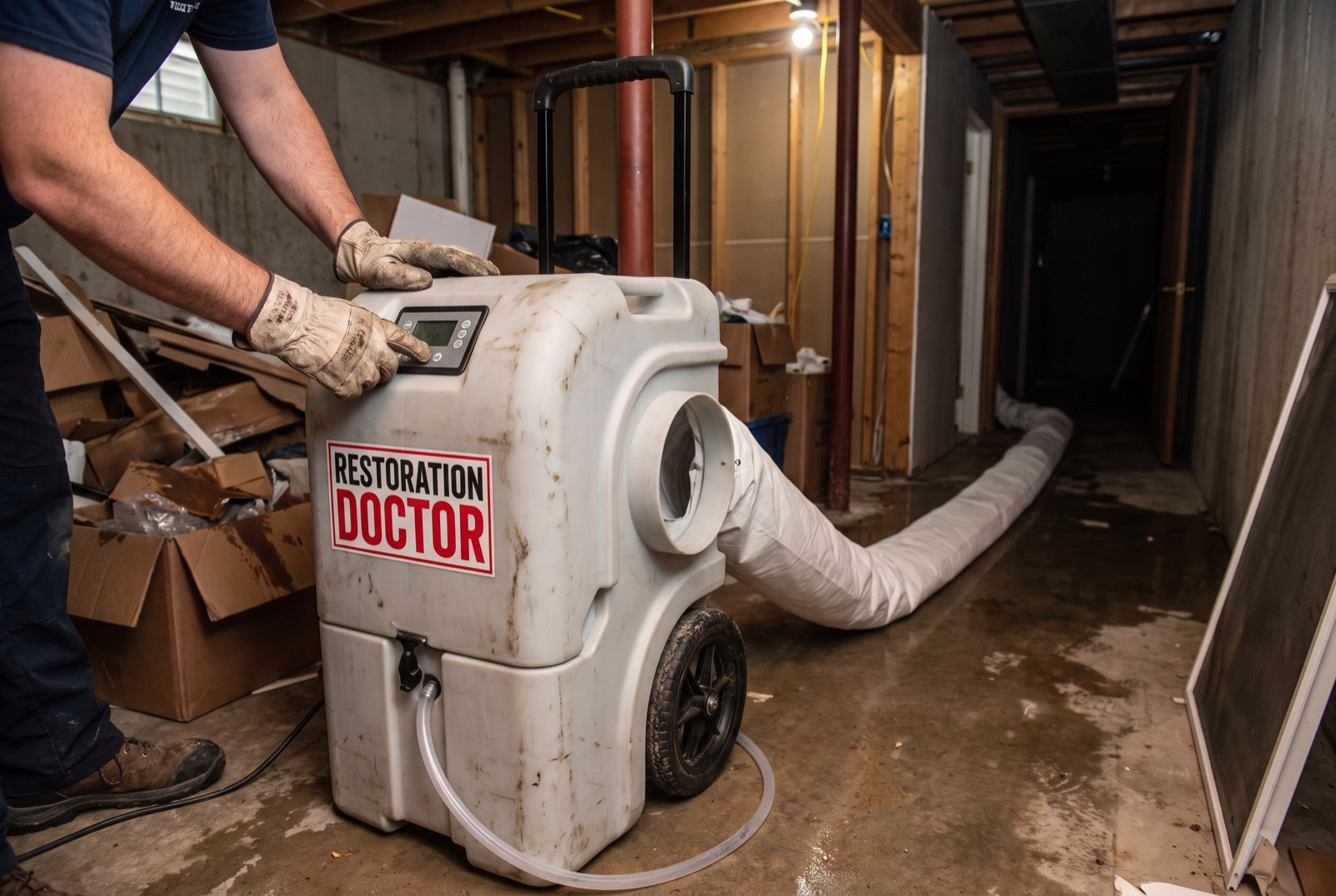
The trouble with DIY isn't that it does nothing — it's that it dries the visible 80 percent and leaves the hidden 20 percent wet. The room recovers, the smell fades briefly, and the moisture trapped in the wall base, pad, or subfloor quietly feeds mold growth for weeks. Homeowners often discover this a month later as a musty odor, a stain returning through fresh paint, or swollen baseboard — at which point the fix involves demolition the original loss never required.
Watch for the signals that a DIY effort is out of its depth: musty odor developing or persisting, meter readings that plateau above the dry standard, swelling or cupping appearing in flooring or trim, or any dampness returning after equipment is shut off. Each means water remains somewhere your equipment can't reach.
When in doubt, get it measured
There's a sensible middle path between DIY-everything and calling in a crew for a spilled bucket: have the loss assessed. A professional moisture inspection maps exactly where water traveled with meters and thermal imaging — sometimes confirming a small loss really is small, sometimes revealing that the 'minor' leak filled a wall cavity. Either way you decide with data.
Restoration Doctor provides assessments and full structural drying across Northern Virginia, Maryland, and D.C., available 24/7 at 1-888-29-FLOOD. If your loss is bigger than a same-day spill — or you simply want certainty the structure is dry — a call costs far less than a hidden wet wall.
Water Damage Restoration
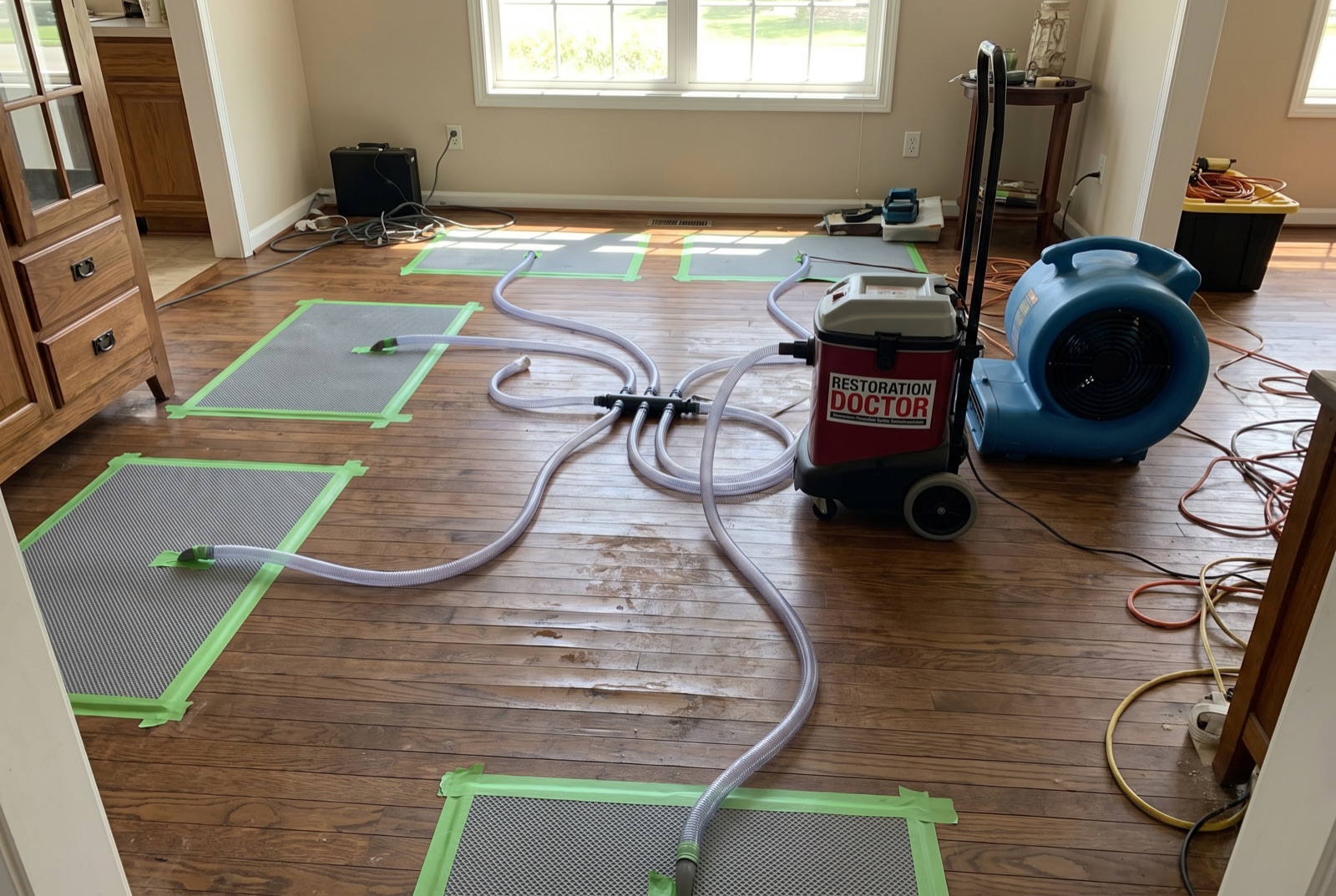
Extraction, structural drying, and moisture verification for burst pipes, appliance leaks, and basement flooding.
Frequently asked
Related questions
How long should a dehumidifier run after a water leak?
Do fans help dry out water damage?
How do professionals dry out a house after water damage?
Can I clean up sewage myself?
Active water, mold, fire, or sewage event?
Connect directly with the Restoration Doctor team for your region. Crews are on standby 24/7 with documented response protocols.