
How long should a dehumidifier run after a water leak?
Run a dehumidifier continuously for at least 48 hours after a water leak, and typically three to five days for moderate damage. The correct stopping point isn't a number of hours — it's when moisture-meter readings confirm the affected materials have returned to their dry standard. Air that feels dry doesn't mean walls and floors are.
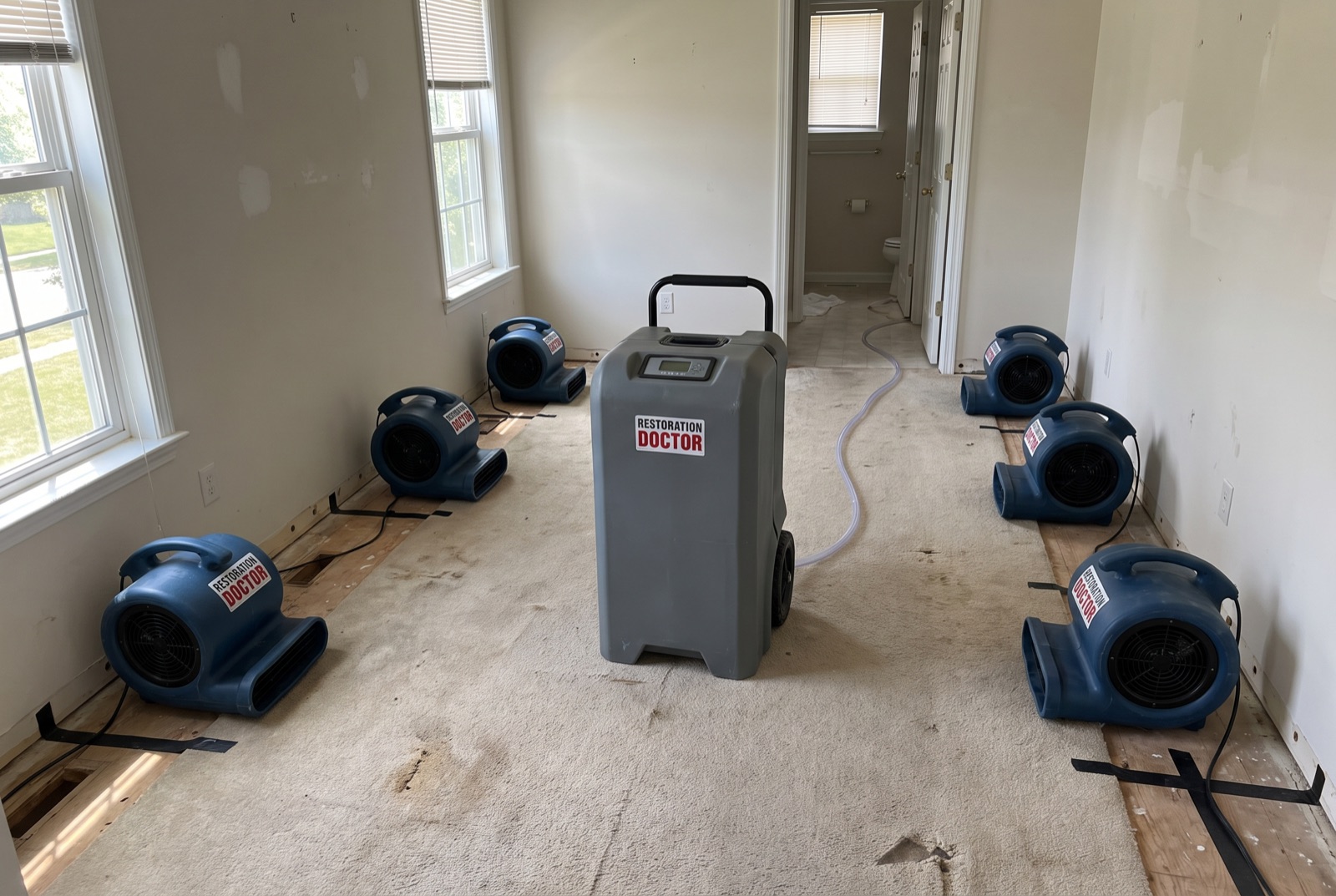
The honest answer: run it until the materials measure dry
Homeowners usually want a runtime number, and 48 hours minimum, three to five days typical is a fair planning figure. But the real answer is a condition, not a duration: a dehumidifier's job after a leak is done when the wet materials — not the air — are back to normal moisture content. Drywall, subfloor, framing, and trim release absorbed water slowly, and they keep releasing it into the room air for days after surfaces feel dry.
That's why the humidity readout on the dehumidifier itself can mislead you. Room humidity dropping to comfortable levels means the machine is keeping up with what the materials are giving off — not that they've finished giving it off. Shut the unit down early and humidity climbs right back as the structure continues to off-gas moisture.
If you're drying anything beyond a trivial spill, a moisture meter (inexpensive pin-type models work for this) transforms guessing into knowing: compare readings on the affected material to the same material in an unaffected room, and run the equipment until they match.
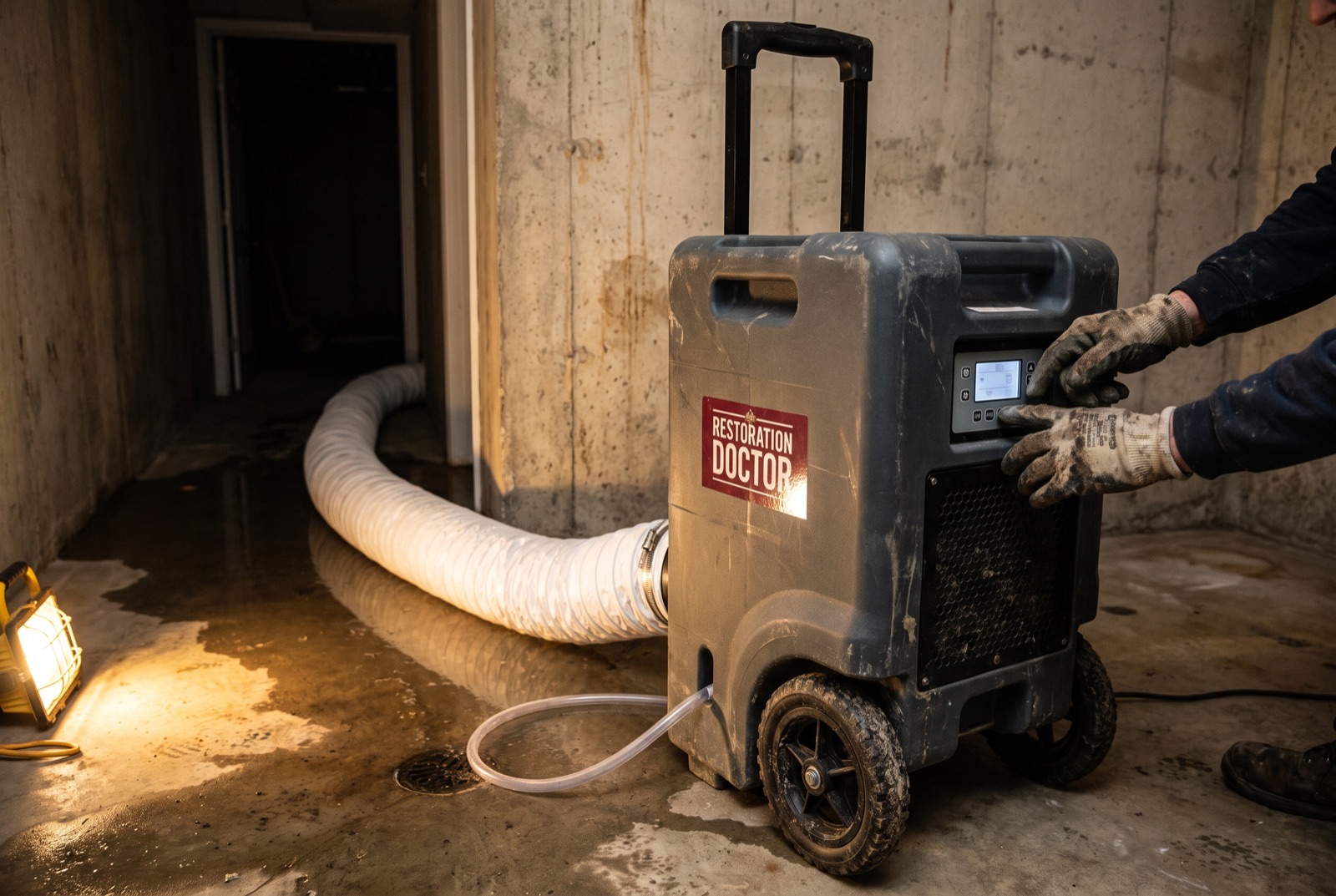
Continuous means continuous
Run the unit around the clock, not in shifts. Drying has momentum: interrupting dehumidification overnight lets humidity rebound and materials re-absorb moisture from the air, undoing hours of progress and stretching the total timeline. Empty the reservoir promptly or, better, set up the drain hose so the unit never shuts itself off on a full tank.
Keep the drying area closed while you do it. Doors and windows shut, HVAC not drawing humid air into the space — a dehumidifier works by driving the room's humidity low enough to pull moisture out of wet materials, and every exchange with humid outdoor air (a given in a Virginia, Maryland, or D.C. summer) resets its progress. Pair it with a fan or two aimed across — not directly at — the wet surfaces to keep evaporation moving.
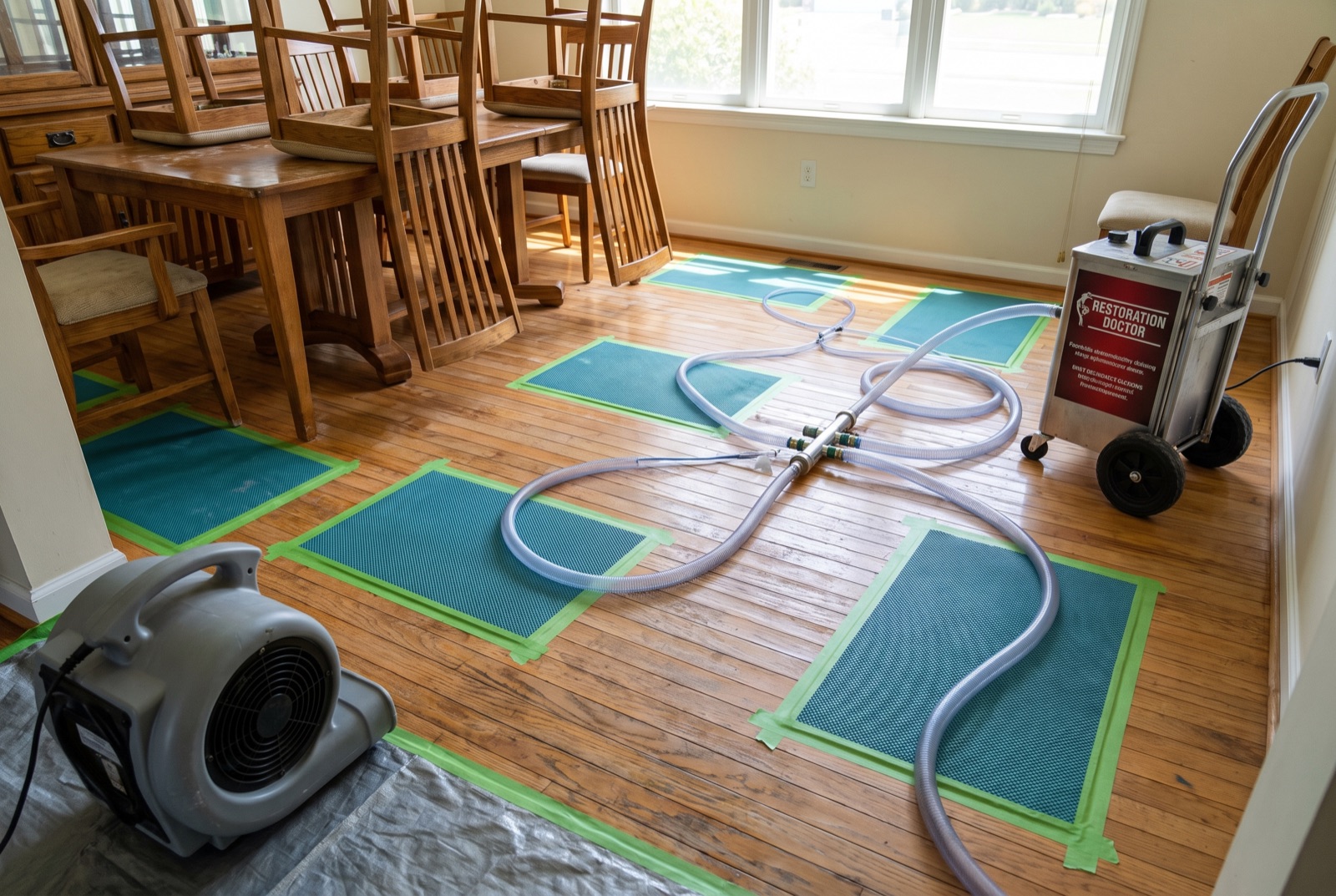
What a household dehumidifier can and can't do
A residential dehumidifier can genuinely finish the job on small, shallow losses: a contained clean-water leak caught the same day, wet hard flooring, a damp area of carpet that was promptly extracted. In those cases, several days of continuous operation with airflow and a closed room is a legitimate drying plan.
What it can't do is dry inside assemblies. Water that reached wall cavities, insulation, sill plates, or the space under installed flooring is beyond the reach of room-side dehumidification on any useful timeline — the moisture is trapped where air doesn't circulate. Professional drying addresses this with capacity and access: low-grain refrigerant (LGR) dehumidifiers that keep extracting moisture at humidity levels where household units stall, air movers creating engineered airflow, and targeted openings (removed baseboard, vent holes, floated carpet) that let air reach the trapped water. That combination, run per IICRC S500 practice, is why professional dry-downs finish in days rather than weeks.
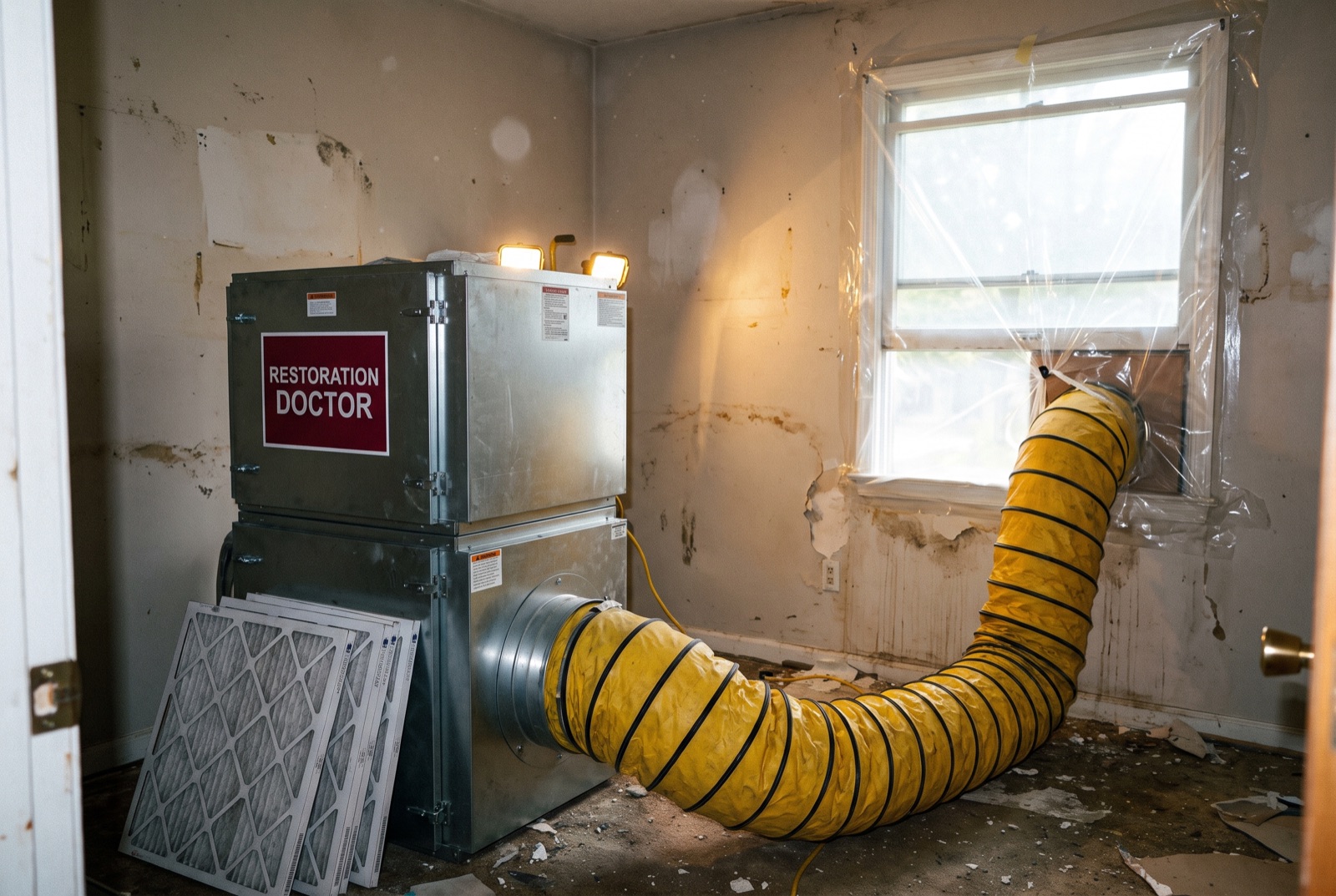
When to escalate past DIY
Call for professional drying if: the water reached more than one room, drywall got wet higher than a few inches, the leak ran for hours before discovery, flooring is swelling or cupping, a musty odor develops, or your meter readings plateau above the dry standard after a couple of days of running. Each of those signals moisture beyond what room-side equipment can reach.
Restoration Doctor deploys commercial drying systems with daily moisture monitoring across Northern Virginia, Maryland, and D.C. If your dehumidifier has been running for days and something still smells or reads damp, call 1-888-29-FLOOD — a moisture inspection will show exactly where the remaining water is hiding.
Water Damage Restoration
Extraction, structural drying, and moisture verification for burst pipes, appliance leaks, and basement flooding.
Frequently asked
Related questions
Do fans help dry out water damage?
Can I dry out water damage myself?
How do you know when walls are completely dry?
Should I open windows to dry out water damage?
Active water, mold, fire, or sewage event?
Connect directly with the Restoration Doctor team for your region. Crews are on standby 24/7 with documented response protocols.