
Should I open windows to dry out water damage?
Only if the outdoor air is drier than the air inside — and in the humid Mid-Atlantic climate, it usually isn't. Opening windows during a Virginia, Maryland, or D.C. summer typically adds moisture to the structure and slows drying. A closed room with a dehumidifier and directed airflow dries wet materials far faster and more predictably.
The physics: drying is a humidity gradient game
Wet materials release moisture into the surrounding air only as long as that air is drier than they are — the steeper the humidity gradient, the faster the drying. Everything about drying strategy follows from that one fact.
Opening windows replaces your indoor air with outdoor air. If the outdoor air happens to be dry — a crisp, low-humidity day — that exchange helps. But if the outdoor air is humid, you're importing moisture: the gradient flattens, evaporation slows, and in muggy conditions moisture can even condense onto cool surfaces like basement walls and slab floors, actively wetting the structure you're trying to dry.
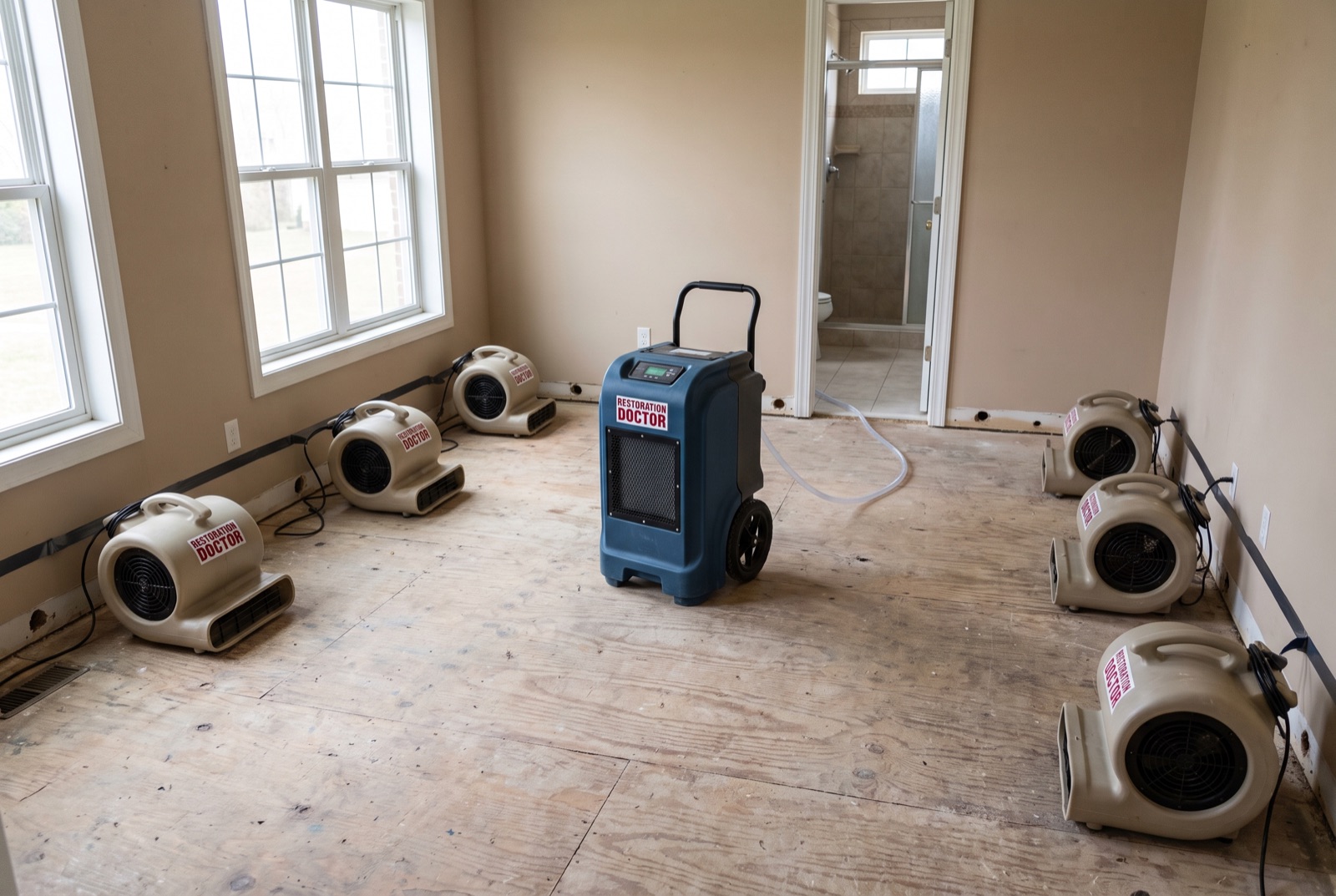
A dehumidifier in a closed room plays the same game the other way: instead of gambling on outdoor conditions, it manufactures dry air continuously, driving indoor humidity far lower than a typical outdoor day ever gets. That's why professional drying under the IICRC S500 standard is overwhelmingly run as a closed system — sealed drying zone, mechanical dehumidification, engineered airflow.
The Mid-Atlantic reality check
Around Northern Virginia, Maryland, and D.C., the open-window strategy fails most of the year. Summers are the obvious problem — outdoor dew points from June through September routinely sit high enough that outside air is carrying more moisture than a damp room. Opening up during a July drying project doesn't ventilate the moisture out; it feeds the room new moisture as fast as the materials give up their own.
Spring and fall offer occasional genuinely dry days where ventilation helps, and cold winter air — though it feels raw — is actually dry once heated indoors, making winter one of the better seasons for ventilation-assisted drying. But 'occasionally helpful, depending on the dew point' is a poor foundation for a time-critical process with a 24-to-48-hour drying window running.
The practical rule: if you have a dehumidifier, close the room and let it work. Only consider windows when the outside air is unmistakably drier than inside — and even then, a dehumidified closed room usually still wins.
When ventilation does make sense
Ventilation has legitimate roles even in a closed-system world. In the first minutes after a loss, airing out a space can dump the initial slug of humid air and any odors before the drying system closes up. If you have no dehumidification at all and the weather is genuinely dry, moving air through the space beats sealed stagnation. And for losses involving strong odors or contaminants, controlled ventilation is part of the professional toolkit.
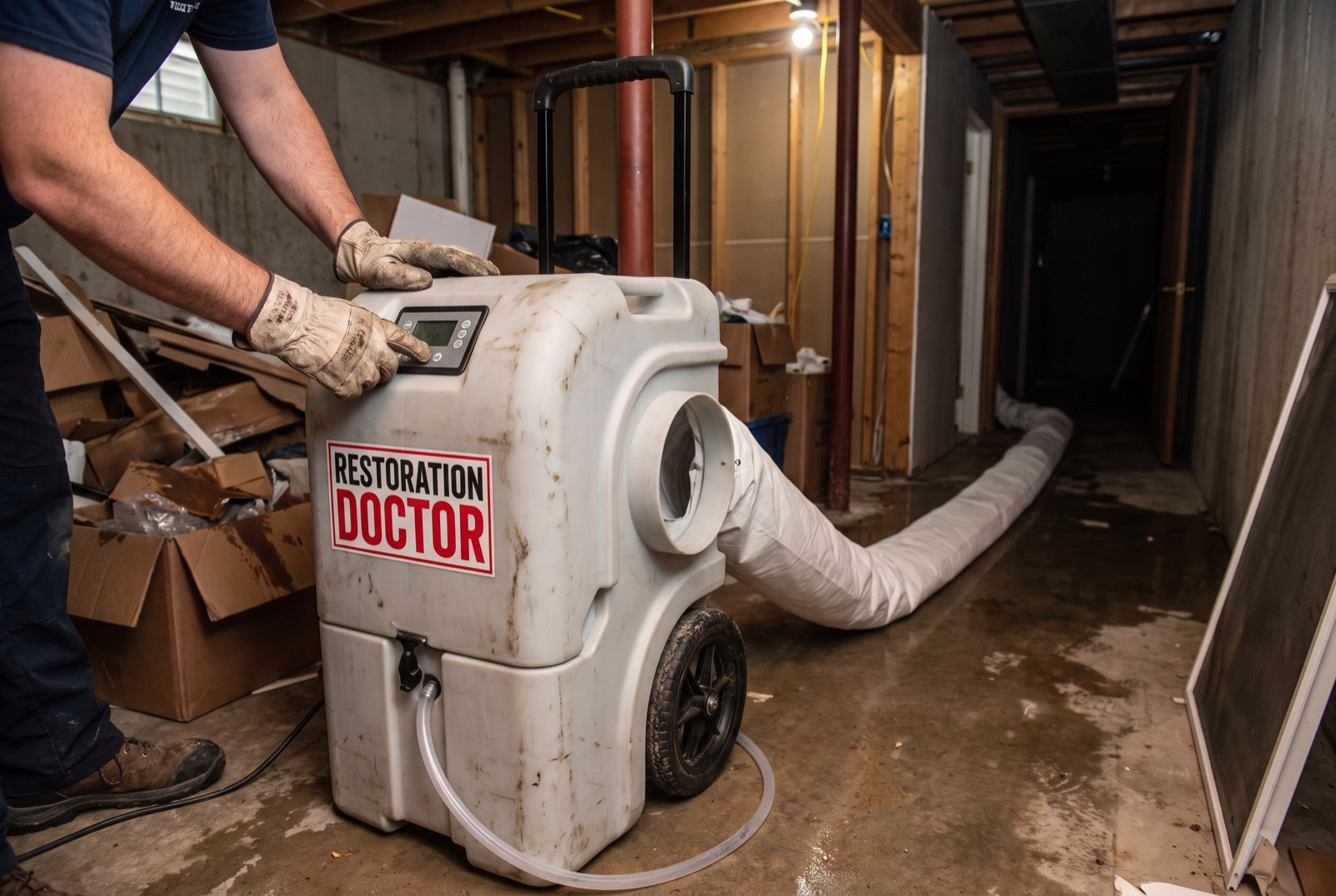
What ventilation never does well is finish the job: the last and hardest phase of drying — pulling bound moisture out of drywall cores, framing, and subfloor — needs sustained very-dry air that weather simply doesn't deliver on demand. That's the phase where closed-system LGR dehumidification does its real work, and where open windows quietly stall a dry-down at 'almost.'
The reliable setup, whatever the weather
For any DIY-scale loss: close the affected room, run a dehumidifier continuously on its lowest humidity setting, aim fans to sweep air across (not straight at) the wet surfaces, and keep HVAC from pulling humid air in. Verify progress with a moisture meter rather than your palm, and keep the system running until affected materials match dry ones elsewhere in the house.
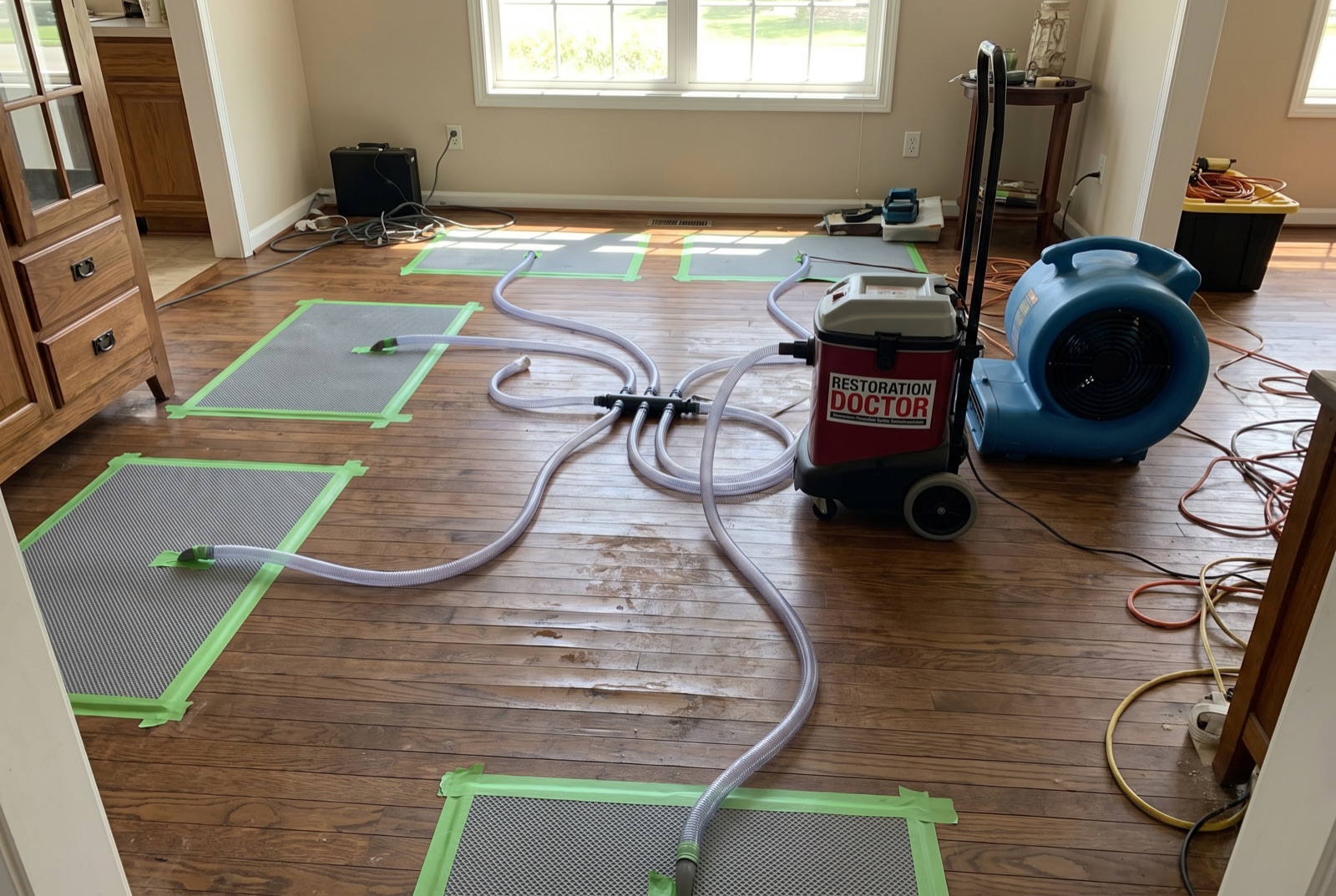
For anything beyond a small clean-water event, weather-independent drying is what a professional crew brings: commercial LGR dehumidifiers and air movers sized to the space, run as a sealed system that dries at the same pace in a July heat wave as a January cold snap. Restoration Doctor deploys exactly that across Northern Virginia, Maryland, and D.C., 24/7 — call 1-888-29-FLOOD and take the weather out of the equation.
Water Damage Restoration
Extraction, structural drying, and moisture verification for burst pipes, appliance leaks, and basement flooding.
Frequently asked
Related questions
How long should a dehumidifier run after a water leak?
Do fans help dry out water damage?
How long does it take to dry out a flooded basement?
Can I dry out water damage myself?
Active water, mold, fire, or sewage event?
Connect directly with the Restoration Doctor team for your region. Crews are on standby 24/7 with documented response protocols.