What are the 3 categories of water damage?
Under the IICRC S500 standard, Category 1 is clean water from sanitary sources like supply lines; Category 2 is gray water with significant contamination, such as appliance discharge; Category 3 is grossly contaminated black water from sewage or outdoor flooding. The category determines safety protocols, cleaning requirements, and which materials can be saved versus removed.
Category 1: clean water
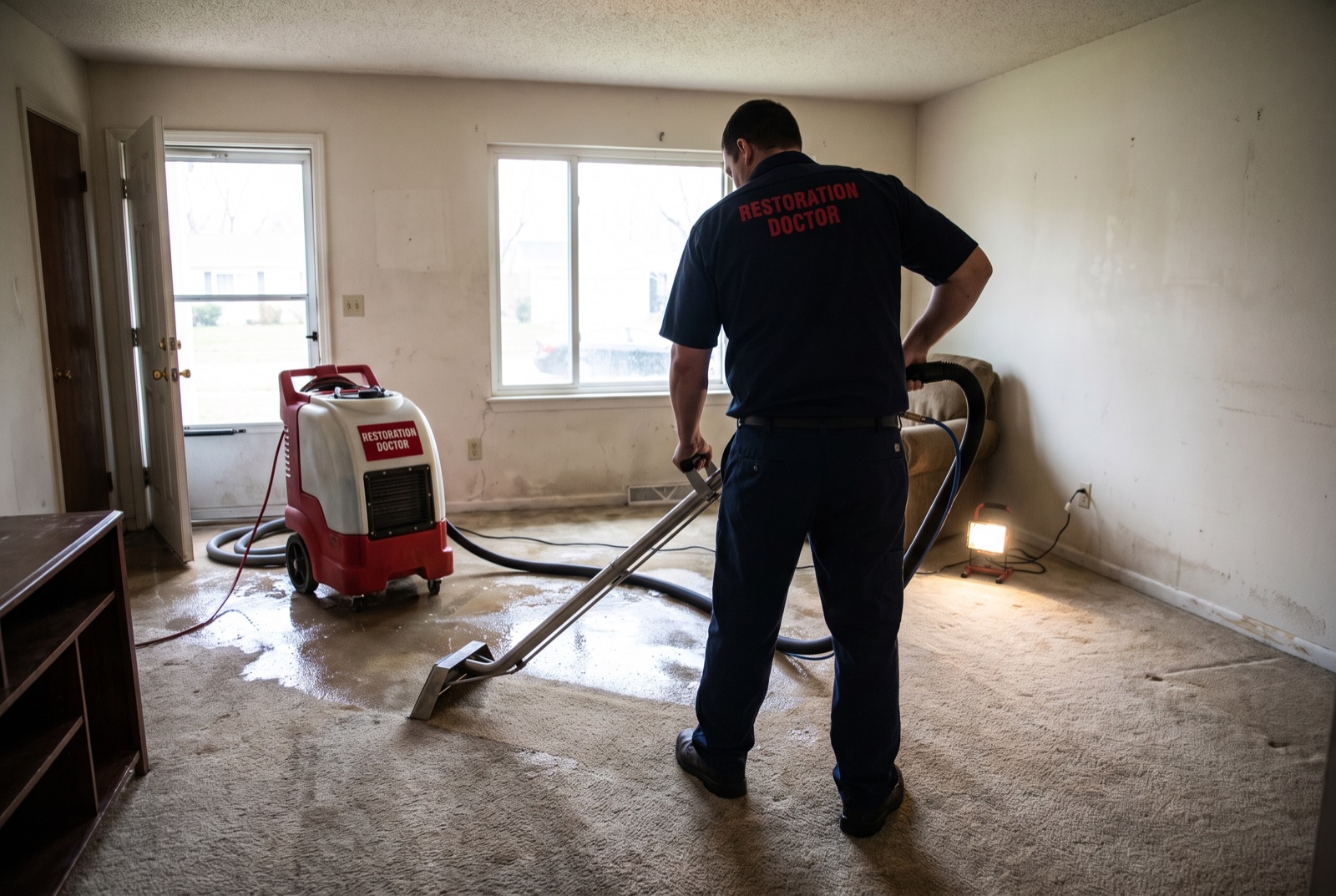
Category 1 water originates from a sanitary source and poses no substantial health risk from ingestion or contact at the time of release. Typical sources include broken supply lines, failed water heater tanks, tub or sink overflows with no contaminants, melting ice or snow, and rainwater that enters without crossing contaminated surfaces.
Clean water allows the most favorable restoration outcome. Because contamination isn't a factor, crews can focus purely on extraction and drying, and most structural materials — drywall, framing, hardwood, even carpet — are candidates to be dried in place and saved rather than removed. Carpet pad is still typically replaced because it's inexpensive relative to the cost of drying it reliably.
The caveat: Category 1 is a starting condition, not a permanent one. Clean water that sits for days, flows through building assemblies, or contacts soiled materials picks up contamination and degrades toward Category 2. Temperature and time both push water down the contamination scale, which is one of the quieter reasons fast response saves money.
Category 2: gray water
Category 2 water carries significant contamination — chemical, biological, or physical — with the potential to cause discomfort or illness on contact or ingestion. Common sources include washing machine and dishwasher discharge, toilet overflows containing urine but no solid waste, aquarium leaks, waterbed failures, and clean water that has degraded with time.
Gray water changes the response in two ways. First, cleaning and antimicrobial treatment join the scope: affected surfaces are cleaned and treated, not merely dried. Second, the save-versus-remove math shifts for porous materials. Carpet can sometimes be cleaned and saved after Category 2 exposure; carpet pad cannot. Drywall that absorbed gray water low on the wall is often cut out along a clean line rather than dried in place.
Like Category 1, gray water degrades with time — a Category 2 loss left standing can warrant Category 3 handling by the time it's addressed.
Category 3: black water
Category 3 is grossly contaminated water that can contain pathogenic, toxigenic, or otherwise harmful agents. The defining sources are sewage — any toilet backflow from beyond the trap, or backups from the sewer line — and rising water from outside: river and stream flooding, storm surge, and ground-surface runoff, which carries soil organisms, agricultural and road chemicals, and anything else it crossed on the way in.
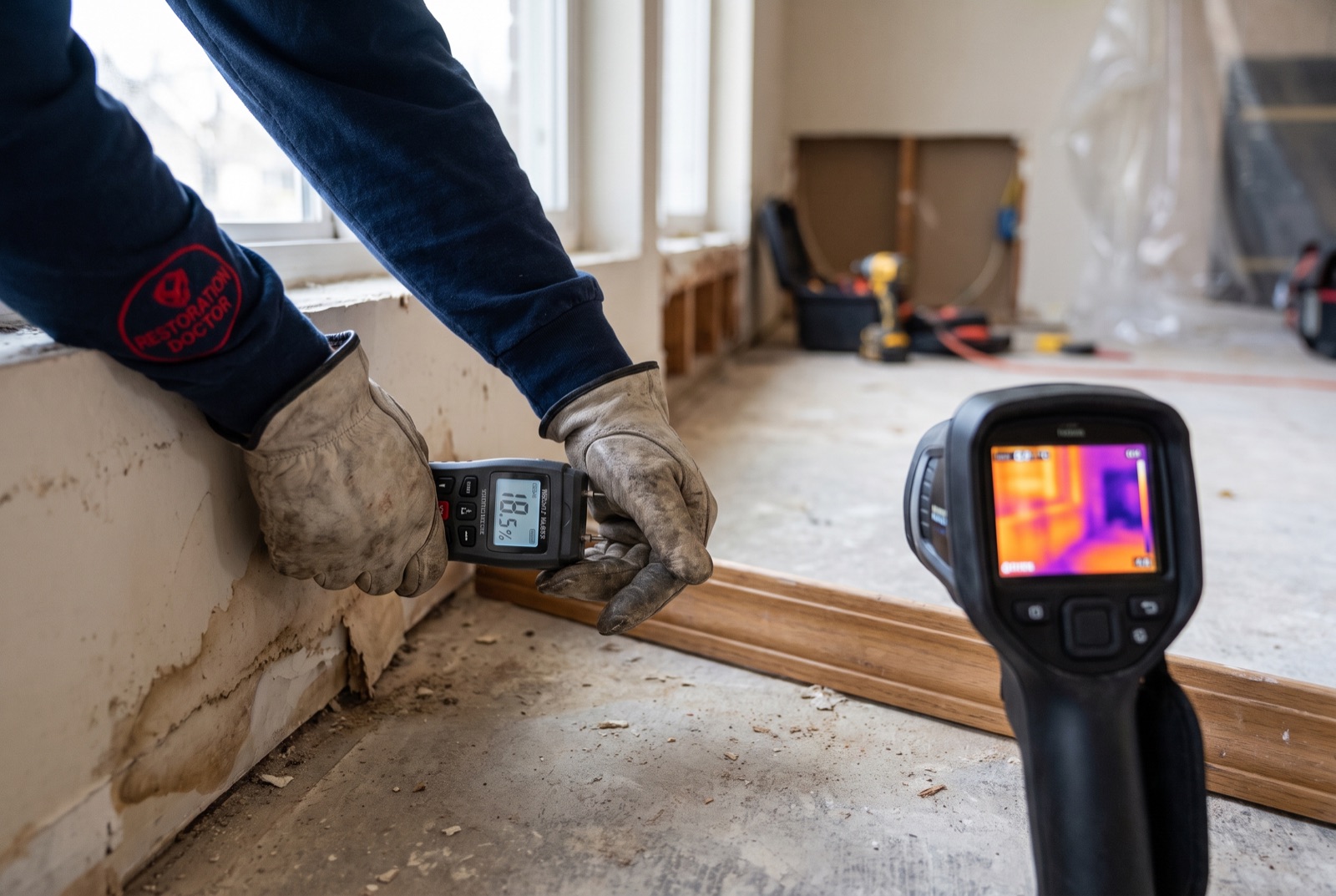
Black water losses are handled as biohazard work. Occupants — especially children, elderly family members, and anyone immunocompromised — should stay out of affected areas. Crews work in protective equipment, contain the affected zone, and remove rather than clean porous materials the water contacted: carpet and pad, upholstered items, and typically the lower portion of drywall and its insulation. Remaining structural surfaces are cleaned, disinfected, and dried, and the results verified before rebuild.
This is not overcaution — sewage and floodwater routinely carry bacteria, viruses, and parasites, and porous materials cannot be reliably sanitized once contaminated.
Why the category drives everything — including your claim
Category determines safety protocol, scope of removal, cleaning requirements, and ultimately cost — a Category 3 loss in a finished basement can cost several times what the same volume of clean water would, because of demolition, disposal, and disinfection requirements. Categories are also distinct from classes: category measures contamination, while Class 1 through 4 measures how much water the materials absorbed and how hard the structure will be to dry. A loss has both a category and a class, and together they define the drying plan.
Correct categorization matters for insurance too: it justifies why materials were removed rather than dried, and why the scope is what it is. Restoration Doctor documents category, class, and disposition decisions per IICRC S500 on every loss across Northern Virginia, Maryland, and D.C. If you're unsure what kind of water you're dealing with, keep your distance from it and call 1-888-29-FLOOD — category assessment is one of the first things a crew confirms on arrival.
Water Damage Restoration
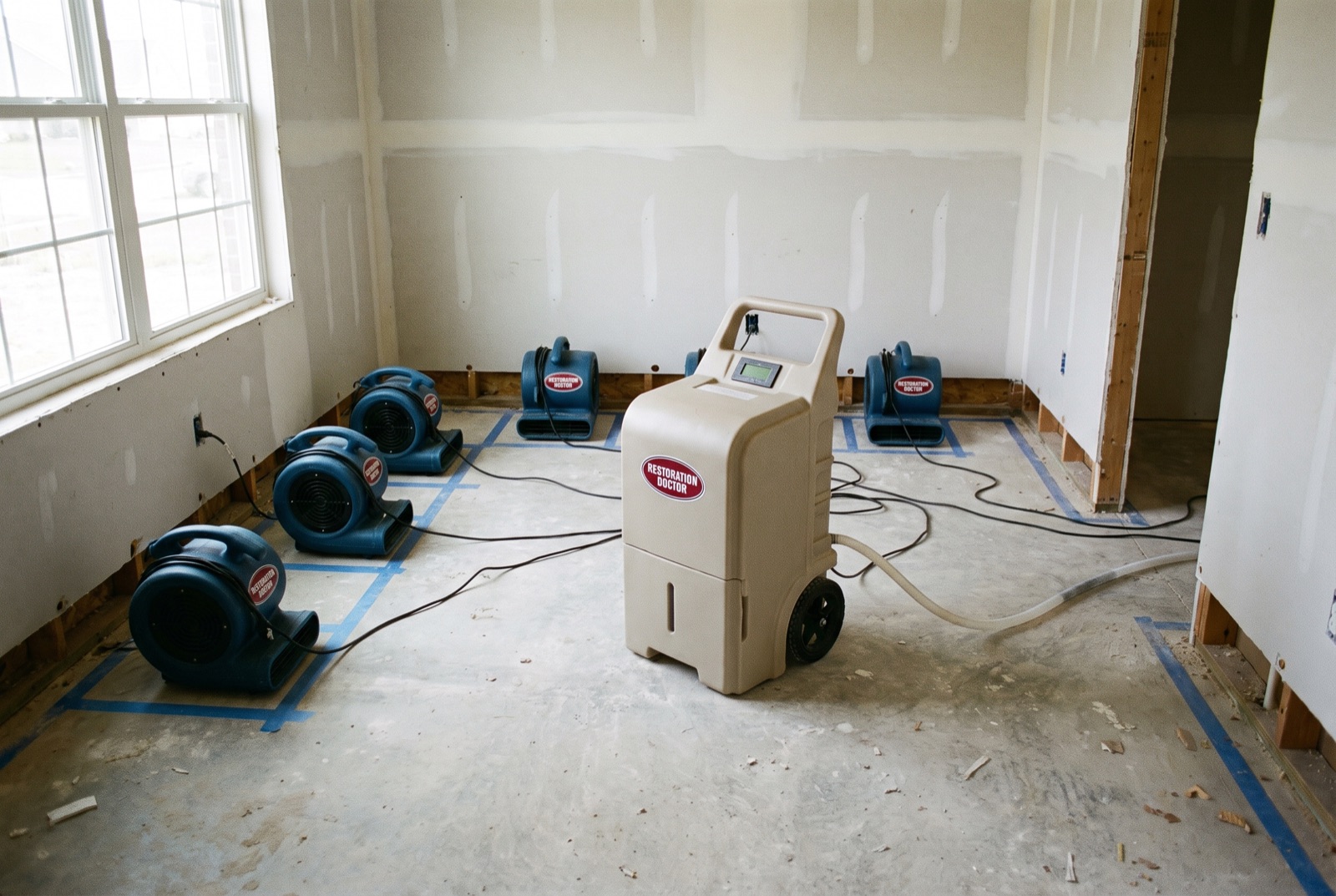
Extraction, structural drying, and moisture verification for burst pipes, appliance leaks, and basement flooding.
Frequently asked
Related questions
What is considered water damage?
What should you do after a sewage backup?
Is a flooded basement dangerous?
Can carpet be saved after a basement flood?
Active water, mold, fire, or sewage event?
Connect directly with the Restoration Doctor team for your region. Crews are on standby 24/7 with documented response protocols.