
Why does my house smell like sewage?
The usual culprits: a dried-out P-trap in a rarely used drain letting sewer gas in, a blocked or frozen roof vent stack, a failing toilet wax ring, or a cracked, clogged, or root-invaded sewer line. Recurring or worsening sewage odor often precedes an actual backup — persistent smell after checking the traps warrants a professional look.
Start with the simplest cause: dry traps
Every drain in your home has a P-trap — the U-shaped bend that holds a plug of water, forming a seal that blocks sewer gas from rising into the house. When a fixture goes unused for weeks, that water evaporates, and the open pipe vents sewer gas into the room. Basement floor drains, guest bathroom showers and sinks, laundry standpipes, and utility sinks are the classic offenders.
The test-and-fix costs nothing: pour a quart or two of water into every rarely used drain in the house and see if the odor fades over the next day. For drains that are chronically unused, a small amount of mineral oil on top of the water slows evaporation. If the smell localizes to one bathroom and returns quickly after refilling traps, look next at that fixture's connections rather than the traps again.
Vents, wax rings, and other plumbing-side sources
Your drain system breathes through vent stacks that exit at the roof. When a vent is blocked — leaves, a bird's nest, or frost cap in winter — draining water pulls air through the path of least resistance, which can siphon P-traps dry or pull sewer gas through weak seals. Gurgling fixtures alongside the odor are the tell for a venting problem.
At toilets, the wax ring sealing the base to the drain flange degrades or unseats over time — especially if the toilet rocks — letting gas (and eventually water) escape at the floor line. A sewage smell concentrated around one toilet, sometimes with staining or a spongy floor at the base, points there. Other sources in this family: a cracked drain line inside a wall or under a slab (odor with no visible fixture cause), a failed cleanout cap, a laundry standpipe issue, or a biofilm buildup in a drain — that last one smells more "musty-sour" than true sewage and responds to enzymatic cleaning.
When the smell is a warning: sewer line trouble brewing
Persistent or recurring sewage odor — especially alongside slow drains throughout the house, gurgling toilets, or damp spots in the yard over the lateral — deserves more respect. Those symptoms describe a main line that's partially obstructed by roots, grease, or structural failure, or a lateral that's cracked and leaking gas and effluent into the soil or under the slab. Partial blockages have a way of finishing the job during exactly the wrong week, turning a lingering smell into sewage on the basement floor.
The definitive diagnostic is a sewer camera inspection: a plumber runs a camera down the line and shows you precisely what's there — roots, bellies, cracks, or a clean pipe that clears the line from suspicion. For homes in older Northern Virginia and Maryland neighborhoods with clay or cast iron laterals and mature trees, a camera inspection at the first sign of recurring odor is inexpensive insurance against a Category 3 cleanup later.
If the odor turns into a backup
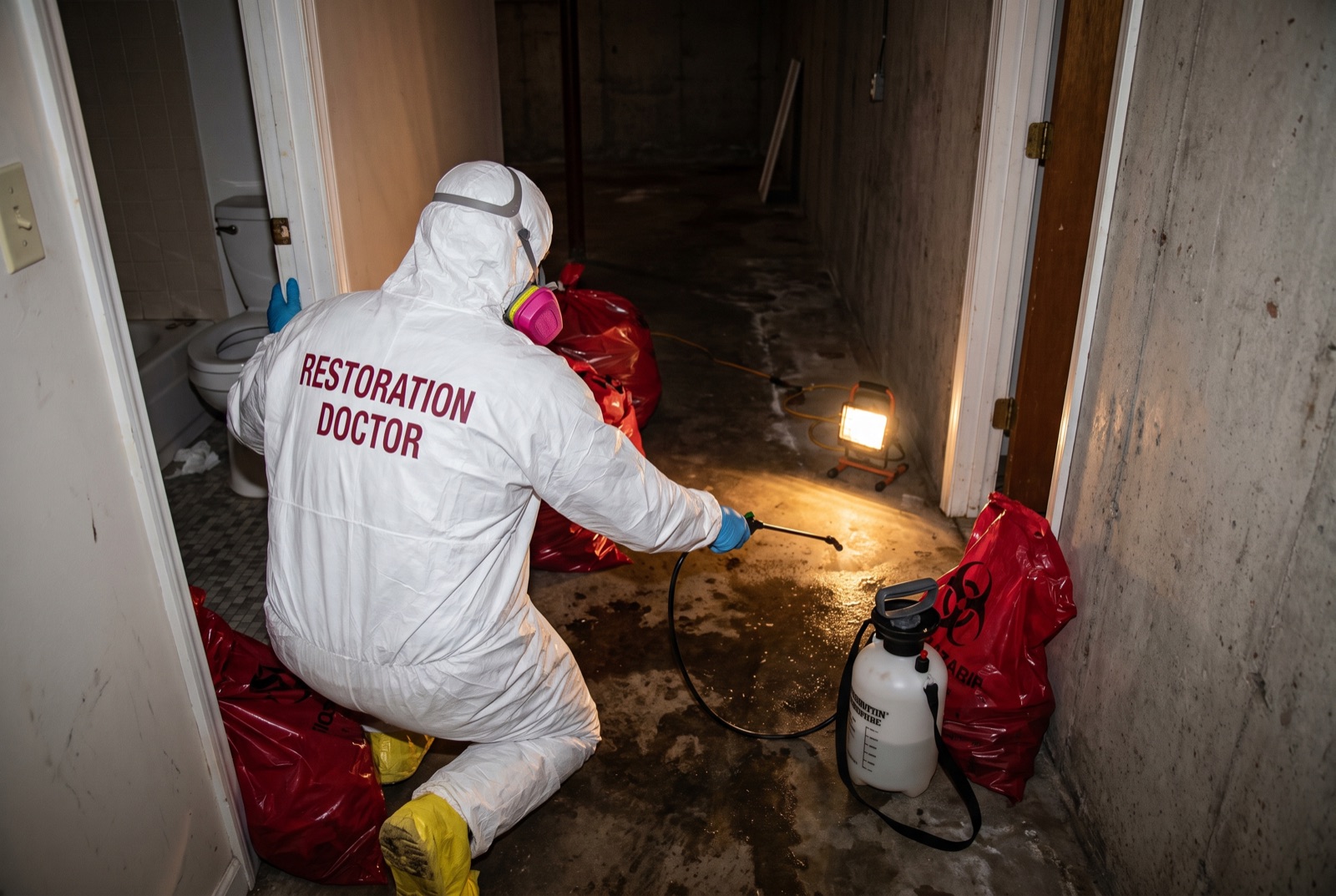
Should the warning go unheeded and sewage arrive — through a floor drain, a basement shower, or around a failed toilet seal — treat it as the contamination event it is: stop all water use, keep people and pets away, and get certified Category 3 cleanup moving alongside the plumbing repair. Sewage contact means containment, removal of contaminated porous materials, disinfection, and verified drying under IICRC S500 protocols, not a mop and a fan. Restoration Doctor responds 24/7 across Northern Virginia, Maryland, and D.C. — call 1-888-29-FLOOD.
Sewage & Biohazard Cleanup
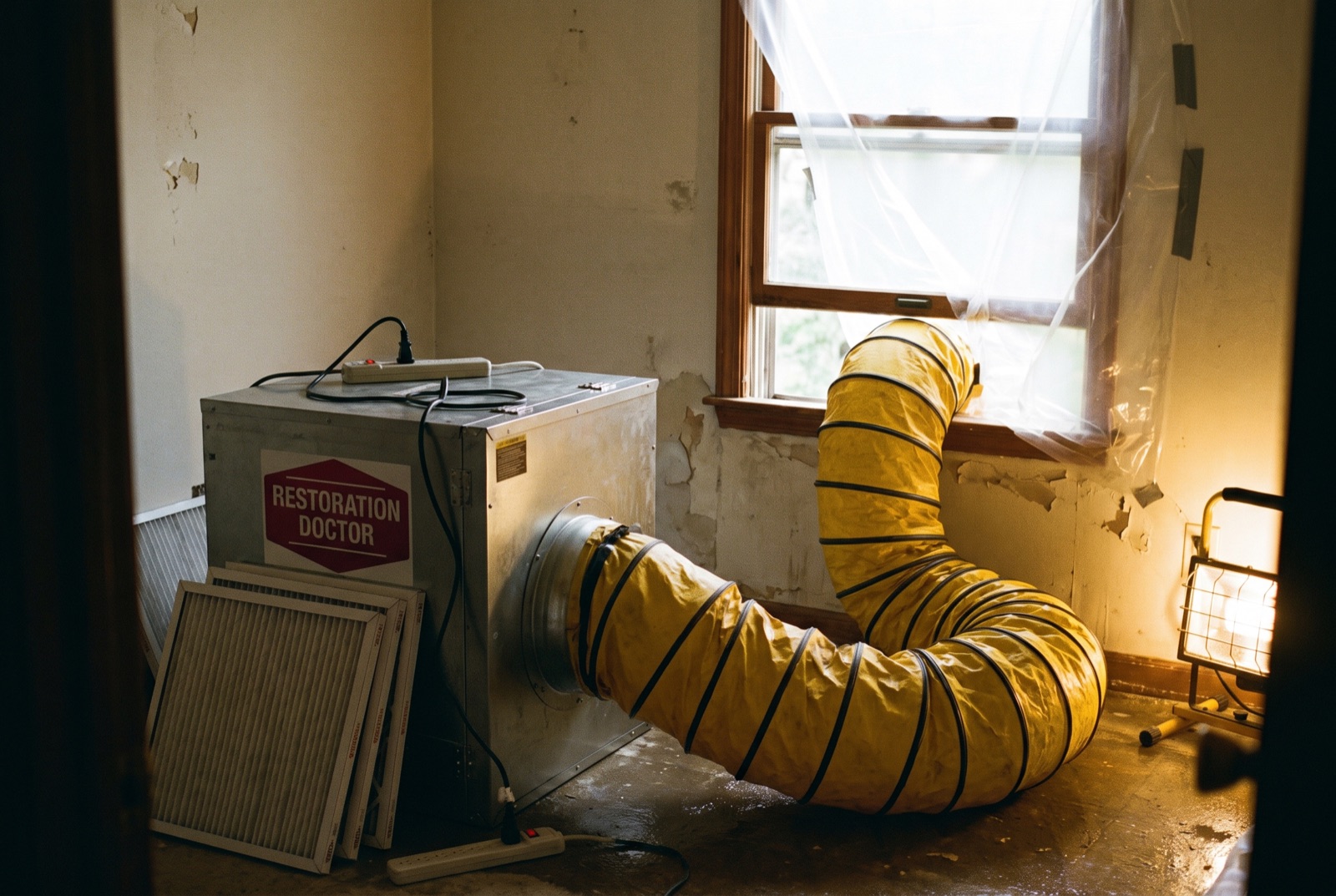
Category 3 black-water decontamination with full PPE, safe removal, antimicrobial treatment, and verification.
Frequently asked
Related questions
What causes sewage to back up into a house?
What should you do after a sewage backup?
Is sewage backup dangerous to your health?
How do professionals clean up sewage?
Active water, mold, fire, or sewage event?
Connect directly with the Restoration Doctor team for your region. Crews are on standby 24/7 with documented response protocols.