Mold After Water Damage: The 24–48 Hour Timeline

BYSteve Jafari, General ManagerNORTHERN VIRGINIA, MARYLAND & D.C.

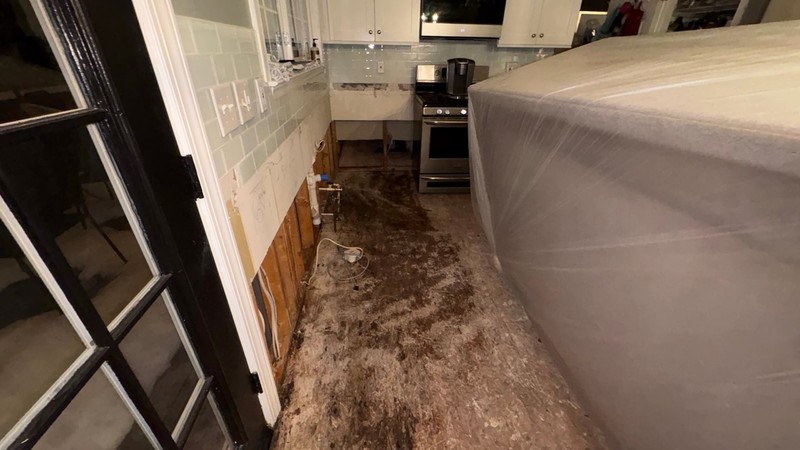
Wet organic materials — drywall, wood, carpet, insulation — that stay wet past 24 to 48 hours are at risk for mold, and growth left unchecked becomes visible and established within about 3 to 12 days. Mold needs only moisture, an organic food source, and typical indoor temperatures, all of which a wet home provides. The single best way to prevent it is to remove the water and dry the structure to a verified dry standard within the first 48 hours. Restoration Doctor's median on-site arrival across Northern Virginia is 47 minutes — call 1-888-293-5663.
Call 1-888-29-FLOODHow fast does mold grow after water damage?
Mold does not wait on your schedule. EPA's guidance is to dry water-damaged areas and items within 24 to 48 hours to prevent mold growth; materials still wet past that window give common indoor molds the sustained moisture they need to germinate. You will not see anything at first — germination and early colonization happen microscopically, inside wet drywall, under carpet pad, and within wall cavities long before any visible fuzz appears. By roughly 3 to 12 days, colonies mature enough to become visible and to start releasing spores, and after about 18 days established colonies can spread aggressively across a wet structure.
That 24–48 hour window is the whole reason restoration crews treat water losses as emergencies rather than cleanup projects. Mold needs moisture and an organic food source, and it grows across the range of temperatures found in homes — EPA's mold course notes that in most cases temperature is not an issue. Moisture is the controlling factor, and a water-damaged home hands it both. The only variable you actually control is how long the materials stay wet — which is why fast, verified drying is the single most effective mold-prevention step there is.
The hour-by-hour mold timeline
| Time since water exposure | What is happening |
|---|---|
| 0–24 hours | Water wicks into drywall, wood, carpet pad, and insulation. Materials saturate. No mold yet, but the clock has started. |
| 24–48 hours | Materials still wet at this point are at risk: spores can germinate on wet organic surfaces, still microscopic and invisible. This is the critical drying window. |
| 48–72 hours | On materials that are still wet, colonization can spread. Clean Category 1 water also degrades toward contaminated Category 2/3, compounding the risk. |
| 3–12 days | Where growth took hold, colonies mature and become visible — discoloration, fuzzy growth, a musty smell. Spore release begins. |
| 12–18+ days | Established colonies spread across wet materials. Remediation scope and cost climb sharply. |

Why Northern Virginia's climate makes mold worse
The Mid-Atlantic is close to ideal for mold. Summers here are hot and humid, with outdoor relative humidity routinely sitting in the 60–80% range for weeks at a time. Mold thrives above about 60% humidity, and the Virginia Department of Health recommends reducing indoor humidity, so during a NoVA summer the ambient air is already working against you — opening a window to 'air it out' often pumps more moisture in, not less. That is why professional dehumidification, not just fans, is what actually dries a structure here.
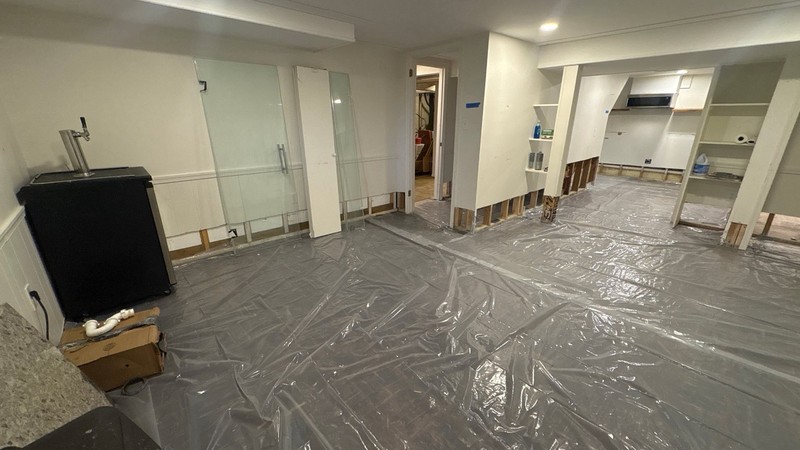
Housing stock adds to it. Northern Virginia has a huge number of finished basements, which are naturally cooler and more humid and are the first place water collects. Many homes are built on slabs or crawl spaces that hold moisture, and a lot of the region's mid-century and older houses have plaster, wood subfloor, and cellulose insulation — all excellent mold food. Add a water event to any of that in July, and the 24–48 hour window can compress even further.
A concrete example: a McLean homeowner discovers a slow toilet-supply leak in a finished basement bathroom over a humid August weekend. The basement is already sitting around 70% relative humidity before the leak, the drywall and baseboard trim are cellulose-based, and the space is cool and poorly ventilated. Those are effectively laboratory conditions for mold — warm enough, wet enough, and full of food — so if that water is left to sit, the drying window is effectively shorter here: visible growth on the baseboard can appear in closer to a day and a half. This is why we tell NoVA homeowners not to treat 48 hours as a safe cushion: in a finished basement in summer, assume you have less time to dry, not more.
What are the signs mold is already growing?
Because early growth is hidden, your nose often finds it before your eyes do. Watch for these signs after any water event:
- A persistent musty, earthy, or damp smell — frequently the first detectable sign.
- Discoloration on walls, ceilings, or baseboards — black, green, gray, or white patches, sometimes fuzzy.
- Warping, bubbling paint, or peeling wallpaper where moisture is trapped behind the surface.
- Worsening allergy-type symptoms indoors — congestion, coughing, itchy eyes, headaches — that ease when you leave the house.
- Materials that still feel damp, cool, or spongy days after the water event.

Can I stop mold from growing after water damage?
Yes — if you win the race to dry. The goal is to get every affected material back below the moisture content that supports mold, and to do it inside that first 48 hours. That means removing standing water immediately, pulling out unsalvageable saturated porous materials (soaked carpet pad, wet insulation), and running commercial air movers and dehumidifiers sized to the space until moisture meters confirm the structure has reached a verified dry standard — not until it 'looks dry.'
Household equipment usually cannot do this fast enough. A box fan moves air but does not remove humidity, and in a humid NoVA summer that can just spread moisture around. Professional crews measure the moisture content of the actual materials with meters and thermal cameras, find the hidden water behind walls and under floors, and document the drop day by day. Restoration Doctor's average structural dry-out runs about 4.5 days, monitored daily to verified targets — the drying phase is precisely where mold is won or lost.

Where does mold hide after water damage?
The mold you can see is rarely the whole problem — after a water event, growth starts wherever moisture lingers, and that is usually out of sight. The most common hidden locations are inside wall cavities behind drywall, under and inside carpet padding, beneath flooring and on the subfloor, above ceiling tiles, inside HVAC ducts and around the air handler, behind baseboards and trim, and within the insulation that soaked up water and holds it like a sponge. Because these spaces stay damp and dark long after the visible surfaces feel dry to the touch, they are exactly where colonies establish first and spread widest.
This is why 'it looks dry' is not the same as 'it is dry,' and why professionals rely on tools rather than appearances. Moisture meters read the actual moisture content inside materials, thermal imaging cameras reveal the cool signature of evaporating water behind walls and under floors, and small inspection openings let a technician see into a cavity. Skipping that step is how a water loss that seemed handled turns into a mold discovery weeks later when the smell returns — the surface dried, but the trapped moisture behind it never did.
For homeowners, the takeaway is simple: after any significant water event, assume moisture reached places you cannot see, and have those areas checked before you close the walls back up. Finding and drying the hidden moisture in the first days is far cheaper and safer than remediating an established colony in the same spot a month later.

Mold vs. mildew vs. staining: how to tell the difference
Not every dark patch after a water event is a full mold problem, and knowing the difference helps you gauge urgency. Mildew is an early-stage, surface-level mold that typically appears as a flat, powdery, gray-to-white film on damp surfaces — think of the film on grout or a shower ceiling. It is the least invasive form and can often be cleaned from hard, non-porous surfaces. Mold proper is more established and three-dimensional: it looks fuzzy or slimy, comes in black, green, blue, or brown, and — critically — roots into porous materials like drywall and wood rather than just sitting on top. Plain water staining, by contrast, is discoloration with no growth or odor; it signals that water was there but does not itself spread.
The reliable tells that you are dealing with real mold rather than a stain are texture and smell. If the patch is raised, fuzzy, or slimy, or if the area carries that persistent musty, earthy odor, treat it as active growth. A stain that is flat, dry, and odorless is usually just a mark left behind — though it still means moisture reached that spot, so it is worth confirming the material underneath is dry. When you cannot tell, the safe assumption is mold, because guessing wrong in the other direction lets a colony keep expanding behind the surface.
One caution specific to porous materials: what looks like a small surface stain on drywall or wood can sit above a much larger colony growing inside the material, where the moisture is. This is why professionals cut test openings and use moisture meters rather than judging by the visible surface alone — the visible patch is frequently the smallest part of the problem.
When does water damage become a mold remediation project?
Once mold has visibly colonized more than a small area, drying alone is no longer enough — the growth itself has to be removed under controlled conditions. Professional mold remediation follows the ANSI/IICRC S520 standard: the work area is contained with plastic sheeting and negative air pressure so spores cannot spread, air is filtered through HEPA scrubbers, non-salvageable contaminated materials are removed and bagged, surfaces are HEPA-vacuumed and treated, and the area is dried and then verified before containment comes down.
The rule of thumb the industry uses: small, isolated surface mold (roughly under about 10 square feet) on a non-porous surface can sometimes be handled carefully by a homeowner, which matches EPA's guidance on when homeowners can clean up mold themselves, but anything larger, anything inside wall cavities or HVAC, and anything tied to contaminated Category 2/3 water calls for professional remediation. Trying to bleach away established mold on porous materials usually just hides it while it keeps growing underneath. If you are already smelling must or seeing discoloration, treat it as remediation, not cleanup.