Why Basements Flood in Northern Virginia (and How to Prevent It)

BYSteve Jafari, General ManagerNORTHERN VIRGINIA, MARYLAND & D.C.

Basement flooding in Northern Virginia is most often caused by dense clay soil that traps water against foundations, negative grading that channels runoff toward the house, sump pump failures during storms, and intense rainfall overwhelming drainage systems. You can prevent most basement floods by regrading so soil drops at least six inches over the first ten feet, extending downspouts four to six feet from the house, maintaining a battery-backup sump pump, and sealing foundation cracks. If water is already inside, cut power to the affected area if you can do so safely, stop the source, and call a licensed restoration team quickly — materials that stay wet past 24 to 48 hours are at risk for mold.
Call 1-888-29-FLOODWatch a real Alexandria, VA basement flood and hardwood water damage restoration:
Basement Flood & Hardwood Water Damage in Alexandria VA — Dried, Cleaned, Restored
ALEXANDRIA, VA · BASEMENT FLOOD AND HARDWOOD WATER DAMAGE · DOCUMENTED ON SITE
Why do basements flood so often in Northern Virginia?
Basements flood in Northern Virginia primarily because of the region's dense clay soil, hilly terrain, aging housing stock, and increasingly intense summer storms. These factors combine to push groundwater and surface runoff toward foundations faster than most drainage systems were designed to handle.
Much of Northern Virginia sits on slow-draining Piedmont clay. When rain saturates the ground, water lingers around your foundation instead of percolating away, building hydrostatic pressure against basement walls and floor slabs. That pressure forces moisture through hairline cracks, cove joints, and pipe penetrations.
On top of the soil problem, much of the housing in Fairfax, Arlington, Loudoun, and Prince William counties was built decades ago, before modern waterproofing and drainage standards. Older foundations, undersized sump systems, and settled grading leave many homes vulnerable during exactly the kind of heavy, fast-moving thunderstorms the area now sees every summer.
We've responded to basement flooding across the Virginia, Maryland, and Washington, D.C. tri-state area for years, and the underlying causes repeat again and again. Figuring out which of them applies to your home is the first step toward keeping the water out.

How does clay soil cause basement flooding?
Clay soil causes basement flooding by holding water against your foundation instead of letting it drain away. Because clay has very low permeability, rainwater saturates the soil around your home and creates sustained hydrostatic pressure on basement walls and floors.
Clay also expands when it gets wet and contracts as it dries. That constant swell-and-shrink cycle stresses foundation walls, opening small cracks over time. Each crack becomes a pathway for water once the surrounding soil is saturated.
The zone of disturbed, backfilled soil right around your foundation drains differently than the undisturbed clay farther out. Water tends to follow that backfill down to the footing, collect there, and then find any entry point available — most commonly the cove joint where the wall meets the floor slab.
You can't change your soil type, but you can control how much water reaches it near the house. That means moving roof runoff away, improving grading, and giving groundwater a managed exit through drain tile and a working sump system.
Can poor yard grading really flood my basement?
Yes. Poor grading is one of the most common — and most fixable — causes of basement flooding. If the ground around your foundation slopes toward the house instead of away from it, every heavy rain funnels water straight to your basement walls.
The standard target is a slope that drops at least six inches over the first ten feet away from the foundation. Many Northern Virginia homes have lost that slope over the years as backfill settles, landscaping beds get built up, or patios and walkways are added without proper pitch.
Downspouts make grading problems worse when they dump water right at the foundation. A single downspout can shed hundreds of gallons during one storm, and if that water lands within a few feet of the wall, it saturates the soil exactly where you don't want it.
Regrading and extending downspouts are relatively inexpensive fixes that eliminate a surprising share of basement water problems. Check them first, before assuming you need major waterproofing work.

Why does my sump pump fail during storms?
Sump pumps most often fail during storms for one of three reasons: the pump loses power in the same outage the storm causes, the pump is overwhelmed by water volume, or the pump is old and burns out at the worst possible moment. All three are common, and all three are preventable.
A sump pump is your basement's last line of defense. It collects groundwater in a pit and pumps it away from the house. But a standard pump runs on household electricity, so when a thunderstorm knocks out power, the pump stops exactly when you need it most and the pit overflows onto the slab.
Volume is the second problem. During an extreme downpour, groundwater can rise faster than a single, undersized pump can move it. Sediment, a stuck float switch, or a clogged discharge line can also silently disable a pump that looked fine the last time you checked.
The fixes are straightforward: install a battery backup or water-powered backup pump, test the primary pump quarterly, keep the pit clean, and replace any pump older than about seven to ten years before it fails on its own.
Key sump pump safeguards for Northern Virginia homes:
- Add a battery backup pump so groundwater keeps moving during storm-related power outages
- Test the primary pump every quarter by pouring water into the pit until the float triggers
- Keep the discharge line clear and pitched to drain away from the foundation
- Clean sediment out of the sump pit so the float and intake don't clog
- Replace pumps proactively at seven to ten years rather than waiting for failure
How do heavy rain and storm runoff overwhelm basement drainage?
Heavy rain overwhelms basement drainage when water arrives faster than the soil, gutters, and municipal storm drains can carry it away. When that happens, excess water backs up, pools against the foundation, and enters through any available opening.
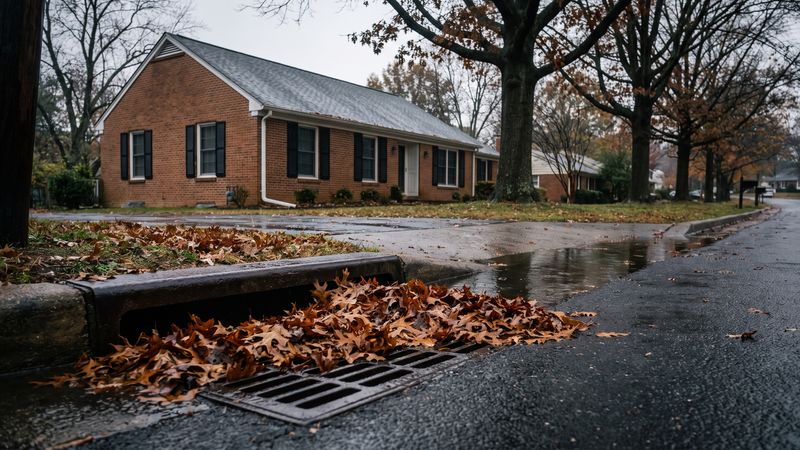
Northern Virginia storms increasingly drop one to three inches of rain in under an hour. That intensity can exceed the capacity of gutters, yard drains, and even the public storm sewer system. When the street drains are full, water has nowhere to go but into low-lying yards and basements.
Sewer backups are a related and more serious risk. When municipal systems surcharge during heavy rain, sewage can back up through basement floor drains and toilets. That is Category 3 water — grossly contaminated — and it requires professional cleanup under IICRC S500 protocols, not a mop and bucket.
Homes near creeks, drainage swales, and at the bottom of sloped streets face the highest risk when runoff peaks. A backwater valve on the sewer line, a properly sized sump system, and clear yard drains all help your home shed water fast enough to keep up with these bursts.

What is the best basement flooding prevention checklist?
The best basement flooding prevention plan combines exterior water management, foundation sealing, and a reliable pumping system with backup power. Work through the checklist below seasonally, and especially before Northern Virginia's summer storm season.
No single measure is enough on its own. Clay soil, grading, and storm intensity each attack the basement from a different angle, so effective prevention layers several defenses together. Most items are low-cost and homeowner-friendly, while a few call for a professional.
Seasonal basement flooding prevention checklist:
- Regrade soil so it slopes at least six inches down over the first ten feet from the foundation
- Extend all downspouts at least four to six feet away from the house
- Clean gutters twice a year so roof runoff is actually carried away
- Seal visible foundation cracks and pipe penetrations with appropriate masonry sealant
- Install and maintain a sump pump with a battery or water-powered backup
- Add a backwater valve if your basement has floor drains or a history of sewer backup
- Check window wells for drainage and add covers where needed
- Store valuables off the basement floor on shelving or in waterproof bins
- Know where your water main shutoff is and test that it turns freely
| Cause | Warning Sign | Primary Fix |
|---|---|---|
| Clay soil hydrostatic pressure | Damp cove joint, efflorescence on walls | Drain tile, interior/exterior waterproofing |
| Negative grading | Puddling near foundation after rain | Regrade soil away from the house |
| Downspouts dumping at foundation | Erosion or mulch washout below spouts | Extend downspouts 4-6 feet out |
| Sump pump failure | Water in pit not draining, no pump cycling | Battery backup, pump replacement |
| Storm runoff / sewer backup | Water rising from floor drain | Backwater valve, clear yard drains |
What should I do the moment my basement floods?
The moment your basement floods, prioritize safety: do not step into standing water that may be in contact with electrical outlets, appliances, or panels. If you can safely reach the breaker, cut power to the affected area before entering.
Once power is handled, stop the water source if you can do so safely — whether that means closing the main valve on a burst pipe or waiting out a storm that's still coming down. Then move valuables, electronics, and documents to a dry level and photograph everything before you move or discard anything.
Do not assume the water is clean. Groundwater intrusion and sewer backups are frequently Category 2 or Category 3 water carrying contaminants, so avoid direct contact and keep children and pets away. The longer water sits, the higher the risk of mold — drywall, carpet, and wood that stay wet past 24 to 48 hours are at risk for growth.
Call a licensed restoration company promptly. Our median on-site arrival across Northern Virginia is 47 minutes, and we target being on site within 60 minutes across our core service area. Fast water extraction and controlled structural drying, monitored daily with moisture meters until the structure reaches its verified drying goals, are what prevent a bad day from becoming a mold and structural problem. Reach our 24/7 emergency line at 1-888-293-5663 or start at /emergency-water-damage.
Immediate basement flood response steps:
- Cut power to the affected area if the breaker is safely accessible
- Avoid standing water near outlets, cords, or appliances
- Stop the source if it's safe to do so (main shutoff for a burst pipe)
- Move valuables, electronics, and documents to a dry level
- Photograph all damage before you move or discard anything
- Call a licensed restoration team for extraction and drying

Will insurance cover basement flooding, and how does billing work?
Whether insurance covers basement flooding depends on the cause. Sudden internal events like a burst pipe or a failed water heater are commonly covered by homeowners policies, while groundwater seepage and surface flooding usually require separate flood insurance or a water-backup/sump-failure endorsement.
Most of our customers file an insurance claim, and the strength of that claim comes down to documentation. We build a carrier-ready claim file that includes an Xactimate scope, CompanyCam photo documentation, and daily moisture logs, so you have clear, professional evidence of what happened and what it took to properly dry the structure.
It's important to understand how billing works: we bill you, the homeowner, directly and hand you that complete claim file to submit to your carrier. We work for you, not your insurance company. That keeps our loyalty and our drying standards aligned with your home rather than with a carrier's cost targets.
If you're not sure what your policy covers, review it before storm season and consider adding water-backup and sump-failure coverage, which is often inexpensive relative to the risk. You can learn more about how we support the process at /insurance-claims.