The Northern Virginia Water-Loss Calendar: Which Emergency Peaks in Which Month
BY RESTORATION DOCTOR · NORTHERN VIRGINIA, MARYLAND & D.C.
Water damage seasonality in Northern Virginia is predictable: remnant-storm rain in early autumn, freeze-thaw splits in midwinter, a high water table in late winter, and a summer dew point that grows mold. This page gives the dominant failure mode month by month, the assembly that fails, and the window in which acting is still cheap.
Call 1-888-29-FLOODWhy does water damage in Northern Virginia follow a calendar at all?
Water damage seasonality in Northern Virginia is real, and it is predictable. The same handful of failure modes arrive in the same months every year, because the weather that drives them does. Remnant tropical rain lands in September and October. Freeze splits land between December and February. Groundwater floods basements in late winter with no plumbing failure at all. Summer humidity grows mold in houses that never took a drop of water.
A house fails where the season attacks it. Autumn attacks drainage, winter attacks plumbing in unconditioned space, late winter attacks the slab and the cove joint, and summer attacks the air itself. Use the table below as a working calendar. Each row gives the dominant failure mode for that month, the assembly that actually fails and the window in which acting is still cheap. The window always closes before the month does.
| Month | Dominant failure mode | Assembly that fails | Window to act |
|---|---|---|---|
| January | Freeze-thaw pipe splits | Supply lines in exterior walls, crawl spaces and unheated garages | December, before the first hard freeze |
| February | Thaw leaks plus a rising water table | Split lines found on thaw; basement slab and cove joint | Late January, before the first sustained thaw |
| March | Groundwater seepage and sump overload | Sump pit, footing drain, window wells | February, test the pump and its backup |
| April | Convective downpours and gutter overflow | Gutters, downspout extensions, area drains | Late March, clean and extend drainage |
| May | Storm-driven roof and flashing leaks | Roof valleys, chimney flashing, skylight curbs | April, walk the roof line in the rain |
| June | Condensation begins; AC condensate overflow | Condensate pan, drain line, air handler platform | Late May, service visit with a pan float switch |
| July | Humidity climbs and condensate lines clog | Basement joists, closet exterior walls, duct boots | June, put a hygrometer in the basement |
| August | Peak dew point; mold in basements that never flooded | Stored cardboard, carpet pad, crawl space liner | July, size and run the dehumidifier |
| September | Tropical remnant rainfall and exterior water entry | Window wells, grading, egress trench drain, sump | Late August, clear every drain path |
| October | Leaf-clogged drainage and overflowing gutters | Gutters, area drains, downspouts, curbside grate | First leaf drop, then again after the last |
| November | Heating startup leaks; hose left on the spigot | Hose bibs, humidifier feed lines, water heater base | Before the first freeze warning |
| December | First hard freeze splits and vacancy losses | Hose bib, garage wall lines, supply lines in empty houses | Early December, insulate and set the thermostat |
What fails in September and October, when tropical remnants arrive as rain rather than wind?
The tail end of the tropical season usually reaches this region as rain, not wind. By the time a system has tracked inland to Fairfax or Prince William, the gusts are mostly spent and what is left is a slow heavy soak that runs for hours. That is a volume problem, and gutters that shrug off a summer thunderstorm will overflow on hour three of a remnant rain.
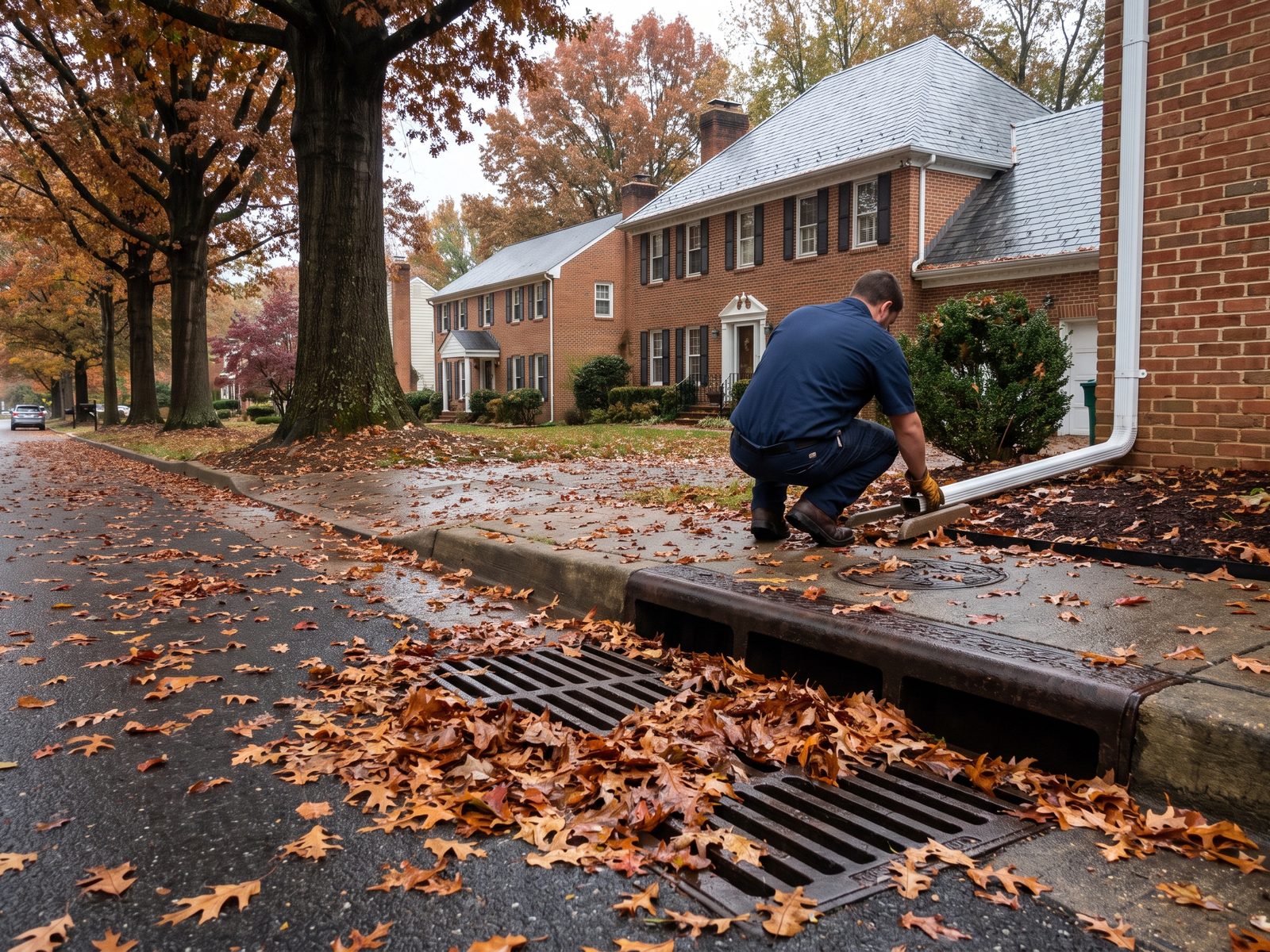
The assemblies that fail are all outside. Window wells fill because the area drain at the bottom is silted in. Downspouts discharge two feet from the foundation instead of six, so the soil against the wall stays saturated and finds the cove joint. October then adds leaves, and mature oaks in the older Vienna, Arlington and Fairfax subdivisions can block a gutter in two weeks. We pull the baseboard on these jobs and the drywall is wet from the floor upward, which tells us the water came in low and slow.
- Extend every downspout so it discharges at least six feet from the foundation
- Clear the area drain at the bottom of each window well and test it with a hose
- Lift the sump float by hand and confirm the pump cycles and the discharge runs clear
- Regrade any soil that slopes back toward the wall while the ground is still soft
- Clean the gutters at first leaf drop and again after the last leaves come down
What fails in November, when the heating system starts and the hose is still attached?
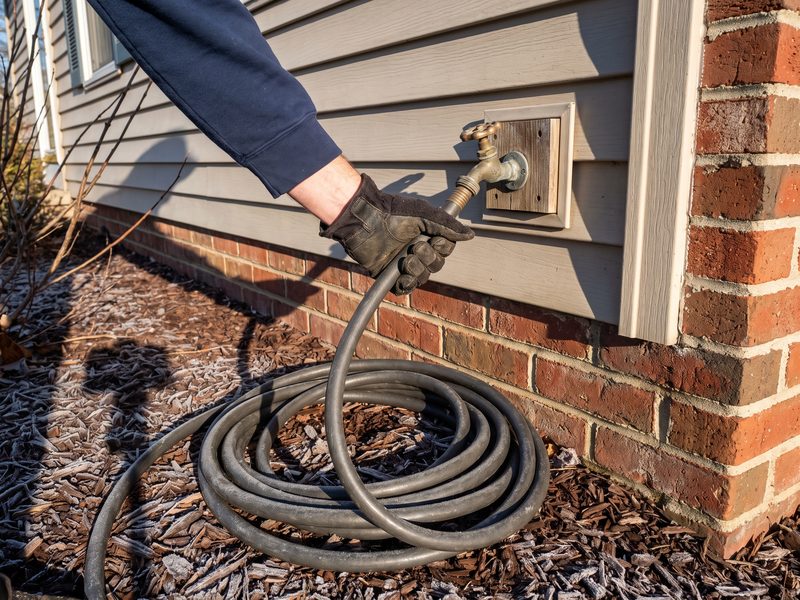
November is the month of two overlapping mistakes. The heating system runs for the first time in months, and the garden hose is still screwed onto the spigot. Both turn into water on a floor within days of the first cold snap. When a boiler, a hydronic zone or a whole-house humidifier comes back online, every joint that sat dry all summer gets pressurized again.
Humidifier feed lines are the quiet ones. They are small, often saddle-tapped into a nearby supply, and they can weep into the platform under the air handler for weeks. The hose is the simpler failure. A frost-free bib only drains if the hose is disconnected, because the hose holds water against the valve seat inside the wall. Freeze that water and the copper splits in the cavity, where nobody sees it until April. Pull the hoses off in November.
What fails in December, January and February, and why is freeze-thaw worse than a deep freeze?
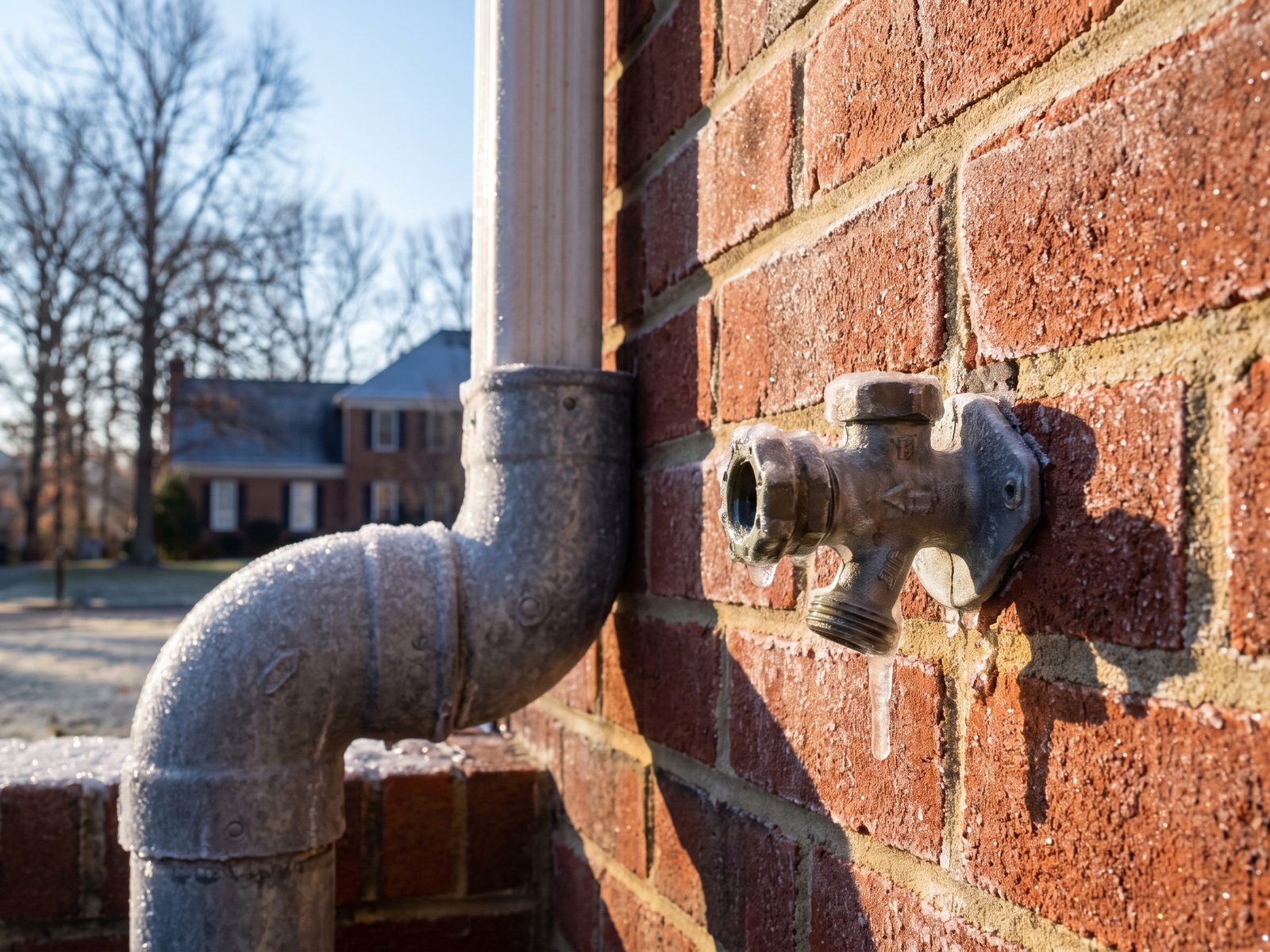
A long steady deep freeze is easier on plumbing than the freeze-thaw cycle this region actually gets. Our winters swing. A night in the teens is followed by a day in the forties, then another night in the teens. Each cycle expands and contracts the pipe and the material around it, and it is usually the third or fourth swing that opens a split.
A pipe that splits while frozen does not leak while it is frozen, because the ice plug is the plug. The water arrives on the thaw, often mid-morning with nobody home. The calls land on the mild day after the cold night rather than during the cold snap itself.
The pipe that goes is almost always in unconditioned space: a crawl space, a garage wall, an attic run over a bonus room, or an uninsulated exterior wall on the north side. Building stock changes the answer across the river. Our District colleagues cover how row-house pipes freeze in the District at https://restorationdoctordc.com/blog/frozen-pipes-dc-row-house, which is worth reading if you own property on both sides of the Potomac.
- Open cabinet doors under sinks on exterior walls so heated air reaches the supply lines
- Let one faucet on the coldest wall drip when the overnight low drops into the teens
- Hold the thermostat at 55 degrees or higher whenever the house is empty
- Find the main shutoff before you need it and confirm the valve actually turns
- Insulate crawl space and garage lines in November, not during the freeze warning
What fails in late winter, when basements flood with no plumbing failure?
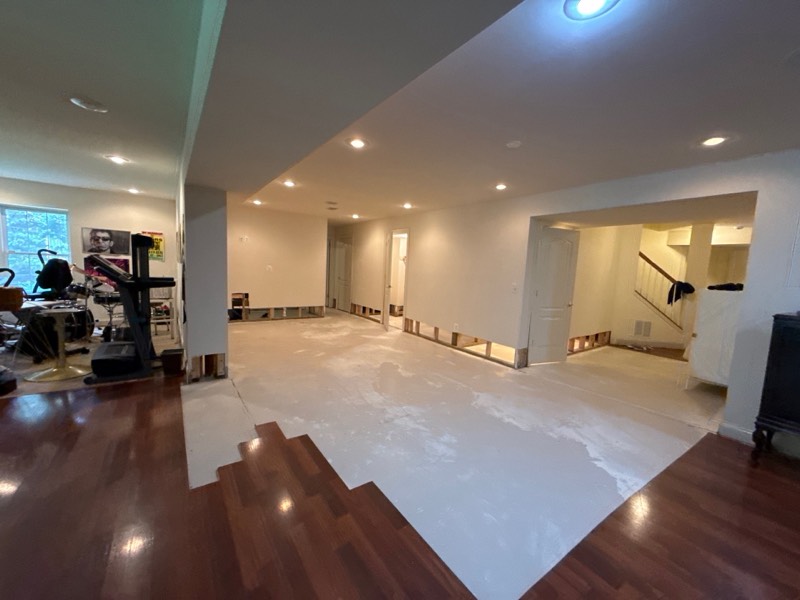
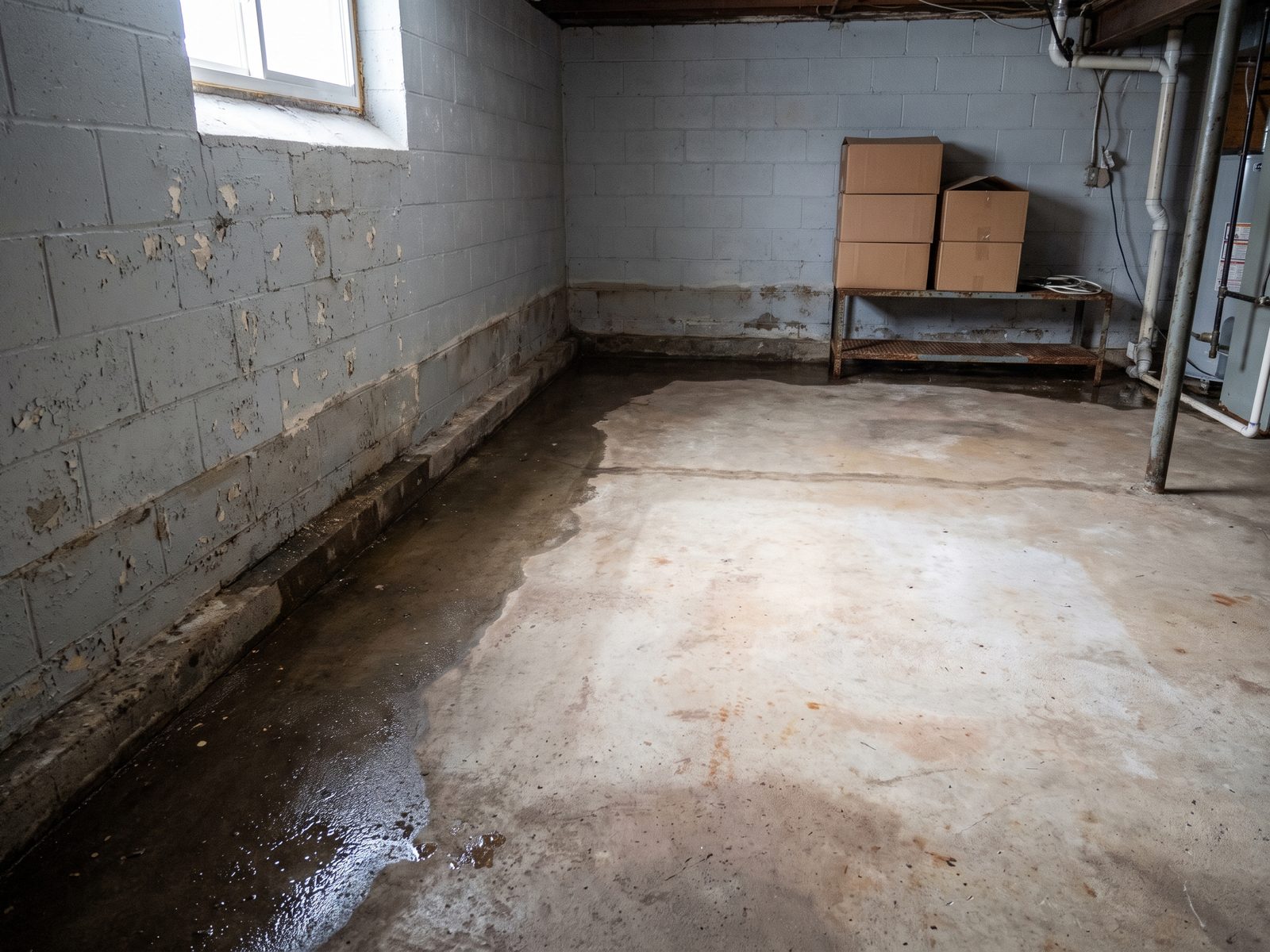
Late February and March produce a call we explain every year: the basement is wet, sometimes badly, and nothing in the house broke. Groundwater is the cause. Months of rain and snowmelt have saturated soil that cannot take any more, the surface is still partly frozen, and the water table rises above the level of the basement slab.
Water enters at the weakest joint it can find, usually the cove where the slab meets the footing and the wall. The signature is a wet perimeter with a dry middle. The moisture meter reads high along the entire base of the wall and normal four feet in, which points at the ground rather than the plumbing. This is also the month a sump pump proves whether it was maintained, so check the check valve, look for ice at the discharge exit, and find out whether there is any backup at all.
What fails in spring, when the water table peaks and the storms turn convective?
Spring runs two failure modes at once. The water table is still high from winter, and the storm pattern shifts from long soaking rain to short violent downpours. A convective storm can put an inch of rain on a roof in half an hour. That is a rate problem rather than a volume problem, and it finds a different set of weak points.
Roofs and flashing go first at that rate. Valleys, chimney counter-flashing, skylight curbs and the seam where a porch roof meets a wall all leak when water moves faster than the detail can shed it. The stain usually appears one room away from the entry, because water travels along the top of the drywall before it drops. Walk the outside of the house in April, and look at the gutters during a rain rather than on a dry afternoon.
What fails in June, July and August, when the dew point does the damage?
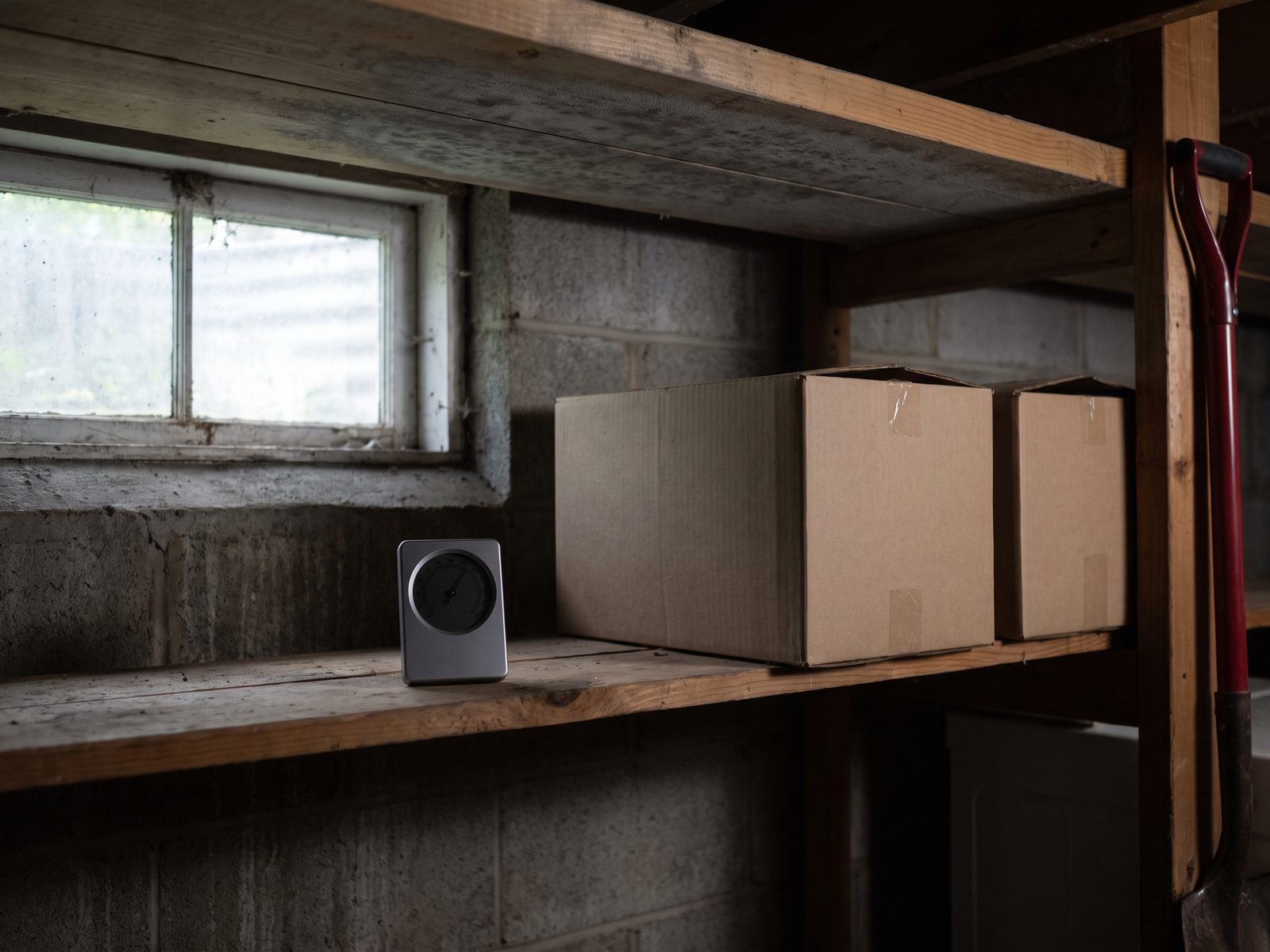
Summer brings the fewest dramatic losses and the most expensive slow ones. The failure mode is dew point, not a burst pipe. When outdoor air carrying a dew point in the seventies drifts into a basement whose slab and walls sit near sixty-five degrees, the air cools, its relative humidity climbs, and it gives up water on every cool surface it touches. The assemblies that suffer are the ones nobody looks at, meaning joist bays, duct boots and anything stored in cardboard on concrete.
The other summer failure is mechanical. An air handler in an attic or a closet pulls gallons of water a day out of the air, and all of it leaves through a condensate pan and one narrow drain line. That line clogs with biological slime every few years, and the pan then overflows into the ceiling below. A float switch on the pan is an inexpensive part that shuts the system down before the ceiling fails.
- Keep basement relative humidity below 50 percent and use a hygrometer you actually read
- Do not open basement windows to air the space out on a humid day; that adds moisture
- Drain the dehumidifier continuously to a floor drain or sump, never to a bucket
- Get stored cardboard and fabric up off the concrete and onto shelving
- Have the condensate drain line cleared and a pan float switch fitted
Which month is worst for mold, and why is it not the wettest one?
August is the worst mold month in Northern Virginia, and it is not the wettest month of the year. Mold does not need a flood. It needs a food source, which every house supplies in drywall paper and settled dust, and it needs sustained moisture inside the material. August delivers weeks of high dew point with no dry stretch long enough for materials to give the water back.
The EPA puts the same idea plainly in its homeowner mold guidance: control moisture and you control mold. The IICRC S520 standard rests on the same logic, which is why a real remediation begins by correcting the moisture source rather than by spraying a surface. The practical consequence is that the mold job you get in September was created in July, so the cheapest intervention on this calendar is a hygrometer in June.
What is the single highest-value thing to do in each quarter?
If you do nothing else on this calendar, do one thing per quarter. Each of these takes under an hour, and each one blocks the dominant failure mode of the quarter that follows it.
Every entry in the table comes down to drainage, temperature, groundwater or humidity. Fix the one that is in season and you have removed that quarter's main risk, which is a better use of an hour than a general inspection carried out in the wrong month.
- Autumn, September to November: clear the gutters, extend the downspouts, disconnect every hose
- Winter, December to February: insulate supply lines in unconditioned space and confirm the main shutoff turns
- Late winter and spring, February to May: test the sump pump, add a backup, then check grading and window wells
- Summer, June to August: put a hygrometer in the basement, hold it under 50 percent, clear the condensate line
How do you use this calendar if you own a rental, a condo or a second property?
A property you do not sleep in fails differently, because nobody is there to hear the first sound. The highest-value upgrade for an unoccupied or lightly occupied home is an automatic shutoff valve with leak sensors at the water heater, the laundry box and under each sink. The second is a low-temperature alarm that tells you the heat has failed before the pipes do.
Condo and stacked-townhouse owners carry an extra variable, because the loss that damages your unit often starts in somebody else's. Learn where your own unit shutoff is, read whether the association policy covers wall and ceiling finishes or only the structure, and photograph your ceilings once a year so you have a before.
Second-property owners get the most out of a calendar like this one, because the failure months invert when the climate does. For a market with no freeze month and a long rainy season, the South Florida water-loss calendar at https://restorationdoctorfl.com/blog/south-florida-water-loss-calendar-by-month lays out the same month-by-month structure. The standards and public sources behind this page are listed below.
- National Weather Service, Baltimore and Washington forecast office: https://www.weather.gov/lwx/
- EPA, A Brief Guide to Mold, Moisture and Your Home: https://www.epa.gov/mold/brief-guide-mold-moisture-and-your-home
- FEMA flood maps, to check whether your address sits in a mapped flood zone: https://www.fema.gov/flood-maps