Your Sump Pump Quit Mid-Storm: The Fifteen-Minute Decision When the Power Is Out
BY RESTORATION DOCTOR · NORTHERN VIRGINIA, MARYLAND & D.C.
When a sump pump stops during a storm, your first job is telling a dead pump from a dead circuit, because the answer changes everything you do next, and neither answer justifies standing in energized water. This guide gives the fifteen-minute sequence, the depth at which you stop bailing and call for help, what a battery or water-powered backup actually buys you, and how a sump failure is usually treated on a homeowners policy.
Call 1-888-29-FLOODHow do you tell in ten seconds whether the pump failed or the power did?
Check a light before you check the pump. If the basement lights, the furnace and a plug-in clock are all dead, the power failed and the pump itself is probably fine. That ten-second check is the start of what to do when a sump pump fails during a storm, because a dead circuit and a dead pump send you down different paths. If the house is still lit and only the pit is filling, then the pump, its float or its own breaker has failed.
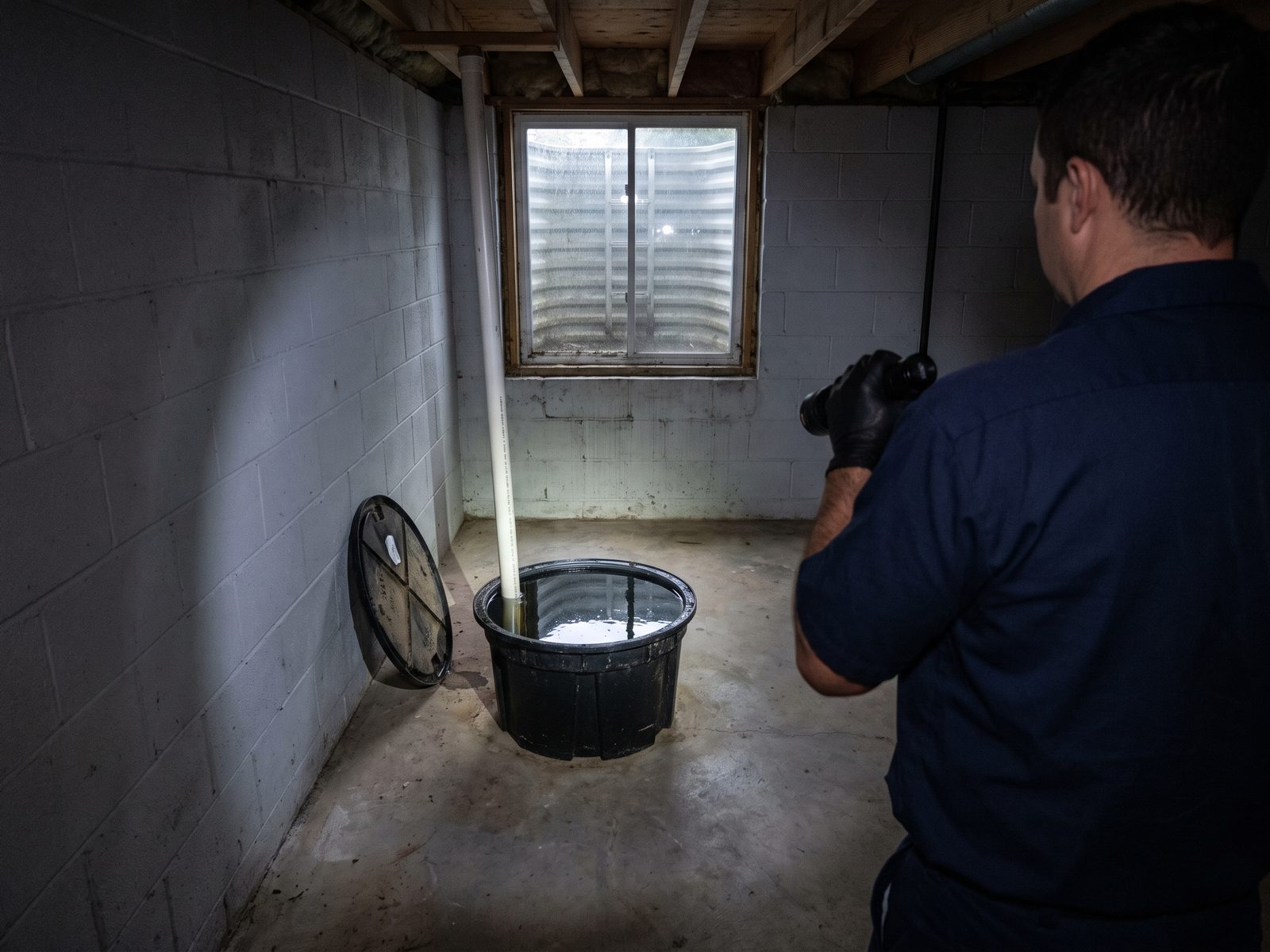
From the top of the stairs, a flashlight tells you the rest. A pit full to the rim with a silent, dry discharge pipe means nothing is moving. A pit that stays full while the line is warm and vibrating means the pump is running and losing the race. A pump that hums without moving water usually has a jammed impeller or a float pinned against the pit wall. The steps below are the first fifteen minutes, in order.
- 1. Decide whether the whole house is dark, or only the pit is filling.
- 2. Stay off the basement floor if water has reached outlets, cords, the furnace or the water heater.
- 3. Cut the basement circuits at the panel only if you can reach it from dry ground. If that means wading, call the utility or a licensed electrician.
- 4. Move what you can reach from the stairs. Boxes up, rugs back, electronics unplugged.
- 5. Stop adding water. No laundry, no dishwasher, no hose running near the foundation.
- 6. Once the power is confirmed off, move water with anything that needs no house current. Hand pump, siphon hose, buckets, cordless wet vacuum.
- 7. Check the outside discharge outlet for ice, mulch or a crushed extension.
- 8. Photograph the water line, the open pit, the discharge pipe and the panel before anything changes.
- 9. Keep any generator outside and clear of windows, doors and window wells. Never in a basement or a garage.
- 10. Call a crew once water is over the ankle, reaches a finished room, or keeps rising after ten minutes of work.
What can you safely do in a basement that already has water in it?
Very little, until the electricity question is settled. Water on a basement floor touches outlets, power strips, extension cords, the furnace and often the pump circuit itself. If the house still has power, treat every inch of it as energized until a panel switch or an electrician says otherwise. The safe order is power first, water second. If reaching the panel means wading, the utility can kill the feed from outside.
Generators deserve the same caution. A portable unit belongs outside only, at least 20 feet from the house, with the exhaust aimed away from it and away from windows, doors and window wells. The Consumer Product Safety Commission has warned repeatedly about carbon monoxide from generators run in basements, crawl spaces and attached garages. The gas has no smell and no color, and it has killed people who were only trying to keep a sump pump alive.
- Do not step into standing water while the house is energized.
- Do not reach into the pit to free a float or clear an impeller.
- Do not run an extension cord across a wet floor.
- Do not operate a generator or a fuel pump indoors.
- Do not reset the circuits yourself once the water is gone.
What can you actually move water with when there is no power?
Less than you would like. A utility pump needs current, so without it you are down to gravity, muscle and stored battery power. None of those beat a storm that is still overhead. The goal is to hold the water below drywall, insulation and the bottom of a finished wall.
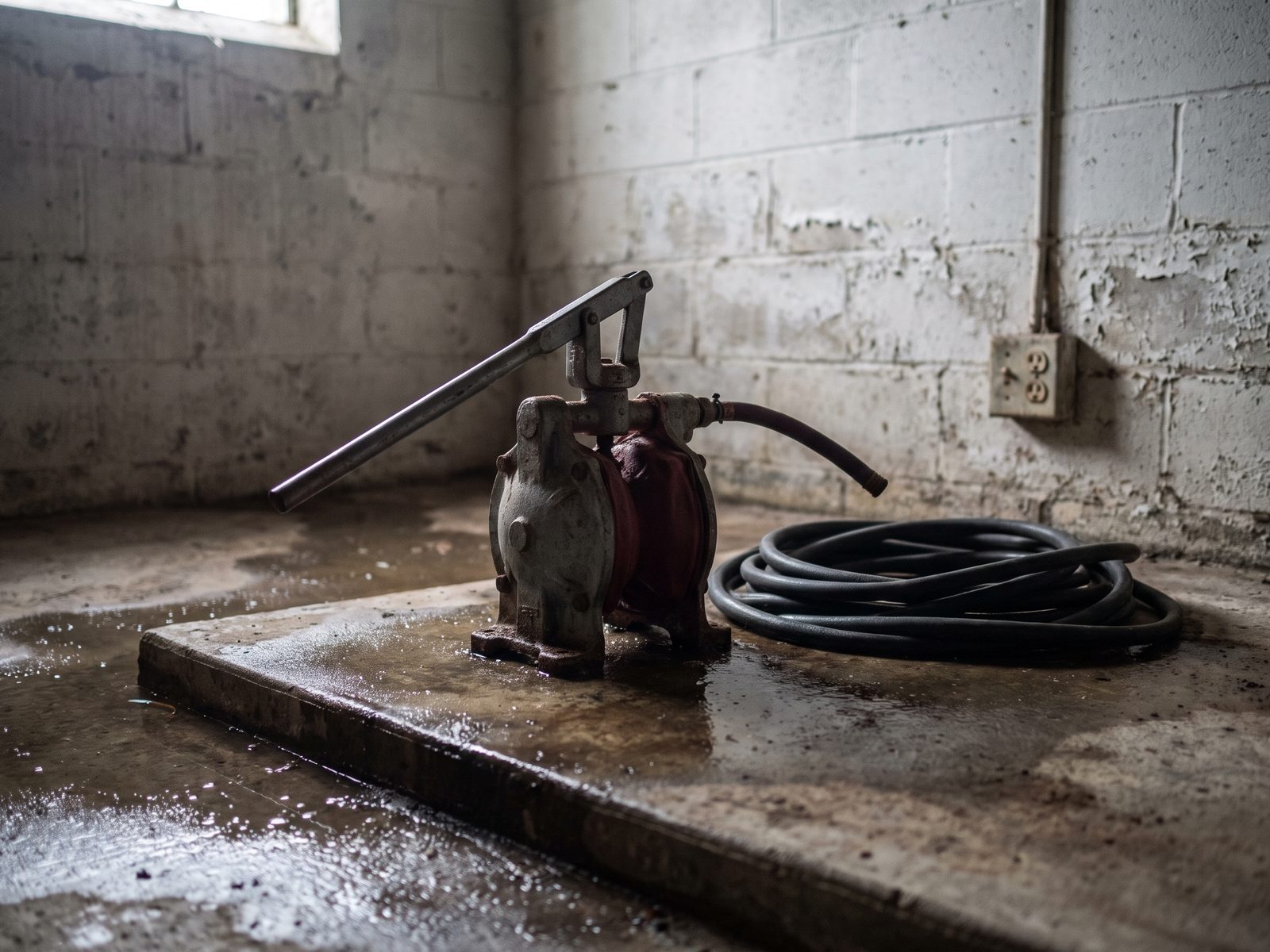
A hand-operated diaphragm pump is the most useful thing in the house, because it needs nothing but a person. A garden hose siphons well if the ground drops away from the pit, which on a sloping Woodbridge or Manassas lot is often true and on a flat one never is. A cordless wet vacuum works in short bursts, limited more by tank size than by battery.
- Hand-operated diaphragm pump, stored where you can find it in the dark
- A garden hose long enough to siphon downhill
- Cordless wet vacuum with a charged spare battery
- Two buckets and a clear route up the stairs
- A headlamp, so both hands stay free
At what depth does this stop being a mopping job?
Roughly at the ankle, and sooner if the water has reached carpet, baseboard or the bottom of a stud bay. What matters is what the water touched, how porous it is, and how long it has been wet.
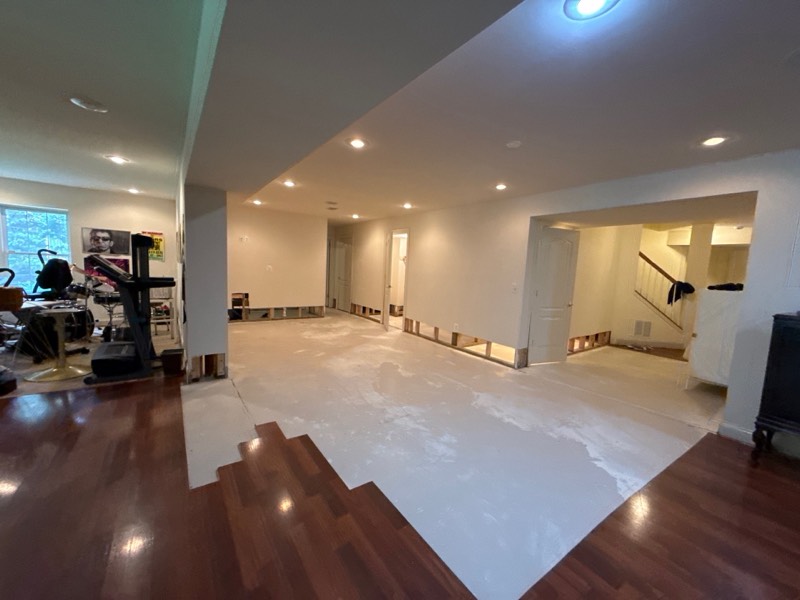
Drywall wicks upward from the cut edge, so an inch on the floor can leave a damp band several inches up the wall by morning. Insulation in a finished bay holds water long after the floor looks dry. Carpet pad rarely survives, and laminate swells at the seams. Crews measure inside the cavity rather than trusting the surface.
Then there is what is in the water. Groundwater arriving through a sump pit has passed through soil, and a pit that has ever taken drain flow should be treated as contaminated. EPA is blunt about the clock: it tells homeowners to dry water-damaged areas and items within 24 to 48 hours to prevent mold growth, and porous material left past that window is the part crews end up removing.
| What you see | What it means | What to do |
|---|---|---|
| Damp slab, wet ring at the pit | The pump kept up until it stopped | Vacuum it, move air, watch the pit |
| Under an inch on bare slab | Anything stored at floor level is wet | Lift it, extract, dry within the day |
| Ankle deep, unfinished basement | Drywall edges and insulation are wicking | Call for extraction; base trim comes off |
| Any depth in a finished room | Carpet, pad and drywall are involved | Call now; pad and trim usually go |
| Water at outlet height or into the furnace | A hazard, not a cleanup | Power off, everyone upstairs, call |
| Still rising after ten minutes | Inflow beats anything done by hand | Stop, photograph, get a crew moving |
Why does the pit keep filling after the rain stops?
Because the soil is still draining, and it drains for hours or days after the sky clears. The pit is not catching rain. It is catching groundwater that the perimeter drain pulls off the footing, and that water arrives late.
Eastern Fairfax County and the ground nearest Alexandria sit on marine clay. Fairfax County describes it as silty, clayey soil with poor drainage that swells when it gets wet and shrinks as it dries. Ground that drains that slowly holds water above the footing long after the surface looks dry, and the perimeter drain keeps delivering it to the pit. Soils vary across Prince William and Loudoun, but slow-draining ground behaves the same way wherever it sits.
That timing is why outages hurt. Distribution across much of the region runs overhead, and the storm cells that fill the pit are the ones that put trees into the lines. A Fairfax or Prince William basement loses the pump at the hour the water table peaks. Size a backup against the outage, not against the pump.
District basements fail the same way for a different reason. A row house pit often takes water from a combined sewer rather than from a water table, which changes both the fix and the insurance question. Our District team covers sump pump failure in a DC storm at https://restorationdoctordc.com/blog/sump-pump-failure-dc-storms.
What does a battery backup really buy you, and how long does it last?
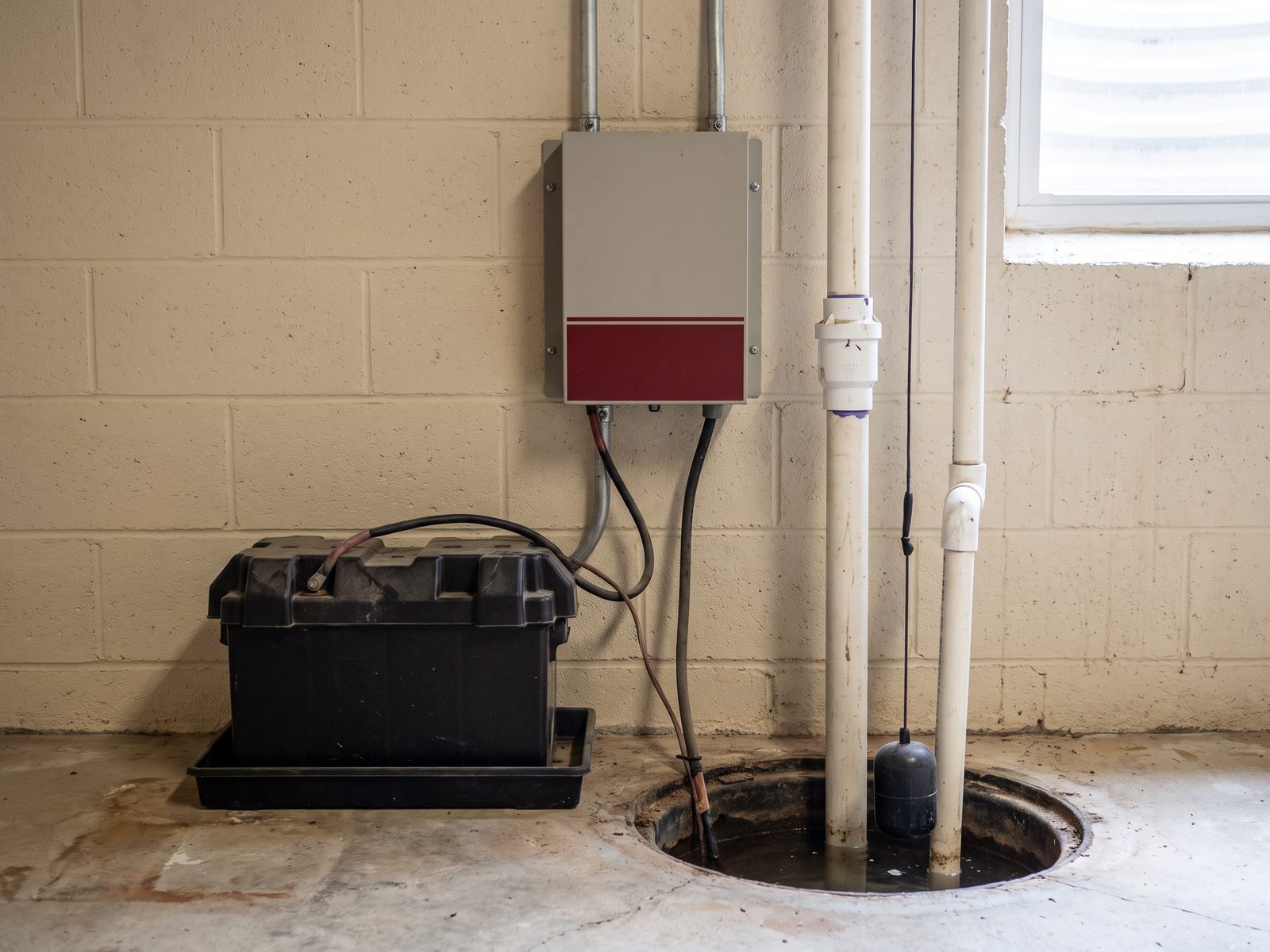
It buys time, and the amount depends on four things you can check yourself. How fast water is coming in. How hard the backup pump pulls. How much charge the battery is really holding. How old that battery is. Anyone quoting a flat number of hours is guessing, because the pit sets the runtime, not the label.
Think in cycles rather than hours. A pit calling for the pump every thirty seconds drains a battery far faster than one cycling every ten minutes. The useful move is a test before the season. Unplug the primary pump, fill the pit with a hose, and watch the backup clear it.
- Inflow rate, which is how often the float actually calls for the pump
- Pump current draw, which rises with discharge lift and head height
- Battery amp-hour rating, and the capacity it still holds
- Battery age, and whether the charger kept it topped up between storms
- Discharge line condition, since a partly blocked line makes every cycle run longer
Is a water-powered backup an option on Northern Virginia municipal supply?
Yes, if the house is on municipal water and the pressure is healthy. A water-powered backup uses the pressure already in your supply line to create suction and lift water out of the pit. It has no battery and no motor, so it does not care whether the outage lasts two hours or two days.
The trade-offs are honest. The unit spends potable water to move pit water, so a long run shows up on the next utility bill. It is no help on a private well, because a well pump needs the electricity the sump pump just lost. Plumbing a device into your potable supply raises a cross-connection question, which is why this is an installation to run past your county or city water authority and a licensed plumber before anyone starts. Ask what that authority requires for backflow protection and whether the work needs a permit where you live.
What does the insurance policy say about a sump failure during a storm?
Usually less than homeowners expect. A standard homeowners policy generally excludes water that backs up through a sewer or a drain, or that overflows from a sump, unless you bought that coverage as an endorsement. Surface water that rises and enters the building is excluded as well, and belongs to a separate flood policy.
If you have the endorsement, read the limit rather than the name. Water backup and sump overflow coverage often carries its own modest cap, well below what a finished lower level costs to put back. Some carriers condition it on the pump being in working order. The declarations page and the endorsement schedule hold the real answer.
Flood coverage is its own conversation. The National Flood Insurance Program administered by FEMA sells through ordinary insurance agents, and FEMA states a 30-day waiting period before a new policy takes effect, with narrow exceptions for lender-required coverage and for a community flood map change. You can buy a policy the day a storm is named. It will not cover that storm. None of this tells you whether your loss is covered, and no restoration company can. What we can do is document it so the carrier decides on facts.
What should you photograph before anyone starts pumping?
Everything that will be gone within the hour. The water line on the wall drops the moment extraction starts and it never comes back. Adjusters reconstruct a loss from what somebody recorded first, and a phone with timestamps is enough.
Shoot wide before you shoot close. Stand in each doorway and capture the room while the water is still where it settled, then move in. Put something of known size in frame so the depth is provable later. Crews work to the ANSI/IICRC S500 standard, which is built on that same record, kept daily until materials reach a defined dry standard.
- A wide shot from the doorway of every affected room
- The water line on the wall and door casings, with a shoe for scale
- The open pit, the float, the pump body and the discharge pipe
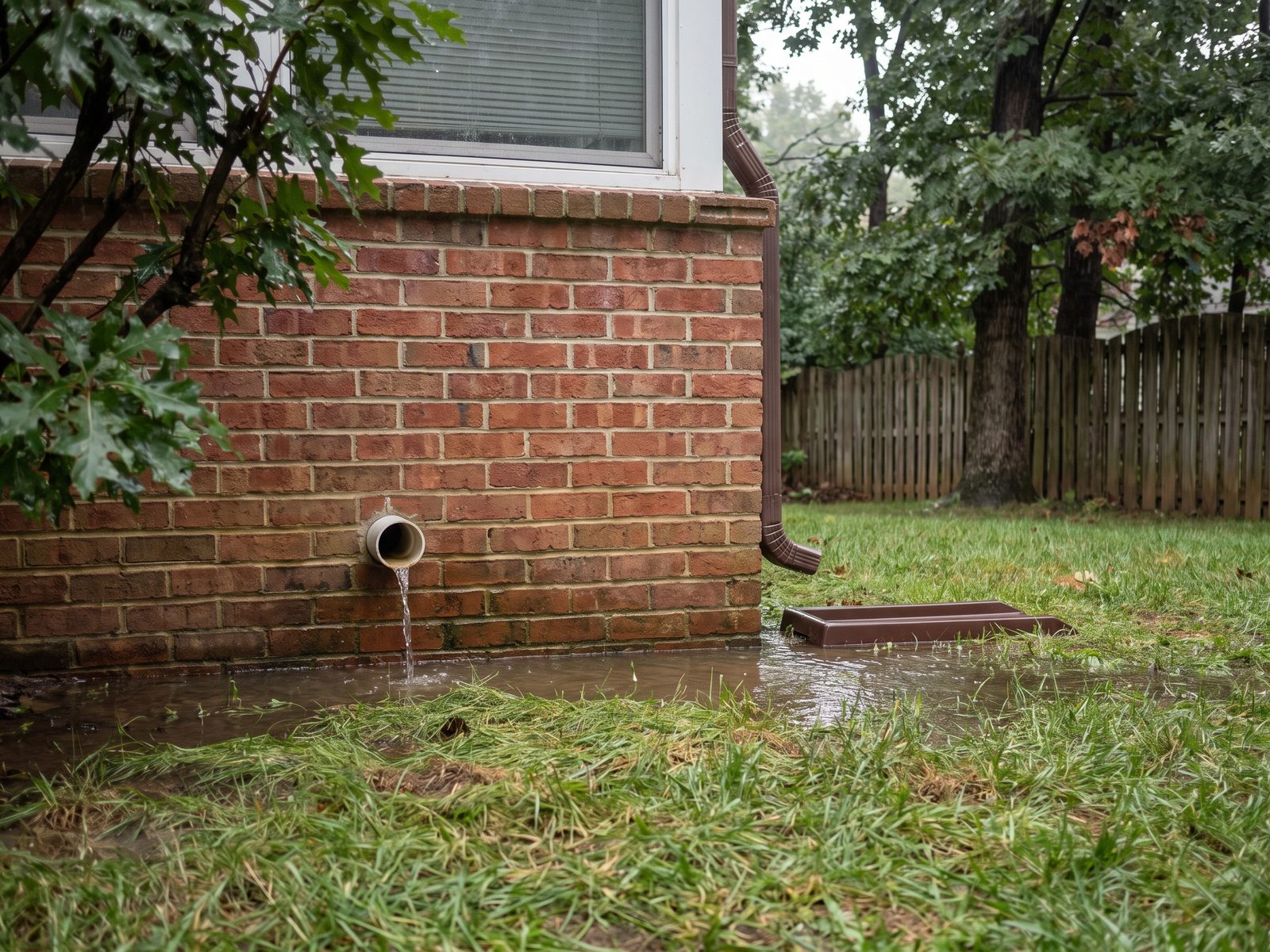
- The outside discharge outlet and the grade around it
- The electrical panel with breaker positions readable
- The pump nameplate and any backup unit, battery date included
- Wet contents room by room, before they are carried upstairs
What does a restoration crew do differently from a wet-vac?
A wet vacuum removes the water you can see. A restoration crew removes the water you cannot, which is the water that becomes a mold problem two weeks later.
The work starts with mapping. Moisture meters and thermal imaging show how far water traveled up the wall and under the flooring. Truck-mounted extraction pulls standing water far faster than a shop vacuum. Where a cavity is wet, crews drill discreet holes at the base plate or make a controlled flood cut, then push dry air through the wall. Dehumidifiers are sized from psychrometric readings.
Material left wet overnight behaves nothing like material extracted the same evening, and the difference usually shows up as drying a wall in place instead of cutting it out. Across Northern Virginia our median arrival time is 47 minutes. If the pit is full and the water is still coming, stop bailing and call.
Standards and guidance behind the advice above, for anyone who wants the primary sources:
- ANSI/IICRC S500 Standard for Professional Water Damage Restoration: https://iicrc.org/s500/
- EPA brief guide on mold and moisture, source of the 24 to 48 hour drying window: https://www.epa.gov/mold/brief-guide-mold-moisture-and-your-home
- FEMA flood insurance and the National Flood Insurance Program: https://www.fema.gov/flood-insurance
- Consumer Product Safety Commission carbon monoxide information: https://www.cpsc.gov/Safety-Education/Safety-Education-Centers/Carbon-Monoxide-Information-Center
- Fairfax County Land Development Services on marine clay soils: https://www.fairfaxcounty.gov/landdevelopment/marine-clay