Marine Clay Basement Water in Fairfax County: Wet Basement, No Leak
BY RESTORATION DOCTOR · NORTHERN VIRGINIA, MARYLAND & D.C.
Marine clay under eastern Fairfax, Alexandria and neighboring areas holds water against a foundation and releases it slowly, so a basement can take water hours after the rain with no plumbing failure and no visible crack. This guide explains hydrostatic pressure, how to tell seepage from a leak, why grading and gutter fixes sometimes fail here, and how insurers usually treat it.
Call 1-888-29-FLOODWhat is marine clay, and where is it under Northern Virginia?
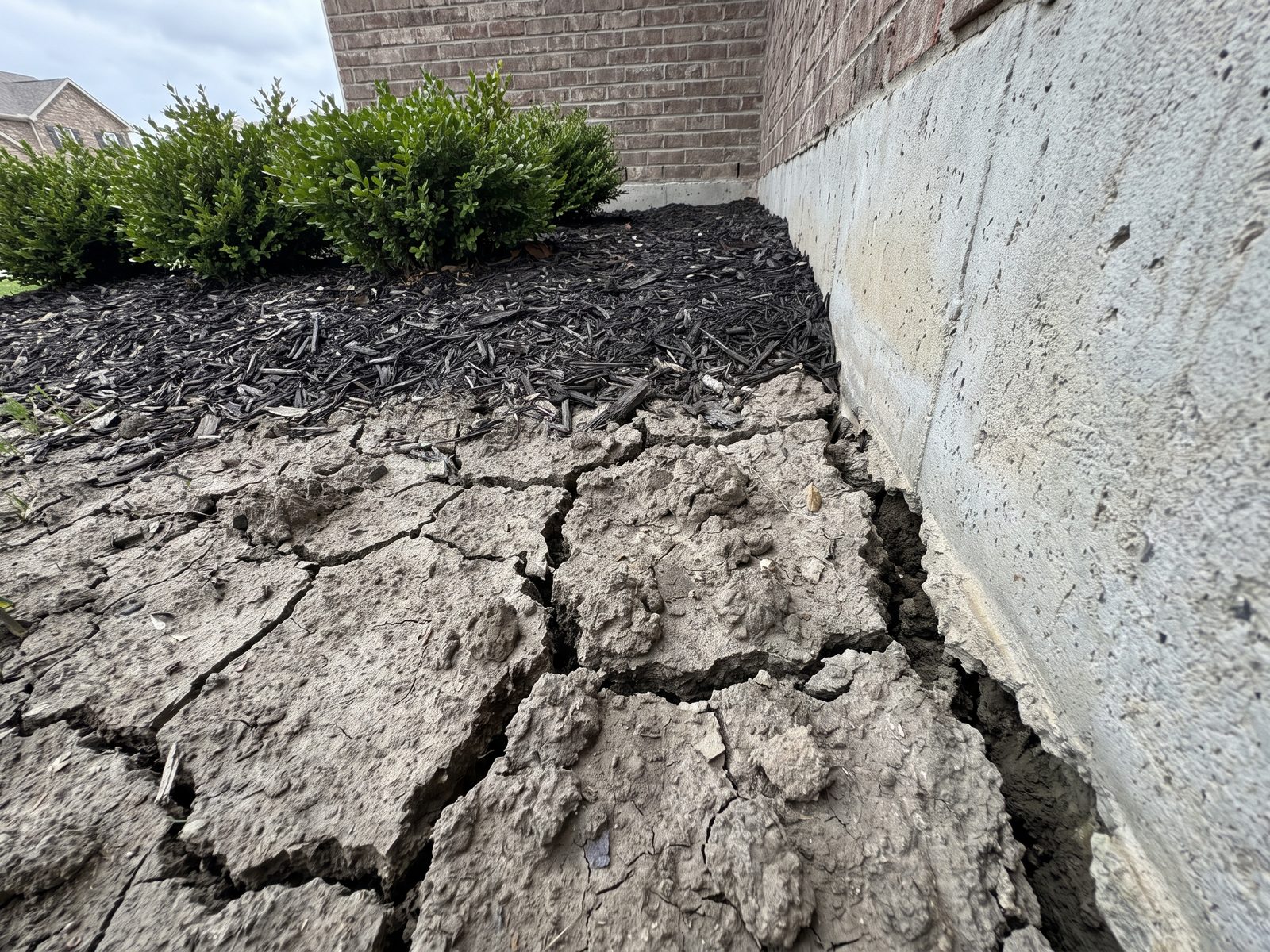
Marine clay is a dense, fine-grained soil laid down when this part of the Coastal Plain sat under seawater, and it swells when it gets wet and shrinks when it dries. That one property explains most marine clay basement water in Fairfax County. Rather than letting rain drain down and away, the soil holds it against the foundation and then presses it through the concrete. There is no pipe to blame and often no crack to point at.
Fairfax County's Land Development Services places the soil in the Coastal Plain, generally east of Interstates 95 and 395, across the Mount Vernon and Franconia (formerly Lee) districts and parts of Mason. On the county soils map it appears as Marumsco soil or as Previously Mapped Marine Clay. The same Coastal Plain belt continues east and south of the county line, which is why the pattern shows up in Alexandria and down through Lorton; the USDA soil survey is the map that settles any single address. A few miles west the ground changes to Piedmont soils that drain faster, which is why neighbors a short drive apart compare notes after one storm and get opposite answers.
- Look up your address on the county soils map before you accept anyone's diagnosis.
- Ask neighbors whether they take water after big rain. Clay affects clusters of houses, not single lots.
- Watch whether interior cracks open in dry spells and close in wet ones. That seasonal movement is a clay signature.
Why does clay soil put water into a basement that has no leak?
The hole dug for a foundation is wider than the house, and the backfill put back into it is looser than the undisturbed clay around it. Rain soaks into that loose fill quickly, hits dense clay on every side, and stops. The trench becomes a narrow reservoir standing against your basement wall, with nowhere to go but down toward the footing and in.
Poured concrete is not waterproof. It is porous, and it is full of planned weak points: form tie holes, honeycombed pockets where the pour did not consolidate, and the cold joint where the wall meets the slab. That wall-to-slab joint, usually called the cove joint, is the most common entry point in this soil. It was never a seal. It is where one pour ended and another began.
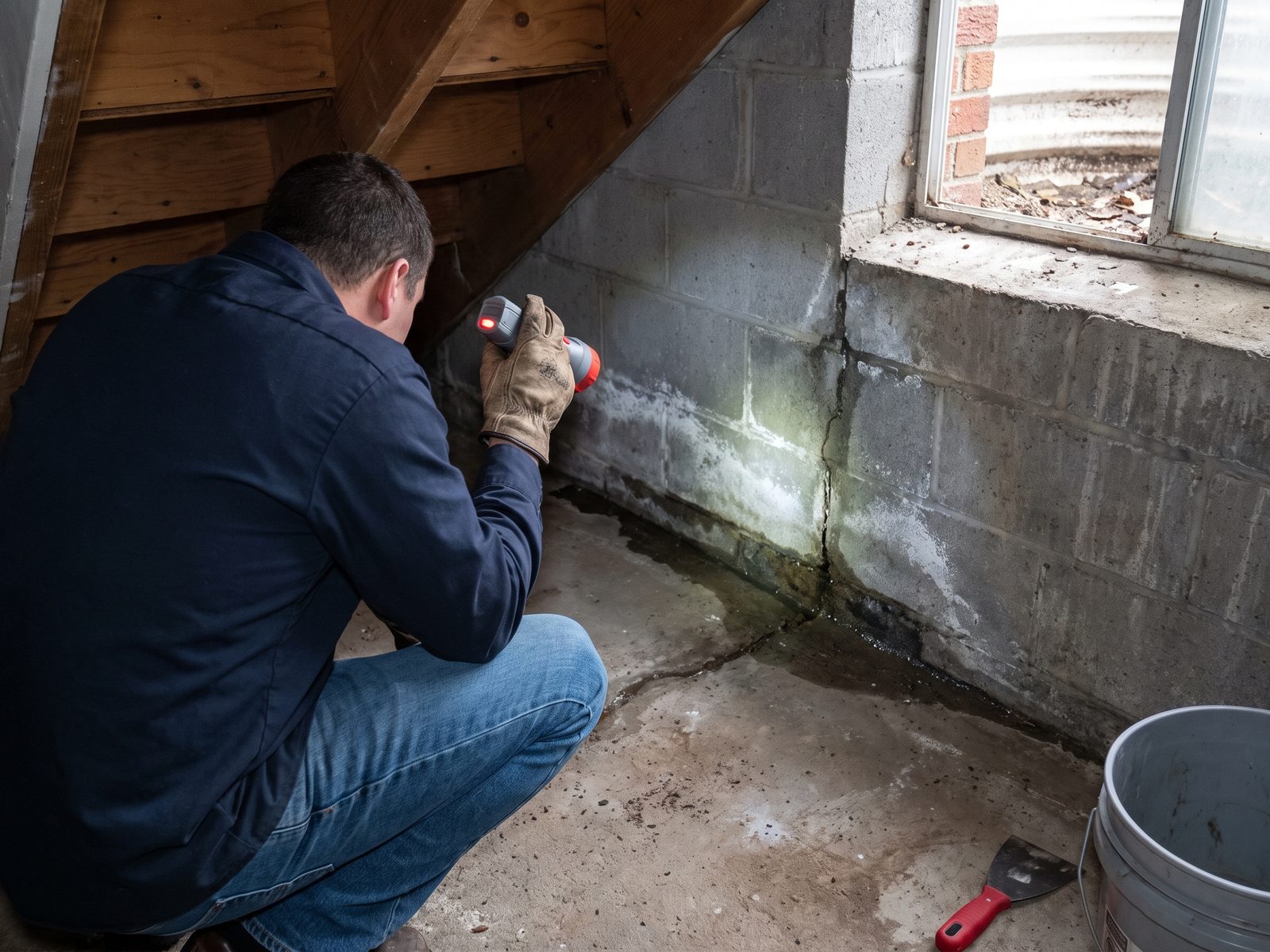
So a basement takes water while every pipe in the house is sound. On a moisture meter the wall reads elevated from the floor upward in a band a few inches to a foot high, running along the perimeter instead of radiating from a point. Pull a section of baseboard and the story finishes itself: damp drywall at the bottom edge, a wet bottom plate, and a wet line that holds the same height around the room.
What is hydrostatic pressure, and how does it move water through concrete?
Hydrostatic pressure is the force standing water exerts because of its own weight. Water saturating the soil beside a basement wall presses sideways against it, and water saturating the soil under the slab presses upward. The deeper the saturated column, the harder the push. Fairfax County names this in its own guidance, warning that large lateral pressures can be exerted on basement walls when drainage is poor and swelling soil bears against the wall.
Pressure turns a slightly porous wall into a wet one. Water under load migrates through capillary paths in the concrete, through the cove joint, and up through gaps around floor penetrations. It does not need a crack. It needs a pressure difference between wet soil outside and dry air inside.
The white chalky crust above a damp line is the evidence. Efflorescence is mineral salt left behind when water travels through masonry and evaporates at the surface, so where you see it, water has moved through that material rather than condensed on it.
Why does the water arrive hours or days after the rain stops?
Clay is slow, and the delay is diagnostic. Rain soaks into topsoil and backfill, then works sideways through a material that barely transmits water. Many homeowners here see nothing during the storm and find water at the joint the next morning, or two days later. That lag is one of the clearest signs you are dealing with groundwater rather than a roof or gutter failure.
Direction matters too. Water perched on top of the clay travels laterally along the easiest path, which can be a utility trench, an old drain line, or the buried slope of the clay surface itself. A yard that looks flat can sit above ground that tilts toward your house, so water reaches your backfill without ever crossing the lawn.
Season changes the picture. From late January through April the water table generally sits high and the soil gets little chance to dry between rains. Late summer works differently: a long dry spell shrinks the clay and opens vertical cracks, so the first heavy rain runs straight down and arrives fast, then the clay swells shut and everything afterward perches and seeps.
How do you tell seepage from a plumbing failure or a foundation crack?
Start with timing, then with shape. Seepage driven by soil pressure follows the weather and follows the perimeter. A supply line failure ignores the weather and radiates from one point. A structural crack leaks in a vertical stripe, wettest at the crack and drier to either side. The table below is the triage we run on arrival, before anything gets moved.
One test settles the plumbing question fast. Shut off every fixture and appliance that uses water, then watch the meter for fifteen minutes. If the low-flow indicator still turns, water is moving inside the house. If it sits still and the basement keeps taking water after rain, the source is outside the building envelope. Groundwater that has passed through soil is not clean water by the standards we work to, so saturated carpet pad is usually removed, not dried.
| What you are seeing | Points to soil pressure | Points to plumbing | What we check first |
|---|---|---|---|
| Water appears only after heavy rain or snowmelt | Strong signal | Unlikely | Rain dates matched against the wet dates |
| Water shows up in a dry week with no storms | Unlikely | Strong signal | Meter test with every fixture shut off |
| Wet band runs along the wall-to-slab joint | Strong signal | Rare | Moisture map of the full perimeter |
| White chalky crust above the wet line | Strong signal | No | Height and continuity of the efflorescence |
| Wet patch mid-wall, dry at the floor line | No | Strong signal | Thermal scan and meter behind the finish |
| Sewage odor, gray or discolored water | No | Sewer side, not supply | Stop entry, contaminated water protocols |
Why do regrading and gutter work sometimes fail to fix it?
Grading and downspouts are the right first move, and the county recommends both. That work is cheap, reversible, and it fixes a real share of wet basements. What it cannot do is reach groundwater. Surface fixes manage the water that lands on your roof and lawn, not water arriving laterally through the soil or sitting in a seasonally high water table under the slab.
Regrading can also work against you. New soil that is the same heavy clay, compacted into a shell, can shed water straight into the backfill trench at the edge of that shell. The water is moved, not removed.
A grading job that did not work is still a test result. Doing the surface work correctly and still taking water after rain narrows the diagnosis to groundwater under pressure, which is the information a drainage designer or a geotechnical engineer needs before quoting anything.
- Positive slope away from the house for the first several feet, checked with a level rather than by eye.
- Downspouts discharged clear of the backfill trench, into ground that actually drains away.
- Deep-rooted trees and shrubs kept well back, since roots pull moisture out of clay and shrink it away from the footing.
What does shrink-swell do to a foundation over a decade?
Fairfax County describes three mechanisms. Shallow clays beneath a foundation shrink and swell, which can cause uneven settling and cracking in floors and walls. Swelling soil pressing against a basement wall can produce structural cracks and shifting over time. On a slope, heavy rain or snow can trigger downslope movement that undermines footings, retaining walls and utility lines.
What distinguishes clay movement from ordinary settlement is seasonality. A crack caused by shrink-swell tends to open during long dry summers and close again in wet months, year after year. Doors that stick in August and swing freely in March tell the same story. The county makes a practical point for anyone reaching for filler: patching a crack is cosmetic, it does not address the cause, and the damage tends to return.
Two cautions belong here. Nobody should be told over the internet that their foundation is compromised, so if cracks are widening or a wall is bowing, the right call is a licensed geotechnical or structural engineer experienced in these soils. And the county warns that patching cracks and later selling without disclosing the history can get you sued by the buyer.
Which fixes actually address hydrostatic pressure?
Two different jobs get confused here. Sealing tries to stop water at the wall surface. Drainage relieves the pressure before water ever reaches the wall. In soil that holds water, sealing alone tends to lose. Water that cannot get through the paint finds the cove joint instead.
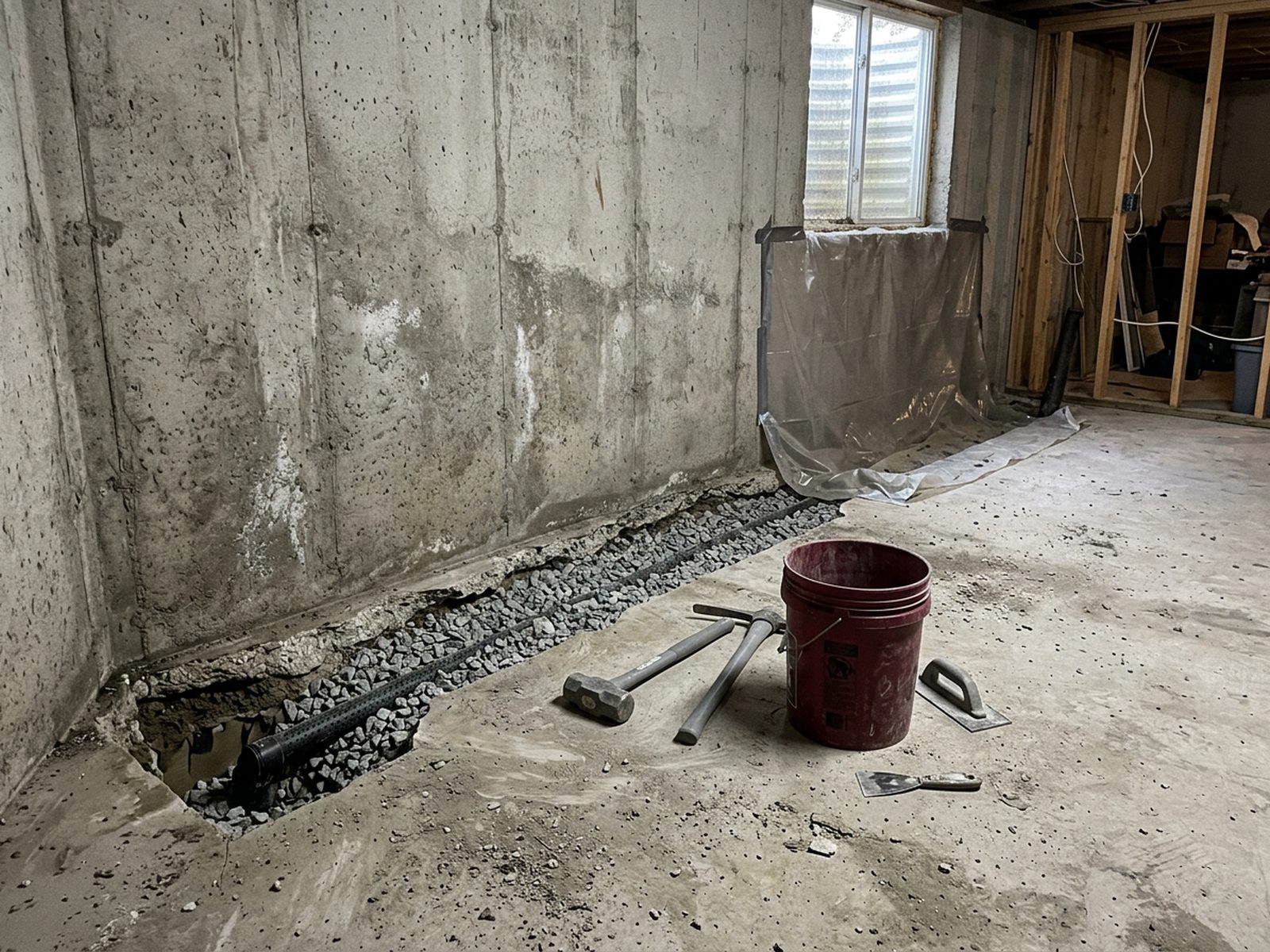
The approaches that address pressure all work by giving water an easier path to somewhere else. An interior perimeter drain cuts a channel at the edge of the slab, collects what arrives at the footing, and carries it to a sump. An exterior system excavates to the footing and rebuilds the drainage with free-draining stone, a footing drain and a drainage board. Which suits a house depends on the site, the access and what the soil is doing.
We should be clear about our own lane. Restoration Doctor dries and restores buildings after water gets in. We do not install waterproofing systems or perform foundation work. What we can do is document the moisture pattern precisely, which is what a drainage contractor or an engineer needs to design a fix instead of guessing.
- Interior perimeter drain to a sump pit: relieves pressure at the footing, least disruptive outside, requires opening the slab edge.
- Exterior excavation with footing drain and drainage board: intercepts water before the wall, most disruptive and most expensive.
- A sump pump with backup power and a discharge line that carries water well away from the house.
- A geotechnical or structural engineer when cracks widen, a wall bows or the slab moves.
Is seepage covered by homeowners insurance, and what about the resulting damage?
Read your own policy before assuming anything, because the answer turns on wording rather than on what feels fair. Most standard homeowners policies exclude water that comes from the ground, and they exclude sewer and drain backup separately. Groundwater under pressure is usually treated as a drainage and maintenance issue rather than a sudden accidental event.
Flood is a separate product. Rising surface water is generally not covered by a homeowners policy at all, and owners who want that protection buy it separately. Water backup is its own thing again: an endorsement covering sewer backup and sump pump overflow is commonly available and is not part of a base policy. If your basement depends on a sump, that endorsement is the most relevant line on your declarations page.
Mold adds a further layer. Many policies cap mold remediation at a sublimit or exclude it when it follows a long-term moisture condition rather than a covered loss. None of this makes a claim pointless. It means the conversation starts with your declarations page, your agent, and the Virginia Bureau of Insurance if you want a neutral explainer, and that any contractor who promises a covered outcome before reading the policy is telling you something they cannot know.
What should you do the first time you see water at the wall-floor joint?
Start with safety and finish with documentation. If water is anywhere near outlets, cords, a furnace or a water heater, kill power to the basement at the panel before walking in. Once the space is safe, photograph everything before you move a single box: wide shots of each wall, close shots of the wet line and any efflorescence, and a shot of the ceiling above.
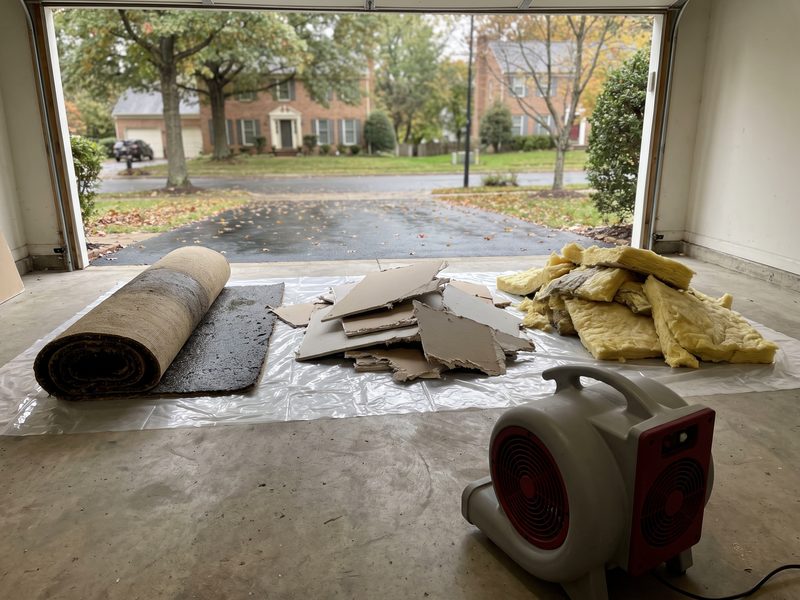
Then get contents up off the slab. Cardboard, upholstery, mattresses and paper wick moisture fast and are usually the first total losses. Carpet padding that has taken groundwater is generally removed rather than dried. Do not point a fan at soaked carpet and consider it handled, because that moves contaminated moisture around the house without lowering the moisture content underneath.
When we take a basement like this, the work follows the IICRC S500 standard: find the source, classify the water, remove what cannot be saved, then dry to documented targets with daily readings rather than to an opinion. The daily log is what makes the file defensible later. Drainage is a separate trade, and the moisture map we hand you is the best brief that trade can get.
Owners with property on the other side of the river meet the same shape of problem for a different reason. Washington basements flood because of the combined sewer rather than the soil, and our District of Columbia site covers that at https://restorationdoctordc.com/blog/northeast-boundary-tunnel-basement-flooding-dc, which is worth reading if you own property on both sides of the river.
- Sources referenced in this guide:
- Fairfax County, Marine Clay: https://www.fairfaxcounty.gov/landdevelopment/marine-clay
- Northern Virginia Soil and Water Conservation District: https://www.fairfaxcounty.gov/soil-water-conservation/
- USDA NRCS Web Soil Survey: https://websoilsurvey.nrcs.usda.gov/app/
- IICRC standards, including S500: https://www.iicrc.org/page/IICRCStandards
- EPA, A Brief Guide to Mold, Moisture and Your Home: https://www.epa.gov/mold/brief-guide-mold-moisture-and-your-home
- Ready.gov flood basics: https://www.ready.gov/floods
- Virginia State Corporation Commission, Bureau of Insurance: https://www.scc.virginia.gov/pages/Bureau-of-Insurance