Dries, Gets Cut, or Gets Thrown Away: What Water Damaged Materials Can Be Saved
BY RESTORATION DOCTOR · NORTHERN VIRGINIA, MARYLAND & D.C.
What water damaged materials can be saved comes down to three things: what the material is, how contaminated the water was, and how long it sat wet. The table below sorts the assemblies found in Northern Virginia homes into dries, gets cut, or gets thrown away, and names the conditions that move a material from one column to the next.
Call 1-888-29-FLOODWhy is 'can it be saved' the wrong first question?
What water damaged materials can be saved is settled by three inputs: the material itself; the water that touched it; the hours it stayed wet. Ask them in that order and a wet house sorts into three piles: what dries in place, what gets cut back to a clean line, what leaves the building.
The question feels impossible on day one because homeowners ask it about the room instead of the assembly. A finished basement is not one decision. It is a slab, a subfloor, rebond pad, carpet, MDF baseboard, batt insulation, drywall, framing. Each answers differently to the same two inches of water.
Mitigation is mostly subtraction, and everything removed becomes a repair line later. The table below is how the call gets made. It is a starting frame, not a substitute for someone standing in the room with a meter.
- Dries in place: the material gives water back under airflow and dehumidification
- Gets cut: part of the assembly is sound, so the wet portion is removed to a clean line
- Gets thrown away: the material holds water or contamination that drying cannot reverse
What three things decide whether a material dries or leaves?
Porosity comes first. Non-porous surfaces such as glass, metal, glazed tile shed water. Semi-porous materials like framing lumber, plywood, unsealed masonry absorb water and release it again. Porous materials such as carpet pad, fiberglass batt, MDF, ceiling tile pull water deep into their structure and hold it.
Water category comes second, and it overrides porosity. The ANSI/IICRC S500 standard sorts water into Category 1 (clean supply water), Category 2 (significantly contaminated, such as a washing machine discharge) and Category 3 (grossly contaminated, including sewage and most ground water). A material that dries without argument after Category 1 is often removed outright after Category 3 contact, because drying is not decontamination.
Elapsed time comes third. Clean water does not stay clean. Sitting in a warm cavity with drywall paper and dust to feed on, it degrades toward Category 2, which is why S500 treats time wet as part of the classification rather than a separate question. Find your assembly in the left column, then read the right column before you accept the middle one.
| Material or assembly | Usual outcome | What changes the answer |
|---|---|---|
| Framing lumber: studs, joists, sill plate | Dries in place | Out if rotted, delaminated, or soaked with Category 3 water |
| Plywood or OSB subfloor | Usually dries in place | Out if OSB edges have swelled or the glue bond has failed |
| Concrete slab and masonry block | Dries in place | Slow but reliable; only structural damage removes it |
| Plaster over wood lath, pre-1960 homes | Often dries in place | Out where the keys behind the lath have broken loose |
| Painted drywall, clean water, short exposure | Dries in place | Out if the paper face is soft, bulging, or was Category 2 or 3 |
| Drywall standing in water at the base of a wall | Gets cut | Cut height follows the wet line, not a fixed number |
| Faced fiberglass batt in a wall or band joist | Usually comes out | A batt wet only at the bottom from clean water can sometimes dry |
| Blown cellulose insulation | Comes out | Nothing practical; it compacts and does not recover loft |
| Carpet after Category 1 water | Often dries in place | Out on delamination, age, or any Category 2 or 3 contact |
| Rebond carpet pad | Comes out | Almost nothing; the open cells hold water and whatever came with it |
| Solid hardwood over plywood | Often dries with mats | Out on crowning, cupping that will not relax, or a wet subfloor |
| Engineered hardwood over plywood | Sometimes dries | Out on a delaminated wear layer or a swollen core |
| Laminate or click-together LVT | Usually comes out | The core swells and does not return to size |
| MDF baseboard and casing, post-1990 builds | Comes out | Solid wood trim in the same profile often dries flat and goes back |
| Acoustic ceiling tile | Comes out | Nothing practical; sagging and staining do not reverse |
Which materials almost always dry in place?
The materials that dry are the ones that give water back. Framing lumber, plywood, OSB subfloor, concrete slab, masonry block, solid wood trim and sound plaster sit here when the water was clean and drying started quickly. None have to be removed to be made dry.
They dry because moisture moves out when the surrounding air is drier than they are. A drying plan creates that difference with air movers, dehumidification, controlled heat. The moisture meter reads into the stud and the subfloor daily, against a dry standard from an unaffected part of the building.
Northern Virginia adds one regional case. The pre-1960 inner suburbs still have plaster over wood lath, which is mineral and usually dries. We probe it before deciding, because the failure mode is not the face going soft. It is the keys behind the lath letting go.
- Framing lumber and engineered joists, unless rotted or Category 3 soaked
- Plywood and most OSB subfloor, checked at the edges for swelling
- Concrete slab, masonry block, brick: slow but reliable
- Sound plaster over lath, probed before any demolition
- Solid wood trim, doors, stair parts, dried flat and reinstalled
Which materials almost always come out?
Some materials fail the moment they get wet. Rebond carpet pad is the clearest case. It is bonded scrap foam, it holds several times its weight in water, and it gives that water back so slowly that the carpet above it stays wet.
Engineered wood products behave the same way. MDF baseboard, particleboard cabinet boxes, laminate cores and the backing on acoustic ceiling tile are wood fiber held together with glue. Water breaks the bond and the fiber swells permanently. A swollen MDF baseboard never returns to a flat profile.
Blown cellulose belongs here too. Once wet it compacts at the bottom of the cavity and never recovers loft. Fiberglass batt is a closer call, which is why it sits in the next section.
- Rebond carpet pad, on essentially every water loss
- Blown cellulose insulation in walls, floors or attic knee walls
- MDF baseboard and casing, common in post-1990 Northern Virginia homes
- Particleboard cabinet boxes that have wicked water at the bottom edge
- Laminate and most click-together LVT once the core has swollen
- Acoustic ceiling tile, which stains and sags permanently
Which materials depend entirely on the water category?
Carpet, drywall, fiberglass batt, hardwood, upholstered contents all move between columns depending on what the water was carrying. This is where two houses with the same visible damage get two different scopes.
After clean supply-line water, carpet is often dried over new pad, drywall above the wet line stays, and a batt wet only at the bottom can sometimes dry once the cavity is opened. After Category 3 water, the porous and semi-porous materials that touched it are removed rather than cleaned, because you cannot verify decontamination inside a material you cannot see into.
The test is not how dirty the water looks. It is where the water came from and what it crossed on the way. Water that ran over a lawn, through a crawl space or out of a floor drain is not clean water, even when it runs clear.
- Category 1, clean supply water: the widest salvage list, if drying starts fast
- Category 2, significantly contaminated: porous materials usually leave
- Category 3, grossly contaminated: porous and most semi-porous materials are removed
- Water that has sat long enough to support growth is treated as the higher category
How does the length of exposure change the table?
Exposure time moves materials down the table in one direction only. On day one, clean water on a sealed hardwood floor has mostly stayed on top of the finish, and fast extraction plus mats can save it. By day three that floor has cupped and the subfloor has taken water.
The 24 to 48 hour window everyone quotes is about biological growth. Drywall paper, wood, dust, carpet backing: all of it is food. Give it moisture and warm still air and colonization begins inside that window. EPA mold guidance makes the same point plainly: act quickly, because the longer mold grows the more damage it does.
Exposure also sets how long drying takes. Our average dry-out runs roughly 4.5 days, and the jobs that start soonest are the ones that finish soonest.
| Time wet | What is usually still savable | What has typically been lost |
|---|---|---|
| 0 to 24 hours | Carpet, drywall, solid and engineered hardwood, most contents, batt in a partly wet cavity | Rebond pad, anything already swollen |
| 24 to 72 hours | Framing, subfloor, masonry, solid trim, hard-surface contents | Carpet in many cases, wet batt, soft drywall, cupped hardwood |
| Beyond 72 hours | Structure, after cleaning and verified drying | Most porous finishes and soft goods in the wet zone |
| Any duration, Category 3 contact | Non-porous and cleanable semi-porous structure | Porous materials that touched the water, however quickly you started |
What does a flood cut actually accomplish, and how high does it go?
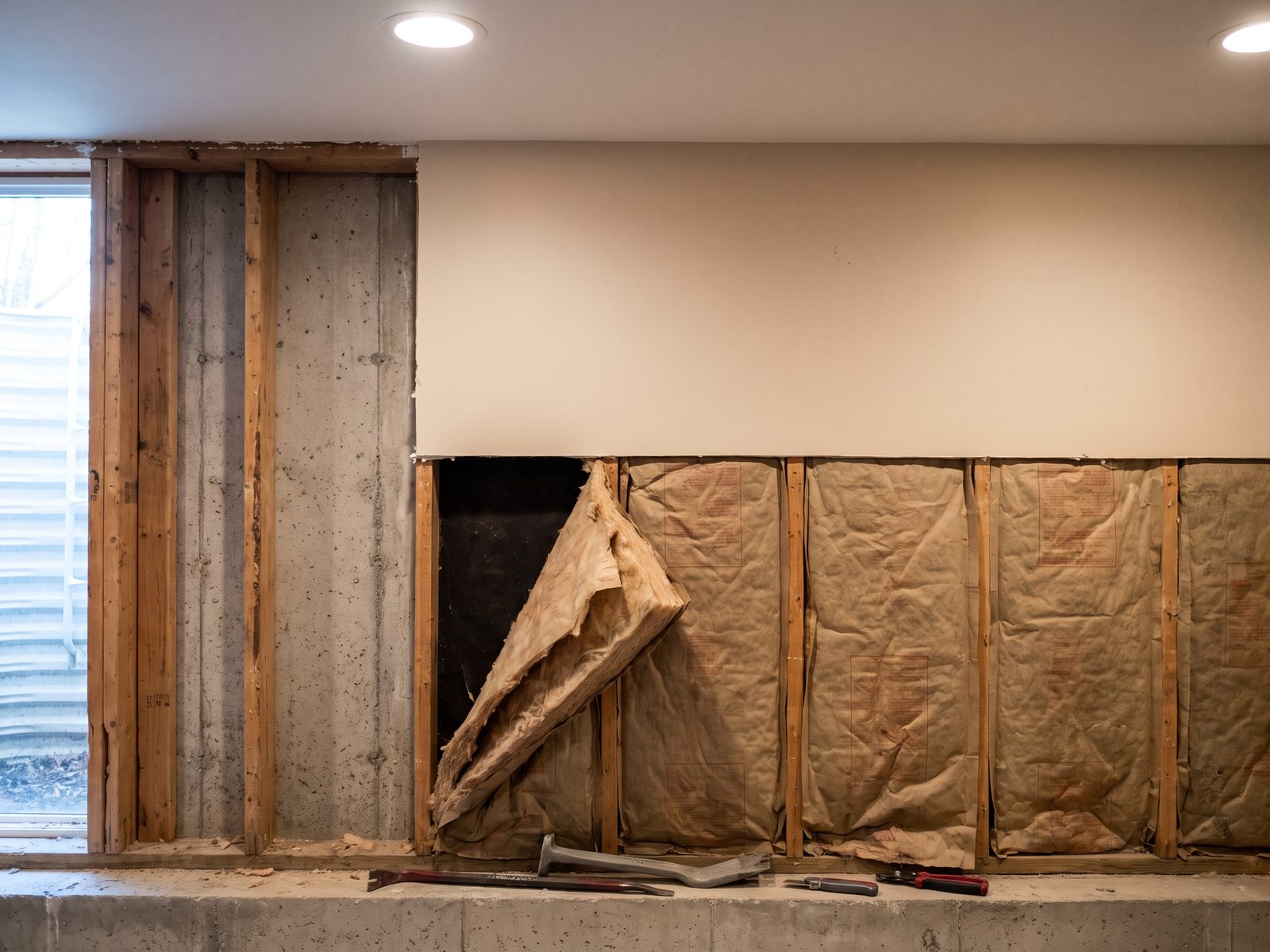
A flood cut is a horizontal cut through drywall above the wet line, so the wet lower section and the insulation behind it come out and the cavity is left open to dry. It exists because that insulation is usually the real problem.
Height follows the damage rather than a rule of thumb. Crews trace the wet line with a moisture meter, then cut above it at a height that makes the repair straightforward. The result often lands near a standard board dimension, but the reading sets the height and convenience only breaks ties.
Two cautions belong with this. Opening a wall is work for a trained crew rather than a homeowner. The reason sharpens in a house built before 1978, where lead-based paint is more likely to be present and disturbing a painted surface creates a dust problem rather than a cleaning problem. Cutting also happens after the source is stopped, never before.
- The source is shut off and standing water extracted before any cutting starts
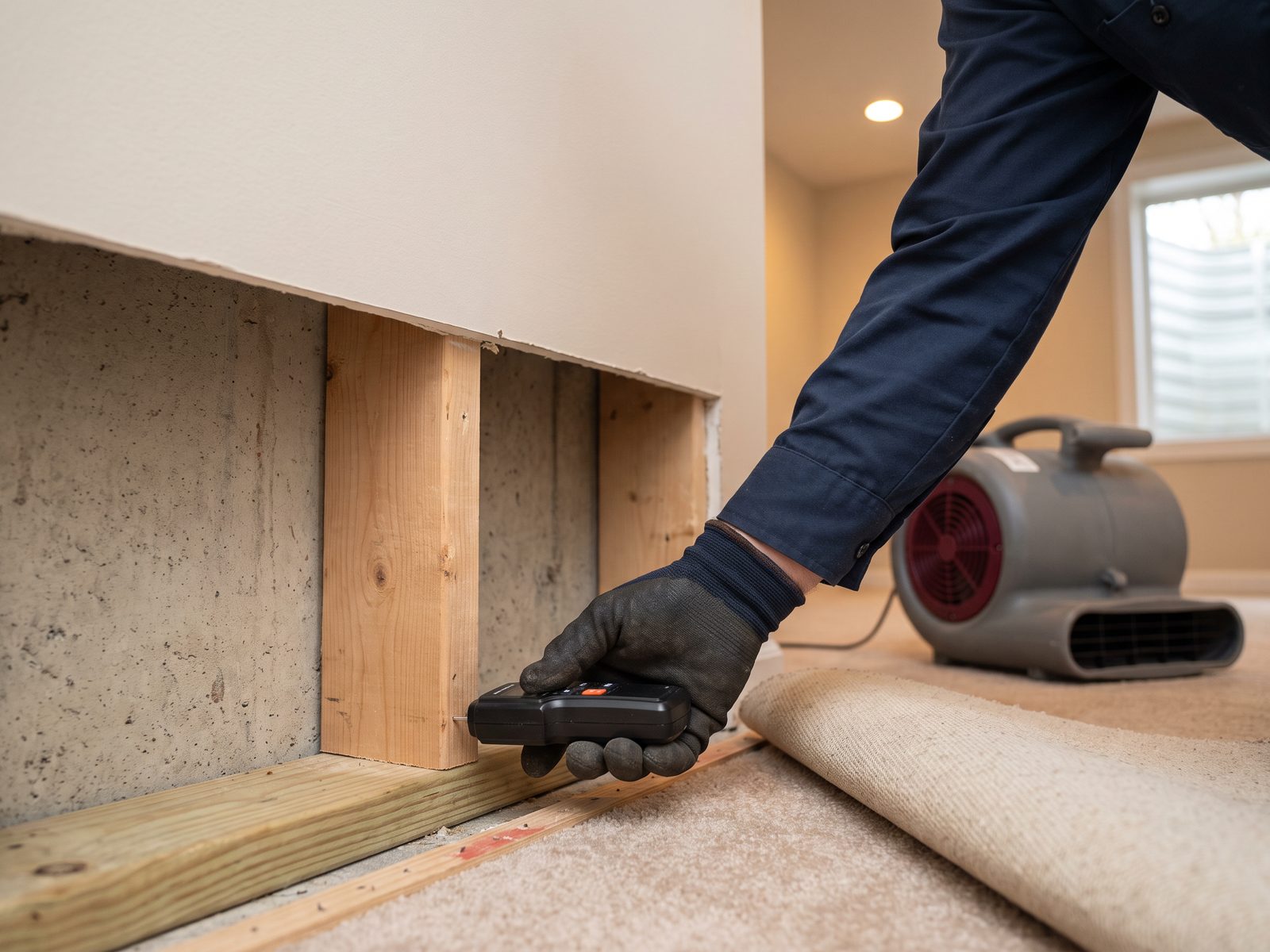
- A crew maps the wet line on each wall with a moisture meter rather than by eye
- The cut is set above the highest reading, high enough to leave a clean patch
- Wet board and all wet insulation come out of the opened cavity together
- The cavity is verified against a dry standard before anything is closed up
- Pre-1978 walls call for a crew trained in lead-safe work practices
How do contents differ from structure in this decision?
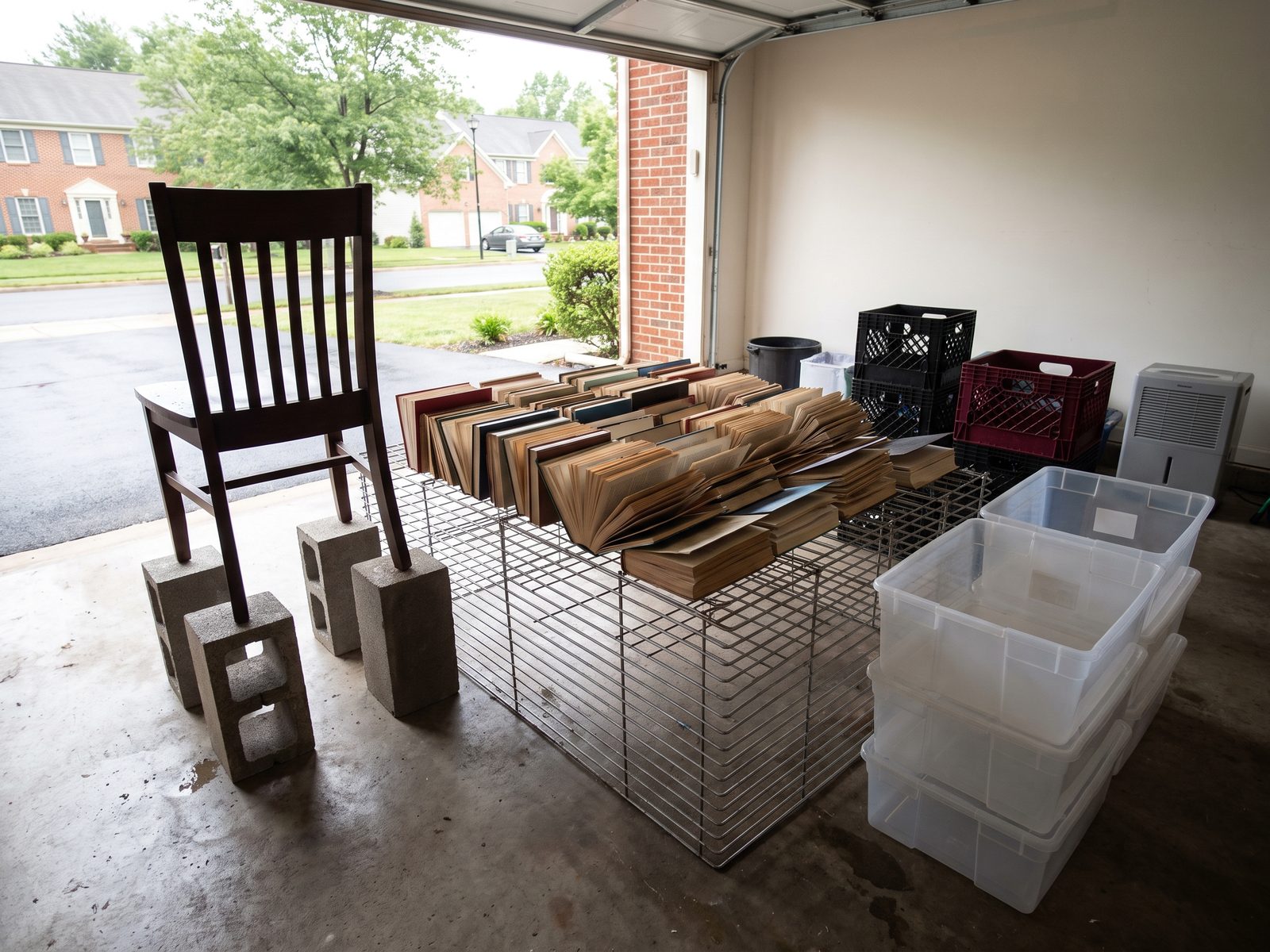
Contents run on different rules because they can be moved. A wet sofa in a wet room has two problems, and moving it out solves one immediately. Pack-out exists for this: items are inventoried, photographed, moved to a controlled space, then dried or cleaned away from the loss.
Sort contents by what they are made of. Hard, non-porous items such as glass, glazed ceramic, sealed metal clean up well even after dirty water. Solid wood furniture and leather often recover with slow drying. Porous soft goods, including mattresses, pillows, upholstered pieces that took Category 3 water, are disposal decisions.
Paper keeps degrading while it is wet, whether a book, a photograph or a box of files, so the standard move is to freeze it and let a document specialist dry it later.
- Move first, decide second: getting items out of the wet room stops absorption
- Raise what cannot be moved onto blocks to break contact with a wet floor
- Photograph everything in place before it is moved, opened or unstacked
- Freeze wet books, photographs or documents rather than air-drying them
Who makes the call, and what should it be recorded against?
The removal decision belongs to the restoration contractor working to the ANSI/IICRC S500 standard, and the adjuster handling the claim reviews it. Neither side should rely on memory. The record makes a scope defensible, and it gets built while the work happens.
That record has a predictable shape. Photographs of each room before anything is touched, moisture readings by material against a dry standard from an unaffected area, a written reason for every removal, then daily readings until each material meets the standard.
When a homeowner asks why a wall came out, the answer should be a reading and a photograph rather than an opinion. If nobody can produce that pairing for a line item, the line item is weak.
- Photographs of every affected room before demolition begins
- Meter readings by material, plus the dry standard they are measured against
- The water category and the reasoning behind that classification
- A stated reason for each removed material, not just a quantity
- Daily monitoring logs through the drying period
What should you refuse to let anyone throw away before it is documented?
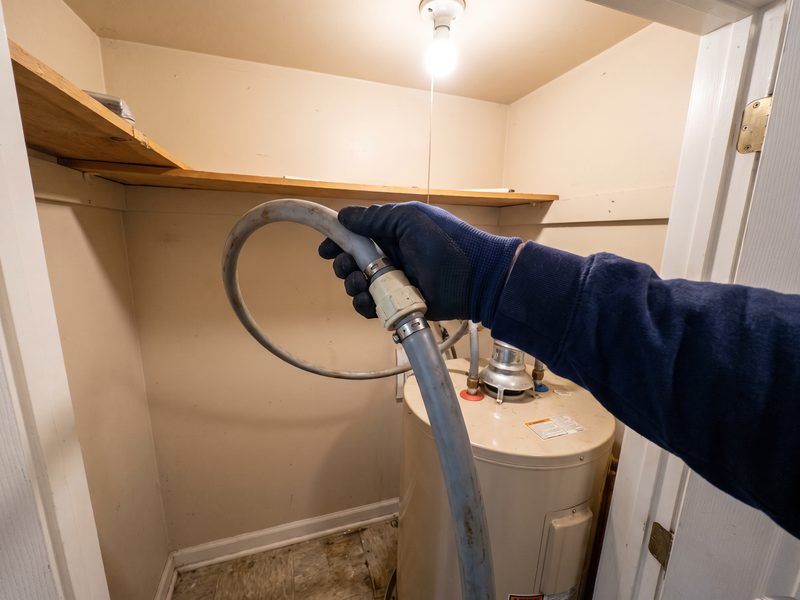
Refuse to let the failed component leave. The burst supply line, the cracked fitting, the failed water heater connector: those are evidence of cause, and cause is usually the first thing a carrier asks about. Bag it, label it, photograph it beside something for scale.
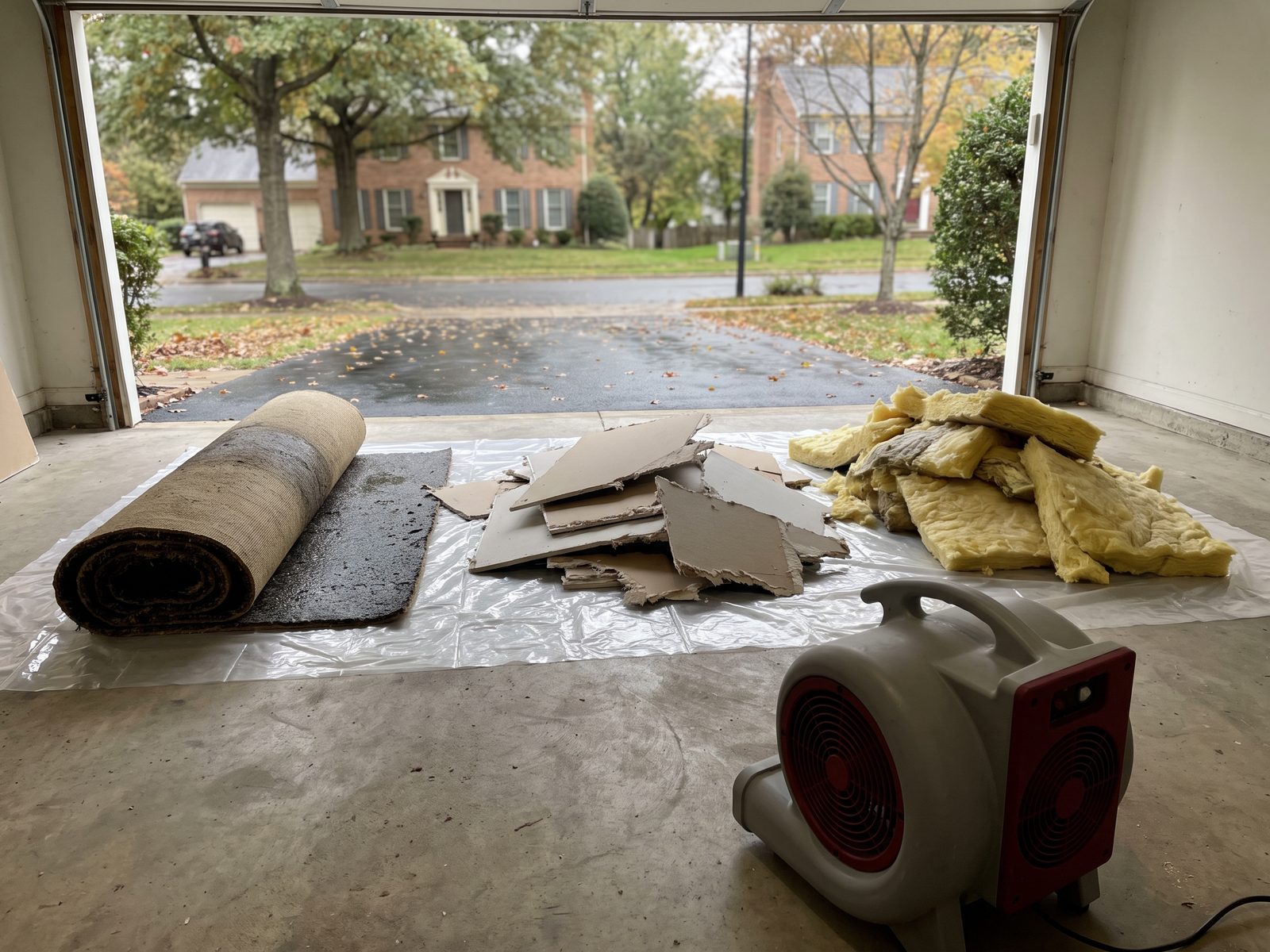
The same goes for removed building material. A pile of wet carpet pad is worth more photographed and counted than as a truckload already gone. Disposal rules for construction debris vary by county and by hauler in Northern Virginia, so confirm locally before anything is loaded out.
Refuse to let contents be discarded on a walk-through opinion. Items that are genuinely unsalvageable still need an inventory entry and a photograph, because that inventory is how they get valued. Throwing them out quietly removes them from the claim as well as from the house.
- The failed part, sealed in a labeled bag, never sent out with the debris
- Photographs of standing water and wet flooring before extraction starts
- A serial number or model plate from any failed appliance or water heater
- Photographs and counts of removed material before it is hauled away
- An inventory with photographs of unsalvageable contents
- Sources and standards referenced in this guide:
- ANSI/IICRC S500, the water damage restoration standard: https://iicrc.org/s500/
- EPA guidance on mold cleanup in the home: https://www.epa.gov/mold/mold-cleanup-your-home
- EPA guidance on lead in pre-1978 homes: https://www.epa.gov/lead/reduce-risk-lead-exposure-home