Basement Flooding During a Storm: What To Do (Safety-First Steps)

BYSteve Jafari, General ManagerNORTHERN VIRGINIA, MARYLAND & D.C.

If your basement is flooding during a storm, do not step into standing water until the electricity to that level is shut off at the breaker — water in contact with energized outlets or appliances can be lethal, and you cannot tell by looking. Once the power is off and you are safe, photograph and video everything before you touch it, stop the water source if you safely can, and call a 24/7 restoration team. Mold can begin growing within 24 to 48 hours in a warm, humid basement, so fast extraction matters. Restoration Doctor responds around the clock across the Virginia, Maryland, and Washington, D.C. area, bills you directly, and hands you a carrier-ready claim file — we work for you, not your insurance company. Reach the emergency line at 1-888-293-5663.
Call 1-888-29-FLOODBasement Flooding During a Storm: What Should You Do First?
The single most important thing to do when your basement is flooding during a storm is to stop and cut the power before you step into the water. Standing water that touches an energized outlet, a submerged extension cord, a running sump pump, or a plugged-in appliance can turn the entire floor into an electrocution hazard — OSHA says never to enter flooded areas or touch electrical equipment — and you cannot tell by looking whether the water is live.
Here is the sequence: assess from the top of the stairs, kill the electricity to the basement at the main panel (or call your utility if the panel itself is wet or sits in the flooded area), and only then consider entering. Everything else — bailing, moving boxes, running a wet/dry vacuum — comes after you have removed the electrical risk and confirmed there is no gas smell and no obvious sewage contamination.
Summer storms in the Virginia, Maryland, and Washington, D.C. area produce fast, heavy downpours that can overwhelm sump pumps and storm drains within minutes, so a basement can go from damp to several inches deep before the storm even peaks. The good news is that a calm, ordered response protects both your safety and your insurance claim, and professional help is available 24/7 at 1-888-293-5663.
One more early decision: resist the urge to rescue belongings first. Boxes and furniture can be replaced; the minutes you spend wading through potentially energized water to save them are the most dangerous minutes of the entire event. Secure the electrical hazard, then the documentation, then the belongings — in that order.
- Stop at the top of the stairs and look before you go down.
- Do not enter standing water until power to the basement is off.
- A gas smell or sewage odor means evacuate and call professionals from a safe location.
- Once safe, document with photos and video before moving anything.
- Call a 24/7 restoration team to start extraction and dry-out.
Why Do You Have to Kill the Power Before Stepping in the Water?
You have to kill the power because water conducts electricity, and a flooded basement often contains submerged or splashed outlets, light fixtures, furnaces, water heaters, sump pumps, and appliances that may still be energized. Stepping into charged water can cause serious injury or death, and there is no visual warning — the water looks exactly the same whether it is safe or lethal.
Shut off electricity at the main breaker panel only if you can reach it without standing in or reaching across water. If the panel is in the flooded basement itself, or if you would have to touch anything wet to get there, do not attempt it — call your utility company or a licensed electrician to cut power at the meter. When in doubt, stay out and make the call from a dry location.
Only after the power is confirmed off should you unplug and remove electrical items, and even then wear rubber boots and avoid handling any device that has been submerged until it has been inspected; EPA advises rubber gloves and sturdy shoes around flood water. This one step is why 'kill the power before you step in that water' is the first rule of a flooded basement, ahead of everything else.

How Do You Document Basement Flood Damage for an Insurance Claim?
Document the damage with wide photos and slow video before you move, bail, or throw anything away, because your claim is built on what you can prove was wet and how deep the water reached. Shoot from the stairs first to capture the overall scene and the visible water line, then move closer once it is safe to record specific damaged items, the water source, and the standing water depth against a wall or fixture.
Most of our customers end up filing an insurance claim, and the ones with strong early documentation consistently have smoother approvals. Restoration Doctor supports that with CompanyCam photo documentation, an Xactimate scope of work, and daily moisture logs — but your first phone-video walkthrough is irreplaceable evidence that no one can recreate after cleanup begins.
A crucial point on how billing works: we bill you, the homeowner, directly and hand you a carrier-ready claim file. We work for you, not your insurance company. That means the documentation package is built to support your claim and to give your adjuster everything they need in one organized file — photos, scope, and moisture readings that show exactly what was wet, when, and what it took to dry it.
- Wide shots first: capture the whole room and the visible water line.
- Photograph the water source (window well, sump pit, floor drain, pipe).
- Record depth against a wall, baseboard, or furniture leg for scale.
- Capture serial numbers and model plates on damaged appliances (furnace, water heater, washer).
- Save receipts for anything you buy during the emergency, like a pump or fans.
- Do not discard damaged items until they are documented and, ideally, seen by your restoration team.
How Do You Stop the Water and Start Cleanup Safely?
Once the power is off and you have documented the scene, stop the water source if you can do so safely, then begin removing standing water. During a storm, the source is often groundwater intrusion through window wells, wall cracks, or a failed sump pump, so water may keep coming until the storm passes and the water table drops — in that case, focus on extraction and containment rather than a permanent fix.
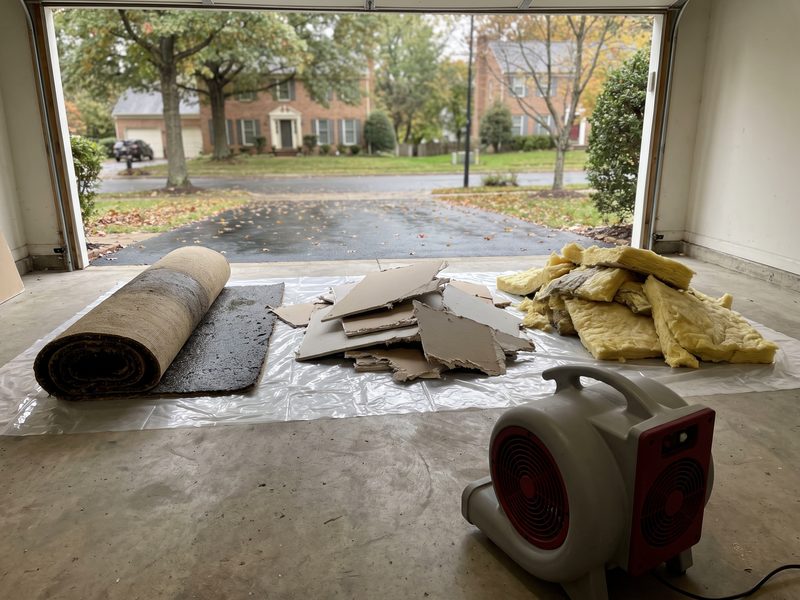
If the flooding is from a burst supply line or a backed-up fixture rather than the storm itself, shut the main water valve to the house. Remove water with a wet/dry vacuum or a pump only after you have confirmed the electrical situation is safe, and get soaked rugs, boxes, and furniture up off the floor and out of the water to limit wicking into drywall and subfloor.
Do not use a household vacuum on standing water, and do not run the HVAC system if the furnace or air handler in the basement has been wet. Avoid direct contact with the water if you suspect it contains sewage — storm flooding that mixes with a backed-up drain is Category 3 water under the ANSI/IICRC S500 standard, and it requires professional handling with proper protective equipment.
- Shut the main water valve if the source is a plumbing failure, not the storm.
- Lift furniture, electronics, and boxes out of standing water.
- Pull up soaked area rugs so they don't wick into subfloor and drywall.
- Open windows for airflow only after the storm passes and outdoor humidity allows.
- Do not run a wet furnace or HVAC unit until it has been inspected.

What Are the Water Damage Categories and Why Do They Matter?
Water damage is classified into three categories under the ANSI/IICRC S500 standard, and the category determines whether materials can be cleaned and dried in place or must be removed as a contamination hazard. Storm flooding frequently falls into Category 2 or Category 3, which is why a flooded basement is rarely a simple mop-up job.
Category 1 is water from a clean, sanitary source, such as a broken supply line. Category 2 — often called gray water — carries significant contamination that can cause discomfort or sickness if contacted or consumed; think appliance discharge or aquarium overflow. Category 3 — black water — is grossly contaminated and can contain pathogens and toxins (OSHA on biohazards in flood water); it includes sewage backups and rising water from rivers, streams, and surface flooding that has contacted the ground. Category 3 losses call for protective equipment and removal of porous materials that absorbed the water.
Keep in mind that categories can degrade over time: clean water that sits, spreads through building materials, and stays warm can deteriorate to Category 2 or 3. That is one more reason speed matters. Understanding the category also affects your claim — carpet pad, drywall, and insulation that soaked up Category 3 water generally cannot be salvaged, and documenting the source and contamination level early helps justify that removal to your adjuster.
| Category | What it is | Common storm example | Typical handling |
|---|---|---|---|
| Category 1 | Water from a clean, sanitary source | Broken supply line during a storm | Extract and dry; most materials salvageable |
| Category 2 | Significantly contaminated (gray water) | Appliance discharge, sump seepage | Clean and disinfect; some porous items removed |
| Category 3 | Grossly contaminated (black water) | Rising ground/storm water, sewage backup | Full PPE and containment; remove absorbed porous materials |
When Should You Call a Professional Restoration Company?
Call a professional restoration company immediately for any storm flooding that involves more than a small, clean spill — especially if there is standing water, contaminated Category 3 water, wet drywall or insulation, or any chance the water touched electrical or HVAC equipment. The faster extraction and drying begin, the less likely you are to face mold growth, which can start within 24 to 48 hours in a warm, humid summer basement; EPA's mold guidance urges drying water-damaged materials within that window.
Restoration Doctor responds 24/7 across the Virginia, Maryland, and Washington, D.C. tri-state area, and our crews work to the ANSI/IICRC S500 standard for water damage restoration and S520 for mold remediation, with full containment and protective protocols when the water is Category 3. Every job is documented from the first walkthrough with CompanyCam photos, an Xactimate scope, and daily moisture logs.
A professional crew also brings equipment a shop vac cannot match — truck-mounted extraction, commercial air movers, and dehumidifiers sized to the space using psychrometric calculations, so the equipment actually keeps pace with the moisture load instead of just moving humid air around. We monitor the structure daily with moisture meters until it reaches a verified drying goal, typically over the course of several days depending on materials and saturation. You can reach our emergency line at 1-888-293-5663 or start online through our emergency water damage page.

How Do You Prevent the Next Basement Flood This Summer?
Prevent the next basement flood by keeping water moving away from your foundation and making sure your sump pump can handle a heavy summer storm. Most storm-season basement floods trace back to overwhelmed drainage, a failed or undersized sump pump, or a lack of backup power during the outages that often accompany severe weather.
Test your sump pump before storm season by pouring water into the pit and confirming it kicks on and drains fully. Add a battery backup or water-powered backup pump so it keeps running if the storm knocks out power — which is exactly when you need it most. Extend downspouts several feet from the foundation, keep gutters clear, and make sure the grade around your home slopes away from the walls.
Inside, consider a backwater valve if you have experienced sewage backups, seal visible foundation cracks, and keep stored items off the floor on shelves or pallets. These steps will not stop every extreme storm, but they dramatically reduce how often — and how deeply — your basement takes on water.
- Test the sump pump and add a battery or water-powered backup.
- Extend downspouts and keep gutters clear.
- Regrade soil so it slopes away from the foundation.
- Seal foundation cracks and consider a backwater valve.
- Store belongings on shelves or pallets, not directly on the floor.