Sewage Backup Cleanup: A Homeowner's Safety Guide

BYSteve Jafari, General ManagerNORTHERN VIRGINIA, MARYLAND & D.C.

Sewage backup cleanup is a Category 3 ("black water") biohazard job under the ANSI/IICRC S500 standard, meaning the water is grossly contaminated with bacteria, viruses, and parasites. Do not walk through it, run your HVAC, or try to save porous items like carpet, drywall, or upholstered furniture — they must be discarded. Evacuate the area, keep kids and pets out, and call trained technicians with proper PPE and containment. Restoration Doctor responds 24/7 across the Virginia, Maryland, and Washington, D.C. tri-state area at 1-888-293-5663.
Call 1-888-29-FLOODWatch a real Alexandria, VA category-3 water damage (sewage/toilet overflow) restoration:
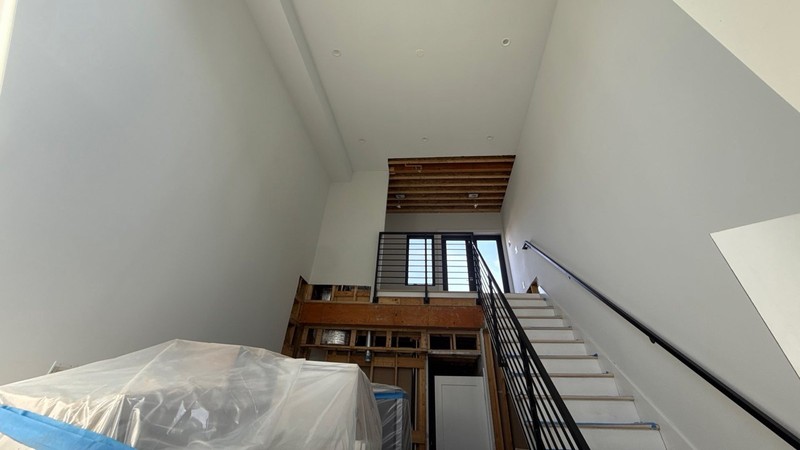
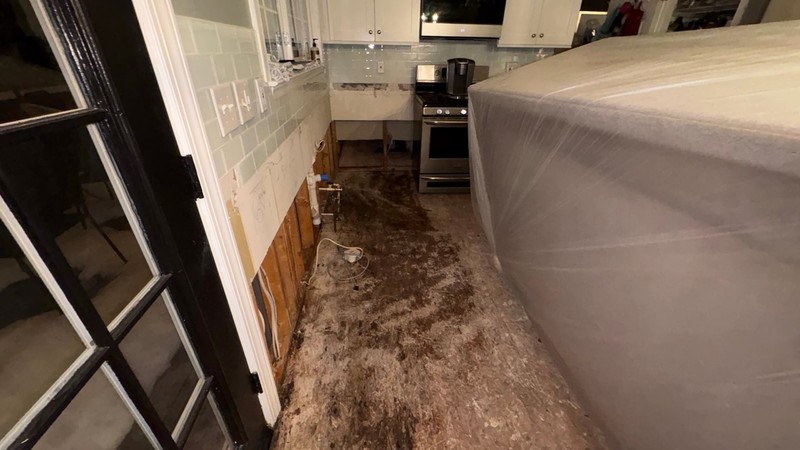
Sewage Backup to Finished-Basement Restoration in Alexandria
ALEXANDRIA, VA · CATEGORY-3 WATER DAMAGE (SEWAGE/TOILET OVERFLOW) · DOCUMENTED ON SITE
What makes a sewage backup a Category 3 biohazard?
A sewage backup is classified as Category 3 water — commonly called "black water" — under the ANSI/IICRC S500 Standard for Professional Water Damage Restoration. It is the most severe category of water intrusion. Category 3 water is grossly contaminated and can contain sewage, harmful bacteria, viruses, fungi, and other toxic or pathogenic agents that pose serious health risks to anyone exposed.
The reason sewage backup cleanup demands biohazard-level care is what is actually in the water. Raw sewage can carry pathogens such as E. coli, Salmonella, hepatitis A virus, rotavirus, and parasites like Giardia and Cryptosporidium. It also contains ammonia and decomposing organic waste, and exposure can cause gastrointestinal illness, skin infections, and respiratory problems.
Unlike a clean supply-line leak (Category 1) or a "gray water" appliance discharge (Category 2), Category 3 water cannot simply be dried out and sanitized in place. Any water that has contacted sewage — and Category 1 or 2 water that has been left standing long enough to degrade into Category 3 — is treated as biohazardous. That distinction drives every decision on the job: what gets cleaned, what gets thrown away, and how the crew protects themselves and the rest of your home.
At Restoration Doctor we handle sewage losses under Category 3 biohazard protocols aligned with IICRC S500, because treating it as ordinary water damage puts your family's health at risk.
- Category 1 (clean water): broken supply line or similar sanitary source, no significant contaminants
- Category 2 (gray water): dishwasher or washing machine discharge — significant contamination that can cause illness if ingested
- Category 3 (black water): sewage backup, toilet overflow originating beyond the trap, rising floodwater — grossly contaminated

What should you NOT do during a sewage backup?
Do not walk through, touch, or attempt to clean up sewage yourself, and do not run your HVAC system, which can spread contaminated aerosols throughout the house. The single most important thing you can do is keep people and pets away from the affected area until trained technicians arrive.
Homeowners often make the situation more dangerous — and more expensive — by trying to mop, shop-vac, or rinse sewage on their own. Ordinary household cleaning does not neutralize the pathogens in black water, and standard vacuums can aerosolize the contamination. Porous belongings that soak up sewage cannot be salvaged by scrubbing, and continuing to use the space tracks bacteria into clean rooms.
Avoiding a few specific mistakes protects your health and prevents cross-contamination that can turn a contained loss into a whole-home cleanup.
- Do not walk through standing sewage or track it into dry areas
- Do not run the furnace, air conditioner, or fans that push air across the contamination
- Do not use a household vacuum or shop-vac on the sewage
- Do not try to save soaked carpet, mattresses, or upholstered furniture
- Do not eat, drink, or let children and pets near the area
- Do not use sinks, showers, or toilets on the affected drain line until the blockage is cleared
- Do not touch electrical outlets or switches in a flooded area — shut off power to that zone at the panel only if you can reach it safely and without standing in water
What should you do immediately when sewage backs up?
Immediately evacuate the affected area, stop using water fixtures on that drain line, and call a professional biohazard restoration team. If you can do so safely and without stepping into the contamination, shut off electricity to the affected zone at the breaker panel and open windows for ventilation.
The faster you contain a sewage event, the less it spreads. Pathogens multiply and odors set in quickly, and every hour the water sits, it wicks further into flooring, wall cavities, and baseboards. Prompt professional response is often the difference between removing a section of drywall and gutting a room.
Speed matters, and so does documentation. Take photos or video of the damage from a safe distance before anything is moved — this supports your insurance claim later. Then call for help. Across our Northern Virginia core, our median on-site arrival is 47 minutes, and we respond 24/7 throughout the Virginia, Maryland, and Washington, D.C. area, because sewage cannot wait until morning.
- Get everyone, including pets, out of the affected space
- Stop using water fixtures feeding the backed-up drain line
- If safe, cut power to the affected area at the breaker
- Photograph the damage from a safe distance for your claim
- Call Restoration Doctor at 1-888-293-5663 for 24/7 emergency response
- Do not attempt DIY cleanup of the sewage itself

What PPE and containment do professionals use for sewage cleanup?
Professional sewage cleanup requires full personal protective equipment (PPE) and physical containment to protect workers and prevent pathogens from spreading to unaffected areas. Technicians wear fluid-resistant suits, gloves, boot covers, eye protection, and respirators, and they seal off the work zone before cleanup begins.
Containment is what separates a professional biohazard job from a well-meaning DIY disaster. Crews establish a contained work area with plastic sheeting, seal HVAC registers so contaminated air cannot circulate, and set up negative air pressure using HEPA-filtered air scrubbers so airflow moves into the work zone rather than out of it. Contaminated water is extracted with dedicated equipment, and solid waste is bagged and disposed of in accordance with local regulations for contaminated debris.
This layered approach reflects the IICRC S500 requirement to treat Category 3 water as a health hazard rather than a nuisance. The goal is to remove the contamination completely, verify the structure is clean and dry, and hand you back a space that is genuinely safe to occupy again.
| Purpose | Equipment / Method |
|---|---|
| Body protection | Fluid-resistant coveralls, nitrile gloves, boot covers |
| Respiratory protection | Respirators appropriate to the exposure — N95 at minimum, half- or full-face respirators with P100 filters for heavy contamination |
| Eye protection | Sealed goggles or full-face shields |
| Containment | Plastic sheeting barriers and sealed HVAC registers |
| Air control | HEPA air scrubbers and negative-pressure zones |
| Water removal | Dedicated extraction units for contaminated water |
| Waste handling | Sealed bags and disposal per local regulations for contaminated debris |
Which materials have to be discarded after a sewage backup?
Porous materials that have absorbed sewage generally must be discarded because they cannot be reliably decontaminated. This includes carpet and pad, drywall, insulation, upholstered furniture, mattresses, particleboard, and most items that soak up water and hold contamination in their fibers.
Under IICRC S500, the guiding principle for Category 3 water is that porous materials contacted by black water are removed and disposed of rather than cleaned. There is no way to verify that bacteria and viruses have been eliminated from the interior of a soaked mattress or from the paper facing and gypsum core of wet drywall, so those materials go. Non-porous and some semi-porous surfaces — tile, glass, metal, and sealed or solid wood after careful evaluation — can often be cleaned and disinfected because contamination stays at the surface where it can be reached.
Knowing what stays and what goes helps you understand the scope of the job, and it prevents the false economy of keeping a contaminated item that will off-gas odor or harbor microbial growth for years.
| Material | Usually discarded? | Notes |
|---|---|---|
| Carpet and carpet pad | Yes | Fibers trap pathogens; pad acts like a sponge |
| Drywall and insulation | Yes | Wicks water upward; core cannot be sanitized |
| Upholstered furniture and mattresses | Yes | Porous stuffing holds contamination |
| Particleboard / MDF furniture | Yes | Swells and disintegrates; cannot be cleaned |
| Sealed hardwood trim and framing | Sometimes | May be cleaned, disinfected, and dried if structurally sound |
| Tile, glass, metal, solid plastics | No | Non-porous; can be cleaned and disinfected |

How do professionals clean and disinfect after a sewage backup?
Professionals follow a structured process: extract the contaminated water, remove and dispose of unsalvageable porous materials, clean and disinfect all remaining surfaces with EPA-registered antimicrobials, then dry the structure to a verified moisture standard. Only after the space is both clean and dry is it considered restored.
The order matters. Removing bulk contamination and porous debris first reduces the pathogen load so disinfection can actually reach every remaining surface. Technicians then apply appropriate antimicrobial agents to framing, subfloor, and hard surfaces, and use HEPA vacuuming and air scrubbing to capture airborne particles. Deodorization addresses the organic odor sewage leaves behind — a lingering smell usually means contamination remains.
Drying is a science, not a guess. Using psychrometry — measuring temperature, relative humidity, and material moisture content — crews position air movers and dehumidifiers to pull moisture out of the structure and monitor progress with daily readings. A typical structural dry-out runs about 4.5 days, monitored until materials reach documented dry standards, so nothing is closed up while it is still wet enough to grow mold. Our water damage restoration team documents every step with moisture logs and photo records.
Because Category 3 losses so often lead to secondary mold growth if any moisture is left behind, verified drying — and, when needed, mold remediation performed under the ANSI/IICRC S520 mold remediation standard — is part of doing the job right.
- Extract contaminated water with dedicated equipment
- Remove and bag unsalvageable porous materials
- Clean and disinfect remaining surfaces with EPA-registered antimicrobials
- HEPA vacuum and air-scrub to capture airborne contamination
- Deodorize to eliminate organic sewage odor
- Dry to a verified moisture standard, monitored daily
Does insurance cover sewage backup cleanup, and how does billing work?
Sewage backup is often covered by homeowners insurance, but usually only if you carry a specific sewer or water backup endorsement — standard policies frequently exclude it unless that rider is added. Backup endorsements also commonly carry their own coverage caps, so it is worth confirming your policy details with your carrier before you need them.
Most of the customers we serve file an insurance claim, and the way we support that claim is straightforward: Restoration Doctor bills you, the homeowner, directly, and we hand you a carrier-ready claim file to submit. That file includes an Xactimate scope, CompanyCam photo documentation, and daily moisture logs — the exact evidence adjusters expect. We work for you, not your insurance company.
This distinction protects you. Because our documentation is thorough and standards-based, you have a clear, defensible record of the contamination, the materials removed, and the drying results. If you want help understanding the process, our insurance claims resources walk through what to expect and how to keep your claim moving.

How long does sewage backup cleanup and drying take?
Most sewage backup cleanups take several days from start to finish. Initial extraction, removal, and disinfection are often completed in the first day or two, with structural drying typically running about 4.5 days, monitored daily to verified dry standards. The exact timeline depends on how far the sewage spread, how much material must be removed, and how saturated the structure is.
A small, quickly contained toilet backup limited to a bathroom floor may dry faster, while sewage that reached carpeted rooms, wall cavities, and subflooring takes longer because there is more to demolish, disinfect, and dry. Rushing the drying phase is the most common way these jobs go wrong — closing up a wall that still reads high moisture invites mold and odor to return weeks later.
That is why we monitor drying with daily moisture readings rather than assumptions, and we do not consider the job done until moisture levels meet documented dry standards. If you are dealing with an active event right now, our emergency water damage team is available 24/7 across Virginia, Maryland, and Washington, D.C. — call us anytime at 1-888-293-5663.