
How much does it cost to clean up a flooded basement?
Flooded basement cleanup typically runs in the thousands of dollars, and finished space, deep water, or sewage contamination all push the work further. Water depth, contamination category, square footage, and finish level are the four variables that set the price, and the real figure comes after an on-site inspection.
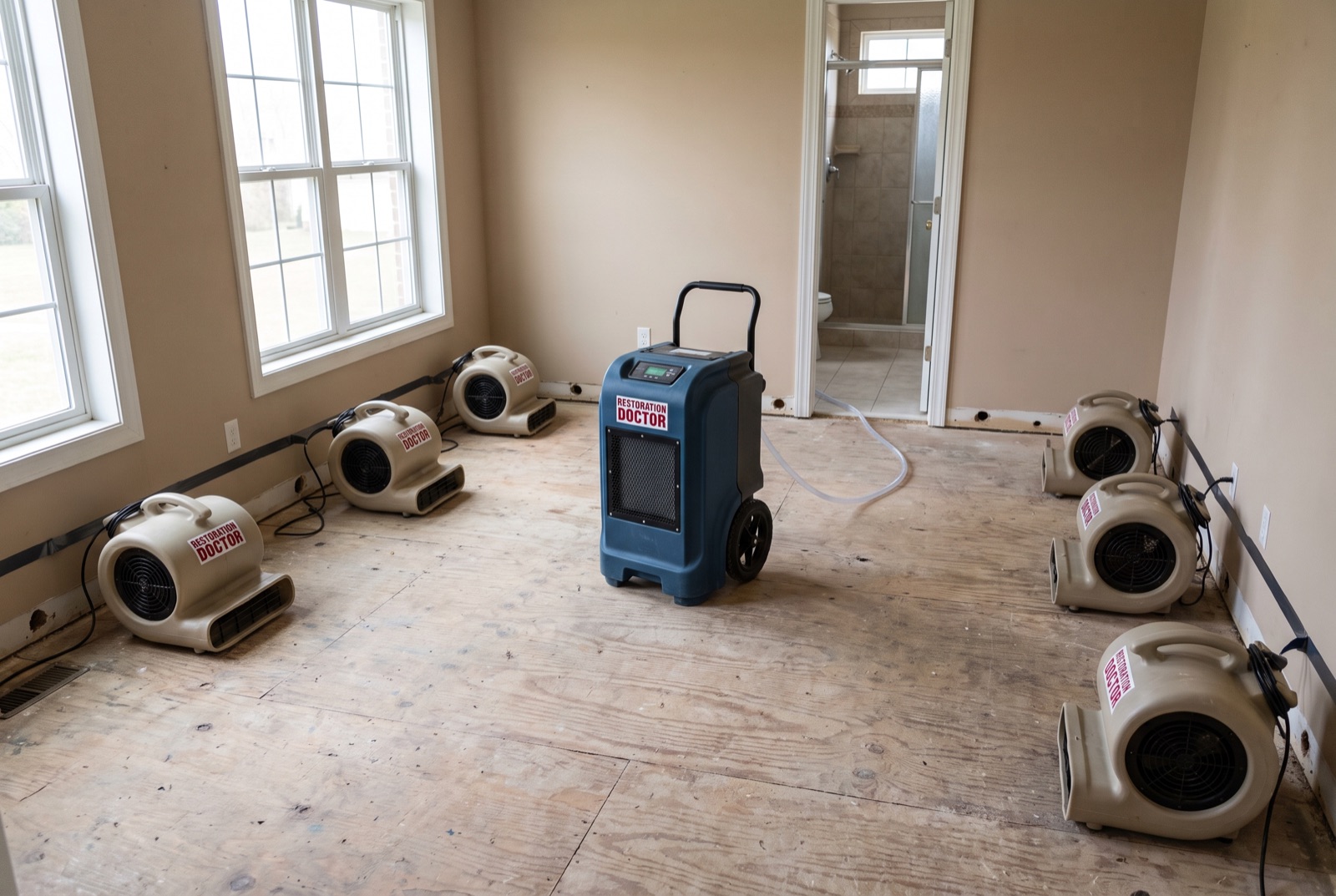
The four variables that price a basement flood
Water depth and volume. An inch of water across a basement floor is an extraction-and-dry project; several feet submerges utilities, stored contents, and wall assemblies, multiplying every subsequent line. Deep water can also mean pump-out time before extraction even begins.
Contamination category. Clean supply-line water (Category 1) is the simplest scenario. Groundwater and storm inflow are handled as contaminated (typically Category 3), and sewage backups categorically are — meaning porous materials the water touched are removed rather than dried, disposal costs rise, and biohazard protocols run through the whole job. Contaminated events carry the heaviest scopes.
Finished versus unfinished. An unfinished basement — bare slab, block walls — is the most forgiving flood environment in a house. A finished basement adds carpet and pad, drywall and insulation, trim, doors, and often furniture and electronics, each a removal, drying, or replacement line. Finish level frequently matters more than water depth.
Dwell time. Water that sat for days risks mold and wicks higher into walls, expanding demolition. Fast response holds the scope down.
What the cleanup actually involves
Safety first: power to the basement is confirmed off before anyone enters standing water. Then pump-out and extraction, removal of soaked contents, and triage — what's salvageable versus what goes. In contaminated events, carpet, pad, and the lower portion of drywall and insulation are typically cut out and disposed of; in clean events more can be dried in place.
Then structural drying: air movers and commercial dehumidifiers, typically running with the run time set by daily moisture readings — concrete in particular holds moisture long after it looks dry and needs meter-verified drying to keep mold from following weeks later. Contaminated losses get antimicrobial treatment throughout. Reconstruction of a finished basement — new drywall, flooring, trim, paint — is usually a second scope on top of the mitigation.
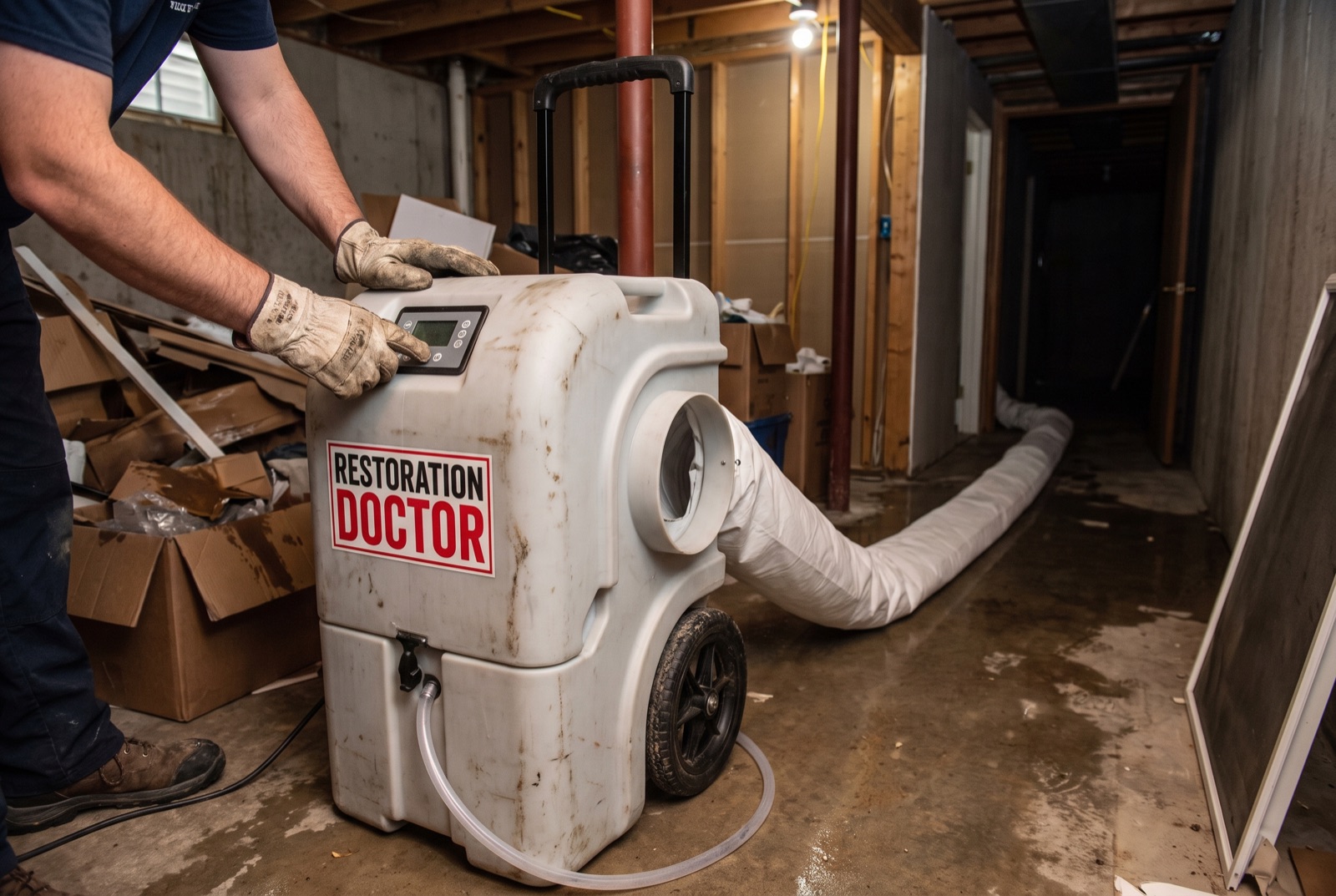
Document how the water got in
Photograph the water's entry path and the affected areas before cleanup, and keep records of what is removed. Coverage depends on your policy and your insurer's decision. Questions about coverage belong with your insurer, your agent, or a licensed public adjuster or attorney.
Getting the water out — fast and documented
The physical clock is the same regardless: dry within 24-48 hours to prevent mold growth, and rising wick damage in walls by the day. Restoration Doctor provides 24/7 basement flood response across Northern Virginia, Maryland, and D.C. — pump-out, truck-mounted extraction, contamination-appropriate demolition, verified structural drying, and itemized documentation of the entry path and every line of work. Call 1-888-29-FLOOD before the water climbs any higher.
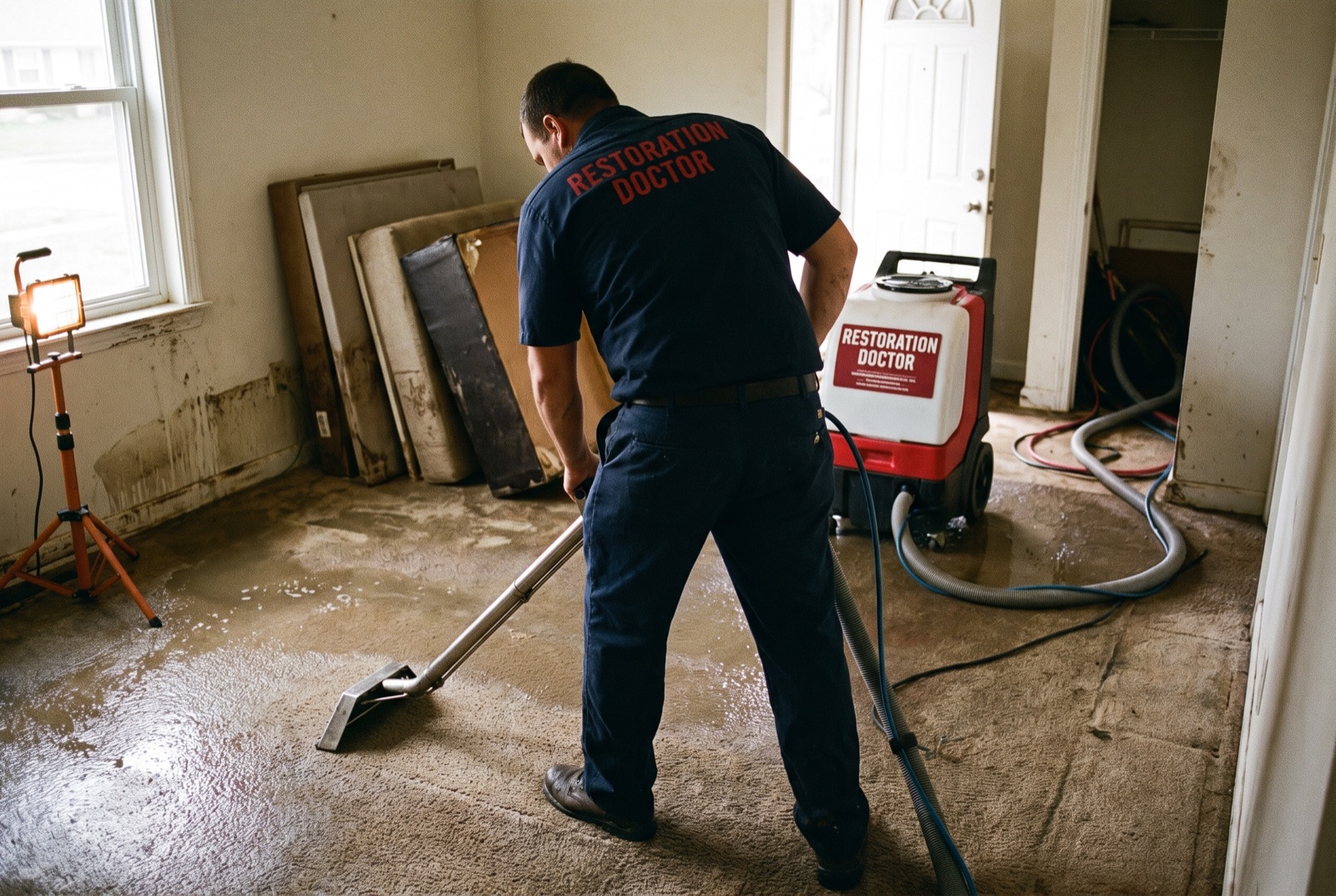
Water Damage Restoration
Extraction, structural drying, and moisture verification for burst pipes, appliance leaks, and basement flooding.
Frequently asked
Related questions
What should you do when your basement floods?
Basement Flooding and Your Homeowners Policy: Questions to Ask Your Insurer
How long does it take to dry out a flooded basement?
How much does sewage cleanup cost?
Active water, mold, fire, or sewage event?
Connect directly with the Restoration Doctor team for your region. Crews are on standby 24/7 with documented response protocols.