
Is professional water damage restoration worth it?
Yes — for anything beyond a small clean-water spill you wiped up immediately. Professional restoration prevents the three failure modes of DIY dry-outs: hidden moisture left in walls and subfloors, mold risk from materials left wet past 24 to 48 hours, and undocumented losses that weaken insurance claims. The cost of doing it right is consistently lower than the cost of doing it twice.
The honest DIY threshold
Not every water event needs a restoration crew. A knocked-over bucket, a small clean-water spill on tile caught immediately, a dishwasher overflow that never left the kitchen's hard flooring — wipe it up, run a fan, move on. The threshold is reached when water has gone somewhere you can't see or reach: into drywall, under any flooring, into carpet pad, along baseboards, into a wall cavity or ceiling, or when it sat for hours before discovery. Contaminated water — anything from a drain, toilet, or outside — crosses the threshold instantly regardless of volume.
The reason the threshold sits that low is that the visible water is the easy part. What determines the outcome is the water you can't see, and household equipment can neither find it nor remove it.
What the professionals actually change
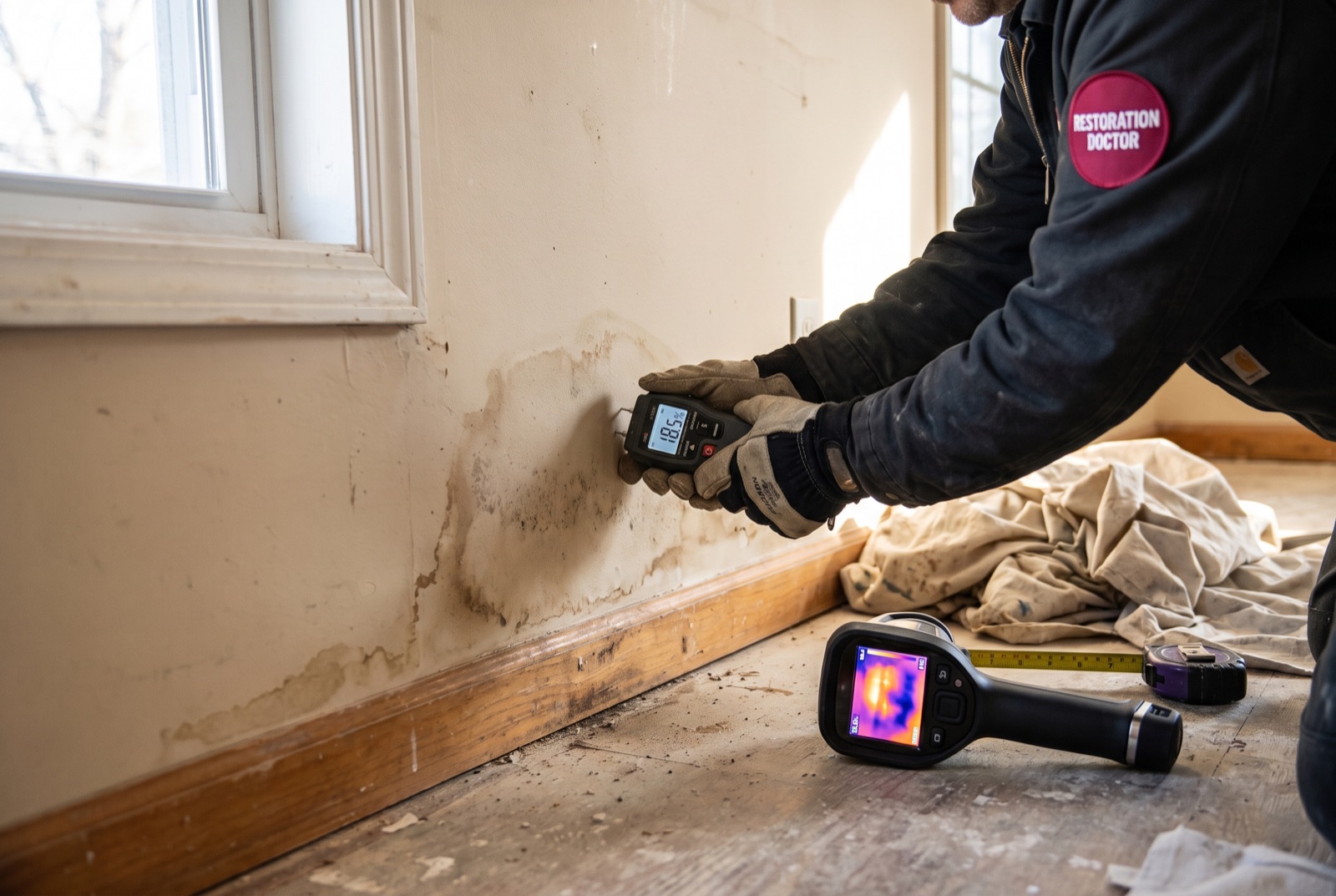
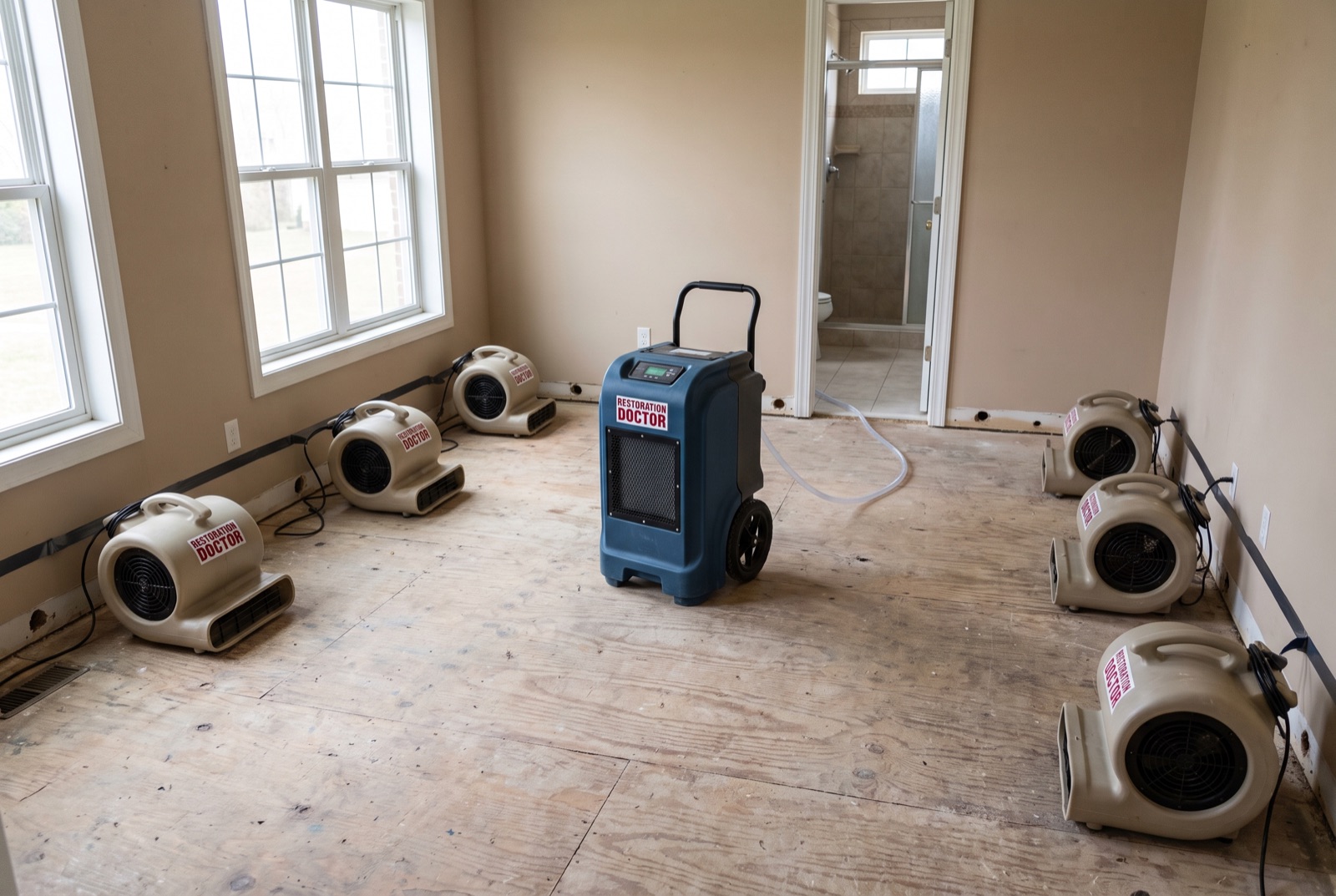
Three capabilities justify the invoice. Detection: moisture meters and thermal imaging map exactly where water traveled — routinely two or three times the visible footprint — so nothing wet gets sealed behind a "finished" cleanup. Removal: truck-mounted extraction takes out in an hour what evaporation would take weeks to remove, and commercial low-grain dehumidifiers with directed airflow dry wall cavities and subfloors that fans cannot touch. Verification: daily meter readings against material dry standards prove the structure is actually dry rather than dry-looking, which is the difference between finished and postponed.
The failure mode of DIY is always the same: the surfaces dry, the fans go back in the garage, and the moisture left in the assembly feeds mold and rot for weeks. The discovery — a musty smell, a soft floor, a stain that returns — arrives after the cheap window has closed.
The math, in ranges
Professional mitigation for a typical residential loss commonly runs from several hundred dollars for small, fast-caught events to several thousand for multi-room losses — a national average around a few thousand dollars. The comparison isn't against zero; it's against the deferred cost of an incomplete dry-out: mold remediation commonly runs $1,500 to $6,000 and up, subfloor and flooring replacement adds thousands more, and a wall system that stayed wet can turn a $3,000 mitigation into a $15,000 to $20,000 remediation-and-rebuild. Delay and incompleteness are the two most expensive line items in water damage, and DIY buys both.
For insured losses, the calculus tilts further: professional documentation — cause-of-loss photos, moisture maps, drying logs, itemized scopes — is what makes a claim verifiable, and mitigation is a policy duty in any case. An undocumented DIY dry-out that later surfaces mold leaves you arguing about a months-old loss with no file.
Making "worth it" true: hire well
The value case assumes competent work — measured drying, honest save-versus-replace calls, real documentation. That's a hiring problem, and it's solvable: IICRC-certified technicians, true 24/7 response, daily drying logs, itemized Xactimate estimates, and a verifiable local track record are the filter.
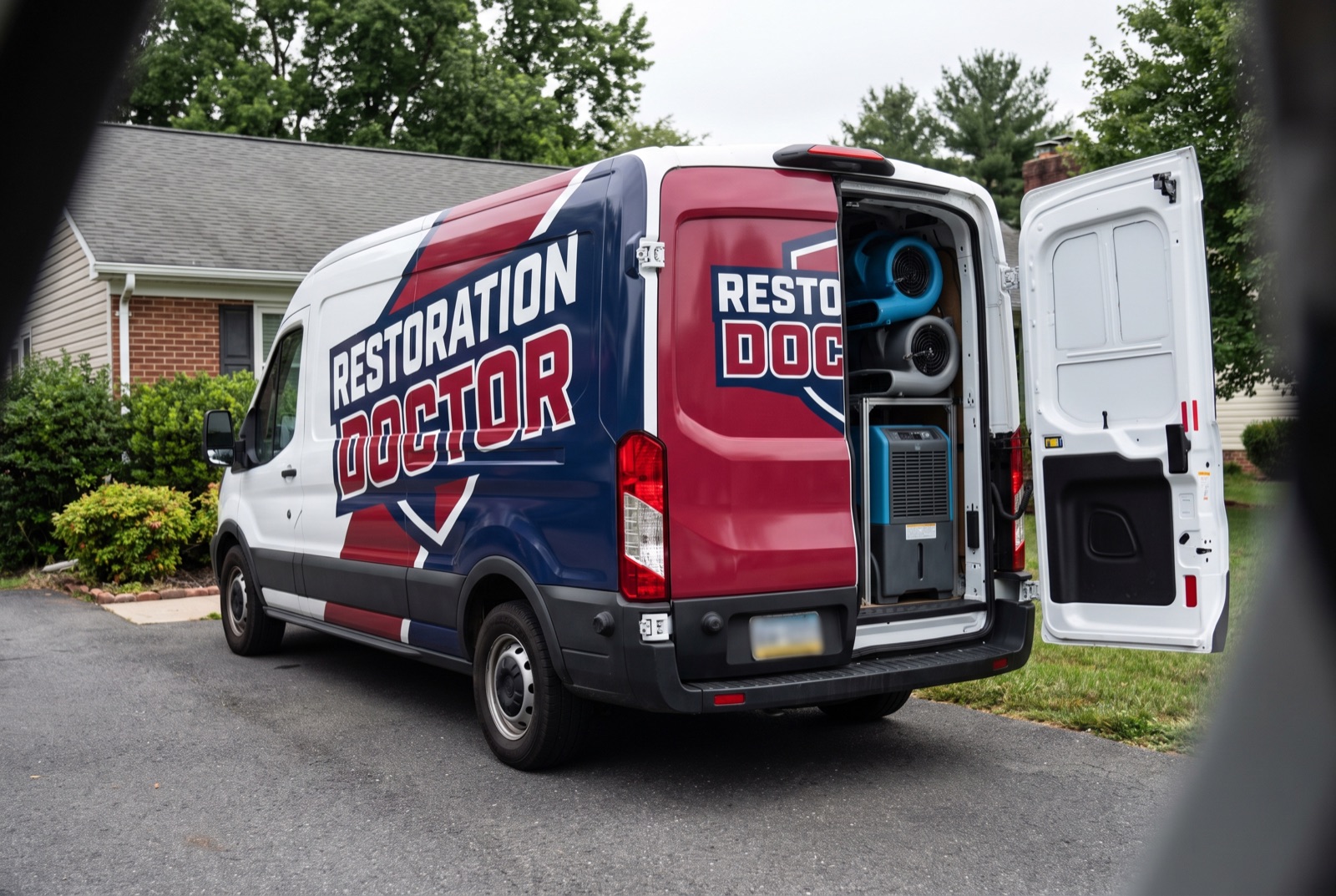
Restoration Doctor is built to make the professional option unambiguous: certified in-house crews across Northern Virginia, Maryland, and D.C., moisture-mapped and meter-verified drying on every loss, and a CompanyCam photo trail from arrival to completion that your insurance carrier can verify line by line. If you're weighing fans-from-the-garage against a phone call, call 1-888-29-FLOOD — an honest assessment of whether you actually need us costs you nothing.
Water Damage Restoration
Extraction, structural drying, and moisture verification for burst pipes, appliance leaks, and basement flooding.
Frequently asked
Related questions
Can I dry out water damage myself?
How much does water damage restoration cost?
Why is water damage restoration so expensive?
How do I choose a water damage restoration company?
Active water, mold, fire, or sewage event?
Connect directly with the Restoration Doctor team for your region. Crews are on standby 24/7 with documented response protocols.