How Fast Does Mold Grow After Water Damage?

BYSteve Jafari, General ManagerNORTHERN VIRGINIA, MARYLAND & D.C.

Wet materials dried within 24 to 48 hours generally never grow mold; materials left wet past that window are at risk, and visible colonies can appear in as little as 3 to 5 days when conditions are warm, humid, and undisturbed. The single most effective way to prevent mold after water damage is fast, professional structural drying to verified dry standards — which is why Restoration Doctor targets a median 47-minute arrival across Northern Virginia and serves the full Virginia, Maryland, and Washington, D.C. tri-state area 24/7.
Call 1-888-29-FLOODHow fast does mold grow after water damage?
Materials that stay wet past 24 to 48 hours are at risk for mold growth — dried inside that window, they generally never grow it at all. Under the right conditions — warm temperatures, high humidity, and an organic food source like drywall paper, wood, or carpet backing — dormant mold spores that are already present in virtually every indoor environment can germinate and colonize surfaces that stay wet.
This 24-to-48-hour window is the drying window EPA identifies for preventing mold growth, and it's why the ANSI/IICRC S500 Standard for Professional Water Damage Restoration emphasizes rapid extraction and drying. The clock starts the moment materials get wet, not when you notice a problem. A leak that soaks a wall cavity overnight may already have burned most of that window by the time you wake up.
Visible mold — the fuzzy or discolored patches most homeowners recognize — usually takes a little longer, often appearing within 3 to 5 days if wet materials are left undisturbed. But the absence of visible mold does not mean you're safe. Where growth does take hold, it begins microscopically, long before you can see or smell it. That's the core reason speed matters so much after any water intrusion, and why calling a professional restoration team quickly is the best defense against a mold problem ever developing.

What conditions make mold grow faster after a leak or flood?
Mold grows fastest when three ingredients come together: moisture, an organic food source, and warm, stagnant air. Remove or reduce any one of these and you slow the process dramatically — which is exactly what professional drying is designed to do.
Temperature and humidity are the biggest accelerators. Most household molds thrive between roughly 70°F and 90°F — the same comfortable range we keep our homes in year-round. When relative humidity climbs above about 60 percent, which is common after a flood or in a poorly ventilated basement, spores germinate quickly. Add darkness and poor airflow, like the inside of a wall cavity or the space under flooring, and growth accelerates further because those spaces trap moisture and stay warm.
The type of water matters too. Clean water from a supply line (Category 1) is the least contaminated, but if it sits — soaking into materials and picking up contamination — it can deteriorate into Category 2 or Category 3 water and support faster microbial growth. Category 3 water, from sewage, rising floodwater, or long-standing contamination, carries its own biohazard concerns and demands specialized handling under IICRC protocols.
- Temperature: 70°F-90°F is ideal for most indoor molds
- Humidity: relative humidity above ~60% dramatically speeds germination
- Food source: drywall paper, wood, insulation, carpet, ceiling tile, and dust
- Stagnant air: enclosed wall cavities, subfloors, and crawl spaces trap moisture
- Time: every hour past the initial wetting increases the risk of colonization
- Water category: standing or contaminated water accelerates microbial activity
What does the 24-48 hour mold timeline actually look like?
The mold timeline after water damage progresses in fairly predictable stages when wet materials are left untreated. Understanding this progression explains why the first day or two is so critical.
In the first 24 hours, water wicks deep into porous materials — drywall pulls moisture upward, subfloors absorb it, and insulation holds it against framing. Dormant spores begin absorbing moisture and preparing to germinate. Materials still wet between 24 and 48 hours are the ones at risk, and germination can begin in earnest on the most vulnerable of them. By day three to five, colonies can become visible and start releasing new spores, and a musty odor often appears. After a week or more, mold can spread deep into structural materials and through HVAC systems, requiring far more invasive remediation. For a deeper day-by-day breakdown, see our full mold-after-water-damage timeline at /blog/mold-after-water-damage-24-48-hour-timeline.
| Time since water intrusion | What is happening | Restoration priority |
|---|---|---|
| 0-24 hours | Water saturates porous materials; spores absorb moisture | Emergency extraction and drying — highest impact window |
| 24-48 hours | Materials still wet are at risk; germination can begin on drywall, wood, carpet, insulation | Aggressive drying can still prevent colonization |
| 3-5 days | Visible mold and musty odor may appear; spores spread | Containment and remediation likely needed |
| 1+ week | Mold penetrates structure and may enter HVAC | Full remediation, material removal, and post-remediation verification |

Why does fast professional drying prevent a mold claim?
Fast professional drying prevents mold because it removes the one ingredient mold cannot grow without — moisture — before spores can germinate and colonize. If wet materials are dried to verified dry standards within the first 24 to 48 hours, you can often stop mold before it ever starts, which keeps a straightforward water event from escalating into a costly mold problem.
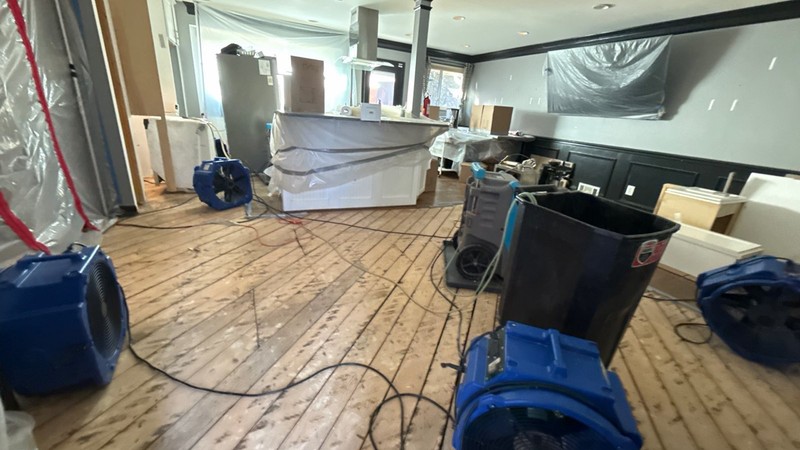
Professionals do this with far more than fans and towels. Under the ANSI/IICRC S500 standard, a proper dry-out uses commercial-grade extraction, refrigerant or desiccant dehumidification, and air movers positioned using psychrometric readings — temperature, relative humidity, and grains per pound — to control the drying environment. Moisture is tracked with meters and readings are logged daily until materials reach a documented drying goal, not just until they feel dry to the touch.
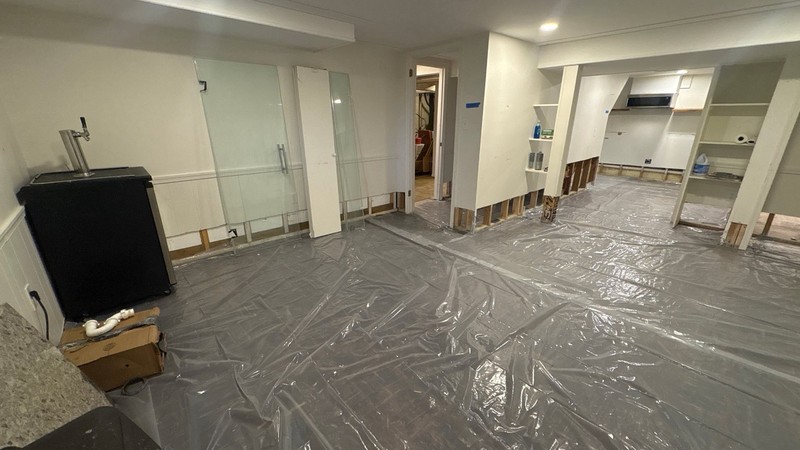
At Restoration Doctor, a typical structural dry-out runs about 4.5 days, monitored daily to verified dry standards. That documentation matters for more than peace of mind: it becomes part of the carrier-ready claim file we hand you, showing that materials were dried promptly and correctly. And when mold never develops, there's simply no mold claim to file — which is the goal. Learn more about our rapid response process at /emergency-water-damage.
What happens if water damage isn't dried within 48 hours?
If water damage isn't dried within 48 hours, the risk shifts from a simple water event to a probable mold remediation project. Once colonies establish, you can no longer just dry the materials — contaminated porous materials often have to be removed under containment and disposed of, and the air itself may need HEPA filtration.
This is where costs and disruption climb sharply. Drying a wet wall is relatively fast and non-invasive. Remediating a moldy wall, by contrast, may require containment barriers, negative air pressure, removal of drywall and insulation, cleaning of framing, and post-remediation verification. It's more expensive, takes longer, and displaces more of your daily life.
There's also a health dimension. Mold exposure can trigger allergic reactions, asthma flare-ups, and respiratory irritation, particularly for children, older adults, and anyone with a compromised immune system. That's why the ANSI/IICRC S520 Standard for Professional Mold Remediation emphasizes containment, source removal, and worker protection — and why waiting rarely saves money. If you're already past the window, our team at /services/mold-remediation can assess the situation and contain it properly.

Where does mold grow first after water damage in a home?
Mold grows first in the wet, dark, poorly ventilated areas where moisture lingers longest — typically inside wall cavities, under flooring, behind baseboards, and in basements and crawl spaces. These hidden spaces trap humidity and stay warm, creating ideal conditions well before any visible sign appears on the surface.
The materials themselves also dictate where mold shows up first. Paper-faced drywall, wood framing, carpet padding, ceiling tiles, and cellulose insulation are all rich organic food sources that hold moisture readily. Hard, non-porous surfaces like glass, metal, and sealed tile resist mold much longer because spores can't feed on them directly, though mold can still grow in the dust and organic residue sitting on top.
Because so much early growth is hidden, professionals rely on moisture meters and, where appropriate, thermal imaging to find wet materials behind walls and under floors that look dry from the outside. Finding that hidden moisture is often the difference between drying a problem out and discovering a full-blown colony weeks later.
- Inside wall cavities behind wet drywall
- Under carpet and in carpet padding
- Behind baseboards and trim
- Basements, crawl spaces, and subfloors
- Around HVAC components and ductwork
- Under sinks, appliances, and slow plumbing leaks
How do I know if mold has already started growing?
The clearest early signs that mold has started growing are a persistent musty or earthy odor and visible discoloration — often black, green, gray, or white patches — on walls, ceilings, or flooring. A musty smell frequently shows up before you can see anything, because much of the early growth happens inside materials and cavities you can't see.
Other clues include worsening allergy or respiratory symptoms that improve when you leave the house, warping or bubbling paint and drywall, and areas that stay damp or cool to the touch. If you had a water event within the past few days and any of these signs appear, treat it as active microbial growth until proven otherwise.
Because visible mold is only part of the picture, a professional inspection uses moisture mapping and, when warranted, sampling to determine the extent of growth. If you suspect mold has begun, avoid disturbing it — cutting or scrubbing a colony can release spores throughout your home. Instead, isolate the area and contact a qualified team. You can reach Restoration Doctor 24/7 at 1-888-293-5663 or through our /contact page.

How quickly can Restoration Doctor respond to prevent mold?
Restoration Doctor targets a median on-site arrival of 47 minutes, with an on-site-within-60-minutes response goal across the Northern Virginia core. That speed is deliberate: it puts our crews in your home well inside the 24-to-48-hour window EPA identifies for drying water-damaged materials, when fast extraction and drying have the greatest chance of preventing mold entirely.
We operate 24/7 for emergencies because water damage doesn't wait for business hours — and neither does mold. Once on-site, we extract standing water, set commercial drying equipment based on psychrometric measurements, and monitor moisture daily until materials reach verified dry standards: the S500-aligned process that stops microbial growth before it starts. We've completed over 10,000 restoration projects across the Virginia, Maryland, and Washington, D.C. tri-state area, working from our headquarters at 8609 Westwood Center Dr, Ste 110-1062, Vienna, VA 22182.
We also make the insurance side simpler. We bill you, the homeowner, directly — never your carrier — and we hand you a carrier-ready claim file including an Xactimate scope, CompanyCam photo documentation, and daily moisture logs, so you can file confidently. We work for you, not your insurance company. Explore how we support claims at /insurance-claims, or learn about our full process at /services/water-damage-restoration.