Can Mold Make You Sick? A Symptom-to-Source Guide for Homeowners

BYSteve Jafari, General ManagerNORTHERN VIRGINIA, MARYLAND & D.C.
Yes, mold can make you sick. Indoor mold exposure commonly triggers allergy symptoms (sneezing, congestion, itchy eyes), worsens asthma and breathing problems, and in people with weakened immune systems can cause serious lung or sinus infections. Mold can begin growing on wet materials within 24 to 48 hours, which is why fast drying after any leak matters so much. If your symptoms improve when you leave home and return when you're back indoors, household mold is a likely culprit worth investigating and removing.
Call 1-888-29-FLOODCan mold actually make you sick?
Yes, mold can make you sick. Breathing in or touching mold spores, along with the fragments and microbial volatile organic compounds they release, can trigger allergic reactions, inflame your airways, aggravate asthma, and, in people with compromised immune systems, cause genuine infections. The severity depends on the type of mold, how much you're exposed to, how long the exposure lasts, and your individual sensitivity.
Most people who get sick from mold experience allergy-type and respiratory symptoms rather than dramatic illness. But that doesn't mean the exposure is harmless. Chronic, low-level exposure in a damp home can keep you feeling run-down, congested, and short of breath for months while the underlying moisture problem quietly grows worse behind the walls.
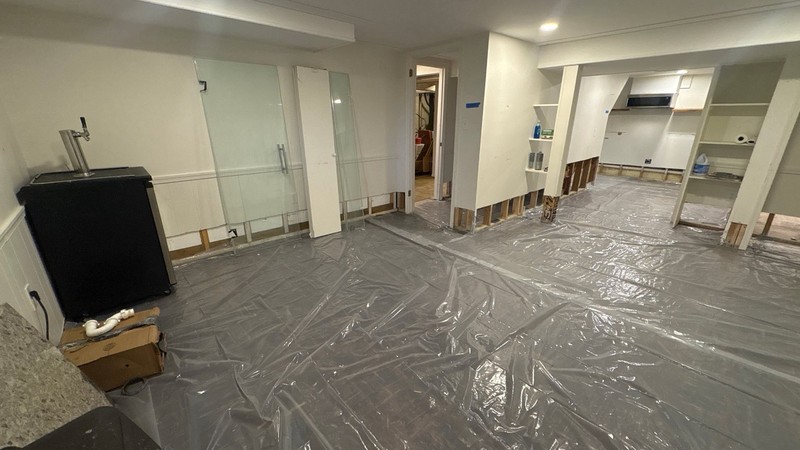
The key insight for homeowners is that mold is a symptom of water. Mold needs moisture to grow, so sickness from household mold almost always traces back to a leak, flood, humidity problem, or past water damage that was never fully dried. Addressing the health symptoms means finding and fixing that water source, which is exactly the work our technicians perform under the ANSI/IICRC S500 water damage restoration standard and the ANSI/IICRC S520 mold remediation standard.
What are the most common symptoms of mold exposure?
The most common symptoms of mold exposure are allergy and respiratory complaints: sneezing, nasal congestion, a runny nose, itchy or watery eyes, throat irritation, coughing, and wheezing. Many people also report headaches, fatigue, and skin irritation when they spend time in a mold-affected space.
These symptoms are easy to mistake for a lingering cold, seasonal allergies, or general tiredness. The telling pattern is timing and location: mold symptoms often flare indoors, worsen in damp rooms like basements and bathrooms, and ease when you leave the house for a day or two. If you feel noticeably better at work or on vacation and worse at home, that's a strong clue.
Dose and duration matter, too. A brief visit to a musty crawl space might cause a few hours of sniffles in a sensitive person, while living above a chronically damp basement can produce symptoms that never fully clear. The longer the exposure continues, the harder it becomes to connect the dots, because the congestion and fatigue start to feel like your normal baseline rather than a reaction to your environment.
- Upper respiratory: sneezing, stuffy or runny nose, postnasal drip
- Eyes and throat: itchy, watery, or red eyes; scratchy or sore throat
- Lower respiratory: cough, wheezing, chest tightness, shortness of breath
- Skin: rashes, hives, or irritation after contact with moldy surfaces
- Whole-body: headaches, fatigue, and difficulty concentrating
- Timing clue: symptoms improve away from home and return indoors
How do I tell the difference between a mold allergy, an asthma flare, and an infection risk?
The difference comes down to which body system is reacting and how severe the reaction gets. A mold allergy is an immune overreaction that stays mostly in your nose, eyes, throat, and skin. An asthma flare means the mold is inflaming and narrowing your lower airways, causing wheezing and real breathing difficulty. An infection risk applies mainly to people with weakened immune systems, where mold can take hold in the lungs or sinuses and require medical treatment.
Think of it as a spectrum of severity. Most healthy people land in the allergy range. People with existing asthma or reactive airways can move into the asthma-flare range quickly when exposure is heavy. Infection is uncommon and typically affects immunocompromised individuals, but it's the most serious outcome and the reason vulnerable people should never clean up significant mold contamination themselves.
Use the map below to connect what you're feeling to the likely category and the right response. When in doubt, especially with breathing symptoms, contact a medical professional first. No restoration company, ours included, can diagnose illness; what we can do is remove the environmental trigger so your doctor's treatment has a chance to work.
| Reaction type | Typical symptoms | Who's most affected | What to do |
|---|---|---|---|
| Allergy | Sneezing, congestion, itchy/watery eyes, skin irritation | People sensitive or allergic to mold | Reduce exposure, find the moisture source, see a doctor if persistent |
| Asthma / airway flare | Wheezing, coughing, chest tightness, shortness of breath | People with asthma or reactive airways | Treat per your asthma action plan; leave the area; seek urgent care if severe |
| Infection risk | Persistent cough, fever, sinus pain, worsening lung symptoms | Immunocompromised people, chemo patients, transplant recipients | Seek medical care promptly; avoid all cleanup; professional remediation only |
Who is most at risk of getting sick from household mold?
The people most at risk of getting sick from household mold are infants and children, older adults, people with asthma or chronic lung disease, those with mold allergies, and anyone with a weakened immune system. For these groups, the same exposure that gives a healthy adult mild congestion can trigger serious breathing problems or, rarely, infection.
Developing lungs make children especially vulnerable, and research has linked early-life exposure to damp, moldy homes with a higher risk of developing asthma. On the other end of the spectrum, immunocompromised individuals, including people undergoing chemotherapy, organ transplant recipients, and those with advanced lung conditions, face a small but real risk of invasive fungal infection and should stay out of contaminated areas entirely.
If someone in a high-risk group lives in your home, treat visible mold or a persistent musty smell as urgent. Keep vulnerable family members out of affected rooms, close the door if possible, and arrange a professional assessment rather than attempting a DIY cleanup that can stir spores into the air and spread them through the HVAC system.
- Infants, toddlers, and young children with developing lungs
- Older adults
- People with asthma, COPD, or other chronic respiratory disease
- People with documented mold or environmental allergies
- Immunocompromised people: chemo, transplant, autoimmune, or HIV patients
How do I know if the mold is in my house and not just seasonal allergies?
The clearest sign that household mold, not pollen, is making you sick is a location-based pattern: your symptoms worsen inside your home and improve when you leave for a day or more. Seasonal allergies track the outdoor pollen calendar and follow you everywhere; indoor mold symptoms cluster around specific damp rooms and don't care what season it is.
Back up that pattern with your senses and your home's history. A persistent musty or earthy odor is one of the strongest indicators of hidden mold, even when you can't see any growth. Visible spots on walls, ceilings, grout, or around windows confirm it. And any past water event, whether a roof leak, a burst pipe, a flooded basement, or a slow plumbing drip, is a prime suspect, because mold can begin colonizing within 24 to 48 hours of materials getting wet.
Indoor humidity is the other piece of the puzzle. Sustained relative humidity above 60% can support mold growth even without a leak, which is why the EPA recommends keeping indoor humidity below 60%, and ideally between 30% and 50%. A basic hygrometer costs little and tells you a lot about whether your basement or bathroom is quietly feeding a mold problem.
Look for these red flags together rather than in isolation. One sign may be coincidence; several pointing the same direction usually means it's time for a professional moisture inspection.
- Symptoms improve away from home, return when you're back indoors
- A musty, earthy smell that won't go away, especially in basements or bathrooms
- Visible spots on drywall, ceilings, caulk, grout, or window frames
- Condensation, peeling paint, warped flooring, or water staining
- A history of leaks, flooding, or sustained indoor humidity above 60%
What should I do first if I think mold is making me sick?
If you think mold is making you sick, do two things in parallel: protect your health and stop the moisture. Limit your time in the affected room, improve ventilation where you safely can, and keep high-risk family members away from the area. Then identify and shut off the water source feeding the mold, whether that's a leaking pipe, a running humidifier, condensation, or a drainage problem outside the foundation.
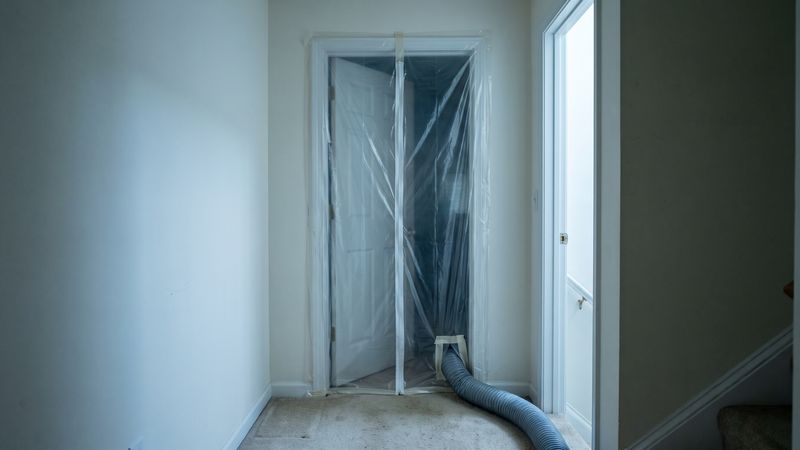
Do not attempt to scrub or demolish large areas of mold yourself. Disturbing contaminated materials releases a burst of spores into the air and can spread the problem to clean parts of the home while making your symptoms worse. Small surface mold on a hard, non-porous surface (roughly under 10 square feet, per EPA guidance) can often be cleaned by a homeowner with proper ventilation and protective equipment. Anything larger, anything recurring, or anything tied to sewage or long-term water damage calls for professional remediation under IICRC S520 containment protocols, including physical barriers and HEPA-filtered negative air.
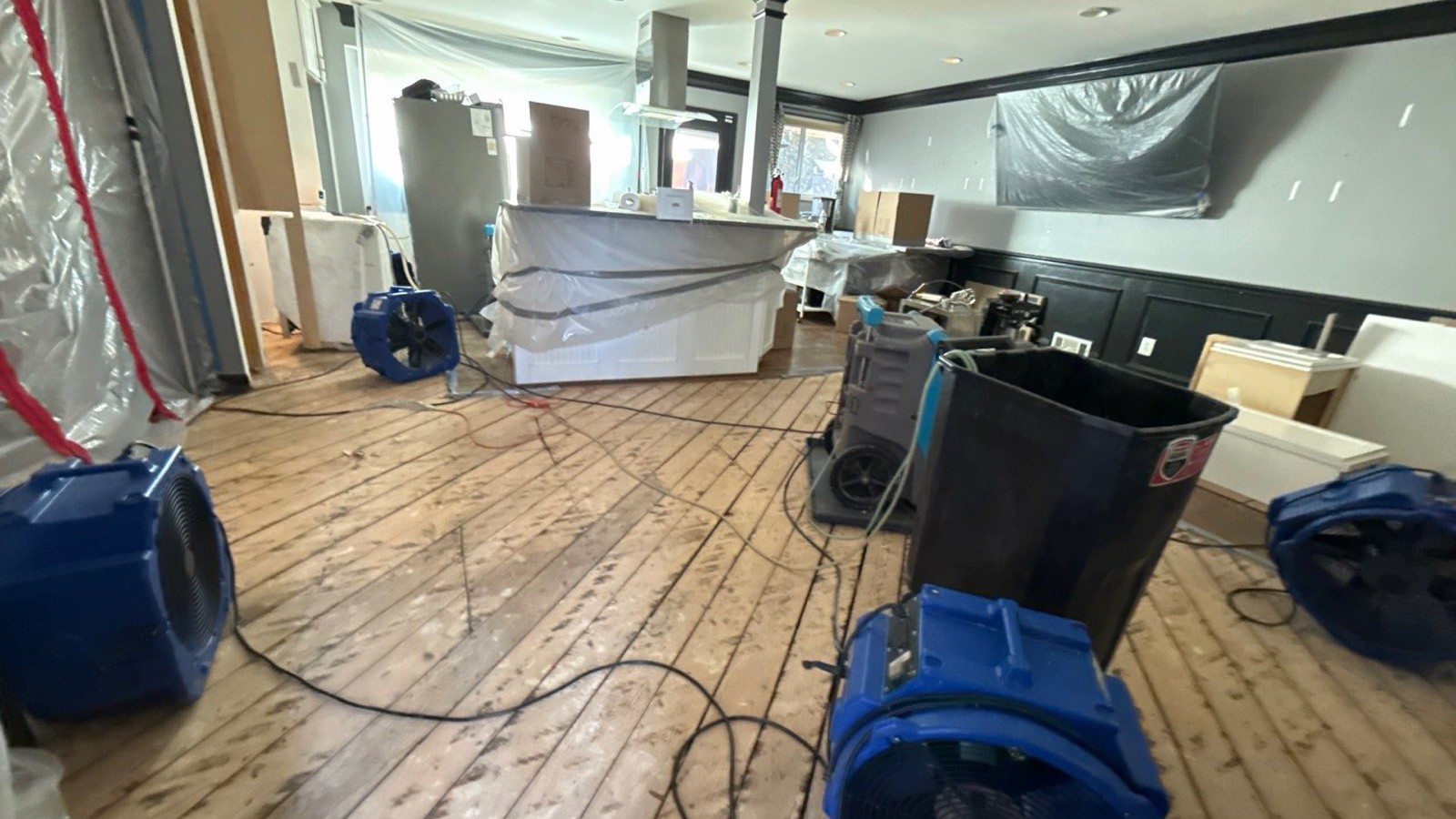
For your health, see your doctor and describe the home environment, including any known water damage and the timing of your symptoms. For the building, that's where we come in: our technicians inspect, locate hidden moisture with meters and thermal imaging, contain the work area, remove affected materials safely, and dry the structure to verified drying goals documented in daily moisture logs.
- Leave or limit time in the affected room and ventilate it
- Keep children, older adults, and immunocompromised people out
- Find and stop the water source (leak, humidity, condensation, drainage)
- Don't disturb large or recurring mold growth yourself
- See a doctor about your symptoms and mention the damp environment
- Call for professional assessment: 1-888-293-5663
Will my symptoms go away after the mold is removed?
In most cases, yes. Allergy and respiratory symptoms caused by mold typically improve or resolve once the mold is professionally removed and the moisture source is permanently fixed. People often notice clearer breathing, less congestion, and better sleep within days to weeks of a complete remediation and dry-out. The crucial word is complete: if hidden mold or the underlying water problem remains, the symptoms come right back.
That's why proper remediation isn't just wiping down a surface. Under the S520 standard it involves containing the work area, removing non-salvageable porous materials like saturated drywall and insulation, HEPA vacuuming and air filtration, detailed cleaning, and then drying the structure to measured moisture targets rather than a guess. Most structural dry-outs run roughly three to five days depending on the materials and conditions, and we confirm progress with daily moisture readings so you know the structure is actually dry, not just dry to the touch.
If your symptoms persist long after a thorough remediation, revisit both your home and your health. There may be a second moisture source, such as a crawl space or an HVAC condensation issue, or the illness may have another cause worth exploring with your physician. A follow-up inspection can confirm whether the home is truly clear.
How does the insurance and cost side work for mold cleanup?
Mold remediation costs vary widely based on the size of the affected area, how much material must be removed, whether containment and negative air are required, and whether there's an active water source to repair, so legitimate pricing is always quoted as a range rather than a flat fee. Be wary of any company that names a single fixed price over the phone without seeing the loss. The only way to get an accurate number is a professional inspection that measures the true extent of the contamination, including hidden moisture behind walls and under floors.
On insurance, whether mold is covered usually depends on the cause of the water. Sudden, accidental events like a burst pipe are more likely to be covered than long-term neglected leaks, deferred maintenance, or flooding, which many homeowners policies exclude or cap with a separate mold limit. Reading your policy's water damage and fungi provisions before you need them is time well spent.
Our billing model is straightforward: we bill the homeowner directly and hand you a carrier-ready claim file, complete with an Xactimate scope, CompanyCam photo documentation, and daily moisture logs. In other words, we work for you, not your insurance company, and we give you everything you need to pursue your claim with confidence. You can learn more on our insurance claims page, and we're available 24/7 across the Virginia, Maryland, and Washington, D.C. area if you need help right now.