How to Read a Drying Log: GPP, Grain Depression and What Counts as Dry
BY RESTORATION DOCTOR · NORTHERN VIRGINIA, MARYLAND & D.C.
A drying log records four numbers that matter: grains per pound, grain depression, dew point and the moisture content of the wet materials. Together they show whether the equipment removed water or only moved air, and this guide explains each number, how the drying goal is set from an unaffected part of the same building, and what a stalled log looks like.
Call 1-888-29-FLOODWhat is a drying log, and who is it written for?
A drying log is the daily record of the air and the materials in a building being dried, and it is the document that proves the equipment did its job. Grain depression in drying is the difference between the moisture in the air entering a dehumidifier and the moisture in the air leaving it, and it is the quickest check on the whole system. Read the log in four columns and the rest of the paperwork makes sense: grains per pound, grain depression, dew point and the moisture content of the wet materials.
A drying log is not a diary of effort, and not a tally of fans run or hours spent on site. It is a set of measurements taken at the same points, in the same rooms, with the same meters, once or twice a day, so that a trend is visible. If the numbers move in the right direction the drying is working. If they flatten, something in the building or the setup needs to change.
- The crew: tomorrow's equipment decisions come straight off today's readings
- The adjuster: the log is the justification for every equipment day on the invoice
- The owner or manager: proof the structure was returned to a measured dry standard
- The next contractor: the log tells a flooring or drywall crew what was already verified
What are grains per pound, and why not just use relative humidity?
Grains per pound, written GPP on most logs, counts the actual water carried in the air. A grain is a tiny unit of weight, 7,000 to the pound, so GPP tells you how many grains of water vapor ride along with each pound of dry air. It is an absolute figure. Sixty GPP in a cold basement is the same quantity of water as sixty GPP in a warm attic.
Relative humidity is a ratio, not a quantity. It compares the water in the air to the most that air could hold at its current temperature, and warm air can hold far more than cold air. That makes relative humidity useful for comfort and useless for judging progress on its own. Heat a room by fifteen degrees Fahrenheit and the relative humidity reading drops sharply without a single drop of water leaving the building.
This is the trap that catches people reading their first log. A column of falling relative humidity looks like success. If the GPP column beside it has not moved, no water was removed; the air simply got warmer and its capacity went up. The National Weather Service explains the same distinction for outdoor weather, and the physics is identical indoors. A log that reports temperature and relative humidity without GPP is not showing you enough to judge anything.
What is grain depression, and what number shows the dehumidifier is working?
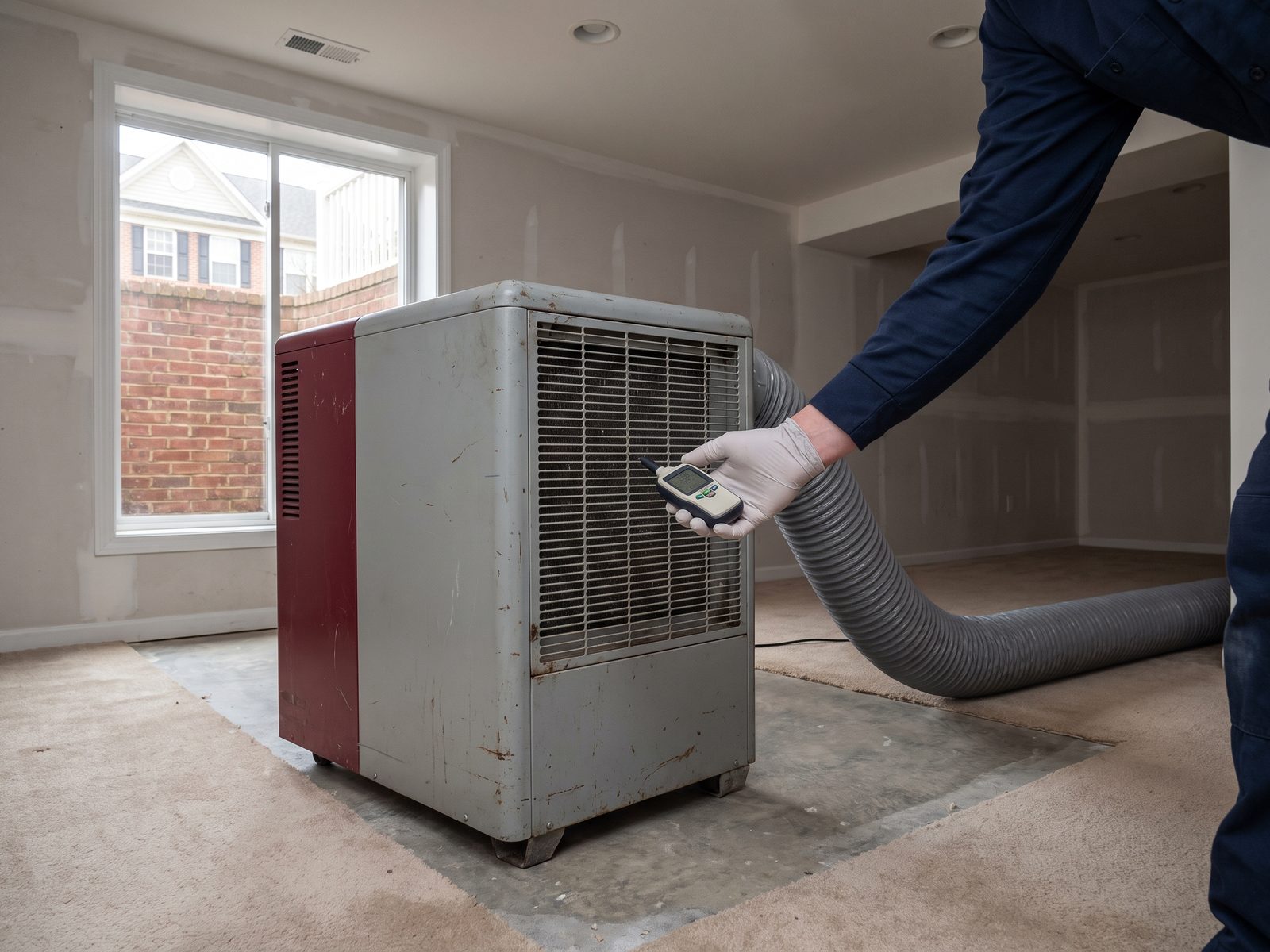
Grain depression is subtraction. Measure the GPP of the air being pulled into the dehumidifier, measure the GPP of the air coming out of it, and take the difference. If the intake air reads 85 GPP and the discharge reads 55 GPP, the grain depression is 30 GPP. That single number says the machine took thirty grains of water out of every pound of air that passed through it. A depression near zero early in the job says the machine is running and doing nothing; the same reading late in the job usually means there is little water left for it to find.
There is no universal target here, and anyone who quotes one is guessing about your building. The workable depression depends on the type of dehumidifier, the temperature of the air reaching it, how wet the structure still is, and how tightly the drying chamber is sealed. A refrigerant unit and a desiccant unit behave differently at the same room temperature. What matters on your log is the shape of the column, not a number borrowed from someone else's job.
The shape is the tell. Early in a job, with soaked materials still giving up water, the depression should be healthy and clearly positive. As the building dries, less water is available for the machine to find, so the depression narrows. That narrowing is normal and expected. A depression that is small on day one, before the building has given up much of anything, points at the equipment or the setup rather than at good progress.
- Check the obvious first: a full collection tank, a blocked drain hose or a clogged filter
- Check the coil: a refrigerant unit that has iced over stops condensing water
- Check the chamber: open doors, an unsealed stairwell or an active HVAC return feeds in new air
- Check the match: the wrong machine for the temperature and load will underperform all week
- Check the placement: intake air should come from the wettest part of the chamber
What is dew point, and why does it decide whether opening a window helps or hurts?
Dew point is the temperature at which air becomes completely saturated and starts releasing its water as condensation. Like GPP it is an absolute measure of moisture, which is why restorers write both. Air with a dew point of 72 degrees Fahrenheit carries a great deal of water. Air with a dew point of 35 degrees carries very little, no matter what its relative humidity reading says.
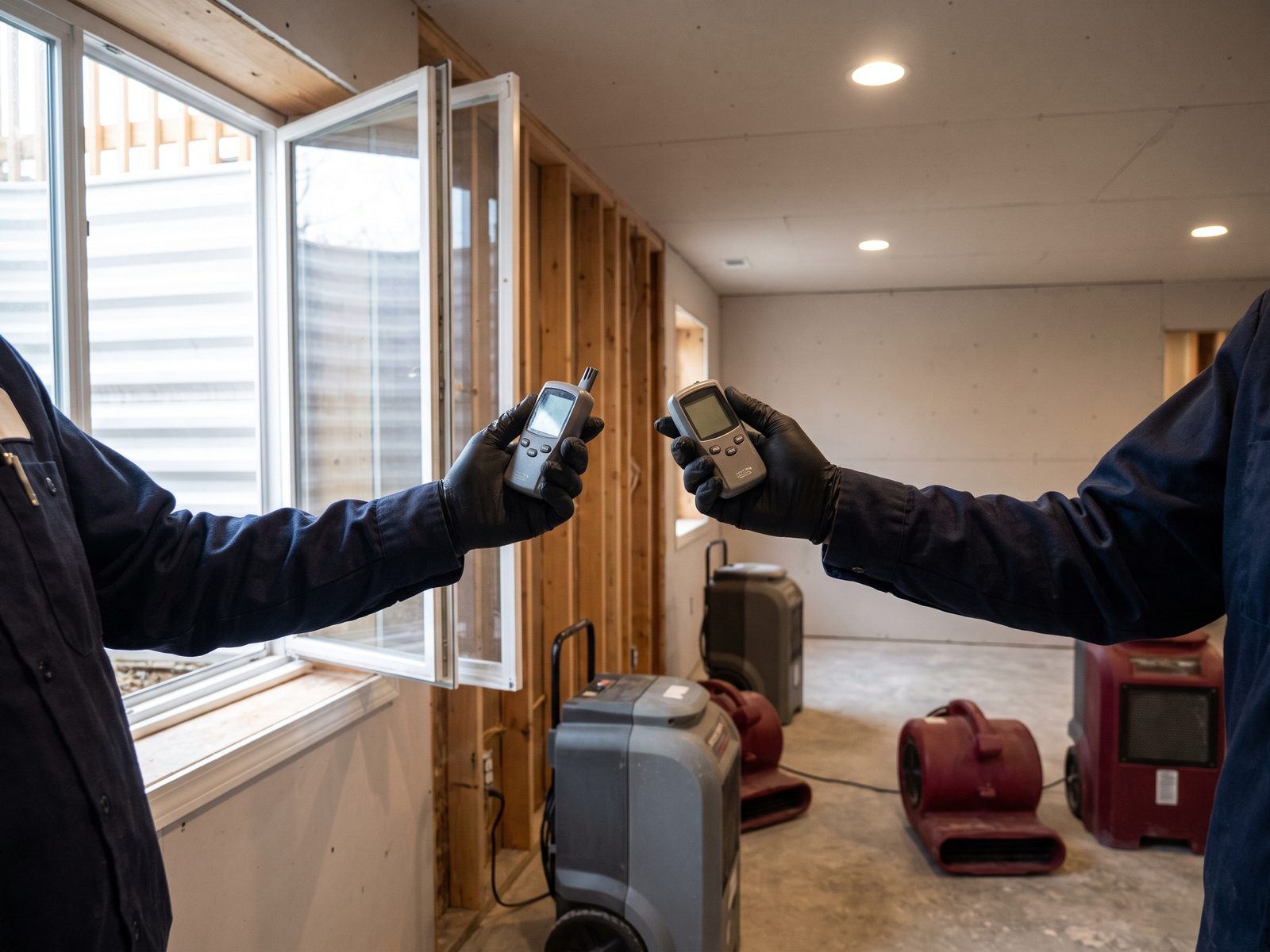
The window question answers itself once both dew points are on the sheet. If the outdoor dew point is lower than the indoor dew point, outdoor air is drier than the air in the room and ventilation will help. If the outdoor dew point is higher, every cubic foot of outside air that comes in brings more water than it takes away. Opening the window in that condition adds load to the dehumidifier and slows the job down.
Why does a DMV summer make outdoor air the enemy of a drying job?
From May through September the outdoor air across Northern Virginia often carries as much water as the air inside a house, and far more than the air inside a chamber that is already being dehumidified. On a humid July afternoon in Fairfax or Alexandria the dew point outside can sit in the low seventies while a dehumidified basement is being held far below that. Open a window in those conditions and you are importing water, not exhausting it. It is one of the most common well-meant mistakes a homeowner makes during a summer loss.
So a summer job in Arlington, Loudoun or Prince William County is almost always dried as a closed system. The doors and windows stay shut, the affected space is separated from the rest of the house where practical, and the dehumidifiers are left to work on a known quantity of air. The log makes the choice defensible, because the outdoor readings sit right there in the same table as the indoor ones.
What is a drying goal, and how is it set from an unaffected area?
A drying goal is the moisture reading the wet material has to reach before the job is finished, and it comes from the same building, not from a textbook. On day one the technician finds material of the same type in a part of the structure that never got wet, takes readings there, and writes those numbers down as the dry standard. A stud in a dry wall cavity twelve feet away is the fairest possible benchmark for the stud that got soaked.
Climate is another reason a borrowed number fails. The equilibrium a material reaches in a mid-Atlantic winter is not the one it reaches in a subtropical summer. Our Florida sister site treats the same question separately in its piece on what dry means at 80% outdoor humidity at https://restorationdoctorfl.com/blog/what-does-dry-mean-drying-goal-florida. Same standard, same method, different arithmetic. The unaffected area in your own building is what settles it.
What moisture content actually counts as dry for wood, drywall and concrete?
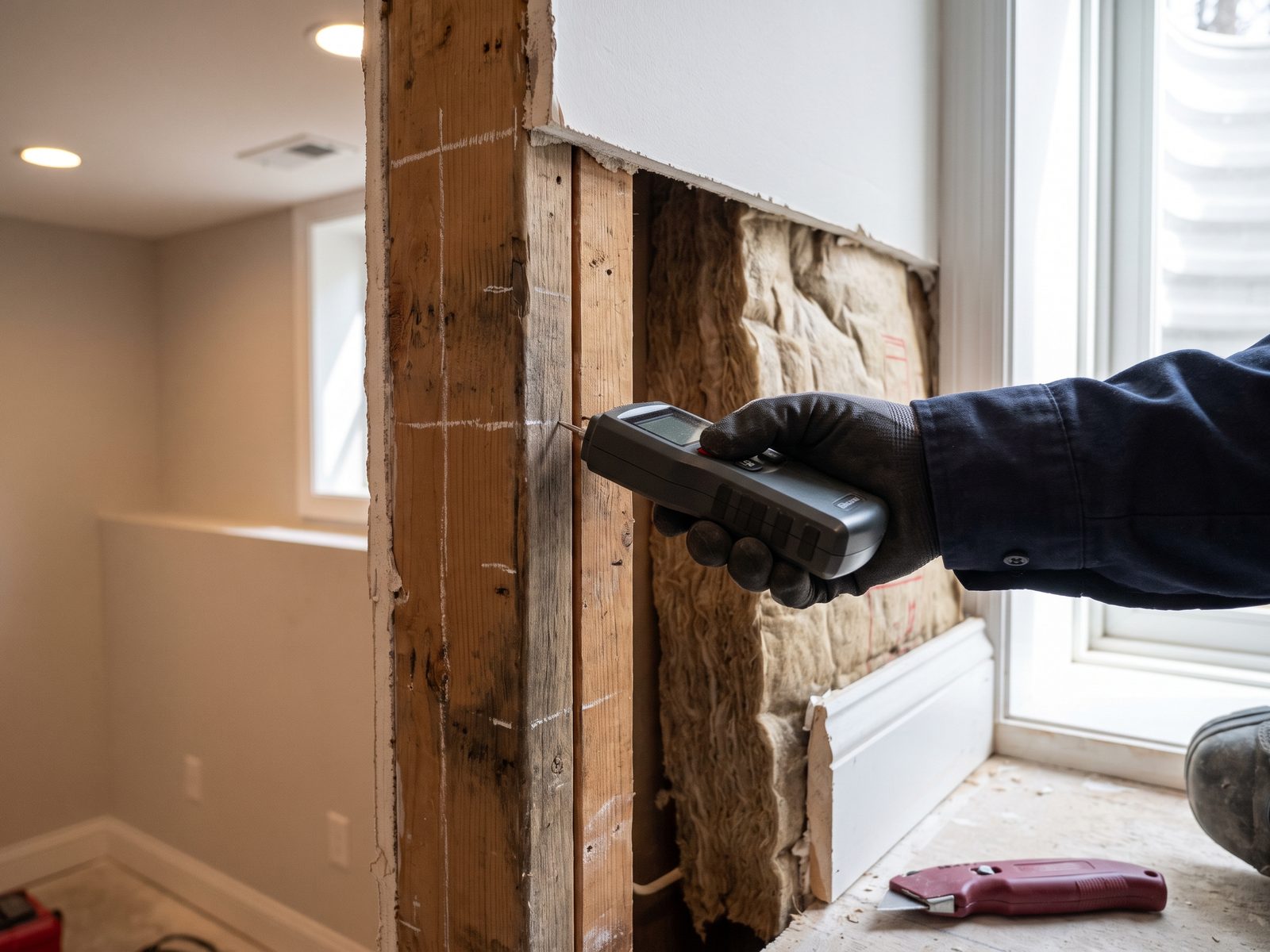
Dry is a comparison, not a fixed number, and the meter you hold changes what the reading even means. A pin meter pushed into wood measures electrical resistance between the pins and reports a genuine percentage of moisture content for that species. A pinless meter reads a field a short distance into the material and gives a comparative scale. On drywall, plaster and concrete most handheld meters report relative values, useful for tracking a trend and not for declaring a universal threshold.
The practical rule is the same for every material. Establish the reference from an unaffected area, re-read the same marked locations each day with the same meter, and stop when the wet material has come back to the reference range and stayed there. Comparing affected material against an unaffected reference is the established practice in professional structural drying, which is why a competent log always shows the reference alongside the affected readings. The ANSI/IICRC S500 standard for professional water damage restoration is the document that governs this work, covering psychrometry and drying technology, building and material science, and project documentation.
| Material | What the meter actually reads | How dry is decided | Common trap |
|---|---|---|---|
| Framing lumber | True moisture content by resistance between pins | Compared against an unaffected stud of the same species in the same building | Reading the face of the stud instead of the wet bottom of the cavity |
| Drywall | A relative scale, not a true percentage | Tracked as a trend back to the reading taken on unaffected board | The paper face dries first and hides a saturated core and bottom edge |
| Hardwood flooring | Moisture content, often through a pinless sweep plus pin checks | Compared to boards in a room that never got wet | Cupping that flattens on the surface while the subfloor stays wet |
| Concrete slab | Surface conditions only on a handheld meter | In-situ relative humidity probes set in drilled holes and given time to settle | Calling a slab dry from a surface reading, then laying flooring over it |
Why does 'it feels dry' mislead almost everyone?
Touch tells you about a surface, and surfaces are the first thing to dry. A wet material dries from its surface inward, so the outside of it is back to normal long before the middle is. The face of the drywall, the top of the subfloor and the exposed side of a joist all feel normal long before the core has given up its water. A wall that feels dry to the back of your hand can still hold a lot of water an inch behind the paint.
The stakes are not cosmetic. EPA guidance on mold and moisture points at wet materials being dried within roughly a day or two to keep growth from starting, and organic material that stays damp inside a closed cavity is an ideal place for it. Mold found later behind a wall is usually not a mystery; it is the part of the building that never appeared on anyone's reading sheet.
What should a daily reading sheet contain to be usable?
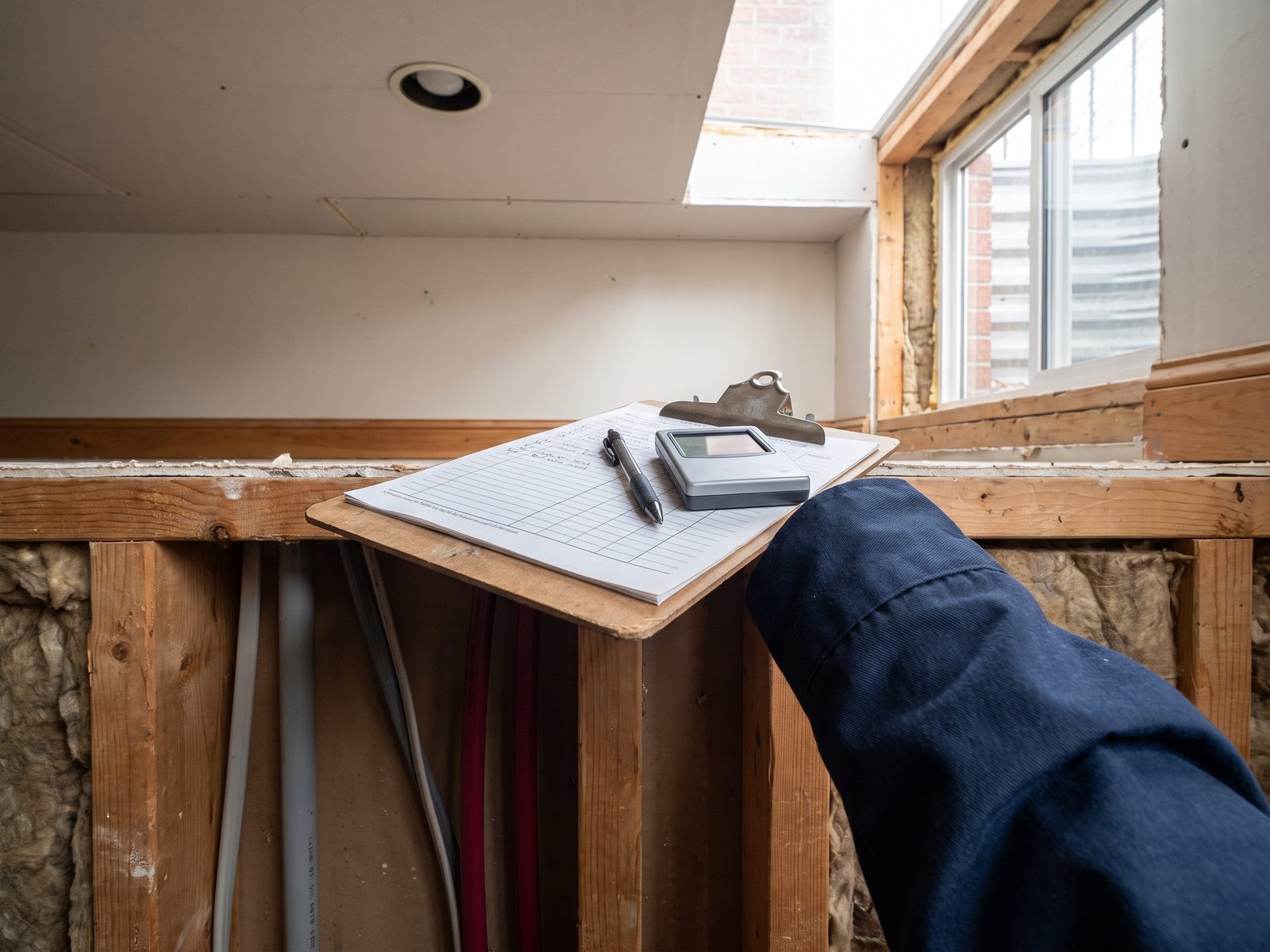
A usable sheet is boring and repetitive by design. Every line is taken at the same place, with the same instrument, at the same time of day, so that one day can be compared to the next without argument. Anything that changes location or method between visits breaks the comparison.
The sheet also has to say who took the readings and when. Initials and a date on every visit turn the figures into testimony a carrier can weigh. An unsigned sheet is far weaker.
| Column | What it records | Why it matters |
|---|---|---|
| Date and time | When the visit happened | Establishes the interval between readings and the number of equipment days |
| Outside air | Temperature, relative humidity, GPP and dew point outdoors | Settles the ventilation question and explains a slow day honestly |
| Unaffected area | The same readings in a dry part of the building | This is the dry standard the goal is measured against |
| Drying chamber air | Temperature, relative humidity and GPP in each affected space | Shows whether the chamber is actually being controlled |
| Dehumidifier intake and discharge | GPP in and GPP out for every unit | Gives the grain depression, the direct proof each machine is removing water |
| Material moisture content | Readings at marked points on each wet material | The only numbers that decide when the structure is dry |
| Equipment | Count, type and position of air movers and dehumidifiers | Explains what changed between two days of readings |
| Notes and initials | Actions taken, materials removed, who took the readings | Turns a column of figures into a defensible record |
What do you do if the numbers stop moving?
A flat line across two consecutive visits means something in the setup has to change, and the usual culprits are barriers. Vinyl wallpaper, paint layers, tile and thinset, glued-down flooring, cabinet toe kicks and closed cavities all trap water behind a surface that air cannot reach. A system sized for open drywall will stall against any of these, and so will a chamber that leaks into the rest of the house.
What a crew does next is straightforward. Reinspect with a thermal camera and a meter to find where the water actually sits, open or remove whatever is holding it, resize or reposition the equipment, and tighten the containment. Older masonry and plaster hold water differently again, which is why our Washington DC site covers how long drying takes in a row house at https://restorationdoctordc.com/blog/how-long-water-damage-dry-dc as a separate case.
Keep the timeline in perspective while this is happening. A straightforward residential dry-out averages about 4.5 days for us, and a job that runs longer is often a job where a barrier was found and dealt with partway through. That is a reason to expect a clear explanation and an updated plan in the log, not a reason to assume the work was mishandled. If nobody can explain the flat line, that is the point to ask for a second opinion.
- Sources used in this guide:
- ANSI/IICRC S500, the Standard for Professional Water Damage Restoration, https://www.iicrc.org/s500/
- ANSI/IICRC S520, the Standard for Professional Mold Remediation, https://www.iicrc.org/s520/
- US EPA, A Brief Guide to Mold, Moisture and Your Home, https://www.epa.gov/mold/brief-guide-mold-moisture-and-your-home
- National Weather Service, dew point versus relative humidity, https://www.weather.gov/arx/why_dewpoint_vs_humidity