What a Carrier-Ready Drying File Contains: Water Damage Claim Documentation
BY RESTORATION DOCTOR · NORTHERN VIRGINIA, MARYLAND & D.C.
A carrier-ready drying file is a chronological evidence chain: pre-work photographs, a moisture map, daily readings with psychrometric conditions, an equipment log that matches the invoice, and a documented drying goal that closes the job. This guide lists what belongs in each part, why an adjuster asks for it, and the omissions that most often turn a covered loss into a partial payment.
Call 1-888-29-FLOODWhat is a drying file, and who actually reads it?
A drying file is the documentation package that proves a water damage claim. It holds pre-work photographs, a moisture map, daily readings with the psychrometric conditions around them, an equipment log, a materials record and a drying goal that the final readings meet. It answers four questions for an adjuster: what was wet, how wet it was, what was done about it, and when the structure reached a dry standard.
The file is rarely read by one person. A desk adjuster checks it against the estimate. A field adjuster compares the photographs to what they saw on site. On larger losses a third-party reviewer looks again before payment is released. None of them were in the house on day one, so anything that was not recorded effectively did not happen.
The habit comes from the ANSI/IICRC S500 water damage restoration standard, which treats inspection, monitoring and documentation as part of the work itself. It is industry practice and carrier expectation, not a statute. Around 83% of our projects are billed through insurance, so the file gets built the same way on every job, including the small ones.
- 1. Pre-work photographs of the source, the affected rooms and the contents
- 2. A moisture map showing wet areas and where each reading was taken
- 3. Initial readings with a dry standard from an unaffected area
- 4. Daily readings with matching psychrometric conditions
- 5. An equipment log with placement, quantity and removal dates
- 6. A materials record: what came out, how much, and why
- 7. Final readings and a signed completion that closes the drying goal
What has to be photographed before anything is touched?
Photograph the source of the loss, every affected room from wide to tight, the water line on walls and cabinets, the contents at risk, and any damage that existed before the water arrived. Those frames are taken before extraction starts. Once the water is gone, the strongest evidence of the loss goes with it.
The sequence that survives review is wide, medium, tight. A wide frame from the doorway establishes the room. A medium frame puts the wet zone in context, so a reviewer can see the stain sits below the failed supply line. A tight frame shows the split hose or the wicking on the baseboard. A reviewer who cannot place a close-up in a room will not credit it.
Pre-existing damage deserves its own frames. If the hardwood already cupped from an older leak, photograph it and note it. That keeps the carrier from paying for damage the policy never covered, and it keeps a later reviewer from writing off new damage as old.
- The source, close enough to show the failure and wide enough to place it
- Each affected room from the doorway, then the wet zone, then the detail
- Water lines on drywall, baseboard, cabinet bases and door casings
- Contents in contact with water, including what was moved and where
- Pre-existing damage, stains, cupping or prior repairs
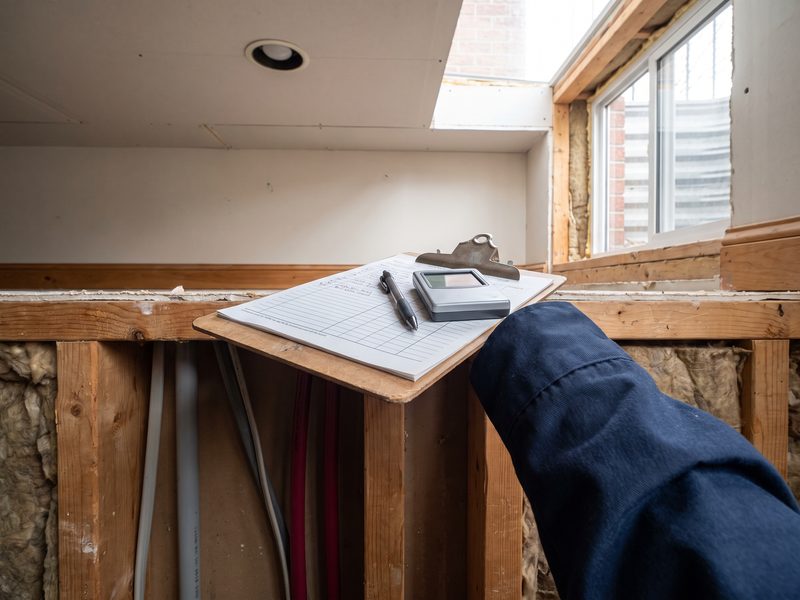
- The moisture meter in frame against the material it is reading
What is a moisture map, and why does the adjuster want one?
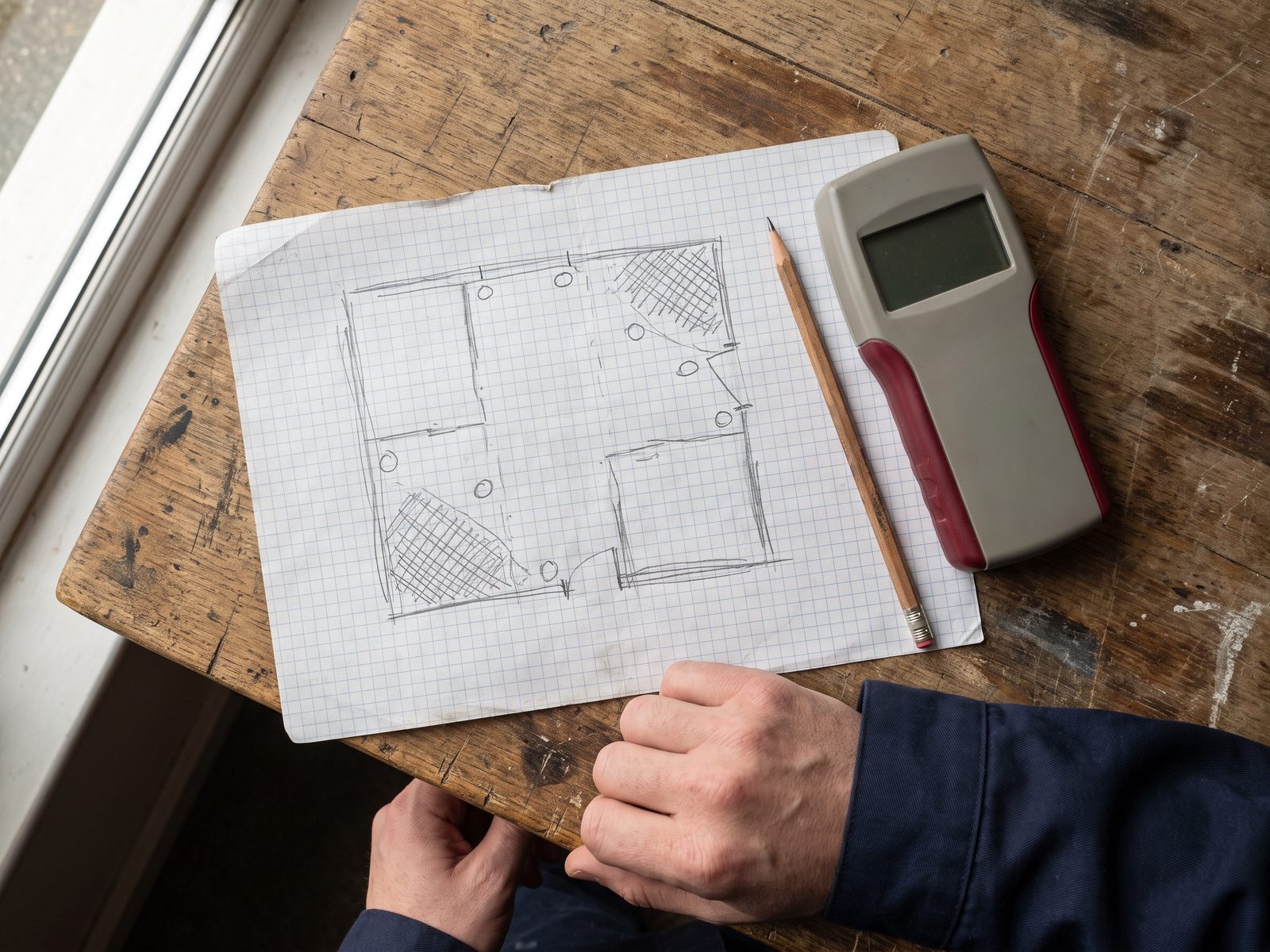
A moisture map is a floor plan of the affected area with the wet zones marked and each reading point numbered, so every number in the log has a place on a drawing. It turns a column of readings into something a reviewer can picture in seconds.
It does not have to be pretty. A hand sketch on graph paper works, as long as rooms are labeled, dimensions are close and the wet perimeter is drawn where moisture actually stopped. Water does not respect walls. A supply-line break in a McLean powder room routinely wets the hallway subfloor and the far side of a shared wall.
The map also disciplines the estimate. If the drawing says the wet area runs eleven feet into the hallway, the estimate should carry about that much affected flooring. When the two disagree, a reviewer usually trusts the drawing and cuts the estimate to match. Label points so they never change: point 1 is the same stud bay on day four as it was on day one.
What do daily readings have to include to be usable?
A usable reading records the date and time, a location ID that matches the moisture map, the material, the meter type, the value, and the dry standard it is compared against. Miss one of those and the number is data without meaning.
The dry standard is what adjusters look for first. Drying is not finished at a fixed number on a meter. It is finished when affected material reads at or near the same value as the same material in an unaffected part of the building. That comparison is taken on day one, before equipment goes in.
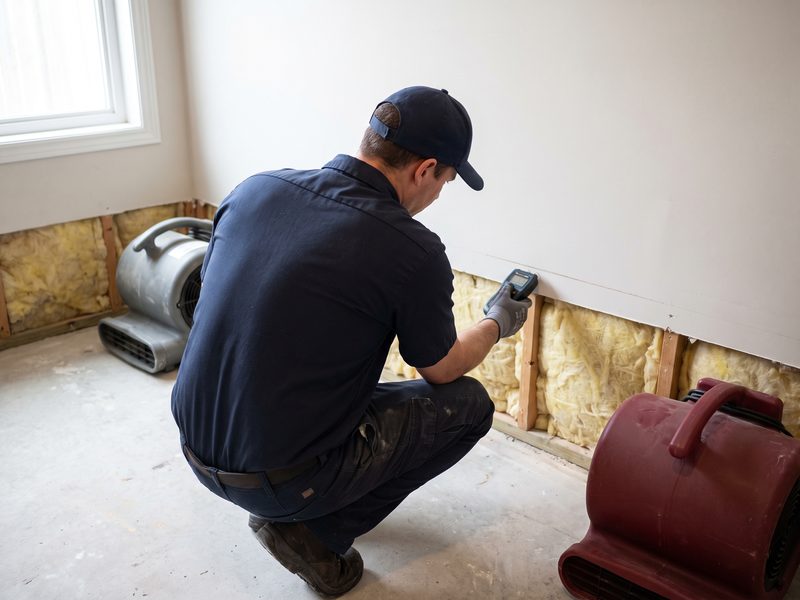
Take readings at the same time of day with the same instruments. A pinless meter reads a relative scale through the surface. A penetrating meter reads moisture content at depth. Mixing the two across days produces a chart that looks like the material got wetter overnight, and that is hard to explain later.
| Field recorded | Why the adjuster wants it | Common failure |
|---|---|---|
| Date and time | Establishes the drying curve and monitoring interval | Several days logged at once from memory |
| Location ID | Ties the number to a point on the moisture map | Vague labels that change day to day |
| Material | Drywall, framing and subfloor dry at different rates | One reading used for a whole room |
| Meter type | Pinless and penetrating scales are not interchangeable | Instruments swapped mid-job with no note |
| Value | Shows measurable progress toward the goal | Flat numbers with no note on the plateau |
| Dry standard | Defines when drying is actually complete | No unaffected comparison reading taken |
Why do psychrometric numbers matter to a claim, not just to the drying?
Psychrometric readings are the temperature and humidity measurements that show the drying environment could actually remove water. Moisture content readings prove the material got drier. Psychrometrics prove the equipment caused it. An adjuster looking at a week of equipment charges wants both.
The set taken on a normal job is small. Temperature and relative humidity in the affected area. The same pair in an unaffected area, which acts as the control. The same pair outside. Then the air entering the dehumidifier and the air leaving it. From those, a technician derives grains per pound, the number that says how much water the air is holding.
Those readings answer questions that otherwise become arguments. Why did drying take six days instead of three? Because outside air sat near saturation all week. Why is there a second dehumidifier on the invoice? Because the inlet and outlet readings show the first was at capacity. Neither answer can be reconstructed afterward.
There is a second reason to keep the environment on record. Warm, wet air is how a contained water loss becomes a mold claim, and EPA guidance puts fixing the water problem and drying materials completely at the front of any mold cleanup.
How is the equipment log tied to the invoice?
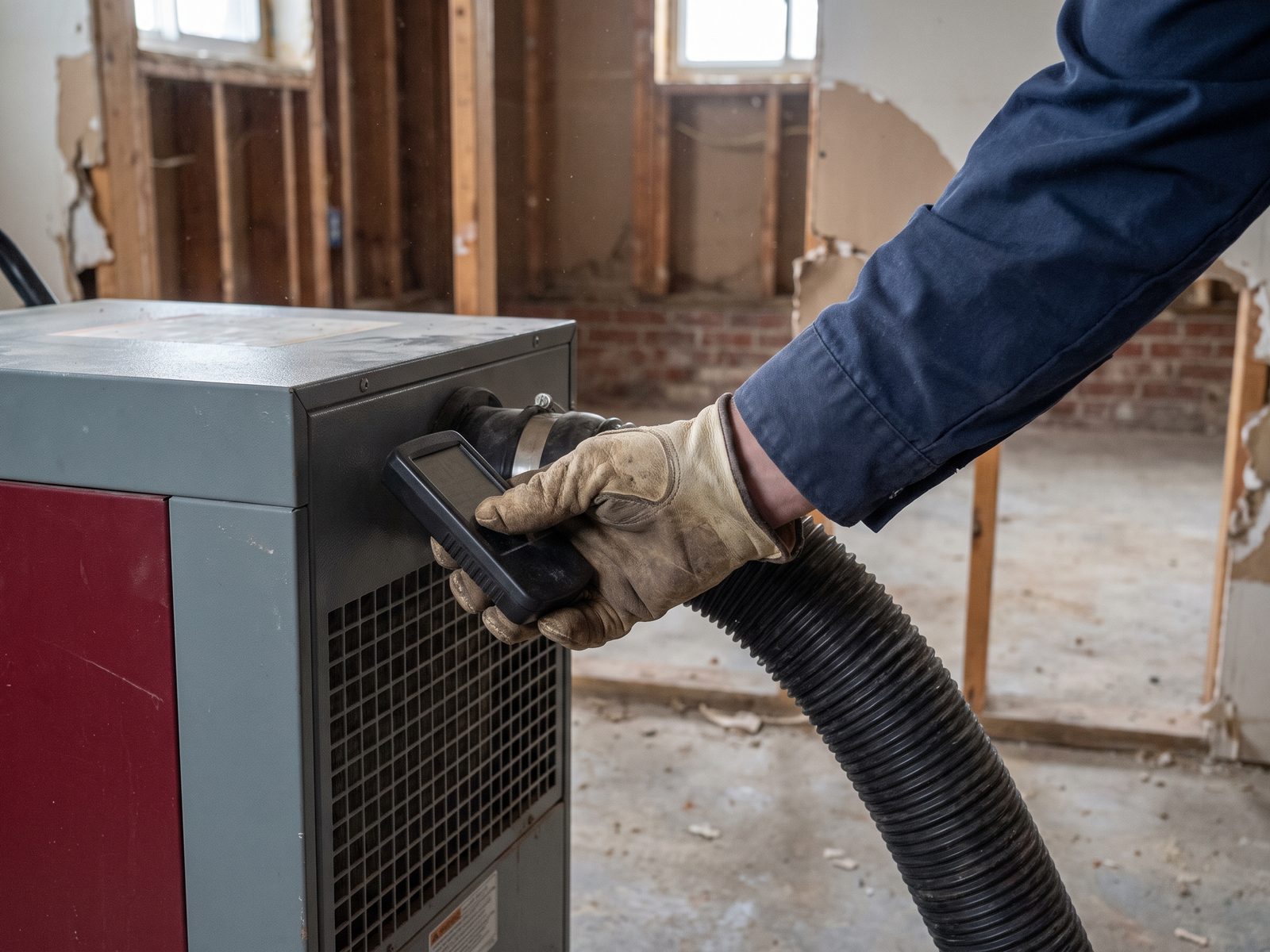
Every equipment line on the invoice should trace to a log entry: what the unit was, where it sat, the day it was placed and the day it was pulled. Equipment is billed in unit-days, so the log is the arithmetic behind the largest recurring charge on most mitigation estimates.
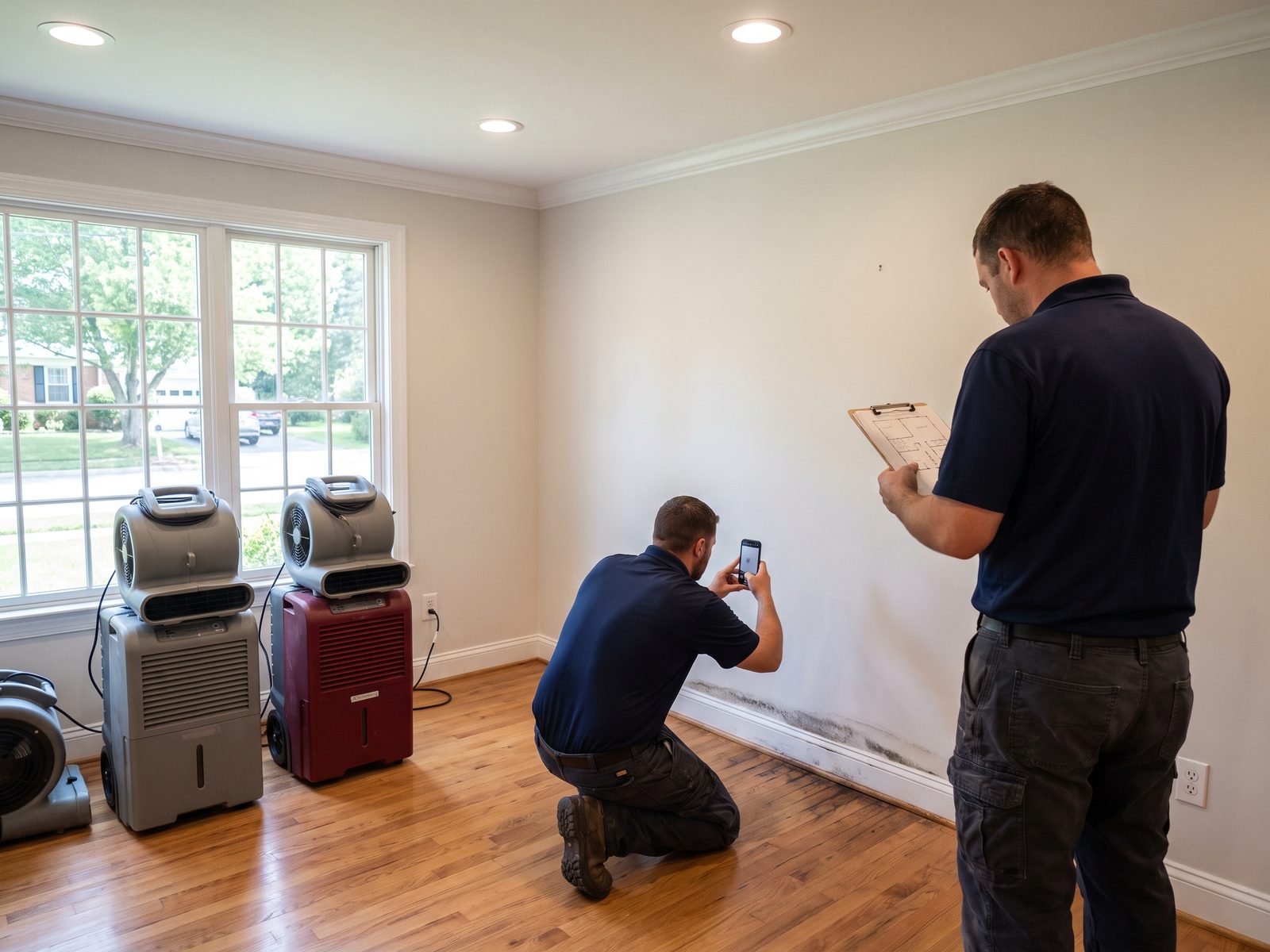
Air movers are counted, not described. Dehumidifiers are recorded by class and capacity, because a low grain refrigerant unit and a desiccant unit carry different rates. Air scrubbers need a reason tied to the water category or to a containment. Placement photographs taken the day equipment goes in are worth more than any note, because they show the count in the room.
Three mismatches account for most of the reductions we see. Equipment appears on the invoice with no placement date. The log ends before the final readings do, which reads as billing after the structure was dry. Or the count in the log does not match the count visible in the photographs.
- Air movers: quantity per room, placement date, removal date
- Dehumidifiers: class and capacity, inlet and outlet readings, dates
- Air scrubbers: the reason for use, filter stage, dates
- Supplemental heat or injection drying: what it served, for how long
- Placement photographs from the day equipment is staged in each room
- A relocation note for any unit moved between rooms mid-job
What justifies removing a material, and how is that recorded?
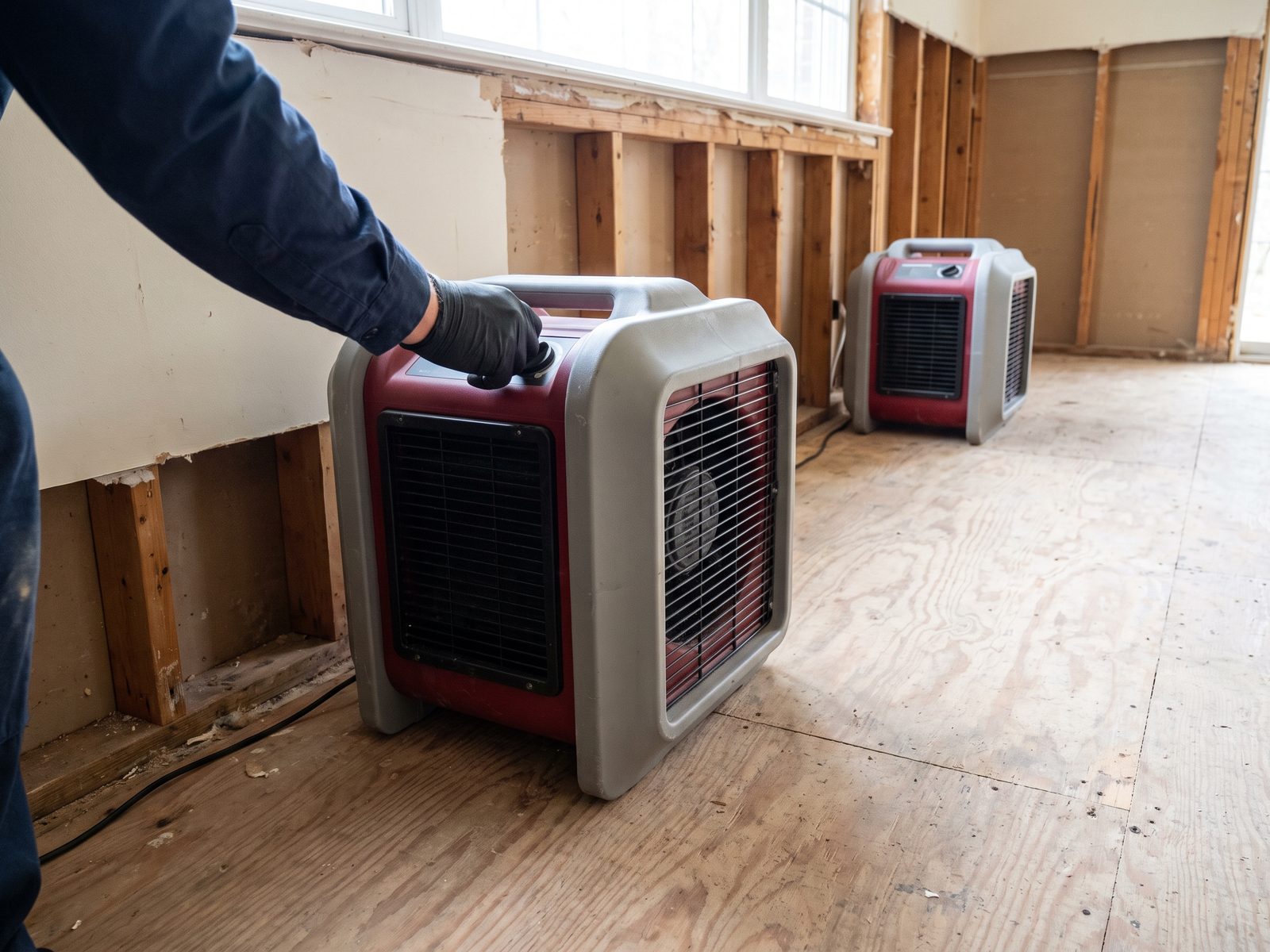
A material comes out when it cannot be dried in place, when the category of water contaminated it, or when it hides a wet cavity that surface airflow will never reach. The file records the reason before the demolition, with the measured quantity and photographs taken before, during and after.
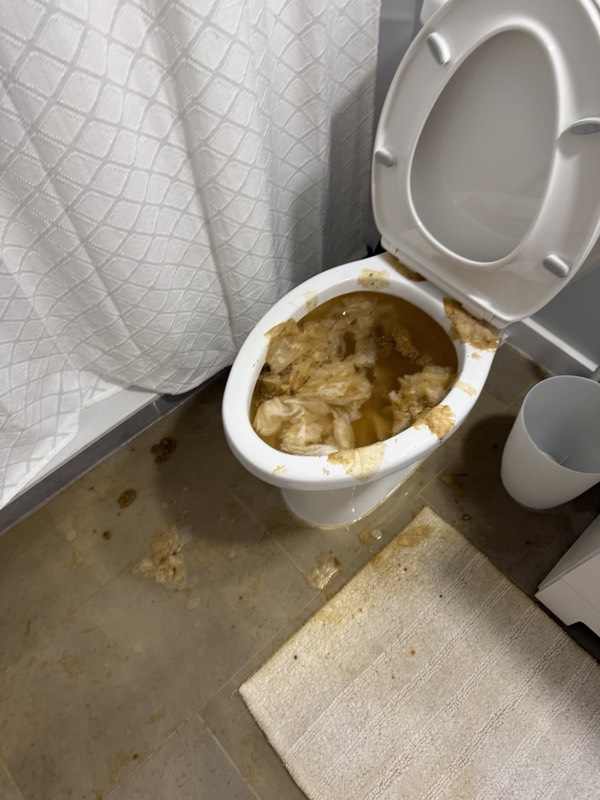
Category drives most of these calls. Clean water from a supply line leaves far more material salvageable than water from a sewer line. Porosity drives the rest. Carpet pad and insulation hold water and rarely justify the drying time. Framing and sealed concrete usually dry in place. Drywall depends on how high the water wicked and what sits behind it.
Quantities have to be measured in the units the estimate uses: linear feet of baseboard, square feet of drywall at a stated cut height, square feet of flooring and pad. A flood cut shown at two feet and billed at four is the kind of contradiction a reviewer finds quickly.
The strongest removal documentation shows the open cavity. A photograph of saturated insulation or a wet sill plate justifies the cut better than any written note.
What is the drying goal, and what closes the file?
The drying goal is the target value each affected material has to reach, taken from the same material in an unaffected part of the building on day one. The file closes when final readings meet that goal, final photographs are taken, equipment is logged out and the property owner signs a completion.
Skipping the goal is the quiet way a good job produces a bad file. With no stated target, a reviewer decides alone whether five days of equipment was reasonable. With a target on record, the last page argues on its own: here is the start, here is the standard, here is the day it was met.
Final photographs mirror the first set. Same rooms, same angles, equipment gone, materials dry. That pairing is the most quoted part of the file, because the before and after frames settle in seconds whether the scope matched the loss.
A completion signature matters more than homeowners expect. It records the date the owner agreed drying finished, which separates mitigation from the repair work that follows.
Which four omissions most often cause a partial denial?
Four gaps account for most of the reduced mitigation payments we see, and all four are cheap to prevent on day one. No pre-work photographs of the source. Readings with no location identity. An equipment log that does not line up with the invoice. And no dry standard, which leaves the drying goal unproven.
The first is the most expensive. If the only photographs came after extraction, nobody outside the house can see the original extent, and the scope gets cut back to what those frames support. The second is quieter. Readings labeled only by room cannot show that the same point got drier, so the log proves the crew visited and nothing more.
The third gap is arithmetic. A log missing placement or removal dates invites a reviewer to pay for fewer days than were run. The fourth ends arguments before they start. Without a dry standard from unaffected material there is no agreed finish line, so the length of the drying becomes opinion rather than record.
- 1. No pre-work photographs, so the original extent cannot be seen
- 2. Readings with no fixed location ID, so no point can be shown drying
- 3. An equipment log missing placement or removal dates for billed units
- 4. No day-one dry standard, so the drying goal was never defined
What should you ask your contractor to send you at the end of the job?
Ask for the complete file in a format you can open and forward, and ask at the end of the job rather than weeks later. A one-page summary is not a drying file, and the parts a reviewer wants are listed below.
This matters more in Northern Virginia than homeowners expect. Restoration Doctor invoices the property owner and hands over the claim file rather than working as a carrier's preferred vendor. On our jobs in Fairfax, Arlington, Alexandria, Loudoun and Prince William, the person submitting the documentation is usually the homeowner.
Read the file once before you send it. Check that room names on the map match the estimate, that equipment dates cover the days being billed, and that the last page shows final readings against a stated goal. A complete file does not guarantee payment. What it does is remove the reasons a covered loss gets paid at less than it cost.
Sources: the ANSI/IICRC S500 Standard for Professional Water Damage Restoration at https://iicrc.org/s500/ and EPA mold cleanup guidance at https://www.epa.gov/mold/mold-cleanup-your-home
- The full photograph set, not a selection, with capture dates intact
- The moisture map, even if it is a hand sketch on graph paper
- Every monitoring reading, including the day-one dry standard
- The equipment log with placement and removal dates per unit
- The materials record with quantities and a reason for each removal
- Final readings and the signed completion that closes the job